

📲 Free catholic app. Web version too 🙏 to contact priests & and consecrated religious 24h. https://nitter.cf/t.co/RnkqSmjVCx enseña los riesgos y desafíos del 🌎 digital
Joined January 2018
- Tweets1.4K
- Following718
- Followers241
- Likes858





Amen App retweeted

Hay quienes quieren tratar Halloween como una fiesta infantil o como un hecho cultural neutro. La realidad muestra otra cosa. Por ejemplo: es la época del año con mayor número de profanaciones, sacrilegios y robo de copones con formas consagradas. Conoce y divulga un poco más de las raíces y realidades de Halloween:
youtu.be/TXd1qMNOLlE

Amen App retweeted

Algunos subrayan el vertiginoso cambio de época que vivimos... Pero quizá convenga recordar que el problema de fondo sigue siendo el mismo, y lo será hasta el final de los tiempos: el combate espiritual frente a la acción del Maligno.
De hecho, me ha llegado este vídeo de imágenes simbólicas e inquietantes, y no he podido por menos de recordar esta cita de Evagrio Póntico, autor del siglo IV:
«No depende de nosotros que estos pensamientos turben el alma; pero sí depende de nosotros que permanezcan en ella y que generen o no las pasiones». (Tratado práctico, 6).
Amen App retweeted
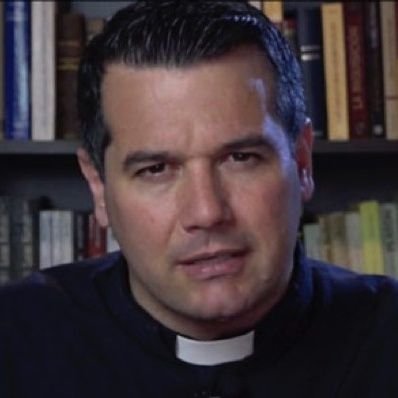
Holy Communion: In the Hand or on the Tongue?
Homily, September 20, 2026
Last Sunday, in our homily, we reflected on the need to strengthen our catechesis concerning the Real Presence of Jesus Christ in the Eucharist. Today, continuing with that theme, we would like to conclude these reflections by considering the manner in which we receive Our Lord in Holy Communion.
Few liturgical questions have generated as much discussion in recent decades as the manner of receiving Holy Communion. To understand the issue properly, we need to set ideological positions aside and consider both what happened historically and what the Church has actually taught.
What Happened in 1969?
In 1969, under Pope St. Paul VI, the Instruction Memoriale Domini was issued. Its historical context is important. In a number of places, the practice of receiving Holy Communion in the hand had been introduced without authorization, contrary to the discipline then in force. At the same time, the Church was deeply concerned about errors and confusion regarding the Real Presence of Christ in the Eucharist.
Faced with this situation, the Holy See consulted the bishops of the world. The majority favored retaining the traditional discipline—that is, receiving Holy Communion on the tongue.
Pope Paul VI therefore confirmed the traditional manner of receiving Communion and warned that changing the practice could lead to diminished reverence toward the Blessed Sacrament, the danger of profanation, and the adulteration of true doctrine. Nevertheless, in places where the contrary practice had already become established—particularly in countries with a Protestant heritage—episcopal conferences could request an indult—that is, an exceptional permission—from the Holy See for Communion to be distributed in the hand.
“But Didn’t the Early Christians Receive Communion in the Hand?” someone might ask
There is evidence that Christians in the early centuries of the Church received Holy Communion in the hand. But using this historical fact in isolation can be misleading.
St. Basil the Great, in the fourth century, speaks explicitly about receiving Communion in one’s own hand in circumstances such as times of persecution, when a priest or deacon was not available. St. Cyril of Jerusalem, also in the fourth century, describes the communicant making the left hand a “throne” for the right in order to receive the King. He also insists upon the greatest care that nothing of the Eucharist be lost.
Other early Christian writers likewise testify to the extraordinary care with which the Eucharist was treated and to concern that nothing consecrated should be lost or profaned.
Thus, even when Communion in the hand existed in the ancient Church, we should not simply assume that it was identical in manner, discipline, or surrounding ritual to the modern practice. What is unmistakable in the ancient sources is the profound reverence with which Christians approached and handled the Holy Eucharist.
In any event, the antiquity of a practice does not by itself prove its superiority. If our criterion were simply, “The early Christians did it,” then, for example, all women would have to cover their heads at Mass, none of them could proclaim the readings, and men and women would have to sit separately. Pope Pius XII already warned in his encyclical Mediator Dei that an ancient practice, merely because it is ancient, should not necessarily be considered better.
Over the course of the centuries, the Church’s Eucharistic discipline gradually developed, and increasingly precise measures were adopted to safeguard the Blessed Sacrament.
Why Did This Development Take Place?
Memoriale Domini itself gives us an important explanation. As the Church’s understanding and reverence for the Eucharistic mystery deepened, the custom developed whereby the minister placed the consecrated Host directly upon the tongue of the communicant.
Three elements therefore appear closely related: a deeper understanding of the Eucharistic mystery, greater reverence toward the Blessed Sacrament, and an attitude of humility in receiving Our Lord.
What, Then, Is the Best Way to Receive?
Receiving Holy Communion in the hand, where it is legitimately permitted, is not per se a sacrilege. Nor can we automatically judge a person’s interior devotion on the basis of whether he receives Communion on the tongue or in the hand. But this does not mean that the two manners of receiving must necessarily be regarded as pastorally identical.
The Instruction Memoriale Domini expressly points to the advantages of the traditional manner of receiving Holy Communion on the tongue. Speaking of this traditional practice, it states that:
“This method of distributing holy communion must be retained, taking the present situation of the Church in the entire world into account, not merely because it has many centuries of tradition behind it, but especially because it expresses the faithful’s reverence for the Eucharist.”
The document goes on to explain that this traditional manner more effectively safeguards the reverence, decorum, and dignity due to Holy Communion, protects against the danger of profanation of the Eucharistic species, and safeguards the careful attention that the Church has always required regarding the fragments of the consecrated Bread.
This is not about turning the manner of receiving Communion into an ideological banner, nor is it about claiming that a person who receives on the tongue is necessarily holier than someone who receives in the hand. Rather, it is about asking ourselves which outward signs most clearly express what we truly believe.
If the consecrated Host is truly the Body, Blood, Soul, and Divinity of Our Lord Jesus Christ, then our bodily attitude should manifest that faith. The history of the Church shows a progressive development of signs of adoration, humility, and reverence before the Eucharistic mystery.
Therefore, beyond controversies and personal preferences, perhaps the fundamental question is much simpler:
How can we receive Our Lord with the greatest possible reverence?
Blessed and praised be the Most Holy Sacrament of the Altar. Now and forever, blessed and praised.
Fr. Javier Olivera Ravasi
Saint Monica / St Thomas the Apostle Parish
Archdiocese of San Francisco


Amen App retweeted

Me encantó la decisión de Francia de prohibir las redes sociales a menores de 15 años. El Centro Democrático ya radicó el proyecto en Colombia, porque los estudios son claros: las redes dañan la atención y la autoestima de los niños.
Que los niños jueguen, estudien y hagan deporte. 🥰🇨🇴
RT @PJavierOR: Recién ahora pude leer todos los documentos sobre la FSSPX (2/7/26)
Aunque parecen muy claros, podrían haber sido técnicamen…
Amen App retweeted

El Papa León XIV lo dijo claro en el Congreso: la vida vale desde la concepción hasta la muerte natural.
No hay sociedad justa que abandone al no nacido, al anciano o al enfermo. Esa es nuestra convicción. 🙏🏻
Amen App retweeted

Let us #PrayTogether that everyone, from large producers to small consumers, be committed to avoid wasting food, and to ensure that everyone has access to quality food. #PrayerIntention @clicktopray_en popesprayer.va/praywiththepo…
Amen App retweeted
He aquí el salmo que cantaron las 16 carmelitas de Compiègne (Francia) mientras eran guillotinadas el 7 de julio de 1794:
"Alabad al Señor, todas las naciones,
aclamadlo, todos los pueblos.
Firme es su misericordia con nosotros,
su fidelidad dura por siempre." (SALMO 116)
Amen App retweeted

Ante una blasfemia pública y televisada, estamos llamados a hacer reparación pública al Santo Nombre de Jesús 🙏.
Todos los varones católicos están llamados a rezar el Santo Rosario este primer sábado del mes, a las 11:00 a. m., frente a la Catedral Primada de Colombia en Santa Fe de Bogotá ⛪️.
¡Viva Cristo Rey! ⚔️



Amen App retweeted

El 13 de septiembre tendrá lugar, de manera virtual, el II Congreso Católico sobre el Mundo Digital, cuyos invitados analizarán los beneficios y precauciones que hay que tener con la inteligencia artificial. aciprensa.com/noticias/11450…


Amen App retweeted

¿Una corona en la Iglesia?
¿No es eso vanidad?
Pues no. Hoy te explico qué es la Tiara Papal, su profundo simbolismo y por qué, con humildad y sentido católico, no sería tan mala idea recuperarla.
🧵👇
1️⃣
La Tiara Papal es una triple corona utilizada por los papas durante siglos, sobre todo en actos solemnes.
Su uso decayó tras el Vaticano II y fue abandonado por Pablo VI (aunque nunca prohibido).
La última vez que se impuso fue precisamente a Pablo VI.
2️⃣
No es un símbolo de lujo, sino de misión espiritual y autoridad al servicio de Cristo.
La triple corona representa:
– Padre de los reyes
– Gobernante del mundo
– Vicario de Cristo en la Tierra
¡Pero ojo! Todo esto en clave de siervo de los siervos de Dios.
3️⃣
También se interpreta así:
– Poder de Orden: autoridad espiritual
– Poder de Jurisdicción: gobierno de la Iglesia
– Poder Magisterial: enseñanza de la fe
Es decir, no poder mundano, sino servicio total en nombre de Cristo, Cabeza de la Iglesia.
4️⃣
Pablo VI renunció públicamente a llevarla como gesto de humildad.
Fue un signo profético para el momento,
pero eso no significa que la tiara fuera símbolo de soberbia.
Los signos hay que interpretarlos en su contexto, no con prejuicios modernos.
5️⃣
¿Y hoy? ¿Por qué recuperarla?
– Porque la belleza y la nobleza en la liturgia y en los signos enseñan y elevan.
– Porque no debemos renunciar a los signos de la historia viva de la Iglesia.
– Porque humildad no es renunciar a lo sagrado, sino usarlo para gloria de Dios.
6️⃣
La Tiara no tiene que ser usada todos los días.
Pero su recuperación simbólica (en el escudo, en actos solemnes...)
sería un gesto de continuidad, de pertenencia a una historia y de fe en la misión que Cristo confió a Pedro.
7️⃣
La Tiara no es poder.
Es servicio visible a una Iglesia universal,
signo de que el Papa no es un presidente, sino un padre, un pastor y un testigo de lo eterno en medio del mundo.
8️⃣
Una Iglesia que renuncia a todo lo que simboliza lo sagrado,
corre el riesgo de parecerse demasiado al mundo.
Recuperar la Tiara (bien entendida) no es volver al pasado,
es recordar que seguimos siendo lo que siempre hemos sido.
#TiaraPapal #Liturgia #TradiciónCatólica #Papa #IglesiaCatólica #SimbolismoCatólico #FeCatólica #Roma #Magisterio #Católicos

Amen App retweeted

✅El primer sábado de cada mes, a las 11:00 a.m., hombres de diferentes edades y estados de vida, se reúnen en la Plaza de Bolívar, frente a la capilla del Sagrario en Bogotá, para rezar juntos el santo rosario.
📌Más detalles acá:
🌏acortar.link/LsMxsO

Amen App retweeted

¡Ver el continente digital con los ojos de Cristo!
➡️ La Fundación AMEN Digital invita a participar del primer congreso católico sobre el mundo digital para compartir estrategias, prácticas, hábitos y técnicas digitales espiritualmente saludables.
Con el lema ¡Ver el continente digital con los ojos de Cristo!, este congreso católico se realizará los días 22 y 23 de junio en Bogotá (Colombia) en el auditorio Miguel de Cervantes de la Universidad de Cervantes.
📹Además, contará con transmisión en vivo para todas las personas que deseen ser parte de este congreso, que contará con la presencia de expertos digitales, sacerdotes y religiosos consagrados e influencers católicos.
🟡Durante las 3 jornadas, el congreso tocará temas sobre cultura digital, trampas y encuentros digitales, María en el continente digital, crímenes cibernéticos y Dark Net, prácticas y hábitos digitales, riesgos de enfermedades asociadas al mundo digital y sanación de heridas.
📣“Los temas tendrán un eje de reflexión y serán tratados a los ojos de Cristo, es decir, según las Sagradas Escrituras y la tradición católica. Adicionalmente los ponentes abordarán mensajes de diferentes Papas y santos específicamente relacionados al mundo digital”, indica la fundación en una nota de prensa.
🏁La meta de este congreso es sensibilizar sobre los riesgos en el ambiente digital, mostrar las diferentes facetas y trampas del mundo digital, evidenciar los impactos de la innovación y tecnología y emprender caminos de sanación a heridas provocadas en el continente digital.
🔴Puedes inscribirte en congresodigital.com o recibir más información escribiendo al whatsapp: +57 3229283915 o al correo [email protected].
✍️Harumi Suzuki
📸Créditos: Unsplash.
Amen App retweeted

This is how we can save the Western Civilisation 👇💪
Watch this short video from the Warriors of Mary Catholic men’s gathering in Poland 🇵🇱
Christians in Britain, Ireland, Spain, Germany, France should imitate this and rise up to defend the greatest civilisation in the history of mankind.
Retweet maximum
Video: Wojownicy Maryi
Amen App retweeted

WHEN YOU VISIT A PRIEST, PLEASE REMEMBER...
That a priest isn't married, nor will he have a family of his own. No wife, no children. His family is his parishioners. He is a spiritual father in faith to the community he serves. His future is in celebrating the Eucharist at mass every day, listening to confessions, anointing the sick, serving those who come to him for help. A priest may serve a parish only for a minimum of five to seven years. After that he may be transfered to another parish or assigned a different role in the Church. He relies on his team of volunteers, staff and the lay faithful. Don't expect him to be there all the time for you.
When you give money to the Church, you may be surprised to know that the money isn't for him because no priest earns a fixed salary. They receive a stipend to meet their basic expenses of food, clothing and travel. They save every penny to go for a vacation and much of the money is gifted by friends, relatives and well wishers as they don't get paid leave like the rest of us who work. While we work for a fixed amount of hours with two days off a week , priests are expected to be on stand by 24/7. So don't be angry if they don't respond to you when you need them. They are humans as well with the same frailty as us.
If you hear anyone speaking badly about a particular priest, please correct that person and don't engage in idle gossip without knowing the facts. Remember that they are alone and at times would need company. Pay attention to their emotional, physical and mental needs. Accompany them if needed or offer a helping hand or even a lift. It's not easy to go out alone at 2 or 3 in the morning especially in dangerous neighborhoods for counseling or even anointing someone on their death bed. If someone comes to them at such an hour for help, they have to get up from their deep sleep and still be expected to celebrate Mass in the morning. Who is there for them when they are ill or have emergencies in the middle of the night? Yet they are required to perform their duties because if not them, who?
Remember their birthdays, ordination anniversaries and important events in their lives. Celebrate with them, cry with them. Offer a shoulder to lean on. If they fall, don't judge or criticize. Lift them up and help them on their journey in life. Don't be offended if they don't live up to your expectations. No priest is perfect.
So take care of your priests, remember the ones who baptized, confirmed, married and anointed you. The ones who offer masses for your intentions and pray for you. May God bless our priests in Jesus name, our eternal High Priest. Amen.
(Source: Author unknown)
