

“We live very simply—but with all the essentials of life well understood and provided for—hot baths, cold Champagne, new peas and old brandy” — WSC
Auckland, New Zealand
Joined July 2023
- Tweets4.1K
- Following401
- Followers364
- Likes4.7K


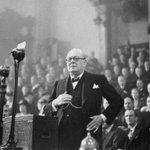

That might be the worst New Zealand national anthem I’ve yet heard. #anzacwarriors
12
259
We Kiwis all know a Chloe…

Chloe woke up at 6:45am and immediately felt proud of herself.
She had, after all, not eaten a single animal product in four years. The planet was healing. She could feel it.
6:52am - Applied her morning SPF. The SPF contains beeswax. Chloe does not know this. Moving on.
7:10am - Breakfast: a smoothie containing avocado. The avocado was grown in Michoacán, Mexico, on land where a pine forest was until 2019. It required approximately 320 litres of water to produce. It was flown to the UK. Chloe sprinkled hemp seeds on top. The hemp seeds came from China. Chloe felt connected to the earth.
8:00am - Got dressed. Polyester leggings, derived from crude oil. A bamboo top that was processed using carbon disulphide in a Taiwanese chemical plant. Trainers with a recycled plastic upper that sheds microplastics into waterways with every wash. Chloe's outfit today had a higher carbon footprint than a ribeye steak. Chloe does not know this either.
9:30am - Posted on Instagram about choosing compassion. The phone was manufactured in a Shenzhen factory using cobalt from the DRC, where mining operations have displaced local communities and killed an unknowable number of small mammals, reptiles, and insects. The algorithm served Chloe an ad for oat milk. Chloe liked it.
12:00pm - Lunch: tofu stir-fry. The soy was grown in Brazil. Brazil produces more soy than almost any country on earth. The primary reason is soybean oil: one of the most widely used industrial and culinary oils on the planet. The soymeal left over after oil extraction is fed to livestock as a byproduct. Chloe is aware of the livestock connection and finds it outrageous. She has not looked into why the soy was grown in the first place. The answer is the oil. The oil is in her salad dressing.
1:30pm - Drove to the garden centre. The car runs on petrol. Chloe has a Just Stop Oil sticker on the bumper. This is not being commented on further.
3:00pm - Bought a monstera. The monstera was grown in a Dutch greenhouse using natural gas heating. Chloe put it next to the pothos that is slowly poisoning the neighbourhood cats.
6:00pm - Dinner: pasta with cashew cream sauce. The cashews were processed in Vietnam, often by workers in conditions that would prompt significant commentary if they were in an abattoir.
8:00pm - Watched a documentary about factory farming. Wept. Posted about it. Caption: "We have to do better."
Chloe is, by every measure she has chosen to measure by, doing brilliantly.
By some of the others, the picture is more complicated.
Chloe has not chosen to measure by those.

13
507

Anto Coates retweeted

Still my favorite song 😁 @AnthonyOCoates

Anto Coates retweeted

OUR FREE-SPEECH DOCUMENTARY HAS BEEN CANCELLED
THE RICH MIX CINEMA HAS BANNED OUR PREMIERE, BECAUSE OUR FILM DOES NOT ALIGN WITH ITS ‘VALUES’.
You would think that banning a documentary about free speech would be a bad look for a cultural institution. But that’s precisely what Rich Mix in east London has just done.
We were all set to hold the premiere of our documentary, Think Before You Post, about the rise of the British speech police, at Rich Mix on Tuesday 25 November. But last night, we received an email saying the venue would be ‘terminating [our] booking contract’.
‘Since confirming your booking, it has come to light that the content and speakers featured do not align with our values and mission here at Rich Mix’, reads the email. ‘Our founding objectives are to support marginalised communities (primarily communities facing racial inequity), promote intercultural understanding, eliminate racial discrimination, and foster equality of opportunity through arts and culture.’
Those of you who have watched the documentary might be wondering what this is getting at. After all, the film is about the people who have been arrested, prosecuted and even held on remand for alleged speechcrime – even though they hadn’t said anything the least bit hateful.
Rich Mix claims that the ‘nature of the event was not fully disclosed to us upon booking’. This is despite the fact the documentary was already available to watch online when we snagged the slot. And all of the speakers who were due to take part in the post-screening Q&A were in the film itself.
I wish I could say I was surprised. The cultural sector is overrun with woke scolds who wouldn’t know what free speech is if it bit them on the backside. The gentleman who emailed us about the cancellation naturally had his pronouns in his email signature, too.
This isn’t even the first time our documentary about censorship has been censored. On X, it has been slapped with age restrictions, despite having no age-inappropriate content in it, thanks to the illiberal Online Safety Act.
I suppose we should be happy to have been proven right. But vindication is cold comfort when it comes at the cost of a great evening of screening the film and discussing it with our contributors, friends and – most importantly – supporters.
If you have bought tickets, please bear with us. We are working flat-out to find a new venue for the same night. But if we fail to do so, we will of course refund everyone in full, and postpone for a later date. (If you’d like a refund now anyway, just get in touch and we’ll process it.)
In any case, we are determined not to be silenced. Clearly, the core message of Think Before You Post – for free speech and against censorship – is more important than ever. Even if it doesn’t jive with the sacred ‘values’ of Rich Mix.

Ardern “leading NZ through crises after crises”…

She led a nation through crises after crises while you turned your creepy little obsession into Temu-style parody songs.
Years later she’s a global icon — and you’re still obsessed with her? #Rentfree doesn’t even begin to cover it.
Seriously. Get help.
1
6
347
If only politicians of the left in New Zealand understood this point better. But then if they did, they probably wouldn’t be on the left.

Roads are what you get when you let the people decide.
They’re cheap. Flexible. Distributed. They don’t require central planning — they are planning, done in parallel, bottom-up, by millions. Every driver chooses their route, their timing, their mode. And from that decentralized swarm of local decisions, something astonishing emerges: a transportation network that scales, adapts, and evolves.
Trains? They only work when the stars align — when population density is absurdly high, routes predictable, demand constant. Otherwise, they’re fixed, fragile, and catastrophically expensive. You have to get it all right in advance.
Roads, you don’t. They’re the free market made asphalt.
Trains are the five-year plan — brilliant on a whiteboard, brittle in reality.
One empowers.
The other presumes to know better.
Anto Coates retweeted

Jeremy Clarkson has had his Hawkstone beer advertisement banned by the Advertising Standards Authority.
Seems alright to me … so what’s the problem ?
Anto Coates retweeted

You’ve heard of the Precautionary Principle, but we desperately need a new principle too—one I call the Intervention Culpability Principle.
The Precautionary Principle is often misunderstood as “we should take all precautions when there are perceived dangers.” But that’s not what it says.
What it actually says is that the burden of proof is on those proposing novel interventions to show that they will be both effective and low-harm.
Why? Because society culturally evolves into somewhat optimal configurations over time, without a central designer. Most interventions perturb that evolved system and are more likely to cause harm than improvement.
History confirms this: some of the greatest human-caused catastrophes—especially mass deaths by governments—were driven by well-intentioned but destructive interventions.
That’s the why behind the Precautionary Principle: absent strong evidence, we should assume new interventions will degrade things, not improve them.
But here’s what we’re missing: a principle for what happens after interventions are already in place.
Take COVID as a case study. The baseline mainstream assumption is that the interventions worked:
•They slowed the spread
•They saved hospitals
•The costs were minimal
•They weren’t responsible for the COVID deaths
Meanwhile, skeptics—largely ignored—have had to try to prove the opposite:
•That the interventions didn’t slow the spread
•Didn’t protect hospitals
•Caused widespread harm
•And may have even been responsible for many of the COVID deaths
But why is the burden on skeptics?
Why isn’t it on the interventionists—the people who supported lockdowns, mask mandates, forced vaccinations—to prove that their actions worked?
Just as the Precautionary Principle says that the default assumption before an intervention should be skepticism, we need a post-intervention principle that assumes failure by default—until convincingly proven otherwise.
This is especially vital when:
•Interventions were implemented hastily
•Under fear and moral panic
•Without serious cost-benefit analysis
•While violating civil liberties
•And with narrative pressure to appear virtuous
So here’s the new principle:
⸻
The Culpability Principle
The burden is on those who supported novel interventions to prove that they worked as advertised—and did not cause major harms.
They must fully and independently audit the consequences of their interventions, starting from the assumption that they failed and caused harm.
And this is especially critical when:
•The Precautionary Principle was never observed
•Civil liberties were suspended
•Interventions were deemed “common sense” without evidence
•Dissenters were vilified
⸻
Together, the Precautionary and Culpability Principles reflect the same core wisdom:
Our greatest threats come from our own actions.
They’re the pre- and post-game rules for responsible societal behavior.
Before intervention:
“Prove your plan won’t screw things up.”
After intervention:
“Prove your plan didn’t screw things up.”
⸻
Some will say, “But if an intervention has already happened, won’t it be obvious whether it worked?”
Not at all.
Especially not when powerful actors are incentivized to retroactively justify their actions, and where narratives form to cast them as both saviors and saints.
Both principles tie to the Hippocratic idea: “First, do no harm.” But more precisely, they define where the burden of proof lies when change is introduced—before and after.
So, to be precise in naming:
•The Intervention Precautionary Principle – burden of proof before action
•The Intervention Culpability Principle – burden of proof after acti
I notice nobody’s even bothering to farewell the terrible year just been as they did in 2020 and 2021. The realisation has finally dawned that the messed up state of the world is permanent.
1
23
593
Anto Coates retweeted

We at The Babylon Bee are endorsing Kamala Harris. Our CEO @sethdillon explains what makes her so great.


It’s telling that they illustrate Green Party ads like a kids’ picture book. It’s a childish utopian view of politics.

Two days left to vote whānau. The future is up to us. ✅✅

ALT I'm voting Green for.. Green streets & spaces Safe bike lanes & footpaths Authorised by Miriam Ross, Level 5, 108 The Terrace, Wellington. Homes powered by the sun Tree-lined streets Fast, frequent, & affordable electric buses Light rail in AKL, WGTN, & CHCH Warm, dry & affordable homes for all Flood-resilient design
12
973


A very important read for anyone trying to wade through the sea of mortality data from Covid-19. I think I might call it a syndemic from now on.

Syndemic is an important word. It connotes the aggregation of two epidemics that exacerbate the burden of disease. Where two diseases are present, there are statistical methods that can be used to assess which the important one is. /1 @jengleruk @profnfenton @MartinNeil9

2
425