
A Mumbai based strategic research thinktank, focusing on key issues impacting India nationally & internationally.
Mumbai
Joined November 2021
- Tweets576
- Following0
- Followers488
- Likes15


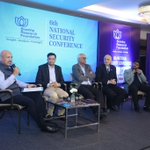
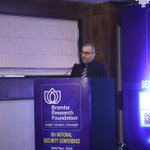


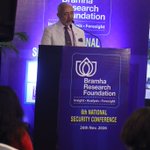


Bramha Research Foundation thanks our distinguished speakers including military , Government and corporate leaders, global security experts, diplomats, technologists and innovators who shared their valuable insights and perspectives at our 6th National Security Conference, marking the 18th anniversary of the 26/11 Mumbai terror attacks.
The discussions covered AI-driven warfare, human capital and technological sovereignty, maritime security and the strategic frontier of the Andaman & Nicobar Islands, defence indigenisation and self-reliance, India's steadfast stand against terrorism with our partner countries, Operation Sindoor and India's new security 'normal' and future of war.
We appreciate the speakers and participants for their unwavering commitment to strengthening India's national security and combating terror in all forms.


1
1
72
Vice Admiral Atul Anand, PVSM, AVSM, NM (Retd), former Additional Secretary, Department of Military Affairs, moderating the panel session on Atmanirbharta in defence with Ankur Kothari, CEO, Kusumgar; Abhishek Singh, Sr VP- Defence (India and South East Asia), Rolls-Royce; Eyal Calif, SIBAT, Ministry of Defence, Israel and Sandeep Maheshwari, Sr. VP & Co-head Defence & Space, 360 ONE.
Honoured to have this distinguished panel at our 6th National Security Conference examine what true self-reliance in defence demands. Key takeaways from the discussion:
1. Real self-reliance means owning the whole value chain. Ankur Kothari argued that sovereign manufacturing cannot stop at assembly or build-to-print and must cover raw materials, chemistry, metallurgy and design.
2. Exporting makes Indian manufacturers better for the Indian military. Kothari said that bidding for contracts abroad keeps a company upgrading its capabilities and that Kusumgar has moved from importing to exporting parachutes and camouflage solutions while offering a stronger product to India's own forces.
3. Co-development is the route to engine self-reliance. Abhishek Singh said technology transfer alone does not build resilience and that Rolls-Royce is working towards a co-development model for the AMCA programme in which the intellectual property created is owned by Indians. He described its planned partnership with Reliance and an envisaged gas turbine complex covering the full life cycle and stressed academic collaboration such as the project announced with IIT Kanpur.
4. International partnership strengthens self-reliance when it rests on trust. Eyal Calif said India-Israel cooperation works best between like-minded democracies with strong people-to-people ties and complementary strengths. He added that partnerships should grow from procurement to co-production and joint innovation and that business logic, intellectual property and export questions must be settled from the start.
5. Private capital is now backing defence and space. Sandeep Maheshwari explained that 360 ONE invests from seed to late stage in areas such as electronic warfare, ISR, advanced manufacturing and radar and named visibility of order timelines and faster testing and certification as the biggest pain points for portfolio companies.
6. Delivery and collaboration matter more than intent. The panelists asked for more caution in publishing sensitive specifications, a shift from competing to collaborating within the ecosystem and a review of foreign OEM norms in the DAP. Calif added that self-sufficiency means what can be sustained in the field and not only what can be produced.
We thank Vice Admiral Atul Anand, Ankur Kothari, Abhishek Singh, Eyal Calif and Sandeep Maheshwari for practical insights on indigenous value chains, exports, co-development, international partnership and private investment and for sharing the policy changes that would help Atmanirbharta deliver.


1
32
Palak Shah, Managing Editor, Businessworld, moderating the panel "Finance System- National Security Perspective" with Dharmesh Mehta, MD & CEO, DAM Capital and Navneet Munot, Managing Director & CEO, HDFC Mutual Fund.
Honoured to have this distinguished panel at our 6th National Security Conference examine whether India's financial markets are a national security issue. Key takeaways from the discussion:
1. Financial markets are a security frontier and not only an economic one. Palak Shah argued that a country can be attacked without a shot being fired through stolen market data, manipulation and cross-border money flows that leave Indian investors with the losses and that the physical borders have been far better guarded than the markets.
2. India's market infrastructure has shown strong cyber resilience but the threat keeps evolving. Dharmesh Mehta credited the exchanges and their cyber teams for protecting the markets at very large transaction volumes and cautioned that continued investment is essential as cybercrime grows smarter with AI.
3. Domestic savings are becoming a structural shield. Navneet Munot said India's older vulnerability to foreign capital flows has eased with the growth of SIPs, which now let domestic investors cushion foreign selling and support the economy's resilience while giving more Indians a stake in the country's growth.
4. The panel did not agree on how effective regulation has been. Palak Shah questioned whether enforcement is fast enough in cases of market manipulation and illicit money. Dharmesh Mehta and Navneet Munot credited an increasingly proactive regulator and India's transparency and disclosure standards. Mehta also drew a distinction between manipulation by individuals which can be caught and punished and an attack on the system itself.
5. Investor awareness is part of financial security. Navneet Munot highlighted SEBI studies showing that most retail traders lose money and described HDFC Mutual Fund's Nivesh Samriddhi programme which takes product-free investor education to armed forces families and personnel from Ambala to Jammu and Pune to Agartala.
6. Capital markets can back indigenisation and defence. Munot said investor confidence in Indian defence companies has grown with government policy on indigenisation, exports and positive lists while Mehta said capital markets now recognise the growth story in defence and surveillance and cautioned against valuations running too far ahead.
The discussion set out two views on one question: whether India's markets are well protected or need tougher and faster enforcement against manipulators and illicit money. Bramha Research Foundation thanks Palak Shah, Dharmesh Mehta and Navneet Munot for a candid session on cyber resilience, regulatory credibility, domestic participation and the link between financial markets and national security.


34
MEDIA COVERAGE for our 6th National Security Conference.
Official release from Lok Bhavan Maharashtra: Hon'ble Governor of Maharashtra Jishnu Dev Varma, at our 6th National Security Conference, said:
1) The concept of national security now encompasses internal security, cyber security, maritime security, economic and energy security and the protection of critical infrastructure, data and emerging technologies.
2) Developing indigenous capabilities in artificial intelligence, quantum technology, cyber security and advanced defence systems and achieving self-reliance in the defence sector is the need of the hour.
lokbhavan.maharashtra.gov.in…
1
68
Adv. Ashish Shelar @ShelarAshish, Minister for Electronics, IT, Al and Cultural Affairs, Government of Maharashtra, speaking on the sidelines at our 6th National Security Conference said:
Bramha Research Foundation's National Security Conference is a vital platform for strengthening India's preparedness against evolving traditional, digital and cyber security threats.

Bramha Research Foundation's National Security Conference is a vital platform for strengthening India's preparedness against evolving traditional, digital and cyber security threats.
#Mumbai #AshishShelar
1
21
Yaniv Revach @yanivrev , Consul General of Israel to Mid-West India, speaking at our 6th National Security Conference:-
1) He underlined the similarities between the 26/11 and 7 October attacks, including the state-sponsored religious fundamentalism that fuelled them, their heinous nature and the selective expectations of restraint from the victims by the world community.
2) He said Israel remembers India's staunch support in the dark times of 7 October, as shown by PM Modi's unequivocal condemnation of the attack before anyone else and that state sponsors of terrorism like Pakistan, Qatar and Turkiye continue to pose a threat to the security of both nations.
3) India and Israel have had historically close relations. May both nations continue to cooperate in this joint fight against terrorism and ensure greater security for them and the world community at large.

Had the great pleasure of attending and addressing the gathering at the 6th National Security Conference organised by @BRFOnline at the magnificent @TajLandsEnd.
I underlined the numerous similarities between the 26/11 and October 7 attacks, including the state sponsored religious fundamentalism that fuelled them, the heinous nature of these attacks and the selective expectations of restraint from the victims by the world community.
I informed the audience of how Israel remembers India's staunch support in the dark times of October 7 as demonstrated by PM Modi's unequivocal condemnation of the attack before anyone else. It also recognises how state sponsors of terrorism like Pakistan, Qatar and Turkiye continue to pose a threat to the security of both nations.
As the Middle East reinvents itself with the rise of the Mecca Agreement, it is pertinent for all nations to note the ever present security threat presented by rogue states like Iran and Pakistan. Let's hope that countries across the world, especially in Europe realise this patent fact.
India and Israel have had historically close relations, with the Jewish community in India being its most vibrant example. May both nations continue to cooperate in this joint fight against terrorism and ensure greater security for them and the world community at large.
#CounteringTerrorism
#IndiaIsraelFriendship
#NeverForgiveNeverForget2611


1
49
MEDIA COVERAGE for our University of Mumbai Guest Lecture.
Air Chief Marshal Ashutosh Dixit, Chief of the Air Staff, speaking at our University of Mumbai Guest Lecture on the 18th anniversary of 26/11, said:-
1) It happened in 2008, and we could not give a response. But after that, whatever events like this have happened, we have been able to give a befitting response. The best response you have seen was in Operation Sindoor, which is still ongoing.
2) The "new normal" has acted as a deterrent: terror and talks will not go together, water and blood will not flow together and the differentiation between a terrorist and his supporter will no longer be there.
3) On Samvidhan Diwas, he recalled that the Constitution places on every citizen the duty to defend the country and paid homage to the 166 lives lost and the bravehearts of 26/11.
ndtv.com/india-news/air-forc…

1
1
86

#WATCH | Mumbai, Maharashtra: Air Chief Marshal Ashutosh Dixit says, "We want to be a developed country, we want to be Atmanirbhar, we want to have a great say in global affairs, and we want to have each and every person in India feel very proud that he is part of Bharat. That is the vision of Viksit Bharat."
1
5
#WATCH | Mumbai, Maharashtra: Air Chief Marshal Ashutosh Dixit says, "Youth is very important because they are the future of our country. We say that we will be a developed country in 2047, and that is the time, the people who are 20-22 years of age will be holding all the responsible positions. They are the ones who will make India developed. The most important is this cognitive domain. People are getting affected by social media. I also want to give this message to the youth: please be very careful in what you believe, what you forward, what you read, what you understand, because social media is full of lies and all different things which are not very healthy..."
4