

Anti-aging, performance & cellular vitality ⚡️ Red Light Therapy • Methylene Blue • Carbon 60 • Urolithin A • Mushrooms • Oral Care • Skin Care • More Coming!
United States
Joined March 2019
- Tweets550
- Following14
- Followers845
- Likes897




BioLight retweeted

Red light therapy may be changing more than your oral tissue. 🦷🔴
New research is exploring a fascinating connection between photobiomodulation and the oral microbiome.
The twist? PBM may not need to directly kill bacteria to influence the microbial ecosystem.
By supporting mitochondrial signaling, circulation, inflammation, saliva, and tissue repair, red and near-infrared light may change the environment those microbes live in.
Maybe better oral health isn’t always about attacking the microbes.
Maybe it’s about improving the environment they live in.
BioLight retweeted
Daily or every other day… how often should you actually use red light therapy? 🚨⚡️
For general wellness, the evidence points toward consistent, appropriately dosed PBM — and there’s no convincing evidence that healthy tissue needs a mandatory 48-hour break between sessions.
⚡ PBM triggers transient mitochondrial + redox signals
🧬 Those signals can be stimulated regularly
📉 But more isn’t always better, as PBM has a biphasic dose-response
The takeaway: daily moderate-dose sessions can make sense for general wellness, while every-other-day remains a solid option. The key isn’t simply frequency — it’s getting the dose right.
🤖 Made with AI

BioLight retweeted
Scientists just injected a patient’s own mitochondria directly into her eyes 👀
The goal? To see whether healthy mitochondria could help rescue severely damaged retinal and optic-nerve cells.
The early result was intriguing: light-response activity returned temporarily — although measurable vision did not.
It’s only one case, and far too early to call it a treatment. But the concept is remarkable:
What if damaged cells could one day be re-energized by replacing their mitochondria?
Mitochondrial medicine may be entering an entirely new era.
BioLight retweeted
C60 just got a lot more interesting ⚡️
New 2026 research found that a modified C60 fullerene dramatically enhanced the effects of heat-based cancer therapy — boosting cancer-cell apoptosis while suppressing migration by up to 87%.
One key mechanism? Downregulation of HSP70, a survival protein cancer cells use to resist heat stress.
Important: this was an in-vitro study using a specially modified C60 molecule, not evidence that C60 supplements treat cancer.
But it adds another fascinating layer to the emerging science of fullerenes as potential therapeutic nanomedicines.
BioLight retweeted
Addiction may not be powered by dopamine alone. It may also be powered by mitochondria. 🧠⚡
New 2026 research suggests addictive drugs can hijack mitochondrial calcium signaling, ramping up cellular energy to help sustain massive dopamine release.
Even more fascinating: disrupting this mitochondrial pathway reduced drug-driven dopamine release and addiction-related behaviors in mice — while largely preserving natural reward responses.
The research is preclinical, but it reveals a fascinating possibility:
The dopamine rush may only be half the story. The mitochondria powering it may be the other half.
BioLight retweeted
Can just 5 minutes of near-infrared light help rescue stressed brain cells? 🚨⚡️🧠
In a new laboratory study, near-infrared light helped amyloid-stressed mouse neurons repair damaged mitochondrial networks — the cellular power systems responsible for producing energy.
After treatment, researchers observed:
⚡ Partial restoration of ATP
🛡️ Reduced oxidative stress
🔗 More connected mitochondrial networks
📈 Improved neuronal survival
The important caveat: this was a cell study — not a human trial, and not evidence that photobiomodulation treats Alzheimer’s disease.
But the findings point toward an intriguing idea:
Protecting the brain may start with protecting its mitochondria.
If future human trials confirm these effects, photobiomodulation could become an increasingly interesting tool for supporting brain health and healthy aging.
BioLight retweeted
C60 is more than just another antioxidant. ⚡
From mitochondrial protection and oxidative-stress defense to inflammation support, recovery, and healthy aging, this unique carbon molecule is getting serious attention in the longevity and wellness space.
Swipe through for the Top 5 Reasons to Supplement w/ C60 ➡️
Potential benefits are based largely on preclinical research; human clinical data remain limited.

BioLight retweeted
How Kris Gethin uses his BioLight Ember circadian light 🌅
@kris_gethin
BioLight Ember: biolight.shop/products/ember
BioLight retweeted
⚡️💧 Methylene Blue: More Than Just a Dye?
A new scientific review analyzed thousands of published papers and identified 26 studies examining methylene blue’s effects on mitochondria, brain health, tissue regeneration, and healthy aging.
Here’s the simple version:
✅ Helps support mitochondrial energy production by improving how cells generate ATP
✅ May reduce oxidative stress, helping protect cells from excess free-radical damage
✅ Appears to support the body’s natural cellular cleanup and renewal processes, including mitophagy (the removal of damaged mitochondria)
✅ Shows promise for supporting brain health and cognitive function
✅ Early research suggests benefits for skin health, including improved hydration, collagen support, and protection against UV-related damage
✅ Photodynamic applications of methylene blue may also help support wound healing and tissue repair
Perhaps most interestingly, methylene blue appears to act as an “electron shuttle,” helping energy flow through the mitochondrial electron transport chain when parts of the system aren’t functioning optimally.
That said, it’s important to keep the science in perspective.
⚠️ Methylene blue remains investigational for many of these applications.
⚠️ Proper dosing matters.
⚠️ Individuals with G6PD deficiency and those taking certain serotonergic medications require special caution.
⚠️ More large-scale human clinical trials are still needed to fully establish long-term safety, efficacy, and optimal use.
The takeaway?
Methylene blue continues to be one of the most fascinating compounds in mitochondrial medicine, with emerging research suggesting potential benefits for cellular energy, brain health, healthy aging, and tissue regeneration. The early findings are promising — but the science is still evolving.
📚 Resource: Kavasogullari, C., Demirel, M., Roiatti, I., & Sari, B. (2026). Methylene blue a scoping review: biological effects in mitochondrial health, neuroprotection, aesthetic, and regenerative medicine. Longevity, 7(1). doi.org/10.1080/30653495.202…

BioLight retweeted
✨ Gold Nanoparticles + Light: A New Frontier in Precision Medicine
What happens when you combine nanotechnology with light?
Researchers are developing tiny gold nanoparticles that can be activated by specific wavelengths of light—creating highly targeted therapeutic effects with remarkable precision.
Here’s how it works:
🟡 Gold nanoparticles are engineered to accumulate in diseased tissue.
💡 When illuminated with the right wavelength (often near-infrared light), they absorb the energy and convert it into localized heat.
🔥 This heat—and the reactive oxygen species (ROS) it can generate—can selectively damage targeted cells while minimizing harm to surrounding healthy tissue.
Why is this exciting?
✅ Highly targeted treatment
✅ Minimally invasive approach
✅ Potentially fewer side effects
✅ Applications being explored in cancer therapy, infectious diseases, drug delivery, and beyond
While much of this work is still in the research and clinical development stages, gold nanoparticle photothermal therapy represents one of the most promising examples of how light-based technologies may transform the future of precision medicine.
Sometimes, the future of medicine isn’t just about discovering new drugs—it’s about finding smarter ways to deliver energy exactly where it’s needed.
📚 Source:
Rao, J., et al. Gold Nanoparticle-Based Photothermal Therapy: Recent Advances and Future Perspectives. Journal of Photochemistry and Photobiology C: Photochemistry Reviews (2025), along with recent 2025 reviews on gold nanoparticle-mediated photothermal and photodynamic therapies published in Nanoscale Advances and Nanomaterials.

BioLight retweeted
🧠 Your brain doesn’t just need protection — it needs energy.
Two newly published studies explored red and near-infrared light therapy in two completely different populations: collegiate football players and adults with ADHD.
One study found that near-infrared light helped stabilize brain markers associated with repetitive head impacts across an entire football season. The other showed improved impulse control and increased oxygen delivery to the prefrontal cortex after just a single treatment in adults with ADHD.
Different conditions. Different goals. The same underlying mechanism.
Both studies point toward one powerful concept: brain health begins with bioenergetics.
When mitochondria produce and utilize energy more efficiently, brain cells are better equipped to manage inflammation, utilize oxygen, and maintain healthy function.
While these are early studies and much larger clinical trials are still needed, they reinforce an exciting idea: supporting the brain’s energy systems may help improve both resilience and performance.
Because whether the goal is protecting the brain or optimizing it, it all comes back to cellular energy. ⚡🧠
BioLight retweeted

🚨 The Wait Is Over. BioLight Labs Has Arrived. 🚨
For years, BioLight has been focused on helping you optimize your health through light, energy, and mitochondrial wellness. Today, we’re excited to take the next step in that mission…
🤖 Made with AI

BioLight retweeted

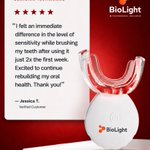
I spent 10 months using red & near-infrared light therapy for teeth & gums.🦷This review covers pros & cons of the @BioLightShop Guardian, what my dentist said at my checkup after the first 11 wks, plus input from functional dentistry leader @doctorstaci
youtu.be/2NlY_T1Bncs
BioLight retweeted
Key Points From Episode:
⚡️ ALS may not start only in motor neurons; it may start with hypothalamic energy-control failure.
⚡️ The hypothalamus is the body’s metabolic thermostat/control room (hunger, weight, hormones, energy use).
⚡️ Hypermetabolism + weight loss are common in ALS and correlate with worse outcomes — this may be upstream, not just secondary.
⚡️ In ALS models, hypothalamus shows early mitochondrial dysfunction before symptom onset.
⚡️ Key mitochondrial finding: reduced maximal respiration + reduced spare respiratory capacity (“backup power” loss).
⚡️ Changes are region-specific: hypothalamus shows the strongest coordinated mitochondrial/inflammatory signature vs hippocampus/cerebellum.
⚡️ Early astrocyte and microglia activation appears alongside metabolic reprogramming toward glycolysis.
⚡️ Melanocortin circuitry disruption: decreased POMC neurons, increased AgRP-related signaling → altered energy balance control.
⚡️ Timing matters: these shifts occur before major motor symptoms, implying causal relevance.
⚡️ TMZ (trimetazidine) given early restored hypothalamic bioenergetics, reduced glial activation, normalized circuit features, delayed onset, extended survival (mouse data).
Article: sciencedirect.com/science/ar…

BioLight retweeted
The science is finally catching up.
Red light therapy isn’t just another wellness trend. It’s a window into how light directly interacts with human biology.
From helmets to full-body systems, people are investing in long-wavelength light for one reason: energy at the cellular level.
Beneath the hype, the mechanism is simple—but powerful:
Light → mitochondria → ATP → function
When you support the mitochondria, you don’t just “feel better”—you change how your body produces, manages, and sustains energy.
And that’s where things get interesting.
Because this isn’t about quick fixes or surface-level benefits.
It’s about biological leverage—tapping into the systems that drive recovery, resilience, and longevity.
The future of health isn’t just chemical.
It’s photonic.

BioLight retweeted
Doesn’t sunlight do this for free? 🌞

David Sinclair's lab is using AI to build a pill that reverses aging for $100.
Right now, their gene therapy costs roughly $10 million to manufacture. It requires a direct injection into the target organ.
That's not going to work for 8 billion people.
So Sinclair's team made a breakthrough. They found that the three age-reversal genes aren't the only path to resetting cells.
They discovered CHEMICALS that do the same thing.
In mice, they can now give an animal a liquid — not genes, not injections, a drink — and rejuvenate tissues in 4 weeks.
Sinclair says it's now normal for his students to casually report: "We just rejuvenated the ear. We just rejuvenated the skin. We just cured ALS (motorneuron disease) in these animals."
He calls his lab "Willy Wonka's chocolate factory" because the discoveries blow him away every week.
But he wants one molecule that does everything. So they used AI to screen 8 BILLION candidates. They're now down to three molecules that work. And they're using AI to try to combine all three into one.
The gene therapy could cost over $100,000 per treatment. Sinclair's goal: "What if it could be $100 instead? That's what I'm working for. I want to democratize this technology so anyone even in Kenya can take these medicines."
They should know within a year or two if the molecules work in mice.
The gene therapy is the proof of concept.
The pill is the endgame.
— @davidasinclair
BioLight retweeted

First, gratitude where it’s due.
We do NOT get here without the support from @BioLightShop and @MahinaToken . Their contribution has been immeasurable. 🙏
BioLight retweeted
⚡️ Mitochondrial Wisdom ⚡️
Most people chase symptoms, but almost all roads lead back to the same bottleneck: a declining mitochondrial membrane potential. When ∆ψm drops, electron flow slows, ATP production falters, and the cell shifts from creation to survival.
This is why fatigue, inflammation, metabolic dysfunction, and premature aging so often appear together; they’re downstream of the same energetic failure...


BioLight retweeted
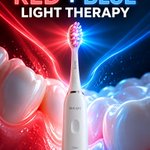
The Illume Sonic Toothbrush improves oral health with red and blue light therapy, helping prevent issues linked to heart disease and more! 🦷
#oralhealth #lighttherapy #hearthealth #wellness #health