

Seed VC, GP at Partech. Genuine passion for working closely with Founders, supporting and challenging them through their ups & downs.
France
Joined September 2014
- Tweets1.7K
- Following59
- Followers3.8K
- Likes3.7K



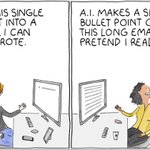

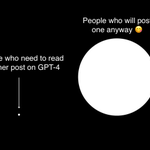

How it started: mistaking AI videos for real videos
How it's going: mistaking real videos for AI videos
1
128
Boris Golden retweeted

A few thoughts on the current state of venture capital.
When the Music Is Playing
In July 2007, a few weeks before the credit markets seized up, Chuck Prince, then the CEO of Citigroup, gave an interview to the Financial Times. The line everyone remembers is this one: "As long as the music is playing, you've got to get up and dance." He was mocked for it for years afterward, and he lost his job a few months later. But I have come to think he was saying something honest. He wasn't claiming the music would play forever. He was admitting that he couldn't sit down while it was still going, and neither could anyone else in his seat.
I've been thinking about that quote a lot lately, because right now is the most disorienting period in venture capital I can remember, and I have been doing this for a while.
Here is what makes it disorienting. It's not that things are bad. Some things are spectacular. We have companies in our portfolio growing faster than anything I have seen in my career, and I don't say that lightly. At the same time, we have companies with no revenue, no product, and a founding team you could fit in a conference room raising billions of dollars at valuations of $10 to $50 billion. Both of these things are true at once, and if you try to reason about them with the same framework you will drive yourself crazy.
Two ideas have helped me make sense of it. Neither is mine.
The first is reflexivity, which George Soros has been writing about since the 1980s. In most of life, perception follows reality: the weather is what it is, and your opinion of it changes nothing. In markets, it runs the other way too. Prices change what participants believe, and what participants believe changes the prices. The feedback loop can run for a long time, and while it's running it looks exactly like progress.
Here is how reflexivity is playing out in AI. Full disclosure: Menlo is an investor in Anthropic, so read the following with that in mind. People watched a frontier lab go from a $4 billion valuation to $18 billion, then $60 billion, then $180 billion, then $380 billion, and now something close to a trillion. They drew the obvious conclusion: that is what a neo lab looks like. So the next neo lab gets priced off that path, not off anything it has built. Then it gets marked up in a subsequent round, and the markup itself becomes the proof. Look at Thinking Machines. Look at Reflection. At that point valuation has stopped being an output of the metrics and has become the metric. Nobody is discounting cash flows. They are discounting the last round.
Soros is very clear about one thing, and it's the part people skip: you cannot know when or how a reflexive process ends. You only know that it does. Every one of them has.
The second idea is Chuck Prince's, and it explains why smart people keep dancing even when they can see the loop for what it is. As far as I can tell, there are two groups on the dance floor.
The first group got in early. Firms like ours were in some of these AI companies before the numbers got silly, and the paper gains are enormous. When you are sitting on gains like that, you start to feel like you're playing with house money. I have been around long enough to know that house money is the most dangerous kind, because you don't respect it the way you respect money you had to earn.
The second group missed the early rounds and knows it. Their LPs know it too. So they are trying to make up for lost time by writing very large checks very late, which is the one strategy almost guaranteed to turn a missed opportunity into a real loss.
House money on one side, FOMO on the other, and reflexivity feeding both. That's the whole story. Everyone has a reason to keep dancing, and the reasons are different, which is why nobody can talk anyone else off the floor.
So what do you do? The instinct in our business is to answer with company identification: just pick the right neo lab and you'll be fine. I think that's the trap. When price has become the signal, being right about the company is not enough, because you can be right about the company and still be wrong about the price by a factor of ten. The public-market investors I admire figured this out a long time ago. They spend as much time on how much to own as on what to own.
The winners in venture over the next decade will be the firms that treat portfolio composition and position sizing as seriously as they treat sourcing. How much of the fund is in companies whose valuation rests on the last round rather than on revenue? What happens to the portfolio if the reflexive loop breaks next year instead of in five? Those are not exciting questions. They are the ones that will matter.
The music will stop. It always does. Dance if you must, but know where the chairs are.
Boris Golden retweeted

This is wild.
143 million people thought they were catching Pokémon. They were actually building one of the largest real-world visual datasets in AI history.
Niantic just disclosed that photos and AR scans collected through Pokémon Go have produced a dataset of over 30 billion real-world images. The company is now using that data to power visual navigation AI for delivery robots.
Players didn't just walk around with their phones. They scanned landmarks, storefronts, parks, and sidewalks from every angle, at every time of day, in lighting and weather conditions that staged photography would never capture. They documented the physical world at a scale no mapping company with a fleet of vehicles could have replicated on the same timeline or budget.
Niantic collected this systematically, data point by data point, across eight years, while users thought the only thing at stake was catching a rare Charizard.
The most valuable AI training datasets in the world aren't being assembled in data centers. They're being built by people who have no idea they're building them.

POKÉMON GO PLAYERS TRAINED 30 BILLION IMAGE AI MAP
Niantic says photos and scans collected through Pokémon Go and its AR apps have produced a massive dataset of more than 30 billion real-world images.
The company is now using that data to power visual navigation for delivery robots, letting them identify exact locations on city streets without relying on GPS.
Source: NewsForce
Boris Golden retweeted

I got the chance to write a guest post on @OpenAIDevs Blog about 15 lessons learned building ChatGPT Apps.
developers.openai.com/blog/1…
If you're building Apps, I think it's worth a read!

Boris Golden retweeted

Today we’re launching KORA, the first public benchmark for AI child safety.
nitter.cf/korabench/status/20187…


Boris Golden retweeted

Stéphane Mallat (médaille d'or CNRS): l'IA n'est pas un perroquet stochastique, elle généralise ; "calculer des probabilités conditionnelles, c'est découvrir la structure du problème", et c'est cela l'intelligence, bien davantage que la logique... même en maths, et même pour nous
Boris Golden retweeted

programming always sucked. it was a requisite pain for ~everyone who wanted to manipulate computers into doing useful things and im glad it’s over. it’s amazing how quickly I’ve moved on and don’t miss even slightly. im resentful that computers didn’t always work this way
Boris Golden retweeted

Un article paru ce jeudi 12 juin dépeint un tableau très éloigné de la réalité concernant Sorare. La trajectoire économique de notre entreprise est fidèle au plan que nous exécutons depuis plusieurs années.
Après avoir investi des sommes importantes pour conquérir le marché entre les années 2021 et 2023, Sorare est désormais proche de la rentabilité.
Ces résultats récompensent nos efforts importants menés ces dernières années pour (i) faire évoluer le modèle d'affaires de Sorare, en générant $50m de CA dès la première année (2024), (ii) réduire méthodiquement nos coûts (notamment de partenariats, divisés par 5), (iii) mettre à disposition de nos utilisateurs ce qui reste à ce jour le plus vaste portefeuille de partenaires sportifs du gaming.
L'ensemble des ces éléments nous permettra de finir l'année 2025 avec un “burn” en forte baisse, une trésorerie plus importante qu'initialement projetée, et des projets forts de croissance pour accélérer notre développement durable et rentable.
Nous construisons, étape par étape et avec détermination, un groupe indépendant et innovant avec les moyens de ses ambitions : être le leader mondial du divertissement sportif.
Boris Golden retweeted

Some key takeaways:
1. 90% of Claude’s code is now written by Claude Code, and this has completely transformed how they build products. The bottlenecks have shifted from engineering (writing code) to decision-making (what to build) and merge queues (getting code into production). This is happening faster than anyone expected—Mike thinks most companies will reach this point within a year.
2. Claude Opus 4 has crossed a critical threshold where it has become a genuine thought partner for strategy. Mike now uses Claude as his go-to product strategy partner, and for the first time, it provides novel angles he hadn’t considered. This shift from “helpful but obvious” to “genuinely creative” happened just in the past month.
3. Anthropic isn’t trying to beat ChatGPT at consumer mindshare—instead, it’s doubling down on differentiation and focus. Anthropic is leaning into their strengths: developers love them, builders use them to create things, and they excel at agentic behavior and coding. Mike’s advice: “Embrace who you are and what you could be rather than who others are.”
4. Product teams working directly with AI researchers drive 10x more value than those just building UX on top of models. Mike has shifted almost all product resources to embed with research teams, working on post-training and fine-tuning rather than just using models off the shelf. If you’re building something anyone could build with public APIs, you’re missing the opportunity.
5. MCP (Model Context Protocol) might be the most important thing Anthropic has shipped. It’s already the fastest-growing standard in tech history, with Microsoft integrating it into Windows. The vision: everything becomes an MCP endpoint, making the entire digital world scriptable and composable by AI agents.
6. The skills to teach kids in an AI world: curiosity, scientific thinking, and maintaining independent thought. Mike’s daughter perfectly captured it: “You can ask Claude, but I know I’m right.” Don’t outsource all cognition to AI—maintain the ability to think independently and verify claims.
7. When building AI products, work at the edge of model capabilities and be willing to break things. The best companies using Anthropic’s APIs are those that pushed the limits with earlier models, hit walls, and then were ready when new capabilities emerged. Cursor and Lovable both took off when Claude 3.5 came out because they’d been testing the boundaries.
8. For AI startups worried about getting crushed by big companies, focus on three moats: deep domain expertise (like Harvey in legal), differentiated go-to-market with specific customer knowledge, and completely new interaction paradigms that incumbents can’t easily copy. Plus, don’t underestimate the power of true startup urgency.
9. The future of product metrics in AI isn’t engagement—it’s actual value delivered. When Claude helps Mike prototype something in 25 minutes that would have taken six hours, that’s the metric that matters. Traditional engagement metrics can be misleading, when one good conversation could be 2 messages or 200.
10. Mike’s previous startup, Artifact, failed despite being loved because mobile web is broken, news doesn’t spread virally, and remote work made pivots nearly impossible. The biggest lesson: know when to call it. They had “10 units of input for 1 unit of output”—the energy just wasn’t there. Sometimes shutting down is the right call to free everyone up for more impactful work.
What AI agents need to be trusted, robust & relevant and thus adopted widely:
1/ Company-specific context (knowledge, culture, goals),
2/ Accountability (transparency & auditability),
3/ Coordination (w/ agents+humans),
4/ Dedicated tools (to work well). buff.ly/4bnYKAe
5
262
"A good idea means a bird’s eye view of the idea maze, understanding all the permutations of the idea & the branching of the decision tree, gaming things out to the end of each scenario. [F]ew can think through all the branches [beyond the maze entrance]." buff.ly/4jUl7kF
206
Very inspiring! When not taking for granted the expert opinions saying it's impossible, working from first principles without knowledge from the space, and being very lean, make an unexpected disruption happen!
Still so many things left to invent & build! buff.ly/4hXxhas
Great post on how what a company needs to move forward changes dramatically before & after product-market fit! buff.ly/4fMRhuQ
Boris Golden retweeted

Today OpenAI announced o3, its next-gen reasoning model. We've worked with OpenAI to test it on ARC-AGI, and we believe it represents a significant breakthrough in getting AI to adapt to novel tasks.
It scores 75.7% on the semi-private eval in low-compute mode (for $20 per task in compute ) and 87.5% in high-compute mode (thousands of $ per task). It's very expensive, but it's not just brute -- these capabilities are new territory and they demand serious scientific attention.


Boris Golden retweeted

RISK REWARD AT SERIES A VS SEED
From a LP update: “we saw the Series A go from the least attractive, risk adjusted round in 2020-21 to the most attractive in 2023.”
For the most part, I think this is right. Investing in a pre-product company at $15m post money valuation versus investing in a $1-2m ARR company at $24m pre / 30m post, means you are paying a 60% premium (24 / 15) in exchanging for massive derisking.
Different from when A was done at $42m pre / $50M post, so you were paying 3x premium (42 / 15) for the same derisking.
Boris Golden retweeted

🚨 IMPORTANT : le très sérieux journal Washington Post, vient de publier un article très fouillé sur l'appui de la Russie au Rassemblement National de Marine Le Pen depuis 2022. Pire : Poutine a mobilisé des armées de trolls pour diviser la société française. Je vous explique 🧵

Boris Golden retweeted

Quick lesson in the dangers of data contamination. Years ago, I came up with an acronym for remembering the periods of the Paleozoic era — “Catastrophic Overthrow Started Different Colder Period”. I was curious if ChatGPT could guess what it stood for. 1/4 – at West Midlands, England

"It’s become fashionable to say that everything can be empirically answered by data. The ethos, especially in product, is unless you are doing everything as an experiment, then you are doing it wrong. And I disagree with that." buff.ly/47Ua9ox
2
309
I'm astonished that a question as simple as "Does the calling for the genocide of [you name it] violate the code of conduct of your university" isn't a straight, wholehearted, unambiguous "YES, of course!".
What a massive & deep failure of morality, humanity and leadership...

The presidents of @Harvard, @MIT, and @Penn were all asked the following question under oath at today’s congressional hearing on antisemitism:
Does calling for the genocide of Jews violate [your university’s] code of conduct or rules regarding bullying or harassment?
The answers they gave reflect the profound moral bankruptcy of Presidents Gay, Magill and Kornbluth.
Representative @EliseStefanik was so shocked with the answers that she asked each of them the same question over and over again, and they gave the same answers over and over again.
In short, they said:
It ‘depends on the context’ and ‘whether the speech turns into conduct,’ that is, actually killing Jews.
This could be the most extraordinary testimony ever elicited in the Congress, certainly on the topic of genocide, which to remind us all is:
“the deliberate killing of a large number of people from a particular nation or ethnic group with the aim of destroying that nation or group”
The presidents’ answers reflect the profound educational, moral and ethical failures that pervade certain of our elite educational institutions due in large part to their failed leadership.
Don’t take my word for it.
You must watch the following three minutes. By the end, you will be where I am.
They must all resign in disgrace.
If a CEO of one of our companies gave a similar answer, he or she would be toast within the hour.
Why has antisemitism exploded on campus and around the world?
Because of leaders like Presidents Gay, Magill and Kornbluth who believe genocide depends on the context.
To think that these are the leaders of Ivy League institutions that are charged with the responsibility to educate our best and brightest.
On the bright side, our congressional leaders deserve accolades for showing tremendous leadership and moral clarity in their statements, by the questions they asked, and the respectfulness with which they conducted the hearing.
It was a masterclass of how our government and democracy should operate.
If you have time, please watch the entire hearing. Throughout the hearing, the three behaved like hostile witnesses, exhibiting a profound disdain for the Congress with their smiles and smirks, and their outright refusal to answer basic questions with a yes or no answer.