

Building AI to create a better world for pets @MarsGlobal
Germany
Joined November 2013
- Tweets2.9K
- Following781
- Followers315
- Likes1.9K



Michael Fitzke retweeted

We’re sharing a solution to the Navier-Stokes Millennium Prize Problem, one of the deepest problems at the frontier of mathematics.
The proof was produced by a group of agents, using an OpenAI next-generation model significantly more capable than GPT-6 Astra.
The problem concerns whether the description of smooth three-dimensional fluid motion modeled by the Navier-Stokes equations can break down. It has remained unresolved for roughly 90 years.

Michael Fitzke retweeted

looool the irony


The era of unprovable AI writing just ended.
Starting August 2, every new Claude model weaves an invisible watermark into the words it generates. Copy it, paste it into an email, a blog post, a college essay, and the watermark travels with the text. Anthropic will publish the detection method so anyone can check, which means your professor, your boss, and the platform you post on can all run the same test you can.
Here's the part almost nobody knows. Google has been doing this to Gemini since 2024. Every Gemini answer you've read for two years carried a hidden signature, and Google barely mentioned it. Claude joining means the two most-used writing models on earth now sign their own work.
Think about what this ends. The entire appeal of AI writing was deniability. Your cover letter, your LinkedIn post, your term paper, your "personal" apology email. Nobody could ever prove a machine wrote it, and everyone quietly relied on that. The labs themselves just decided to hand out the proof.
The mechanism is the wild part. The model tilts its word choices according to a secret key, and across a few hundred words those tilts form a pattern a detector can confirm.
The writing carries its own confession in the sentence structure.
Paraphrase hard enough and it washes out. Short snippets slip through too. But the default just flipped. AI text used to be innocent until proven guilty.
Now it ships pre-confessed.


Hiking on Prince of Wales Island in Alaska. Took the photo of that fallen tree right before climbing over it.
This Post is from a suspended account. Learn more
Michael Fitzke retweeted

AI Models are valuable, but datasets and evals to train AI models are more valuable.
Datasets are valuable, but automated data pipelines that generate the datasets are more valuable.
*** Model < data < pipeline ***
At least until the models start building pipelines. Still far and unsafe.
Michael Fitzke retweeted

> Mom, can we have a type system?
> No, we have a type system at home
The type system at home:
# (B, C, T)
It's because ZIRP is over


Michael Fitzke retweeted

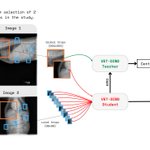
DeepSeek finally released a new model and paper. And because this DeepSeek-OCR release is a bit different from what everyone expected, and DeepSeek releases are generally a big deal, I wanted to do a brief explainer of what it is all about.
In short, they explore how vision encoders can improve the efficiency of LLMs in processing and compressing textual information. And the takeaway is that rendering text as images and feeding that to the model results in more efficient compression than working with text directly.
My first intuition was that this sounds very inefficient and shouldn't work as well as using text tokenizers (or alternatives like Byte Latent Transformer) to prepare the input. It actually reminded me of the line of research I saw years ago, where researchers represented 3D molecules as 3D inputs or 2D images for ConvNets instead of using graph neural nets. This shouldn't work well and should be prone to overfitting.
In the case of DeepSeek-OCR, why even try such an approach? I imagine it started as a curiosity, but then it may have turned into an interesting idea for long-context scaling in LLMs and how to make it cheaper by using vision tokens and representations. (An image can say more than a thousand words, but who would have thought that an image of text can say 1000 words more efficiently!)
In any case, this DeepSeek-OCR approach turns out to be surprisingly efficient. In particular, they found that at a fixed precision of 97% for long-context decoding (i.e., how well the model can compress information into a latent representation and reconstruct it), the OCR version needed 10 times fewer visual tokens than text tokens. In other words, the OCRed version can compress information 10x better than the text version.
How is it different compared to other VLLM architectures?
- They don't use a monolithic ViT as encoder, instead they fuse local and global vision features through a clever 16x convolutional compressor (this can handle high-resolution inputs efficiently in terms of memory and token counts).
- They are (to the best of my knowledge) those who use an MoE as a decoder.
I think it's an interesting, refreshing approach, and the twist here is that it works surprisingly well.
However, I don't think that visual representations of text will solve the limitations of LLMs. Also, while it is popular to dislike text tokenizers like BPE, image representations are messy as well (one has to deal with aspect ratios, resolutions, croppings, color intensity variations, brightness levels, etc.). Still, it’s an interesting idea. Also, if this approach is more efficient than regular black&white text, I am curious to see compression ratios when we add syntax color to code.
Regarding code, this may be an interesting alternative for storing contextual information, as spacing and subword tokenization remain challenges in traditional tokenizers. (Especially when working with code that uses many custom variable names that may not be represented in vocabularies and that have to be broken down into many individual subword tokens.)
Overall, it’s still such an esoteric concept to encode text in images that I am (still) surprised it could do well (and may it would only make sense for very long documents or special domains like OCR or code, not general language modeling).
(PS: Personally, I expected the DeepSeek team to follow up with a V4 model using the sparse attention mechanism they tried in V3.2 recently, but maybe that's still forthcoming. Now, after reading this paper, V4 is perhaps going to be a VLLM.)





Michael Fitzke retweeted

Should be "what we wish they represent" as this intuition breaks for high-dim. data arxiv.org/abs/2110.09485 + the encoded features are biased from the decoder/rec. loss arxiv.org/abs/2402.11337. Use joint-embedding instead: arxiv.org/abs/2205.11508 -> recovers the data coordinates


Michael Fitzke retweeted

Every tool is "superhuman", in the specific use cases relative to it. Otherwise we would not use it.

Incredibly important, often overlooked

Domain in ML projects,
MLEs need domain knowledge from experts or product teams.
As a beginner, it’s not critical unless you’re building MVPs or freelancing. Understanding data features matters more than just model accuracy.
I’ve worked in real estate and e-commerce (Amazon marketing) and still need data context. Even if a model has high precision and recall in A/B testing, it’s useless if it doesn’t boost business revenue.
We build models to make better decisions over large data patterns. Research domains and features, experiment with AI, and build real projects. In real work, collaborate with experts, product teams, or the CEO.
Michael Fitzke retweeted

i saw this guy’s video on simulating gravity in C++ and that pushed me into learning OpenGL (failure lol).
now he’s back with another one simulating black holes.
he incorporated ray tracing, Einstein’s field equation, Schwarzschild solution to the field equation, space-time, everything.
what an insanely cracked man. @KavanSG

Really not a good sign if Gary Marcus is that gracious

GPT-5 hot take
• took almost 3 years, many billions of dollars
• good progress on many fronts
• but still part of the pack, not a giant leap forward (e.g. Grok 4 beats it on ARC-AGI-2 results)
• not the huge leap forward people long expected
• lots of questions TBD about real-world performance
• obviously not AGI
Also:
• pricing is good, but profits may continue to be elusive; still no clear technical moat.
• what was up with those graphs (at least two) where the bars didn’t match the numbers? Did GPT-5 make them??
Quote of the day: “I dont wanna read anything about exponential progress anymore” - @flowersslop


