
@CollignonPeter
Account based inAustralia
About this account
- Account based in
- Australia
- Connected via
- Australia App Store
Account-level information from X, not a live location or the device used for a specific post.
Infectious Diseases Physician and Microbiologist. Professor Medical School. Australian National University. Views are my own.
Canberra Australia
Joined July 2012
- Tweets36.8K
- Following383
- Followers12.7K
- Likes36





Prof Peter Collignon retweeted

🆕💥🔴Culture results of heart valves resected from patients with active Enterococcus faecalis infective endocarditis undergoing heart valve surgery: insights into duration of antibiotic treatment required to achieve valve sterilisation.
📖 Infection | 2026 | Briggs et al.
#idxposts #IEWiki
link.springer.com/article/10…

Patients with EFIE who received valve surgery within 14 days of commencing antibiotic treatment had a very high valve culture positivity rate and this rate continued at moderate levels for those who received surgery after 14 days. We observed no difference in valve culture positivity rates when ceftriaxone or gentamicin was used as the sole pre-surgery synergistic antibiotic. The valve samples that remained culture positive after prolonged antibiotic treatment may help explain the higher relapse rate of patients with EFIE who do not receive valve surgery when compared with patients with other causes of IE.

🆕💥🔴Culture results of heart valves resected from patients with active Enterococcus faecalis infective endocarditis undergoing heart valve surgery: insights into duration of antibiotic treatment required to achieve valve sterilisation.
📖 Infection | 2026 | Briggs et al.
#idxposts #IEWiki
link.springer.com/article/10…
Prof Peter Collignon retweeted

China reduced extreme poverty fast, but Indonesia hasn’t been far behind.
China is often the poster child for rapid reductions in poverty, and for good reason. In the early 1980s, over 90% of its population lived in extreme poverty, but by the early 2020s, that number had dropped to nearly zero.
Some might assume that China is the only reason why global extreme poverty has declined. But that’s wrong: many countries have seen dramatic reductions in poverty, too. Indonesia is one clear example; it’s shown alongside China on the chart.
In 1984, 86% of Indonesians lived on less than $3 per day. By 2025, this had fallen to less than 4%. While it didn’t quite match China’s decline, it has still been impressive. The number of people living in extreme poverty has fallen from 140 million to about 10 million.
Note that the international poverty line is extremely low, defined as people living on less than $3 per day. But Indonesia has also made progress when measuring higher poverty lines.
(written by @_HannahRitchie and @parriagadap)

Prof Peter Collignon retweeted

Yet in France people burn cars on the streets once somebody mentions a higher retirement age…

Prof Peter Collignon retweeted
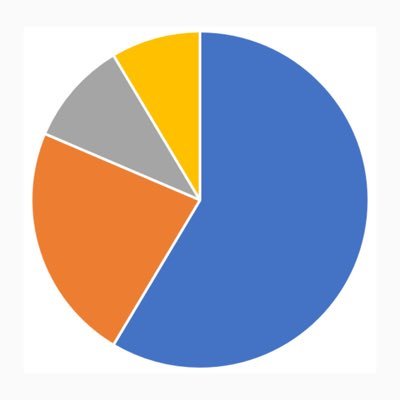
🌿 World's best cities for quality of life, 2026
1. Canberra 🇦🇺: 100
2. Bergen 🇳🇴: 94.3
3. Singapore 🇸🇬: 91.6
4. Grenoble 🇫🇷: 90.8
5. Bern 🇨🇭: 89.8
6. Oslo 🇳🇴: 89.3
7. Luxembourg City 🇱🇺: 89.0
8. Dresden 🇩🇪: 88.5
9. Ghent 🇧🇪: 88.4
10. Paris 🇫🇷: 88.1
11. Basel 🇨🇭: 88.0
12. Linz 🇦🇹: 88.0
13. San Jose 🇺🇸: 87.9
14. Zurich 🇨🇭: 87.7
15. Berlin 🇩🇪: 87.7
16. Munich 🇩🇪: 87.3
17. Sydney 🇦🇺: 87.2
18. Prague 🇨🇿: 86.9
19. Stuttgart 🇩🇪: 86.5
20. Venice 🇮🇹: 86.3
21. Freiburg 🇩🇪: 86.1
22. Seattle 🇺🇸: 85.9
23. Antwerp 🇧🇪: 85.7
24. Hsinchu 🇹🇼: 85.3
25. Padua 🇮🇹: 85.3
26. Taipei 🇹🇼: 85.2
27. Valletta 🇲🇹: 85.2
28. Genoa 🇮🇹: 85.1
29. Utrecht 🇳🇱: 85.0
30. Bratislava 🇸🇰: 85.0
Source: Oxford Economics, Global Cities Index 2026
Prof Peter Collignon retweeted
Child mortality has declined in all world regions.
In 1950, almost one in four children worldwide died before their fifth birthday. In Africa, one in three children died.
The chart shows the change since then. In every region, the mortality rate of children has declined.
In Africa and Oceania, the child mortality rate declined 5-fold, in Asia 10-fold, and in Europe about 27-fold.
Progress was not always steady. The sharp spike in Asia around 1960 was due to the “Great Leap Forward” famine in Mao’s China, the deadliest famine in recorded history.
And the progress is far from finished. The global average has declined to 3.5%, but this still means that about 4.7 million children younger than five years died in 2025 — 13,000 children every single day.
(written by @MaxCRoser)

Prof Peter Collignon retweeted

It goes even further. There has never been a fatal jet airline crash for any passenger airline coming to or from Australia on a direct flight.


In this study we did, even thought females and people who were older used much more antibiotics, the resistance rates on their E.coli isolates causing serious disease was lower.
“Female sex was associated with lower odds of resistance for most agents, except ampicillin and trimethoprim–sulfamethoxazole. Resistance varied non-linearly with age, generally peaking in early to middle adulthood. Associations between area-level antibiotic dispensing and resistance were weak and frequently inverse.”
papers.ssrn.com/sol3/papers.…
We just finished this study that shows socioeconomic factors seem to have much more influence on the levels of Superbugs seen in sub populations rather than antibiotic usage volumes.
We need different strategies if we ant to better control the global Superbugs problem
Interpretation: Population-level resistance was strongly patterned by socioeconomic and demographic conditions plausibly related to exposure and transmission, whereas local total antibiotic dispensing showed no consistent positive association with resistance. These findings do not diminish the established role of antibiotic exposure in selecting resistance within individuals but suggest that population patterns cannot be explained by consumption alone. AMR control should therefore complement antimicrobial stewardship with greater attention to the transmission and acquisition of resistant organisms.
papers.ssrn.com/sol3/papers.…
Prof Peter Collignon retweeted

The post shows that the facility was engaged in gain-of-function research on bioweapon agents (Brucella having been a bioweapons agent used in pre-BWC offensive BW programs).
Such research has no--zero--civilian or defensive military applications. Its sole applications are for discovery, development, and characterization of new BW agents for offensive BW.


Prof Peter Collignon retweeted

This reminds me of
"Everything we eat both causes and prevents cancer"


“An amazing takedown from @econpragmatist and @Dr_A_Stein.”
@ATabarrok on @TheBTI’s debunking of recent nuclear-and-cancer research.
marginalrevolution.com/margi…

Prof Peter Collignon retweeted
"The involvement of Russia’s national-level...leadership, FSB escort of ambulances, and coordination with specialist institutes in Novosibirsk, Moscow, and St. Petersburg reflects the Category A bioterrorism-tier classification of select pathogens in national emergency frameworks"
nationalreview.com/the-morni…

Prof Peter Collignon retweeted
25 years ago today, Robert Stevens, an employee at American Media Inc., was diagnosed with inhalation anthrax, becoming the first identified victim of a sociopathic US Army bioweapons-agents researcher who mailed anthrax spores to media outlets and Congress.

Prof Peter Collignon retweeted

What’s the evidence on rent control?
I charted the findings from 112 studies:
Great for rent-controlled tenants ✅
But:
Pushes up rents for other people ❌
Pushes down new housing construction ❌
Pushes down building quality ❌

Prof Peter Collignon retweeted

"The outlet said staff at the Irkutsk Anti-plague Research Institute of Siberia and the Far East had reportedly been isolated inside the institute since 2 October." theguardian.com/world/2026/o…

Prof Peter Collignon retweeted

Plague naturally occurs in about 26 countries. This infection is readily treated with antibiotics, but can still cause a severe infection.
Russia (and others), has/had biological weapons programs, including significant work involving plague - something to watch.

Prof Peter Collignon retweeted
There are very few details released.
Any potential breach in laboratory procedure (especially one that leads to infection/death) should have a swift response with maximum transparency to the communities impacted.

Russian authorities are responding to an incident in which a suspected dangerous infection was released as a result of a laboratory accident in Siberia and a researcher died. cnn.it/4yy0wJR


Prof Peter Collignon retweeted
This journal article on ancient trade networks connecting Roman and Asian empires features a cool map showing the trade routes between China and Rome. I love history maps like that! Source: buff.ly/3movjV8

