

Columnist and chief data reporter @FinancialTimes | Stories, stats & scatterplots | Senior fellow @LSEdataScience | [email protected]
Doncaster ➡️ London
Joined June 2009
- Tweets66.1K
- Following6.2K
- Followers476K
- Likes58.8K


Pinned Tweet
NEW: I’m not sure people fully appreciate how dire the US life expectancy / mortality situation has got.
My column: enterprise-sharing.ft.com/re…
And some utterly damning charts.
1) at *every* point on the income distribution, Americans live shorter lives than the English.

John Burn-Murdoch retweeted

Sidenote: the minister didn't actually realise before we pulled him into the studio that he was about to do this on live TV. Fair play to him...

'The minister has very bravely offered to go through some of the charts from the budget'
@dantomlinsonmp joins @EdConwaySky at the screen to talk through the numbers behind today's announcement
trib.al/WOFfeba
📺 Sky 501, Virgin 602
John Burn-Murdoch retweeted

Brutal judgement from the OBR on the supply side frictions that have made UK house-building unviable across many sites.


John Burn-Murdoch retweeted

Iran is executing athletes. Several more are now on death row. Please, please retweet as the only thing that has shown any potential to deter the regime is international scrutiny and pressure theguardian.com/global-devel…

John Burn-Murdoch retweeted

wrote about AI AS THE INFINITE WORK MACHINE, creating a world where we're all just constantly deploying agents to fight against everyone else's agents, running constantly to end up in the same place:
bloomberg.com/news/newslette…


John Burn-Murdoch retweeted
I've been in France since 2002 and have never seen the streets so violent nor the politics so extreme. From the sacking of the supermarket on my street to the prospect of Présidente Le Pen, here's me @FT including thoughts from 2 French Nobel laureates as.ft.com/r/addcad57-0f9d-4e…

John Burn-Murdoch retweeted

You love to see it. RIP protectionism as populism.
wsj.com/economy/trade/how-ta…

John Burn-Murdoch retweeted

New Substack post with @soumitrashukla9. Work has never been just about the income earned sans effort costs, as typical in economic models. Key aspects of people’s identity, their meaning, and sense of agency are all wrapped up with what they do for a living.
There has been a lot of conversation lately about how technological change, particularly AI, may disrupt this relationship, from Ezra Klein's column on his own mathematician father’s grapplings with losing meaning in mathematics, to Francis Fukuyama's post on AI, agency, and recognition. In this piece we take a historical perspective on how technological transformation has disrupted identity and meaning by affecting jobs, and how workers and society responded to these changes.
Much of the debate around AI and jobs has centered on wages and material consequences, but losing one's work is also intertwined with how people view their place in society. Most people know about the Luddites—skilled weavers and knitters—who protested the devaluation of their mastery. What’s less known is that the Luddites were actually experts in using the machines as well, and that their protests prompted prominent economists like David Ricardo to rethink the role of automation in society, and later inspired the Arts and Crafts movement. A century later, when recorded sound displaced 20,000 cinema musicians, their campaign against "canned music" and two-year recording ban pressured labels into funding live performance.
Soumitra and I have been working on versions of this essay for months. He led the piece, and we’re both really excited to get it out there.
Link to the post here: aleximas.substack.com/p/tech…


The most revealing part of this conversation between Jon Stewart and Jacob Coxon wasn't Coxon's warning about A.I. doom, but his description of A.I. utopia, and Stewart's incredulous response. I wrote about it — and Francis Fukuyama's "Last Man," and A.I. easily solving the problems that bedeviled my father's field of mathematics for decades — here: nytimes.com/2026/10/18/opini…

John Burn-Murdoch retweeted

The most revealing part of this conversation between Jon Stewart and Jacob Coxon wasn't Coxon's warning about A.I. doom, but his description of A.I. utopia, and Stewart's incredulous response. I wrote about it — and Francis Fukuyama's "Last Man," and A.I. easily solving the problems that bedeviled my father's field of mathematics for decades — here: nytimes.com/2026/10/18/opini…

Former Anthropic researcher Jacob Coxon (@hilbertspaess) and Jon Stewart discuss AI, jobs disappearing, universal income, and whether tech CEOs are creating a dystopian future
John Burn-Murdoch retweeted

John Burn-Murdoch spoke to Jimmy’s Jobs of the Future about what the data is really telling us about the AI jobs debate ft.trib.al/bxE9oyU
📺🎙️ @jimmym | @jburnmurdoch | @FT

John Burn-Murdoch retweeted

I've been thinking a lot about data bottlenecks, and I'm not sure who else is screaming this from the hilltops. I feel like I'm taking crazy pills looking at the jagged frontier thinking it's smooth if you order by data volume.
the spikes in the jagged frontier are tasks with tons of data (either static or simulated; think math, programming, games), and the valleys are tasks with little or no data (cooking a lasagna, olfaction, manufacturing a passenger train). I don't know of any exceptions.
if you order the jagged frontier by data it looks like a spiral frontier. models are superintelligent where we have enormous data, and progressively less so as we have less data. some tasks may draw data from static lakes of data, some may be from limitless waterfalls from simulators that convert compute into data. but ultimately, intelligence on a task is proportional to the data absorbed by the model for that task.
scaling laws are real. if you are not bound by compute or algorithms (increasingly we are not), then intelligence is proportional to data. since we don't have a very good notion of task similarity, it's often difficult to know if data for one task will help you with another, without training a model and seeing. but, it doesn't seem like chess data helps much with math performance and vice versa. so when I refer to data, I refer to data that is task-relevant.
maybe we call this the 'no shortcuts hypothesis'. all the rules-of-thumb about learning are at the root, the same -- Malcom Gladwell's 10,000 hours, Moravec's Paradox, Scaling Laws, the Bitter Lesson, Age of experience. If your learning system (model, brain, whatever) is unconstrained by compute, intelligence is proportional to accumulated experience. no shortcuts. want to be superhuman at chess? play all the chess, more than the whole species combined (good thing a model can do that in 24 hours). want to be superhuman at math? build a math simulator and lock the model in it and run it faster than reality. superhuman at coding? first, collect all public examples of humans writing and responding to code ever, make the model learn from that first, and then lock the model in a simulator where it fixes bug after bug, faster than realtime.
superhuman at image generation? no shortcuts. but here, we don't have a simulator. so now we're moving around the spiral frontier away from closed-loop into large static lakes. still big enough to be superhuman though, which also applies to video, text, and audio. oh! and once you have a superhuman model, you can use it to bootstrap other tasks by making a superhuman model a judge on other tasks.
let's keep marching along the spiral frontier, out of the realm of data abundance, simulators and large static lakes.
biology? no shortcuts. go get a ton of data. and be freaking careful! you can get bad data in biology pretty easily. tilting a well plate 5 degrees the wrong way can ruin an experiment. so make sure you understand the domain, otherwise you're going to have to filter a lot out.
robotics? no shortcuts. get the data. if you can build a simulator, do it, but be mindful our simulators don't have perfect correspondence with reality. so, build an arm farm. fold 1M shirts, put 1B balls in cups. play ping pong forever.
olfaction? no shortcuts. smell the world. build a laboratory of chemical sensors, an international network of trained sensory panelists, a scent production factory, and link them all together. make millions of samples. smell millions of samples. take billions of chemical sensor readings.
I totally buy super intelligence as a concept because I feel it, I use it for coding, the breakthrough math results speak for themselves. I see RSI coming, because how could an all-digital task like ML research and model building not fall to the current paradigm? But the notion that AI will come for everything, all at once, irrespective of domain, feels silly, because there are no shortcuts. if you want a specific form of intelligence, you have to get the data.
looking at you @willdepue, I feel like we're both seeing the same thing
🤖 Made with AI

John Burn-Murdoch retweeted

New post:
"Drowning in slop"
Large parts of the state are being increasingly overwhelmed with complaints, appeals, objections.... written by AI. It's gumming up every process.
How bad has it got and what can we do about it?
samf.substack.com/p/drowning…
John Burn-Murdoch retweeted

These NYC apartments are standing empty, not because the owners don't want to rent them, but because rent stabilization laws prohibit them from charging enough to earn back the costs of necessary repairs.
My latest for @WSJFreeEx
John Burn-Murdoch retweeted

It's out today!
I'll be sharing a lot more about Generation Uncoupled in the coming days. But for now, I just want to express my profound appreciation to all those involved in getting here. My research team at the Survey Center, AEI colleagues, my editor at Penguin Random House, the publicity team and the 100+ young people who were willing to share their thoughts and experiences on dating, politics, family and so much more.
I'm extraordinarily grateful. Read it here: penguinrandomhouse.com/books…

John Burn-Murdoch retweeted

Cannot think of anyone who knows more about jobs data than John Burn Murodch
🏗️ Where is AI impacting job market most?
📈Are software engineering jobs bouncing back?
🍼 The impact of the fertility crisis on the future of the workforce
@jburnmurdoch on @JimmysJobs out now
John Burn-Murdoch retweeted

THE REAL IMPLICATION OF THE AI MATH BREAKTHROUGHS
I wrote about an element of AI that needs to get more discussion. The best public models will always be far behind what the labs can work with internally.
Think about what this means for intelligence-intensive industries.


John Burn-Murdoch retweeted

Humanity memeing itself into a demographic doom spiral in exchange for likes


Why people don’t want to have children any more ft.trib.al/N1OcrMQ

John Burn-Murdoch retweeted

"Even “normal” general-purpose technologies are initially volatile and dangerous, even those we come to think of as unalloyed goods." theargumentmag.com/p/the-nig…
Completely agree, and appreciate @DKThomp citing us making that very point. Emphasizing AI's similarity to past general purpose technologies should put more focus on this destabilization, not less.
"Practically every major technological revolution has been, at least partly and briefly, an economic, social, or political catastrophe. From this reading of history, it would be odd if AI arrived without significantly destabilizing some part of our world for the worse."

John Burn-Murdoch retweeted

Alex Imas told me directly that his Twitter/X account has been hacked. Please don’t click links or respond to DMs from his account until he regains access. @Support, can you help? If anyone has a contact at X, please let me know. Please share.
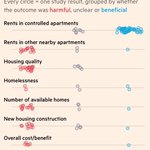
What’s the evidence on rent control?
I charted the findings from 112 studies:
Great for rent-controlled tenants ✅
But:
Pushes up rents for other people ❌
Pushes down new housing construction ❌
Pushes down building quality ❌

In particular, where one big reason rents are rising is a housing shortage, rent controls do nothing to address that and may worsen it.
Here’s my full article on the right and wrong lessons to learn from Spain’s housing crisis ft.com/content/437ca3f0-9db4…

And here’s the meta-analysis where I got the data for the chart on the impacts of rent control: sciencedirect.com/science/ar…