

Chief Economist & Head of Research @panmureliberum Former @cabinetofficeuk @dwp. 🏏 @hmtreasury. @thetimes columnist. 🚴♀️ tours & 🐝-keeping. Views are my own
London
Joined February 2012
- Tweets16.4K
- Following1.4K
- Followers21.4K
- Likes13.8K





Simon French retweeted

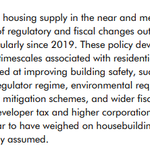
The udpated list of government's additional costs on house building, now including its new 'Your First Home' scheme tax from April.
Every few months I have to update the list for the latest extra cost government adds & the next one it announces.
#ukhousing #Budget2026

This is the Treasury taking greater control of UK energy policy - and long overdue. It is a thoughtful summary by Dan. An amnesty on any new policy costs and row back on new hydrogen costs are particularly welcome.
The big question for me is whether the AR8 and AR9 auctions can attract capacity and projects that “lower bills”. This speaks to the need for a coordinated supply side agenda that supports lower cost of construction of energy infrastructure, and a lower cost of capital. Else these auctions will fail on their own terms.

This Budget is the start of a new energy pathway that the 10 Year Plan will build on. The priority is to bring energy costs down to help British business to compete, and British households to cope. And cheaper electricity will boost electrification, increasing our energy security and helping to decarbonise the whole economy.
What does this mean? First, it means a focus on levies and policy costs on bills. The Conservatives added £100 to everyone's bill via levies in their last decade in power. Labour has cut £150 from bill costs already. But today, John Healey has drawn a line in the sand, with the announcement that we will add no new costs to energy bills, with a comprehensive cost control framework to follow at the spending review. The Chancellor is also junking plans, first set out by the Tories, to add on up to around £10 a year on bills to pay for hydrogen projects.
Second, it means taking account of the interaction between the pace of grid build-out and the pace at which renewables are added to the grid. The NAO have said that investment in expanding the transmission network declined in real terms between 2016 and 2020, just when it was clear that more intermittent power meant we would need more capacity. It is now forecast to rise to over £10bn a year. But with growing constraint and distribution costs, it's right that the system costs of all new power are considered. That is why we will only procure clean power through AR8 (the next auction round) if we are confident it will lower bills. And we will reform the contract for difference by AR9 to support building the lowest cost system, fixing market distortions and siting assets in the right place.
The evidence is clear, clean power is an essential part of the route to cheap power, and the overall approach of seeking to get ourselves off the gas-price rollercoaster to the right one. Gas is setting the electricity price less and less every year. If it wasn't for adding renewables to the grid in recent years then the current Iran price shock would have been worse for families and businesses. The Conservatives and Reform's ideological anti-renewables approach is the wrong one and fails in the face of evidence on how to protect bill payers from shocks and the need to make ourselves less reliant on foreign dictators. We'll take a pragmatic approach to get bills down.
Getting electricity prices down, ensuring new clean power does not run ahead of the grid, is also the credible route to reaching our net zero goals. The decarbonisation that we want to enable in our homes, on our roads and in our businesses, is six times larger than that still to be achieved from getting to a clean grid. Unless we make electricity cheaper relative to other energy sources, we will struggle to increase adoption of EV and heat pumps.
Early start with @seanfarrington and @bbc5live to pick the bones out of yesterday’s Budget. Now remember, no tired, fat fingers on all these buttons….

A government of calculation, not conviction. My thoughts on where today's Budget leaves the UK's economic growth mission thetimes.com/business/econom…

Very honest from Paul on spending. I am not that much kinder in my own Times piece (online shortly) on the growth agenda.

John Healey got his can and gave it an almighty kick down the road
thetimes.com/article/27e6b41…

Brutal judgement from the OBR on the supply side frictions that have made UK house-building unviable across many sites.


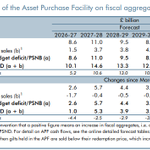
The OBR sees the lifetime costs of the APF as being ~£50bn lower (-£114bn vs -£164bn) - largely as a result of the Bank of England's recent announcement to warehouse £120bn of long-dated Gilts. Whilst doesn't help the near-term fiscal forecast (indeed the costs of the HMT indemnity have gone up vs March) it does suggest the MPC's recent decision was helpful (at the margin) for the UK's public finances.

And @KemiBadenoch is spot on to do so!

Simon French retweeted

Badenoch channelling @Frencheconomics on the rationing of labour, capital and energy
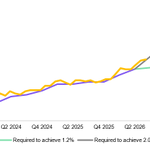
How significant was this Budget compared to previous fiscal statement? Not very. Cumulative tax and spending decisions worth an absolute £31bn across the forecast horizon. No fiscal event of recent vintage has been as inconsequential.

Simon French retweeted

We want the best entrepreneurs to start, scale and stay in Britain.
That’s why we’re backing businesses at every stage of growth, including with a new Founders’ Relief to encourage founders to scale here and reinvest in the next British success story.
Simon French retweeted

Sounds like landlords being hit – again. They already face relatively high taxes. Higher rates will discourage investment. Expect higher rents.
Simon French retweeted

Last night I said watch out for bringing back Entrepreneurs Relief.
Say hello to... Founders Relief!
10% CGT on first £10m of gains just like Entrepreneurs Relief used to be.
Will be interesting to see precise eligibility rules.

My @Channel4News discussion last night with @krishgm and @iMattPound is here: what to expect today and what are the risks of a steady-as-she-goes Budget?
channel4.com/news/budget-doe…

Growth as the primary mission - an update. A vacuous statement if the supply side trade offs needed to achieve >2% growth are not being grasped.

10Y Gilt yields lower than the open despite the reduction in fiscal headroom to £15bn from £24bn. Treasury will be delighted at that shrug from financial markets.
Very thoughtful from Raoul. And I agree. I would add that if those big questions on defence spending, reforming welfare & social care, cost of construction/ energy/ employment/capital all remain parked by next summer then the criticism of a "do-no-harm" approach in Budget 2026 becomes more valid.
I will reserve judgement before going in all Roy Keane....

On balance I come down on the same side of the line as Simon, but maybe for a slightly different reason.
I don't think it is practical to deliver the sort of radical changes needed at this budget both for external reasons (current external shock on headroom) & internal reasons (this government simply hasn't had time to develop sufficiently credible & detailed policies, rushing would do more harm than good on balance).
I think the real test comes in following months on: 10 year strategy, welfare reform, spending review. These three together do need to signify a more radical approach to solving the major structural challenges facing the UK economy.
