

Breaking down stocks, crypto & market moves • Built for investors • Alpha. Analysis. No hype • Follow the market with me 👇
DM for Collab
Joined May 2020
- Tweets6.4K
- Following742
- Followers3.7K
- Likes12.6K




Great discussions going on inside the Bitget Trading Floor!
Just shared my breakdown on the $TSLA short setup. High-value insights, clean execution, and active sessions.
If you're serious about trading, come join the floor! 🚀


🚀 TRADERS, IT'S TIME TO TAKE THE FLOOR!
Join Bitget Trading Floor, connect with traders worldwide, share your strategies and put your trading skills to the test!
💰 Earn up to 20 USDT by completing challenges.
🏆 Invite traders to win 5 USDT.
📅 Nov 3 – Nov 13, 2026
🔥 Don't just watch the market. Be part of the action.
👉 Join Now:discord.gg/sKupAM4EHM
#BitgetFans #TradingFloor

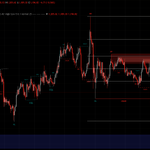
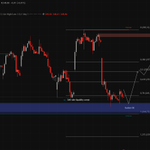
zcash:native trade setup: patience and discipline over chasing price action.
Currently trading around $1,195, the market is retracing but hasn't tested the entry FVG (1,235–1,246) yet. Avoid blind limit orders, wait for a clean rejection in the zone.
Trade Plan Breakdown:
• Entry Zone: Short inside the 1,235 – 1,246 Fair Value Gap upon confirmation.
• Stop Loss (SL): Set strictly at 1,265 (invalidation if the price breaks above 0.5 discount and tests the 1,272–1,302 range).
• Take Profits (TP): TP1 at ~1,167 (bullish OB), TP2 at ~1,121 (weak low liquidity sweep secure partials here), and TP3 at ~1,082. This gives a solid risk-to-reward ratio ranging from 2.7 to nearly 5.9.
Risk Management: Size your position based on dollar risk rather than leverage size, especially given perp volatility.
You can also trade this setup on Bitget to share the 70,000 ethereum:0xdac17f958d2ee523a2206206994597c13d831ec7 reward pool from their ongoing trading campaigns Trading Club Championship.
What is your favorite short zone or accumulation level on ZEC this week? Not financial advice.

Demand for compute is off the charts, but the real bottleneck is capital.
Those who lock down the infrastructure financing will dominate the entire stack. $NVDA and its supply chain keep winning.

🚨 $NVDA NVIDIA CEO JENSEN HUANG ON WHY NEOCLOUDS ARE RUNNING OUT OF CAPITAL:
"The demand for the NeoClouds is off the charts"
The problem:
"There's a scarcity of capital. The demand of the capital is much greater than the availability of the capital"
His message:
"That's gonna get solved… The demand for it is so strong"
$SPCX : Going from 2% to 16% of global capacity in 2 years is unprecedented. If anyone can scale infra that fast, it's SpaceX. Compute is the new battleground.
And for those looking to play the theme in the stock market, it reinforces the appeal of having solid exposure across the entire infra supply chain.

Compute is the BIGGEST moat in AI.
And @elonmusk 's SpaceX could be on track to control more of it than anyone else in the world by the end of 2027, potentially overtaking Google, Microsoft, Amazon, and every other major hyperscaler. According to estimates SpaceX/xAI controlled roughly 2% of global installed AI compute capacity at the end of 2025, representing approximately 600 MW of data center power. By the end of 2026, that figure is projected to increase to 2.8 GW, or roughly 6% of global capacity. But the real story is what could happen in 2027. If SpaceX manages to hit its ambitious 13 GW target, its share of global AI computing infrastructure could surge to approximately 16%, putting it slightly ahead of Google at 12.9 GW and well ahead of Microsoft at 9.1 GW and Amazon at 9.3 GW.
Think about how aggressive that expansion really is. We're talking about going from couple gigawats to 13 GW in just two years, an increase of more than 6.5x times. And this is happening as the entire industry is expanding at an incredible pace, with estimated global AI data center power capacity growing from 26 GW in 2025 to approximately 79 GW by the end of 2027. And I think this is where Elon Musk has an enormous amount of optionality. Musk has discussed roughly a 50/50 split, with roughly half of the computing capacity being used internally and the other half potentially being sold to outside customers. And if demand for compute continues growing and spot market pricing remains attractive which I think it will, Musk will generate massive amounts of revenue by selling access to that capacity. And depending on the economics, those profits could then be redirected into Grok, autonomous vehicles, robotics, and his other businesses, essentially using the AI infrastructure business to help finance the next generation of his companies.
Bullish on SpaceX and compute and if you want to see how I’m investing around the companies powering this massive AI infrastructure expansion, check out my portfolio below.
link.milkroad.com/tx5qip

Friday the market did not sell AI. It sold AI that burns cash.
Intel dropped 28.6% after guiding Q4 at $15-16B vs ~$17.1B expected. Alphabet posted its first negative free cash flow in 22 years (-$9.07B). Amazon’s trailing FCF outflow hit $42.4B. Microsoft, on the other side, printed $18.6B in FCF with Azure +48%, and Apple took the #1 market cap spot at $5.03T.
The rotation is simple: from “who spends the most on AI” to “who gets paid for it”.
Apple confirmed the new rule last night. Record $114.5B revenue, iPhone +17%, and still the stock slid 2-4% after hours because gross margin is guided to 45-46% on memory costs. Good numbers, bad margin. Same memory story that hurt Intel’s PC side.
My plan this week, SMC lens:
• $AMD : reports tonight after the close. Intel damaged chip sentiment, so AMD has to prove data center delivery. I don’t trade the print. I wait for the reaction, then look for a liquidity sweep + CHoCH on the 15m/1H before any entry.
• r $AAPL: gap-down risk on the margin guide. I want a sweep of sell-side liquidity and a reclaim. If it only bleeds with no reclaim, no trade.
• r $QCOM / rARM: report Wednesday after the close. Same memory-cost read-through. I stay flat into the print.
• r $GOOGL / rAMZN: the narrative is cash flow now. Bounces are unconfirmed until a BOS on the 1H.
rMSFT: relative strength leader. Pullbacks into demand only if structure holds.
rINTC: after -28%, no catching knives. Let it build structure first.
Event risk: midterms today, ADP Wednesday (exp. 75K), NFP Friday (exp. 65K vs 29K prior, unemployment 4.2%). BTIG warns of an 8.5% Nasdaq pullback. I don’t need to agree with it to respect it.
Fixed risk per trade, R:R at least 1:3, invalidation defined before entry.
If you trade these setups on Bitget this week, there is an extra: the more you trade this week’s US stock opportunities (rAAPL, rAMD, rQCOM, rARM), the more rSPCX rewards you can unlock through mystery boxes in the Trading Club. Same plan, same risk rules, with a bonus on top. I only take what my plan says: rewards never change my position size.
Which one do you trade on the reaction: AMD tonight or QCOM/ARM Wednesday?
#USStocks #SMC


Crypto Bourse retweeted

$NVDA's forward p/e rating is at roughly 12.9X right now, and its price to earnings growth is .27.
It's mind blowing, @BrianSozzi says. 🤯
Crypto Bourse retweeted

$NBIS 🔥🔥
Institutional investors continue to increase their holdings, signaling their confidence in the stock's future price performance. 📈
Previous update: 78.71% 🐳🐳
Latest data: 79.29%
Others (retail investors): 16.45%
Hold on tight to your positions!!!
Follow me for the latest updates.

$IREN: 13F data lags by weeks, so this chart shows who held at quarter end, not who bought the last leg down.
Institutions up 30% with the price down 67% is a real gap. But the sellers could be funds that were already in.
Who is on the other side?


$NBIS: only 1 of the 3 regions on that chart is above the old $9.49 ceiling. eu-west2 at $12.50, us-north1 still at $5.89. Spot is the marginal hour, not the revenue line.
So what is -39% pricing that the spot chart can't show?


The AI narrative ignores one simple rule: no power, no compute.
Aramco + PIF securing the site where $NBIS is the anchor tenant for 50 MW just wiped out delivery risk. Exactly the kind of fundamental backstop you want to see.
$NBIS just got a much stronger landlord in Saudi Arabia.
Aramco has closed its $2.6B deal for 49% of Humain. PIF keeps the other 51%.
Why Nebius holders should care:
On Oct 21, Nebius signed a preliminary deal with Humain and DataVolt for up to 50MW at the NEOM Oxagon AI campus. That's HALF of the first 100MW under construction, coming online in phases from Q4 2027.
Nebius is the FIRST customer there.
Now the company building that capacity is backed by Aramco AND the Saudi sovereign wealth fund, and targets 3GW of AI data centers by 2030.
In this market the bottleneck isn't demand. It's getting powered buildings delivered on time. Partners with deep pockets matter.
Yes, the expansion phase weighs heavily on the balance sheet, and execution will have to be flawless.
But Melvin hits the nail on the head: $NBIS isn't building a commodity, they're building a fully integrated vertical platform.
Wall Street will eventually price in the software layer once the inference metrics start speaking for themselves. Patient on the thesis.
$NBIS is my #1 AI stock pick and I think Wall Street is completely underestimating what this company is building.
I joined @cvpayne on Fox Business to discuss why I'm so bullish on Nebius and where I see the company heading. What makes Nebius so interesting is that they're building an entire vertically integrated AI cloud platform, from the physical infrastructure and computing hardware all the way up to the software developers need to train, deploy, and run AI models. Think about what Amazon did with AWS. Instead of simply providing servers, Amazon built an entire cloud ecosystem around its infrastructure. Nebius is pursuing a similar opportunity, except its platform is being built specifically for AI from the ground up.
And what I really like is how aggressively management is expanding its software capabilities. They acquired Tavily, which provides real time search infrastructure for AI agents. This allows developers to build AI systems that can access live information, conduct research, and interact with the internet instead of relying entirely on information stored inside a model. They also acquired Eigen AI, which specializes in making AI models run faster and more efficiently. As inference demand explodes, reducing the computing power and cost required to generate AI responses becomes increasingly important. Then there's Clarifai, where Nebius brought in its core engineering and research team and licensed its inference technology. While Eigen focuses on optimizing individual models, Clarifai's technology helps optimize how those models operate across the broader computing infrastructure, including orchestration, deployment, and resource efficiency. All of these technologies feed into Nebius Token Factory, its managed inference platform. Nebius wants to control and optimize the entire process, from the GPUs powering AI models to the software serving those models and the tools AI agents use to perform tasks.
And the economics behind this will be enormous. The more efficiently Nebius can operate its infrastructure, the more computing capacity it can deliver from the same hardware. That potentially means lower costs for customers, better utilization of expensive GPUs, and stronger margins as the business scales. I think investors are still looking at Nebius primarily as another AI data center company, when the bigger opportunity is that it's positioning itself to become a full-stack AI cloud provider. The company is still in a capital-intensive expansion phase, and execution will matter enormously. But I believe the combination of infrastructure, proprietary software, strategic acquisitions, and rapidly growing AI computing demand makes Nebius one of the most compelling long-term opportunities in the AI sector.
$NBIS Q3 2026: The 5 Blind Spots Wall Street Isn't Talking About
Everyone is hyping up the headlines, the Palantir partnership, HGX B300 status, and that $40B backlog. But in my opinion, the market isn't blind; it’s pricing in real structural risks that many are ignoring.
Here are the 5 blind spots I’m watching:
1. The Convertible Arbitrage Cap
The $5.75B convertible notes offering triggered mechanical hedge-selling. Arbitrage funds short the underlying equity ($NBIS) to hedge their bond exposure, creating a persistent technical ceiling until dilution terms are fully priced in.
2. $9.25B in Liquidity vs. Massive Capex Burn
Between $5.75B in convertibles and the $3.5B Citi credit facility, balance sheet risk is climbing. Consensus projects -$0.71 non-GAAP EPS. Revenue growth (+520% YoY) is irrelevant if Free Cash Flow burn continues to accelerate.
3. The Power Grid Reality (Signed MW vs. Energized MW)
Multi-gigawatt roadmaps mean nothing without active substations. Interconnection delays across European hubs and Vineland (US) postpone revenue generation while expensive hardware depreciates from day one.
4. Rapid GPU Amortization vs. Price Hikes
The 17–21% rental price hikes offset costs today, but AI clusters run on tight 3- to 4-year depreciation schedules. As clients optimize inference and explore multi-cloud alternatives, pricing power will face steep resistance.
5. Backlog Quality & Counterparty Risk
A $40B backlog looks massive on paper, but composition is everything. How much of that revenue relies on venture-backed AI startups with short runways versus enterprise-grade balance sheets?
My take for November 12:
A revenue beat is already priced in. To me, what will actually move $NBIS isn't top-line growth, but clear transparency on share dilution, true unit margins, and realistic grid connection timelines. Without that, the hype won't carry the stock.

$NBIS went from being the star of AI infrastructure to pulling back nearly 50% from its ATH.
Yet the core fundamentals are still rock solid:• Demand for high-density GPUs and neocloud capacity continues to outpace supply.
• Hyperscalers and open-source models urgently need agile, dedicated alternatives to avoid bottlenecks.
• At current valuation levels, the market is pricing in macroeconomic fears that don't reflect actual order books.
To me, this is a clear long-term accumulation zone for AI infrastructure.
The issue with traditional brokers (like Robinhood or IBKR)? Your shares just sit idle at 0% while waiting for the bounce.
Holding tokenized stocks through Bitget rTokens offers real flexibility:
1. You can hold $NBIS while earning passive yield via Dual Investment (Buy Low / Sell High strategies) instead of leaving the position completely dormant.
2. You can use your holdings as margin to seize other market opportunities, or borrow against them without selling and triggering a taxable event.

Retail panics over $NBIS dipping after-hours, while the projected compute spending through 2029 is literally mind-blowing. The real bottleneck has never been demand it’s who will actually have the power and the chips to deliver.


The market is panic-selling Neoclouds, but $NBIS fundamentals tell an entirely different story. 📉👀
Everyone is hitting the panic button following Elon Musk’s comments on the upcoming AI datacenter shakeout and reports of hyperscalers pacing their CapEx. The result: $NBIS took a sharp hit.
Yet, look at the underlying drivers:
↠ Reaffirmed run-rate target: $7B–$9B by year-end 2026.
↠ Secured Nvidia infrastructure pipeline with capacity virtually locked in through 2027.
↠ A fresh $3.5B financing facility secured to accelerate buildout while smaller players hit a wall.
Is this the classic "sell the noise, buy the infrastructure" setup, or the start of a destructive pricing war?
The verdict: lands on November 10 with Q3 earnings.

Why $GOOGL ’s Earnings Confirm Megacaps Remain Cash Machines and How to Optimize Your Exposure
The market continues to underestimate Alphabet’s ability to monetize its AI pivot while defending its legacy operating margins.
Breaking down the latest financial results reveals several structural points for medium- to long-term investors:
👉Google Cloud Acceleration: The Cloud unit isn’t just profitable anymore; it’s demonstrating critical operating margin expansion.
Enterprise AI workload deployments and increased TPU adoption are generating operational leverage that comfortably offsets rising CapEx.
💪 Search Resilience: Despite recurring fears around competition from third-party LLMs, core Search ad revenue maintained solid momentum.
Monetization through Search Generative Experiences is beginning to ease concerns around cost-per-click compression.
🚀Free Cash Flow Generation: Backed by a virtually net-debt-free balance sheet and an ongoing share buyback program, current valuations offer a rare margin of safety compared to broader tech multiples.
From a long-term holding perspective, the issue isn't just what to buy, but how to manage dead capital between major expansion legs. Most investors simply let their shares sit idle waiting for the next breakout.
However, pairing spot holdings with systematic yield strategies (such as structured products or Dual Investment to set targeted exit prices while collecting yield) helps smooth out sideways consolidation phases.
Personally, I think shifting part of your tokenized stock holdings over to Bitget this month might be a solid play: having access to 24/7 Dual Investment outside
of Wall Street market hours is a real tactical advantage over platforms like Gate (which stay restricted to regular US sessions), not to mention their current
$200 r $SPCX transfer bonus (for balances ≥ $5,000) running through November 30, which more than covers portfolio migration fees.
What’s your current take on big tech: passive accumulation or actively generating yield on your existing holdings?


Nebius ($NBIS) remains the pure-play most directly exposed to GPU demand.
Microsoft (~$17-19B) and Meta (up to ~$27B, including Vera Rubin capacity from 2027) contracts exceed $40B in total. That gives rare visibility.
The $3.5B Citi bridge (364 days) and customer prepayments (>$9B expected in 2026) help fund the buildout without immediate heavy dilution.
The numbers show real growth: Q2 at $582M (+454% YoY), 2026 guidance of $3-3.4B, and year-end ARR targeted at $7-9B .
But the neocloud sector stays highly volatile. $20-25B capex in 2026, timing of actually connected GW, and sensitivity to any hyperscaler capex delays.
The market reprices fast as soon as execution doubts appear.
AI infrastructure is the real bottleneck. Not the models.
Are you holding $NBIS or staying on the sidelines?
Fed held rates steady today. What’s your long-term plan for the next 12 months?
Fed kept the funds rate at 3.75–4% today (10-2 vote). Two members wanted a hike, inflation still elevated, economy described as strong. Not a big surprise, but it removes the near-term cut narrative for now.
I’m a long-term holder and I don’t want to babysit positions around every FOMC. My base case stays neutral-to-slightly-hawkish, so I’m keeping most of my exposure in banks and energy (thinking r $JPM and r $XOM type names) while still adding slowly to the AI infrastructure side.
On Bitget I’ve started using Auto-Invest on rTokens so the buys happen on a schedule without me opening the app every week. I’m also running some Dual Investment Buy Low / Sell High products so the tokens aren’t just sitting idle while I wait for levels I already wanted. APRs vary, products aren’t always available, and settlement can convert you into a different asset, so I keep the size small and treat it as an overlay.
Not trying to time the next print. Just trying to keep accumulating without staring at the chart all day.
How are you positioning after the hold more banks/energy, or still adding to the AI names?

On Bitget Earn, Stock Dual Investment is showing APRs that catch the eye: up to 265.42% on rAMD and up to 434.61% on r rNBIS .
The trap would be to stop at the number. These are variable ranges (3.02% ~ 265.42% for $AMD , 3.03% ~ 434.61% for $NBIS ), and the top of the range is not what everyone gets.
How “Buy Low” works: you subscribe in USDT and set a target price. If the settlement price at expiry ends below it, you receive the tokenized stock at your target price, plus the interest. “Sell High” is the mirror image, using a stock you already hold.
My read: a high APR pays you for conversion risk. You can end up holding the stock at a price you chose, or selling earlier than the market would.
AMD reports on November 3 after the close, so I’m looking at this next to the chart: bearish OB at 561-568.5 above, bullish OB at 514-527 below.
Not financial advice. Read the terms before subscribing.
Are you leaning Buy Low or Sell High on AMD before earnings?
Full analysis: tradingview.com/chart/AMD/HI…

On Bitget Earn, Stock Dual Investment is showing APRs that catch the eye: up to 265.42% on rAMD and up to 434.61% on r rNBIS .
The trap would be to stop at the number. These are variable ranges (3.02% ~ 265.42% for $AMD , 3.03% ~ 434.61% for $NBIS ), and the top of the range is not what everyone gets.
How “Buy Low” works: you subscribe in USDT and set a target price. If the settlement price at expiry ends below it, you receive the tokenized stock at your target price, plus the interest. “Sell High” is the mirror image, using a stock you already hold.
My read: a high APR pays you for conversion risk. You can end up holding the stock at a price you chose, or selling earlier than the market would.
AMD reports on November 3 after the close, so I’m looking at this next to the chart: bearish OB at 561-568.5 above, bullish OB at 514-527 below.
Not financial advice. Read the terms before subscribing.
Are you leaning Buy Low or Sell High on AMD before earnings?
Full analysis: tradingview.com/chart/AMD/HI…