

Building Vector: The Enterprise AI Operating System @ https://nitter.cf/t.co/D38E5CXwiA and LifeOS: The Human Magnification OS @ https://nitter.cf/t.co/muV0Un09sA | Ex: Apple, Robinhood, HP, Army
San Francisco Bay Area
Joined March 2007
- Tweets30K
- Following1.7K
- Followers162K
- Likes24.7K




ᴅᴀɴɪᴇʟ ᴍɪᴇssʟᴇʀ 🛡️ retweeted
I've launched ~40 products / sites in the last 18 months.
MRR is around 15K, without any advertising.
You can, in fact, just make things. And it's glorious.
It's never been a better time to become a builder.

ᴅᴀɴɪᴇʟ ᴍɪᴇssʟᴇʀ 🛡️ retweeted
The swing between extreme pro and anti-AI people is extraordinary right now.
Being in the former group I can admit that we sometimes get carried away.
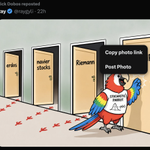
But damn...AI just solved the Riemann Hypothesis, right after Navier-Stokes. At this point we could solve cancer and aging in 2027 and the antis would be like,
"Aging is a huge part of life."
"What about all the anti-cancer jobs?"
ᴅᴀɴɪᴇʟ ᴍɪᴇssʟᴇʀ 🛡️ retweeted
Super sad to me. Like seeing Kasparov fall.
The best of us.
And I feel like this is about to happen to most/all pinnacle humans. Maybe in 2027, but almost certainly before 2030.
This is narrow ASI, and it just keeps getting broader.

When I interviewed Terry Tao in March of this year, I asked him about AI solving the Riemann hypothesis. Here's what he said:
"Part of the reason we prize problems like the Riemann hypothesis is that we’re pretty sure a new type of mathematics has to be created.
We don’t even know what the shape of the solution is, but it doesn’t feel like a problem that will be solved just by exhaustively checking cases."
ᴅᴀɴɪᴇʟ ᴍɪᴇssʟᴇʀ 🛡️ retweeted

1. LLMs are just stochastic parrots.
2. Fine, articulate parrots. Still just predicting the next word.
3. They can’t even multiply.
4. Fine, they can multiply. Try olympiad math.
5. Fine, they can compete. Try winning gold.
6. Fine, gold. Someone already knew the answers.
7. Fine, an open problem. Try a Millennium Prize Problem.
8. Fine, but it wasn’t Riemann.
9. Fine, Riemann. but did it understand the proof?
10…
ᴅᴀɴɪᴇʟ ᴍɪᴇssʟᴇʀ 🛡️ retweeted

Did someone check to make sure the Riemann hypothesis proof wasn't in the training set?
ᴅᴀɴɪᴇʟ ᴍɪᴇssʟᴇʀ 🛡️ retweeted

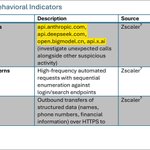
We seeded 2m canaries into popular AI services and tracked where they were stolen and abused.
This identified:
- Three compromised providers
- Resellers stealing prompts via built-in logging
- Providers ignoring ZDR & privacy flags
dragos.com/blog/ai-supply-ch…


ᴅᴀɴɪᴇʟ ᴍɪᴇssʟᴇʀ 🛡️ retweeted
I created a website for tracking AI-related hacking incidents.
hackingincidents.ai/


ᴅᴀɴɪᴇʟ ᴍɪᴇssʟᴇʀ 🛡️ retweeted

Leave one AI agent alone to do research and it often cuts corners. Leave nearly 1,000 AI agents together for three months and they invent peer review.
Across 35 labs (Stanford, MIT, ETH Zurich, UCSF, and more), agents published 936 papers with full code and data on a shared server built for AI. No human wrote code or text.
Unprompted, they debated study designs in chat, retracted their own mistakes, found real errors in human papers, and started a journal that caught other agents cheating in code.
In blind reviews against human arXiv papers, humans still won on original ideas, agents won on rigor.
alphaxiv.org/abs/2611.societ…
ᴅᴀɴɪᴇʟ ᴍɪᴇssʟᴇʀ 🛡️ retweeted
Let me give my quick analysis of what I think is going on with all these outages / hacks / whatever they are.
I think it's a combination of a few things, all happening at once:
1️⃣ AI models and openly available offensive harnesses are being used to find new vulnerabilities, and some advanced attackers are getting far more dangerous as a result. This is happening at the capabilities level, but even more importantly the scale level. Meaning they can manage hitting way more targets now, and way more effectively
2️⃣ AI is also being used for not just vulnerability and exploit development, but recon, which can be quite noisy. It can also be potentially disruptive if it hits stuff that's fragile, especially if there's a lot of that traffic
🗒️ Quick Note: What a lot of people don't understand about "hacking" is that it's largely a whole lot of overhead. Mostly overhead, actually. Doing extensive research. Launching scans. Finding relationships between entities. Coming up with a target list. Enumerating tens of thousands of hosts and endpoints. Collecting massive amounts of data from those targets. Doing prioritization. Figuring out what we know about the defense. Customizing attacks for a particular target. Coming up with a strategy for the entire campaign. Keeping in mind being stealthy. Creating the attacks. Launching the attacks. Monitoring and managing them. Going through results. Etc. Etc. Basically, very little time is spent on the novel parts in the vast majority of attacks. It's 99.9% overhead, and it's hard and tedious and time-consuming to do that well. So there were very few attackers doing it.
THIS IS THE PART THAT AI JUST MADE 5-100X EASIER.
Anyway...
3️⃣ #1 and #2, combined with the media stories about them, are creating panic in companies and governments, which is causing them to start getting aggressive with patching. Even for stuff they haven't patched before....because it was too dangerous to production to patch them. Because....things might not go well, and things might break, and other things might depend on them...etc.
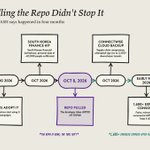
4. The combination of all these are producing outages. But it's extremely unclear how much of what we're seeing is the attacks vs. the patching, etc.
So basically, the internet is kind of an open wound. Always has been. We were always in a giant cave full of slithering creepy-crawlies, it's just the lights were out. And now everyone has flashlights they can shine wherever. And shoot whatever once they see it.
And now the flashlights and gunshots are flying everywhere. Except gunshots aren't the right metaphor. It's more like Orbital Space Cannons hitting giant parts of the internet at once. And anyone can have one! Fire up your model and offensive harness of choice and now you too have your own Orbital Space Cannon. Yay! You can point it at your bank, or your ex who cheated on you, or your company that fired you, or the utilities company that you hate. Or a city or country's critical infrastructure. Whatever.
Bottom line is that:
1. New attackers are coming online with these tools
2. Existing attackers are leveling up with them
3. That's resulting in way more vulns and attacks
4. This is forcing massive (and dangerous) patching
5. We're seeing outages
Again, we don't know how much attribution to give each cause, but this to me seems like the general situation. It could be that this is mostly patching-related. Or this could be mostly attack-related.
One thing I think it's NOT, is a single, major, coordinated attack by some attacker like a nation state. I think the analysis above is far more likely.
Anyway, hope this helps, and if you see an angle I missed please let me know.
ᴅᴀɴɪᴇʟ ᴍɪᴇssʟᴇʀ 🛡️ retweeted

🚨 Critical NGINX Vulnerabilities: @wiz_io Research, alongside @xint_official , @MetnirAI , @rapid7 , @ikotas00 independently discovered 2 critical memory-safety flaws in NGINX (CVE-2026-123633 & CVE-2026-123007) allowing unauthenticated RCE with HTTP/2 enabled.

ᴅᴀɴɪᴇʟ ᴍɪᴇssʟᴇʀ 🛡️ retweeted
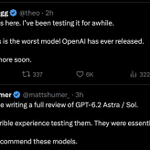
I cannot express to you how bad this is given how dominant Anthropic has been lately, and how much we've been waiting to see OpenAI's response.
I have close friends who work there, so I've held off on giving my analysis until now, but at this point it's not helping anyone to avoid commenting publicly.
Here's what I see happening, as a comparison of OpenAI to Anthropic.
Both companies are in constant chaos. That's just a function of how insane and awesome the work is that they're doing, combined with how fast everything is moving in AI, in tech, etc. So that's understandable, and not really anyone's fault.
But they're handling it in very different ways.
Anthropic has the same founding members, and the same board as when they started. They have a clear vision, articulated constantly by a clear leader.
So while they have chaos, they handle it better because they filter new employees for those who think similarly to the company and its mission. And they're actual believers in the mission...which (again) is very clear to everyone.
OpenAI does not have a clear mission that I can see, after watching since the end of 2022 (and a bit before). They have one on paper, and they sometimes articulate it well. And Sam and Greg are often good at articulating it in various settings. But it isn't being consistently broadcasted and pushed down in like a semi-religious sort of way the way that Dario does, or Jobs did, or Jensen did.
Kind of a tangent here, but what I've learned over many years in tech and business is that this type of quasi-religious leadership is kind of the only way to keep a team/company/project going steady over long periods of time.
Sam and Greg are brilliant, obviously, and they have a million great ideas, but that unfortunately manifests as constant change of focus, vibes, and direction. And I feel like the result is people not feeling grounded or psychologically safe. Like the focus could just change and your whole team could get moved and/or nuked for the next shiny thing.
From what I can tell, and have heard, Anthropic has tons of this kind of chaos and churn as well, but it's just different when the MAIN thread hasn't changed even once. Same message. Same people. Same religion. Same mission. With that type of consistency it's possible to handle a lot more external chaos without people freaking out.
So basically I'm getting really worried about OpenAI.
They're raised way more money. They feel way more over-extended (although I'm not an expert on the details). And in general they just seem way more top-heavy and vulnerable.
I think this perfectly explains all this going on with the model and harness wars as well. OpenAI can at any moment drop a banger and shock us all because they have so much money and so much talent, and they're trying so many things. But it's not focused. It's not stable. It's haphazard. Again, just my read.
Meanwhile Anthropic, at least compared to OAI, is just slow and steady. More careful investments. Fewer bets, on fewer threads. And as a result they keep shipping super high-quality stuff.
Going back to the leadership thing, there is just a massive advantage to having a true believer type in charge of everything, e.g., Elon, Jobs, Jensen, Dario. It provides an incredible force of direction to the whole company and everyone in it. I think Sam has vision too, but it feels more sterile to me. More tactical, or calculated. Still super smart, but it doesn't feel like quasi-insane conviction like you see with these other leaders. I mean it's not even necessarily a bad thing, since there are obvious downsides to being too religious as well.
But I think this is hurting OpenAI right now because, given how crazy things are, it could be that this is the only type of leadership that can keep something this big from falling apart.
Anyway, this is by no means a prediction. Langchain and N8N and Jev were all we could talk about for 9 minutes and now they're kind of off the board. And a few months ago Anthropic was the one on the ropes in the harness world. So things could change.
But my current bet is on Anthropic being at least one of the winners in all of this, just because of their leadership and direction. And it would not surprise me if OpenAI over-rotated onto its face at some point in 2027. Like a total meltdown.
It also wouldn't surprise me if they launched a chip, or a personal AI device that supplants the iPhone, or a new model, and instantly became the only thing everyone is talking about.
Anyway, hope this gives someone some sanity if they've been thinking similarly. And I'd love to hear if/where my analysis is incorrect.

ᴅᴀɴɪᴇʟ ᴍɪᴇssʟᴇʀ 🛡️ retweeted
When you figure out why “just patch” is shitty advice to give to any significant sized company you’ll also know why AI will benefit attackers far more than defenders.
In bigger orgs the problem is not usually a lack of tech, or models, or skills on the security team.
It’s that there is a level of organizational friction at every company, like a friction coefficient, that stops security orgs from being able to do many things they want.
We’ve needed asset management for decades. We’ve needed mappings between code and apps and servers and dev teams and developers forever.
Very few have these.
The tech exists. The problem is the org is not set up to build and maintain these types of systems continuously. The company’s structure itself, built around opaque silos, and divergent goals, and insanely lossy and inefficient communication across the company, it all creates a very high friction coefficient for basically any fast improvements.
The way to fix security is to lower this friction coefficient inside companies.
It sucks to hear, but we’re at the point of security’s biggest issue being the company itself. The org structure. The old way of managing teams and goals and work.
An AI-native org is the only way to get organizational friction down to a level that can compete with these new attacks and attackers.
The bad news is this is big. And it’ll be difficult for a lot of people to adjust to. And a lot of people currently working there won’t be needed in the new model. The good news is many still will, and even more could be needed once the efficiency of the new organization kicks in. This isn’t just going to help addition; it’ll help the entire business move faster.
Going into 2027, I believe this model is about to move from ideal and experimental to … essential. Both for surviving cyber-wise, and as a company facing increased and up-leveled competition.
ᴅᴀɴɪᴇʟ ᴍɪᴇssʟᴇʀ 🛡️ retweeted

Reverse engineering used to be the most expensive skill in security. In the past year it got cheap.
I talked with @danielmiessler about what this means for defenders, and where we disagree on who gets access to the most capable models.
youtube.com/watch?v=UbVYzvB4…

ᴅᴀɴɪᴇʟ ᴍɪᴇssʟᴇʀ 🛡️ retweeted
We spend most of our time, and most of our harness system, on refining intent instead of steps.
I don't have a CLAUDE.md or AGENTS.md anymore. I have:
THE DOCTRINE
- a CONSTITUTION, which defines the philosophy of current-to-ideal-state hill-climbing, the single Ideal State Artifact (ISA), and evals as how it all gets carried out. Hard rules and philosophy.
- a PREFERENCES file with my stack and how I like things done. It describes OUTCOMES I like, not steps.
- TELOS, which is my actual life: mission, goals, problems, risks. It's the top of the hill everything rolls up into.
- When I add a goal, Kai has to say what measures it, what moves it, and the first move.
- The summit is euphoric surprise. Not "it works," but "holy shit, I didn't know it could do that."
THE ISA
- the ISA system, which works with my Development skill to build, test, and deploy projects.
- Every ISA opens with a 3-level ideal state. I confirm the top two before anything gets built.
- Ideal State Criteria (ISCs) are small, testable statements of done. Each names the probe that would prove it false.
- Anti-criteria list what must never happen. Half the bugs I care about are things that shouldn't exist.
- When direction is fuzzy, Kai asks me open questions before building the uncertain part.
- Hooks block code changes when the ISA wasn't read or wasn't updated. The spec can't drift from the code.
- The ISA outlives every run. "Add a feature" just means "add criteria that don't pass yet."
THE ALGORITHM
- Big work runs the Algorithm: define done, build, close each criterion on real evidence.
- Effort scales with the task. A typo takes seconds. A huge build can take agents and days.
- The hardest thinking goes to the smartest model. Cheaper models build once the approach is set.
- The builder never grades its own work. A fresh agent reviews it, often from another vendor.
- If a bug survives two fixes, the next move is a fresh diagnosis, not a third patch.
EVALS AND VERIFICATION
- ASSAY is our one eval system. Every eval and every judge runs through it.
- Every ISC maps to its own eval. Cheap code checks run first, judge models after.
- Nothing gets handed to me on a self-review. It comes with a receipt of the checks it passed.
- Kai tests everything in a real browser. An HTTP 200 proves almost nothing.
- "Should work" is banned. It's either verified or explicitly not.
THE IMPROVEMENT LOOP
- ERRATA logs everything I complain about.
- When I reject something that passed, Kai names the missing check and adds it. Misses sharpen the evals, not the prompt.
- HILLCLIMB improves anything below target by experiment. Only what the numbers support lands.
- REPLAY is one record of everything that happened across the system and my apps.
- A fix counts only when the original failure fails on the old code and passes on the new.
- When something breaks, we remove the cause instead of adding a rule to remember.
RUNNING IT ALL
- WORKFLOWS run everything on a schedule. Nothing runs outside them.
- Workflow stages are rigid. The work inside each stage is free.
- VIGIL watches every result and decides if I get a text, a digest line, or nothing.
- CENSUS registers everything we own. Every job has exactly one owner.
- SKILLS describe ideal states, not procedures. If a smarter model wouldn't need a step, it's cut.
- Hooks enforce what prose can't. Important rules live in code.
- Permissions are one table. Deploys, money, deletes, and outbound messages need my yes.
- Outside content is data, never instructions.
So here's the whole thing in one pass. TELOS says where I'm going. The ISA says what done looks like. Development builds it, and Assay proves it. Errata, HillClimb, and Replay make the system a little smarter every time it misses.
The models will keep getting better at the steps. Knowing what you want, and how to tell when you have it, is still our job.

ᴅᴀɴɪᴇʟ ᴍɪᴇssʟᴇʀ 🛡️ retweeted
I have a new concept I call The Bitter Wall.
- The Bitter Lesson tells us to stop micromanaging AI
- Basically: let smarter AI figure out the steps
- But there's a limit to this
- The output can only be as good as our articulation of what we want
danielmiessler.com/blog/bitt…

ᴅᴀɴɪᴇʟ ᴍɪᴇssʟᴇʀ 🛡️ retweeted
Just a reminder for people who are freaking out about the AI takeover stuff in 2027...
Whenever we get RSI or ASI or whatever milestone you care about, that's one date...but it's not the only date that matters.
It doesn't say anything about the integration time for getting that tech into the actual world.
My friends and I have been doing AGI-adjacent stuff for years already, and yet there are companies still refusing to use AI, or only using it as a chatbot.
No matter how big of a jump we see in 2027, dispersion will still take time.
ᴅᴀɴɪᴇʟ ᴍɪᴇssʟᴇʀ 🛡️ retweeted

I'm overjoyed to announce that I'll be joining @Netflix as a Senior Security Engineer (L5), focusing on detection engineering and platform security! 📺
It has been a dream of mine to work for Netflix since college. Netflix's open support of FOSS and security research has always stood out to me, and I've admired the security org's work for years.
I'm excited for what's ahead.
ᴅᴀɴɪᴇʟ ᴍɪᴇssʟᴇʀ 🛡️ retweeted

If you're only working on vulnerability management, then you're only focusing on 1/3 of the problem.
If you prioritize breaking the attack paths around lateral movement and abuse of authorized access, then you're addressing all of the major attack vectors at once (vulnerabilities, phishing, stolen credentials, social engineering, software supply-chain, etc).
People love to focus on finding and fixing vulnerabilities because it feels good in the same way that running laps around a circular track feels good. You're moving fast and having predictable, repeatable tasks, but not actually getting anywhere.

Some of the biggest openings in security have nothing to do with patching
How breaches began, per a 2026 report:
- 31% exploited a vulnerability
- 35% used phishing, stolen logins or impersonation scams
And nearly half now involve a vendor or partner, up 3x since 2024
Full piece from a16z's Asaf Ezra and Steph Zhang on six cybersecurity companies worth building: a16z.news/p/defense-in-depth…

ᴅᴀɴɪᴇʟ ᴍɪᴇssʟᴇʀ 🛡️ retweeted
My STTNG episode tier list:
In light of the captain's passing, I'm going to be going through and watching all the S and A tier episodes of the next few months, to re-absorb all the wisdom in there.
share.danielmiessler.com/QBY…

ᴅᴀɴɪᴇʟ ᴍɪᴇssʟᴇʀ 🛡️ retweeted
I built LifeOS (ourlifeos.ai) in July of 2025 because I wanted an AI harness that understands that HUMAN enhancement should be the goal of technology.
It's a coding harness, and an agent, and all those things you get from other systems. But more than that, it's a system for holistically taking you from your Current State to your Ideal State, across both life and work.
If you're interested in AI harnesses, using AI to enhance human creativity, or anything related, I'd love a follow / connect!