
Vanguard Laboratory Chemist Microbiologist Horse Stall Cleaner
Western Washington
Joined August 2019
- Tweets746
- Following1.1K
- Followers485
- Likes5.7K





Dustin-Vanguard Laboratory retweeted
Why we haven’t been able to get researchers to demand their peptide vendors use TrustPointe or Vanguard only is beyond me.
Clearly other labs don’t know what the fuck they are doing. PCR and USP <61> for sterility? chromatography that that violates basic analytical chemistry practice?
And researchers are like, “Oh yeah I get my peptides Xtra Freedom Peptides and their COAs from Shitlab 206 are great!”
Boggles the mind. Enjoy your acinetobacter infection.

Apologies for the novel, but this is one that irritates me. A negative PCR ≠ a USP 71(or 73) passing sterility.
There's a significant difference between detecting microbial DNA and demonstrating the absence of viable microbial contamination using a validated sterility procedure.
USP <71> testing relies on microbial growth in 2 types of media over 14 days. PCR detects nucleic acid sequences. Depending on the assay, that DNA may originate from viable organisms, dead organisms, or residual microbial material. A negative PCR result also does not establish that viable contamination is absent, particularly when the organism concentration is below the PCR detection limit.
It's more than a theoretical concern, or semantics. Broad-range 16S PCR for sterility screening reported detection sensitivities ranging from 10 to 100 CFU/mL. Thats substantial when evaluating products where contamination may consist of only a few viable organisms.
Another important distinction is that 16S PCR primarily detects bacteria. It does not adequately address fungal contamination. Adding a fungal PCR assay improves coverage, but it does not automatically establish equivalence to USP <71>. Much of the failed USP 71 sterility tests of RUO
I also reviewed and frequently used commercial PCR systems. Sartorius, one of the major manufacturers in this field, has published studies demonstrating favorable comparisons between its Microsart PCR assays and traditional compendial methods.
However, Sartorius explicitly states in its own technical documentation that its Microsart ATMP system is not a replacement for classical USP <71> sterility testing.
It's good for a screen for products manufactured in highly controlled and regulated cGMP environments. I often used it to quickly screen raw materials and finished productstopical formulations. I would never rely on it for products where nothing concerning the manufacturing can be confirmed, or where the product would be injected.
There is a difference between demonstrating comparable analytical performance in a limited study and validating a method as a replacement for compendial sterility testing across different pharmaceutical formulations.
A 2019 study published in the Journal of Clinical Microbiology evaluated 118 microbial isolates using traditional USP <71> and alternative automated culture systems. One alternative system detected only 71.2% of the organisms after extended incubation.
Validated USP 71 methods do exist.
At @Vanguard_Lab , we offer traditional USP <71> sterility testing as well as rapid sterility testing using the Charles River Celsis ATP bioluminescence system, validated as an alternative to USP <71>. To put in perspective, we paid over 100K for the instrument and nearly another 100k on validation and method suitability studies of more than 50 different peptides at different mgs, different filler materials, and different combinations of peptides.
Celsis uses microbial growth followed by ATP-based detection, allowing a shortened incubation period while retaining a growth-based approach to detecting viable contamination.
We also participate in independent, third-party Pharma ISO accredited proficiency testing with our traditional USP <71> and USP <71>-equivalent rapid sterility methods That provides an additional external assessment of laboratory performance beyond our internal quality controls and method validation.
USP also specifically addresses certain rapid sterility technologies under chapters <72> and <73>, including respiration-based detection and ATP bioluminescence for applicable short-life products.
PCR is not inherently excluded from alternative-method validation. USP <1223> provides a framework for evaluating alternative microbiological technologies. However, I have not found evidence that a commercially available standalone PCR kit is universally recognized by USP as a direct replacement for USP <71>, Nor have I seen any evidence that anyone in this space using PCR is doing method suitability on PC methods or participating in proficiency testing.
If a laboratory is advertising PCR screen as a USP <71> sterility test, I would ask to see the validation demonstrating that equivalence, including low-level microbial recovery, bacterial and fungal coverage, product-specific suitability, assay inhibition, and detection probability at very low contamination levels.
I would also want to know whether that laboratory participates in independent proficiency testing for the methodology being offered.
We use molecular methods at Vanguard, and consider PCR an extremely valuable tool for pathogen detection and identification. We use it daily in our food and pharma departments. It can also be useful for rapid preliminary screening but screening and compendial sterility testing are not interchangeable.
There is nothing wrong with offering PCR microbial screening. There is a problem with advertising that screening as USP <71> sterility testing without the necessary supporting validation. If someone wants us to provide a rapid PCR or other rapid micro method we are happy to do so, but we will not list it on our COA as USP 71, or sterility.
The distinction matters scientifically, analytically, and from a regulatory standpoint.
That's Tori, Vanguards owner, along with Trigger, who frequently tests his water and supplements at Vanguard. vanguardlaboratory.com/equin…


Peptides, Pharma, and supplements are a large part of what we do, but Vanguard provides testing for multiple industries, including Equine Supplements and Water Testing. vanguardlaboratory.com/equin…

1
6
347
Dustin-Vanguard Laboratory retweeted

whole foods 365 ashwagandha capsules recalled for salmonella, lot 2025-26227. dried roots and herb powders are a known source and salmonella can survive for months in a dry powder. Every lot should be tested for microbial contamination.

Dustin-Vanguard Laboratory retweeted

Excerpts from K-Hole Lab chat: The Worse the Method, the Better the Purity?
Why do some peptide batches test below 99% purity at Janoshik and Vanguard but above 99% at Freedom Diagnostics?
That question was raised in K-Hole Lab Chat on 30 August.
Dustin from Vanguard Laboratory responded:
“Generally the poorer the method the better the purity.”
He explained that poorly developed HPLC methods can fail to detect impurities, producing artificially high purity results.
Possible causes include the mobile phase (formic acid vs TFA), gradient, column or a combination of these.
Vanguard uses degradation studies or purchases known impurity standards to check its methods. Dustin shared simsonpharma.com/promotions/… as an example.
He also raised a specific concern about Freedom:
“Often you will see peaks on the chromatogram that should be integrated but arent.”
A Real Example: MOTS-C Lot 1751
Results reportedly obtained from the same lot:
Vanguard: 95.95%, 96.01%, 96.62%
Freedom; 99.24%. 99.56%, 99.37%
Average: 96.19% vs 99.39%.
The batch failed a ≥99% purity specification at Vanguard but passed at Freedom.
These figures were shared in a customer’s email reproduced in Lab Chat. The original chromatograms weren’t available to establish the cause.
The question for Freedom: Why did the same lot produce consistently higher purity results, and were the impurities detected by Vanguard also detected and accounted for?
A higher purity result doesn’t necessarily mean a better test. It may mean the method missed impurities.
Freedom is very welcome to join K-Hole Lab chat to provide supporting evidence for their methods

Dustin-Vanguard Laboratory retweeted
When the Lab Gives the “Wrong” Answer
This article covers what happens when a COA comes back with the “wrong” answer, from cross-lab purity disputes and repeated retest requests to clients asking whether 27 mg can become 30.5 mg, whether a chromatogram can be read as 99%, or whether a failed sterility result can simply be left off the COA.
Most clients accept their results. The interesting part is what happens when they don’t
Link to article below


Dustin-Vanguard Laboratory retweeted
Official Vanguard COA Confirms Studz’s Beebo Sample Is Negative for Fentanyl
We now have Vanguard Laboratory’s official COA for a liquid 5-Amino-1MQ sample purchased directly from Beebo by Studz.
The sample tested negative for fentanyl by LC-MS/MS at a detection limit of 10 ppb. The second page shows a strong response from the fentanyl standard but no corresponding peak in the sample. Vanguard monitored the fentanyl MRM transitions 337.5→188 and 337.5→105.
The link to the original positive samples
Studz said the product was bought from Beebo for personal use and was never sold through Studz Peptides.
The person responsible for the original positive test was someone helping him vet Beebo and after that result, he tested the product at home using the correct dilution and immediately sent part of it to Vanguard. He still has more available for further testing.
Studz believes his vial came from the same batch as the original presumptive-positive samples because the same caps were used. The original customer also reportedly bought directly from Beebo.
Negative for fentanyl, but understrength
Vanguard measured the sample at 35.97 mg/mL rather than the requested 50 mg/mL, making it approximately 28% understrength.
This is consistent with Beebo’s earlier admission that her preparation logs showed the product had been made below the requested concentration. She estimated approximately 25 mg/mL and said the white-label client had been offered a refund.
The figures don't match exactly, but both confirm that the product was substantially understrength. This also provides circumstantial support for Studz’s belief that the samples came from the same preparation.
Could the salt form explain it?
A theory suggested the low result might have been caused by confusing the freebase, chloride and iodide forms, which have different molecular weights.
Dustin has now confirmed that Vanguard used a 5-Amino-1MQ chloride reference standard and reported the result as chloride. Beebo also said she used the chloride form.
The sample and standard were therefore assessed on the same basis. The salt-form theory cannot explain the result: the product was genuinely approximately 28% understrength.
The good news for Beebo is that this sample contained no detectable fentanyl. The bad news is that her brew still came up considerably short although Studz is not concerned about this


Dustin-Vanguard Laboratory retweeted
Beeboo Off the Hook?
Plot twist: Vanguard tested ten separate 5-Amino-1MQ samples, including an authenticated reference standard and one believed to be from the affected vendor.
At high concentration, they all triggered presumptive positive fentanyl strips. When diluted according to the manufacturer’s instructions, they all tested negative.
Targeted LC-MS/MS also returned nondetect across the fentanyl panel.
We're still waiting for the national laboratory’s result on Janoshik’s sample, but for now, it looks like Beeboo’s brew may be clear, and Beeboo can sleep at night again.
Article link below
Overview of some recent sample failures at @Vanguard_Lab
2
4
768
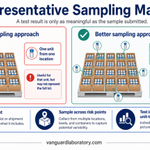
New post on the importance of Statistical risk based sampling plans.
vanguardlaboratory.com/pepti…

You sent one vial to the lab. The report came back clean. Does that mean your entire 500-vial shipment is good to go? No.
Before you test, you need a sampling plan based on risk assessment. Full article link below.
vanguardlaboratory.com/pepti…

Dustin-Vanguard Laboratory retweeted

🔥🔥🔥🔥🔥TEXAS TAKEOVER🔥🔥🔥🔥🔥
We’d like to welcome @Vanguard_Lab to the list of gold sponsors of the Texas Takeover in Dallas, TX September 25-26.
This ain’t the Vanguard you’re thinking about… this is one of the very few analytical laboratories Elite Research trusts with supporting our business with quality assurance / COA tests. They’re one of the biggest in the RUO space that’s actually ISO/IEC 17025 accredited (which ain’t easy). Fast and reliable turnaround times. Truly elite operation. Super pumped to have them.
If you haven’t signed up for the Texas Takeover, do it now. Follow link below for speaker lineup (almost finalized), sponsor information/inquiries, and schedule. Please also reach out to me if interested in sponsorship. SPACES ARE LIMITED.
texastakeover100.com
Thank you @AJA_Cortes, @TJ_Bongiorno, @labs_vanguard, @takegenesis, @Vanguard_Lab, @nick96smart for your contribution towards making this a great conference.


We need a hall of Shame for these.
Another Fraudulent COA, this time they redesigned our logo. If ever in doubt about a COA's authenticity visit verifiedbyvanguard.com, email us , or call(360) 967-7010 and we will happily tell you if it is legitimate.

Dustin-Vanguard Laboratory retweeted
Important note for clients submitting injectable samples:
Microarray and PCR-based screens are not USP <71> sterility tests, and they are not recognized as compendial sterility methods under USP <71>, <72>, or <73>.
USP <71>, <72>, and <73> remain the official compendial sterility tests for injectable products.
Rapid or molecular methods may have research or screening value, but they should not be represented as USP sterility testing unless they fully meet the applicable USP compendial requirements and validation expectations.
Always ask the lab: “Is this a true USP compendial sterility test (<71/72/73>), or a non-compendial rapid method?”
Your compliance depends on clear answers. #USP #SterilityTesting #PharmaQC

Dustin-Vanguard Laboratory retweeted
That “all-natural” herbal pain supplement that works surprisingly well?
Sometimes the secret ingredient is not an herb.
This overlay shows a product sample matching a diclofenac sodium standard an actual pharmaceutical that was not disclosed on the label.
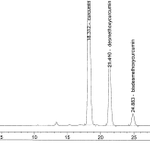
Trust, but verify with chromatography. Vanguard has validated full NSAID test panels for HPLC, and LCMSMS with PPB level detection limits.
