

Software engineer. Building my own home into a tech hub.
Singapore
Joined October 2013
- Tweets2.3K
- Following948
- Followers954
- Likes3.2K







Dylan Oh retweeted

Fable 5.2 shows substantially improved skills in controlling physical robots, even on tasks it has never explicitly been trained to do.
On RoboDojo, a benchmark with a simulated two-arm robot, it outperformed other models and most AI systems built to control robots.
I was about to start building my own home assistant.
Then this showed up on my YouTube homepage.
Claude Fable 5.2, just released, designing a working voice-assistant hub. Good timing :O
In 2028, I'll get the keys to my new home. Hopefully not too early, because I have a lot to learn.
I'm planning to turn it into my own tech hub. A home that I can keep building and experimenting new stuff on.
I can code, I know software architecture. But I know almost nothing about IoT, Robotics or XR yet.
But I'm super excited to start from zero here (well, not exactly zero since I have years of experience in software).
I'll share what I try, what breaks, and what I learn along the way.
My initial thought:
- Brain: AI agent (the main hub)
- Zigbee to the devices
- Might eventually host other software locally that can receive API calls and execute things
- XR for any audiovisual (and maybe gaming)
- When I move in, humanoid robot (hopefully there's a cheaper solution by then)
If you were building your own home from scratch, what would you add to this list?

1
1
43
FDE is not a new job.
A few friends asked me, “What’s FDE? And does it really pay that much?”
And I get why they’re asking.
AI companies are hiring FDEs like crazy, and some of those salary ranges are pretty wild.
So, FDE = Forward Deployed Engineer.
You work closely with customers, figure out how they actually work, build solutions around their needs, and bring what you learn back to the product team.
But here’s the thing. This isn’t new.
Palantir popularized this role more than a decade ago.
And I’ve been doing some version of this throughout my career, just without the fancy title.
So why is everyone talking about it now?
Because building an impressive AI demo is one thing.
Getting it to actually work in a customer’s environment is a completely different mess.
That’s the job itself.
Same role but only with new stack.
2
106
If you get a coding assignment during the interview, and you want that job so badly, still, pleaseeeeeee, ask AI to scan through the repo if any malicious code found. If it’s just an assignment task the code shouldn’t look complicated at all.
I had an interview invitation once and I walked away right after they asked me to clone a repo from their bitbucket and run it locally.
And who tf does their coding interview on the work laptops…
1
54
Learning AI should start with subtraction. NOT addition.
Everyone's trying to catch up on what AI can do and end up getting busier.
Better first question: what am I already doing that I don't want to do, and can AI remove it?
Subtract first. Then explore.
1
54
My future humanoid robot only needs to work in one home. Mine.
A friend asked me why I’m spending my weekends learning about motors and sensors. Nobody’s paying me to do this. Honestly, I just find it fun.
My dream is to have my own humanoid robot at home someday. I don’t mind if I build it myself, use open-source designs, or just buy one when they’re affordable.
I picture it working alongside my smart home.
- Lights, aircon, curtains? Just control them through software.
- Picking up a cup or loading the washing machine? That’s when it needs its hands.
Software first. Physical manipulation when necessary.
I don’t need it to work in every household. I’ll know my floor plan, where everything sits, and what my routines look like. I just want to keep teaching it to work in my home.
For now, I’m still testing the motors on my first self-balancing robot.
Long way to go. But that’s what I’m working toward.

1
59
Dylan Oh retweeted

One person leaves Cardano for Sui, and here's the headline for articles: "Is Cardano Losing Its Loyalists?"
There are so many important developments in Cardano that gets overlooked but this makes the headline.
Anyways! Here's my opinion on the whole "Cardano Vs Sui" discussion:
My DRep ID: drep1jml6pvzdywrcpjntn535xcfgyrlrz788nuuj5ugawpdg2ncwame
#cardano #ada
While testing the MPU6050 for my self-balancing robot, I oriented its +Y axis upward.
The Y reading was about +16,384 (roughly +1g with the ±2g setting).
Gravity pulls downward, so I expected a negative value.
I asked AI why the reading was positive. That’s when I realized I’d misunderstood what an accelerometer actually measures.
It measures specific force, not gravitational acceleration directly.
- Resting on a surface: The surface supports the sensor against gravity → +1g on its upward-pointing axis.
- In free fall: There’s no support force → ~0g, even though it’s accelerating downward.
In short: +1g doesn’t mean the sensor is accelerating upward. It means it’s being supported against gravity.

2
87

Dylan Oh retweeted

New follower? I’m Greg Madison. I’ve been pioneering tangible interfaces in XR for decades: making digital illusions part of the physical world, keeping us grounded in it.
A thread on the ideas behind my work. 🧵
Here’s an early exploration from 2009.
fr.slideshare.net/slideshow/…
Dylan Oh retweeted

Ok so here's what I want to go all-in on for Cardano and I'm looking for people who want to build it with me.
I'm kicking off a commercial viability workstream with @rod_drmz and the @Cardano_CF . Now that the CF is pulling a lot of the programs together, there's a real chance to build proper user journeys through them - with actual branching paths depending on what projects need. Stemming off of convos last year with the venture hub and CAP, @KrisKowalsky, @krissbaird, @dannyribar’ and @planetmaaz
I also want to build a GTM / lead gen piece on top of it, so we can actually connect Cardano projects to real clients and revenue, not just VCs.
The idea is pretty simple - bring in students and early-stage founders, teach product-market fit and how to shape pre-Catalyst ideas, then support them post-Catalyst into Draper, angels, or straight up client work.
Got a fuller write-up coming soon, once alignment with CF is confirmed, but just putting the feeler out now to see who wants to be part of a community-led push on this.
I'm clear of other stuff now so I can properly focus on it. If you're keen, shout.
It’s crazy that I could generate this with a skill and a one shot prompt on Claude code.
I recently came across a Claude Code skill called Anatomy (created by @wheresryan22 ), which creates super detailed, interactive visualizations to explain how technical systems work.
Since I’m currently working on my first robotics project (a self-balancing robot), I thought I’d give it a try. I’ve been struggling with is visualizing how everything actually fits together.
So I gave Anatomy a prompt describing my components, how I planned to assemble them, and how the robot is supposed to work.
And this is what it generated. In one shot.
Of course, I’ll still need to verify the actual design and wiring when I build it. But this gives me a much clearer starting point than trying to piece everything together in my head.
As someone learning robotics from scratch, I find this kind of visualization incredibly helpful. It makes the gap between understanding a concept and actually building something feel a lot smaller.
Pretty amazing what a well-designed skill can do with just one prompt.
A busy week, but the robot project finally moved forward again.
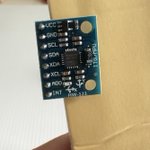
The pre-soldered MPU6050 I ordered arrived. I don’t have to fight with the soldering iron for now (yay)
I hooked it up to the Arduino and started figuring out how to talk to the sensor, read the data, and understand what the accelerometer and gyroscope are actually giving me (through serial monitor).
Gonna spend some time this weekend to make sense of those numbers well enough to eventually keep a two-wheeled robot standing upright.
2
80

Cardano has the rails now: Pyth, USDCx, LayerZero, RealFi.
The infrastructure is there.
Now we need the Disneyland.
cardano:native
1
91
Dylan Oh retweeted

The first Bitcoin DeFi protocol on Cardano is growing!
We now have over $112k USD in TVL.
Bitcoin liquidity can move ⚡️FAST⚡.
Follow @btc_karma today and get in while the APR is still 🔥hot.
I personally have made $1k off of $5k in 2 months.

I had a fun week “learning robotics”.
I started documenting the process — made a short opening animation with Opus 5.5 (which turned out really well), and recorded myself going through the parts.
Hopefully I’ll have a full build video to share once the robot can actually stand upright.
Then I got to soldering my MPU6050.
It came in two parts: the pin headers and the PCB itself. I needed to solder them together.
My cheap soldering kit decided to give up on me after just two attempts. And there was no way I could revive it.
Anyway, I’m not gonna let that stop me from getting started.
I just ordered an MPU6050 with the pins already soldered (should’ve done that in the first place, didn’t know). It’s on its way now.
Once it arrives, I can start testing it with my Arduino and finally write some code (back in my comfort zone!).
Knowing what not to learn yet is part of learning too.

How does a physical measurement become a number that software can understand?
I was taking an Arduino course by Programming Electronics Academy (highly recommended!) as part of learning how to build my self-balancing robot.
When I got to the analog input pins, I realized I didn't actually understand how something like temperature becomes a number inside the microcontroller (MCU) on the Arduino.
The whole path looks something like this:
Physical quantity → sensor → analog voltage → analog-to-digital converter (ADC) → raw digital value → software interpretation
An analog sensor turns a physical quantity, like temperature, light, or pressure, into an electrical signal. Then the analog voltage is converted into a raw digital value and interpreted by the MCU.
A hypothetical example, assuming a 12-bit ADC with a 3.3V reference:
50°C (temperature) → 1.65V (analog voltage) → 2048 (digital raw value) → MCU interprets it as 50°C according to the sensor data sheet (basically, providing the information software needs to convert the raw reading back into a physical quantity)
The interesting part for me is that the MCU never actually “sees” temperature. It only sees a number, and software gives that number physical meaning.
How fun!
1
92