

Building @RingsNetworkio and @lispm_ai Ethereum contributor. Rust · AI · Distributed Systems · ZK
Mars
Joined May 2009
- Tweets3.5K
- Following943
- Followers1.5K
- Likes4.9K





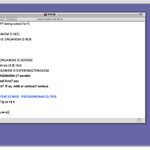
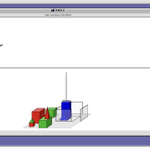
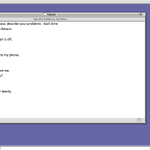
Symbolics Genera Theme is here

In the 1980s, before Mac and Windows took over, AI researchers at MIT and Symbolics worked on a very different kind of computer: the Lisp Machine.
On Symbolics Genera, there was no desktop full of icons and no wall between the OS and your programs. Everything lived in one shared Lisp world:
• The whole screen was a live Dynamic Lisp Listener.
• At the bottom sat a two-line black Mouse Documentation Line (telling you what each mouse button did right now) and a Who-Line (showing who was logged in and whether the machine was waiting for input or running code).
• When you needed a window—like the Zmacs editor—you didn't hunt for an icon. You right-clicked anywhere, chose Create, and dragged a dotted rectangle across the screen to size and place the window on the spot.
We brought that 1980s Lisp Machine workflow back to life in LispM Desktop—and built it for today's AI agents:
1. 1-bit Symbolics Genera Mode
Switch to Genera in Control Panels (or pick Classic Lisp Machine on first start). The desktop icons and top menu bar vanish. Your screen becomes Dynamic Lisp Listener 1, drawn in crisp 1-bit monochrome Dynamic Windows: double-rule borders, 45° diagonal-hatched scrollbars, the inverse-video Mouse Documentation Line, and a live Who-Line.
2. One Command: Prompt for Commands, Lisp, and AI
At Command: █ on the Listener, you can run Symbolics-style commands (Show System, Select, Create), evaluate Emacs Lisp inline ((mapcar #'1+ '(1 2 3 4)) => (2 3 4 5)), or just talk to LispM in plain English. Ask it to fix a bug and run the tests—the Who-Line flips from User Input to Agent Run, and the agent streams its work and reply right on the Listener.
3. Right-Click → Create → Sweep a Window
Right-click anywhere to pop up a 1-bit paper-white Command Menu, choose Create ▸ Emacs, and drag a dotted rubber-band outline across the screen. Let go, and the window snaps into the exact rectangle you drew.
4. [Select], [Bury], and [Kill]
Every LispM app—Zmacs Editor, spatial Finder, App Store, and games—renders in 1-bit Dynamic Windows chrome. Click [Bury] to tuck a window behind the Listener with its state intact, or [Kill] to close it.
5. Even in a Terminal (emacs -nw)
Run emacs -nw (even over SSH), and the same Dynamic Lisp Listener 1 renders in text with a block-character rainbow λ, interactive buttons, the Command: prompt, and the Who-Line.
LispM is open source (AGPL) and built on GNU Emacs for macOS and Linux.
Install in one line:
curl -fsSL lispm.ai/install.sh | sh
lispm.ai
github.com/LispMachineLab/li…
#Lisp #Emacs #AIagents #RetroComputing
1
1
46


Standard TURN (RFC 5766) assumes a centralized user/password database—which goes against everything a decentralized P2P network stands for.
In Rings v1.0.0-pre.4, we built rings-turn so peers authenticate TURN allocations using the exact same DelegateeKey or direct DID signatures they already use in Rings.
The trick: a signature in the STUN USERNAME is public on the wire, so using it directly as the TURN password would let anyone on the path forge MESSAGE-INTEGRITY. Instead, the client and TURN server derive the HMAC key via secp256k1 ECDH + HKDF-SHA256 over the signature—zero shared-secret database, zero cleartext password exposure, and seamless live ICE credential rotation.

Rings v1.0.0-pre.4 is out! 🪐
WebRTC P2P breaks down when both peers sit behind Symmetric NATs or strict UDP firewalls, and traditional TURN servers require shared password databases or central token services.
Preview 4 introduces rings-turn: a stateless, signature-authenticated TURN relay for Rings Network.
- Signature + ECDH Credentials: No shared-secret DB. Clients sign TURN challenges with short-lived DelegateeKeys or non-expiring direct DID keys (Secp256k1, EIP-191, BIP-137, Secp256r1, Ed25519, BLS12-381), deriving the RFC 5389 MESSAGE-INTEGRITY key via secp256k1 ECDH + HKDF-SHA256 so the password never travels in cleartext.
- Seamless Session Rotation: Live WebRTC transports automatically refresh ICE credentials when a DelegateeKey rotates, while active TURN allocations stay alive across key rotation.
- Hardened Relay Policy: Built-in SSRF/loopback/private-IP/NAT64 filtering, per-5-tuple nonce binding, and a standalone rings-turn binary.
Release & docs: github.com/RingsNetwork/ring…

58
The 3th preview release of Rings 1.0 is here!
Before the official release, we'd like to find and fix as many issues as possible. Rings 1.0 will be our first release with a commitment to stability.
If you encounter any bugs or issues, please feel free to open an issue. Your feedback is greatly appreciated!
Rings Network v1.0.0-pre.3 is out!
🪐Non-transitive DHT resilience:
100% delivery across all 120 (ABC)(CDE) topology permutations via multi-predecessor sync & verified gap-bridging
Browser / Native / FFI parity:
unified lifecycle, Onion HTTPS & WebRTC state machines
Hardened storage & crypto:
strict IndexedDB byte budgets with legacy migration + zeroized E2E key/nonce derivation
github.com/RingsNetwork/ring…

3
2
185
LispM is freaky fast.
LispM on @runta's FrontierHarness v1.0 benchmark (@Kimi_Moonshot K3):
As good as @OpenAIDevs Codex overall (66.7%), 1.75x cheaper ($1.98 vs $3.47/pass), 2x faster (3.4m vs 6.7m), and 90% (18/20) on Terminal-Bench.
Turns out an Emacs-native Lisp Machine harness with stateful buffers + TRAMP beats heavy CLI wrappers on both token efficiency and speed.
Now running FrontierHarness v1.1 (62 tasks) with @deepseek_ai V4.1-Flash on @vercel AI Gateway. Stay tuned! 🚀

55
You are all computer scientists.
You know what FINITE AUTOMATA can do.
You know what TURING MACHINES can do.
For example, Finite Automata can add but not multiply.
Turing Machines can compute any computable function.
Turing machines are incredibly more powerful than Finite Automata.
Yet the only difference between a FA and a TM is that
the TM, unlike the FA, has paper and pencil.
Think about it.
It tells you something about the power of writing.
Without writing, you are reduced to a finite automaton.
With writing you have the extraordinary power of a Turing machine.
By Manuel Blum
1
118
With our SCTP batched packet dispatch fix (webrtc-rs/webrtc#941) merged upstream and released in webrtc 0.17.3, we finally dropped our last local vendor patch and shipped @RingsNetwork v1.0.0-pre.1! 🦀
This 1.0 Preview also brings:
1. Client-sealed Onion Kleisli pipelines
2. Signed CRDT provenance & crash-safe recovery
3. Exhaustive Stateright formal verification across routing, storage & admission
Rings v1.0.0-pre.1 is out! 🪐
All 73 issues in the 1.0 milestone are now closed:
• Onion Kleisli pipelines: client-sealed multi-hop invoke circuits
• Non-transitive Chord resilience & incarnation-bound relay custody
• Signed CRDT provenance & water-filling admission
• webrtc 0.17.3 batched SCTP dispatch
• Exhaustive Stateright models + Miri/ASan gates
github.com/RingsNetwork/ring…


The Lisp Machine Bubble: The 1980s AI Crash That Sank Symbolics
youtube.com/watch?v=iF8Dv1hg…

81

A Brief History of PostgreSQL
postgresql.org/docs/current/…


Fun fact of the day:
Postgres started as a successor to Ingres Project, short for Post-Ingres.
And Ingres was the short for Interactive Graphics & Reterival System.
The first version of Postgres didn't even use SQL, it used Post(Quel), short for Query Language.
The project was forked by 2 grad students in 1994 & renamed to Postgres95, but was renamed to PostgreSQL a year later by community maintainers.

1
137
Ryan Kung 🇺🇦 🌪️ retweeted

We built a native ComfyUI client in pure Emacs Lisp — drawn with SVG right inside an Emacs buffer, no WebView or browser required.Navigate nodes spatially with arrow keys, wire sockets with type-aware completion, watch nodes light up over WebSocket as they run, and let AI agents edit & run the exact workflow you’re looking at. 🧵👇

Reimplemented ComfyUI with elisp, you can now use comfy inside Emacs, power by @lispm_ai

Three.js was too complex for product use cases, but I never imagined that it would be this popular just because of AI.
95