

Communications Specialist | Climate Action | Policy Analyst Design & Animation | Social Media Strategist | Championing Women's Empowerment | Everything Aligns ✨
Cameroon
Joined September 2019
- Tweets45K
- Following5.5K
- Followers9.8K
- Likes53.1K






Pinned Tweet
October 2016 marked the beginning of the #AnglophoneCrisis People went out for a peaceful protest but were sprayed with bullets. Mothers, fathers, sisters, brothers and children were killed. People are still dying everyday 💔
Esther Ebot 🇨🇲 retweeted

She Hid Her 12-Year-Old Daughter in a Ditch for Nine Months to Save Her From Boko Haram
In August 2014, Zainabu Hamayaji made a decision that would keep her daughter alive but force the young girl to spend nine months hidden underground.
Hassana was only 12 years old. Her mother feared that Boko Haram fighters would abduct her and force her to become a child bride.
To protect her, Zainabu hid her in a deep ditch behind their home in Madagali, Adamawa State, Nigeria.
Then, she did something that made the plan even more extraordinary.
She pretended to be mentally ill so the insurgents would leave her family alone.
When Boko Haram invaded Madagali, families faced a terrifying choice. People who tried to escape were being killed, and Zainabu witnessed the violence firsthand.
Her husband was among those killed.
She was left trying to protect her children in a town controlled by the same fighters she feared would take her eldest daughter away.
Zainabu had heard that the insurgents were looking for young girls to marry. When they learned she had a daughter of marriageable age, they came to her home.
She denied having such a daughter, but they did not believe her.
They beat her repeatedly. Her shoulder was dislocated, and she lost a tooth during the attacks.
Zainabu realised that simply denying Hassana's existence would not be enough. She needed to make the fighters believe there was something about her family that made it dangerous to interfere with them.
So she began acting as though she had lost her sanity.
She loosened her hair, stripped off her clothes and wandered around the community. She rolled in rubbish and smeared herself with urine and faeces.
The woman who had once lived an ordinary life was deliberately making herself an object of avoidance.
The insurgents returned repeatedly to check whether her behaviour was genuine. Each time, Zainabu continued the act.
Her younger children helped her maintain the deception. When the fighters questioned them about their mother's behaviour, they insisted that she had been mentally unwell for a long time and had previously visited a psychiatric hospital.
The children were frightened, but they played their part.
Eventually, the insurgents began to believe the story.
According to Zainabu's account, they feared that harming a mentally ill woman or taking her child could bring a curse upon them. They even left a warning on the family's house telling other fighters not to attack them.
But while Zainabu was trying to convince the insurgents that she was mentally unstable, Hassana was facing a different kind of ordeal.
She was living inside a ditch.
Her mother had prepared the hiding place with supplies, including food, water and matches. Hassana had to cook and manage her basic needs in the confined space. She also had to find a way to dispose of her waste.
For nine months, the ditch became her hiding place.
She could not simply walk outside whenever she wanted. Her safety depended on remaining hidden while her mother continued the deception above ground.
It was an extraordinary burden for a child who should have been able to live without fear of being abducted and forced into marriage.
Zainabu kept up the act, despite the beatings and the physical injuries she had suffered.
Then, in March 2015, Nigerian soldiers recaptured Madagali from Boko Haram.
When the soldiers encountered Zainabu, they were suspicious. They wanted to know how she had survived in the occupied town and questioned whether she had been married to a Boko Haram fighter.
She denied it and explained what she had done to protect her children.
The soldiers did not immediately believe her.
So she took them to the hiding place.
When they opened the ditch, Hassana was there.
After nine months underground, the 12-year-old girl was finally brought out of hiding.
The soldiers took the family to a camp for displaced people in Gwoza, where Zainabu later told her story to journalists.

Esther Ebot 🇨🇲 retweeted

It's funny how we use this only when relationships are concerned
If it's aboutt leadership and other opprunities, she suddenly becomes immature, too emotional etc

Esther Ebot 🇨🇲 retweeted

The day a nurse misses your vein and injects a substance into the wrong channel.
The day a doctor misdiagnoses you and leaves you carrying a fear you may never fully recover from.
That’s the day you’ll understand why you should never condone an unjust system.
I’m not saying these aren’t genuine mistakes adequately trained professionals can do. But imagine it’s done by someone who wasn’t supposed to be in the service in the first place.
An unjust system is never truly on your side.
Today, its injustice may work in your favour; tomorrow, its injustice will work against you.
And when it does, you’ll wish you had spoken up when the suffering belonged to someone else.
Never mistake an injustice that benefits you for a system that serves you. A system that can be unjust to others can, without warning, be unjust to you.
Esther Ebot 🇨🇲 retweeted

And while we are on the topic of the kids who died in Yde today, let's not forget earlier this year, 2 teen girls in Kumba were raped and killed close to their school, after they were sent back home from school to redo their 'rough' hair.
These girls never made it home!

Esther Ebot 🇨🇲 retweeted
The doctor-to-patient ratio in Cameroon is deeply concerning, and I’m not sure we talk enough about the systemic failures behind it.
The treatment of medical personnel and students by the government and the educational system is disheartening. We continue to train doctors, many of whom eventually leave the country for better opportunities and working conditions.
CUSS graduates hundreds of medical students, but where are the hospitals, the jobs, the equipment and the facilities to support them? What exactly is the point of training medical professionals if we cannot create the conditions for them to serve the population?
We are turning medical education into an export industry while our own healthcare system struggles to meet the needs of its people.
At this rate, you might want to start learning how to boil pawpaw leaves and ask your parents about those traditional methods 😭😂
Because in Cameroon, you’re very likely one minor illness away from death.

Entitlement isn’t a one way street. There are men entitled to women’s care, body, time, etc
Disrespect on women is not entertained here, and we do not encourage entitlement in our ‘programs’. Be guided!!!


Entitlement has to be a mental disorder.
Unless we’re trying to piggyback off the patriarchy, even that your long backhead boyfriend doesn’t owe you anything.
Mannnn I just remembered the beating we received in primary 3 by the pastor because we were singing to Petit Paye’s “Bobbi na ma chop”
You hear children singing an immoral song and your first instinct is to beat them???

Esther Ebot 🇨🇲 retweeted

The impact of the escalation in the Middle East extends far beyond the region.
By year-end, 11.7 million more women and girls in 28 countries could face food insecurity. #ForAllWomenAndGirls, access to food must be protected.
See @vanyaradzayi's remarks: unwomen.org/en/news-stories/…


A protocol cannot transform lives if its promises remain confined to policy documents & conference rooms. Women need to know their rights. Communities need to understand them. And governments must be held accountable for implementing them.
Join us demain bit.ly/3V5azal

23 years of the Maputo Protocol. But how much of its promise does the average Cameroonian woman actually feel?
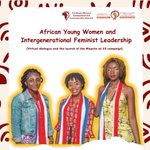
I am honoured to be one of 23 African women contributing to FEMNET’s #MaputoAt23 campaign.
Read “Displaced But Not Disposable” on;
femnet.org/2026/09/displaced…

A protocol cannot transform lives if its promises remain confined to policy documents & conference rooms. Women need to know their rights. Communities need to understand them. And governments must be held accountable for implementing them.
Join us demain bit.ly/3V5azal
These complains about being overloaded with “useless” information in our primary school curriculum are valid, until you come across our neighbours (not calling names) who do not know what their map looked like before 1961 😂
