

Exploring the foundations of physics & cosmology with Zeeya Merali & Gabe Fitzpatrick, of the Foundational Questions Institute, FQxI.
At the edge of reality.
Joined July 2009
- Tweets20.3K
- Following5K
- Followers19.8K
- Likes11.2K





Pinned Tweet
In the first of a series of short documentaries from FQxI, Professor Natalia Ares shows us her research at Oxford University that uses carbon nanotube machines to investigate how we can use information as a fuel. @NAresgroup @geoffreylondon
qspace.fqxi.org/videos/246/i…
#FQxI


FQxI Physics retweeted

On the advice of a group of physicists, OpenAI hasn’t released a major result that claims to make a theory in particle physics mathematically rigorous. Instead, the physicists are now working to understand the 1,147-page AI proof themselves. quantamagazine.org/updates/t…


FQxI Physics retweeted

Mathematicians found a connection between different knots and formulas developed by legendary genius Srinivasa Ramanujan
sciam.com/article/mathematic…

FQxI Physics retweeted

Scientists have ruled out yet another source of the Universe’s elusive dark matter: ‘stupendously’ large black holes
go.nature.com/4su2SqV

FQxI Physics retweeted

🐟 Virtual fish projected with a closed-loop virtual-reality system into a fishbowl with a real fish helped researchers figure out how real fish coordinate their movements in schools based off of a single neighbor.
Get more from PRX Life: go.aps.org/4sAm4TY
Congratulations to William Wong, who won the FQxI challenge at the @Moth_Quantum hack.
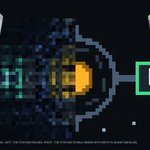
We asked entrants to teach a general audience something about quantum physics, using Moth’s Atlas engines. William made Quantum Crew, a party game where two teams try to keep a space station running without talking to each other. However carefully they plan, they can’t get more than 75% of rounds right. Give each pair a set of entangled crystals and they reach about 85%.
Physicists use this kind of test to show that entangled particles can’t just be carrying instructions set in advance. We also liked that the game shows what entanglement can’t do: the crystals never let the players send each other a message.

Read more & play it yourself: qspace.fqxi.org/news/165334/…

FQxI Physics retweeted
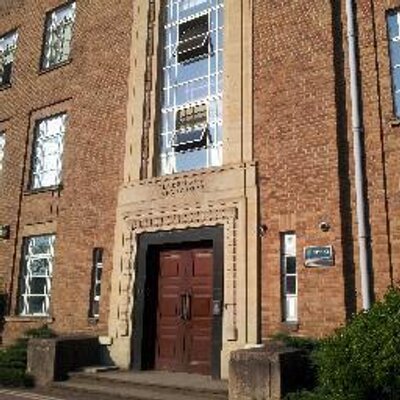
🎙️NEW podcast - Learn how Cecilia Payne-Gaposchkin discovered what stars are made of on The English Heritage Podcast. Featuring pioneering astrophysicist Professor Dame Jocelyn Bell Burnell on diversity.
Listen at open.spotify.com/show/6z3JSB…
@englishheritage @amyfmatthews

FQxI Physics retweeted
In the Department of Physics, our researchers are uncovering the secrets of the universe - from quantum systems to the origins of galaxies. Join our DPhil programmes and help expand the frontiers of discovery: ox.ac.uk/admissions/graduate…
#Oxford #Physics #PhD #Research #Innovation

FQxI Physics retweeted

Sabrina Pasterski has been described as the next Einstein, and perhaps that's no surprise given how mind-bending – and potentially transformative – her ideas are.

FQxI Physics retweeted

Seth Lloyd and I are giving public lectures tomorrow morning @UWConline. We are both attending the current Nobel Symposium hosted @STIAS_SA. Our talks will be live streamed.

FQxI Physics retweeted

Do you want to work with me on quantum information, entanglement and chemistry?
We’re hiring a 2-year Postdoctoral Research Fellow at the @UniofNottingham, on an EPSRC/NSF project with @Harvard.
Deadline: 11 Nov 2026.
Apply here: jobs.nottingham.ac.uk/vacanc…
Please share!

FQxI Physics retweeted

Just released: a new Nobel Prize lesson to share with your students.
It's a deep dive into the 2026 Nobel Prize in Physics, which turned a giant block of ice in the south pole into a detector for mysterious particles from space.
Use the Nobel Prize lesson in the classroom and find out more: bit.ly/4soAXse

FQxI Physics retweeted

A year out, about half of new physics bachelors were working or job-hunting, and 36% of those not in grad school hoped to enroll later.
New AIP data. 🔗 bit.ly/3UFPYcI


FQxI Physics retweeted
Following on our post last week, a reminder to come join us *tonight* from 6:30pm outside the Martin Wood Complex (Clarendon Laboratory, Parks Road, Oxford OX1 3PU).
Visit the event page on our website via link in bio or physics.ox.ac.uk/index%2Ephp…
See you later! 🔭🌔


