




CC retweeted

这家伙把“为什么极少数人能成,而大多数人注定平庸”彻底讲透了。
原因让人极度不适:博弈论。
我们被“棉花糖实验”误导了太多年,以为阶层差距在于意志力。
真相是底层支付矩阵(Payoff Matrix)从第一天起就截然相反:
稳态局(赢家生态):承诺可信、契约稳定、底座安全。此时“延迟满足”是高确定性的复利。
高熵局(底层生态):朝令夕改、承诺易碎、明天难保。此时“即刻落袋”才是生存的纳什均衡。
同一套行为模式:在无风带叫长期主义,在风暴区叫慢性自杀。
耐心、专注、刻意练习、大词汇量……
这些被赞美的美德,从来不是独立品质,
它们全都是“高兑付率与安全感”的衍生副产物。
不是平庸者不肯忍耐,
而是当规则注定失信,
“短视”就是他们唯一理性的防御机制。


CC retweeted
1986年,拉斯维加斯每家赌场联手封杀了同一个人。
他们以为故事到此结束。
结果这人揣着18万美元飞到香港,开始赌马。
最后几乎赚了9亿美元
他叫 Bill Benter。
赌场封杀他,是因为他算牌。
到了马场,他干了一模一样的事:
只是把扑克牌换成了马。
他的全部秘密,浓缩成一行公式:
EV = p · b − (1 − p)
p 是你算出的真实胜率,b 是赔率。
EV 大于零,押。小于零,走人。没有第三种情况。
他花了好几年,喂给电脑几十个变量: 骑师体重、赛道湿度、马的血统、历史跑位: 只为把每匹马的真实胜率算到比庄家更准。
庄家定价偏了,他就吃这个价差。
庄家没偏,他一分钱不碰。
这段 45 分钟的 MIT 概率公开课,讲的就是这件事。
华尔街量化交易员、职业赌徒、对冲基金分析师的共同起点。
MIT 学生一年交 8 万美金来听。
现在免费摆在网上。
Benter 没有内幕,没有运气,没有神秘系统。
他只是认真做了数学作业。
绝大多数人在"感觉会赢"的时候下注。
真正赚到钱的人,只在数学说"值得"的时候出手。
区别只有一个:
你下注前,有没有先算 EV。
CC retweeted

Backpropagation by hand ✍️ ~ 11 steps walkthrough below
Backpropagation is the algorithm that actually trains a neural network, and it is where most people stop following along. It is not calculus you cannot do. It is matrix multiplication, working backward, one layer at a time.
So I drew and calculated one entirely by hand.
Goal: push the loss gradient back through a 3-layer network and land on a new value for every weight and bias.
= 1. Given =
A 3-layer perceptron, an input X, predictions Ypred = [0.5, 0.5, 0], and the truth Ytarget = [0, 1, 0].
= 2. Backprop gradient cells =
Let us draw empty cells for every gradient we are about to compute. The shape of the answer comes first.
= 3. Layer 3 softmax =
We get dL/dz3 straight from Ypred minus Ytarget = [0.5, -0.5, 0]. No chain rule needed, and that shortcut is the whole reason softmax and cross-entropy are paired.
= 4. Layer 3 weights and biases =
Let us multiply dL/dz3 by [a2 | 1]. One multiplication gives the gradient for W3 and b3 together.
= 5. Layer 2 activations =
We multiply dL/dz3 by W3 to get dL/da2. The gradient moves back across a layer the same way the signal moved forward.
= 6. Layer 2 ReLU =
Let us pass it through the gate: keep the gradient where the activation was positive, zero it everywhere else.
= 7. Layer 2 weights and biases =
We multiply dL/dz2 by [a1 | 1]. The same figure as step 4, one layer up.
= 8. Layer 1 activations =
Let us multiply dL/dz2 by W2.
= 9. Layer 1 ReLU =
We apply the same gate again, now on a1.
= 10. Layer 1 weights and biases =
Let us multiply dL/dz1 by [x | 1], and every weight in the network now has a gradient.
= 11. Update =
We subtract, and the network has learned. In practice a learning rate scales this step.
The gradients:
dL/dz3 = [0.5, -0.5, 0]
dL/da1 = [1, -2, 2, -1]
dL/dz1 = [0, -2, 2, -1]
The takeaway: matrix multiplication is all you need. Just like the forward pass, backpropagation is matrix multiplications end to end. You can do every one by hand, slowly and imperfectly, which is exactly why a GPU's ability to do them fast mattered so much to deep learning.
💾 Save this post!

CC retweeted

这是 YouTube 最火爆的 Codex 零基础上手教程。
Youtube 140 万粉丝的大佬 Charlie Chang(Hook AI 创始人),14 分钟带你从下载到实战,全程跟着做一遍:
让搭载 GPT-5.5 的 Codex 自己做落地页、写营销方案、跑定时任务、还能生成宣传视频——一条 prompt 就能产出一整套素材。
章节:
00:00 Codex 是什么,为什么比 Claude/Gemini 强
00:44 第一步:下载安装 Codex
01:08 走一遍引导设置
01:38 吃透主界面:项目、聊天、权限、模型档
03:44 实战介绍
03:57 配连接器:GitHub / 浏览器 / HeyGen
04:35 Plan 模式做一个 AI 落地页
05:50 Codex 自带浏览器,自己截图测试
06:14 加自动化:每天 9 点自动出报告
07:25 让 Codex 回头改进落地页
08:39 接 Google Drive,自动生成营销方案
10:24 一条 prompt 生成宣传视频
12:37 做社媒轮播图
12:45 去试、去迭代,做自己的东西
14 分钟,把 Codex 用成全能助手。
CC retweeted

A 39 year old Slovak-Canadian researcher just paused his AI school to join the company that's racing OpenAI for the future of intelligence.
His name is Andrej Karpathy. And his career is one of the strangest in modern AI.
Karpathy was born in Bratislava in 1986, in what was then Czechoslovakia. His family moved to Toronto when he was 15. He did his bachelor's in computer science and physics at the University of Toronto, where he sat in on Geoffrey Hinton's classes and reading groups long before Hinton became a household name. He did his master's at UBC. Then he went to Stanford for his PhD under Fei-Fei Li, the woman who built ImageNet.
In 2015, while still finishing his PhD, he designed and taught Stanford's first deep learning course. It was called CS231n. It started with 150 students. Two years later it had 750. The lecture videos went on YouTube for free and became the standard reference for an entire generation of AI engineers. TIME magazine later reported that those Stanford lectures alone have over 800,000 views.
That same year, Sam Altman, Elon Musk, and Ilya Sutskever started a research lab called OpenAI. Karpathy was one of its founding members.
He stayed at OpenAI for two years. Then in June 2017, Elon Musk hired him to run Tesla Autopilot. He spent five years there as Senior Director of AI, leading the computer vision team behind every Tesla on the road.
In February 2023 he went back to OpenAI. He quit again in February 2024.
And then he did something nobody in his position had ever done.
He turned his YouTube channel into a school.
His "Neural Networks: Zero to Hero" series walks through how to build a GPT model from scratch in plain code, math, and English. The flagship video, "Let's build GPT: from scratch, in code, spelled out," is just under two hours long and has millions of views. People at every major AI lab cite it as how they actually understood transformers.
In July 2024 he announced Eureka Labs. The pitch was an AI-native school. Human teachers paired with AI teaching assistants, scaling one great teacher to a million students. The first course was LLM101n, an undergraduate program that would teach anyone to train their own ChatGPT from scratch.
Then in February 2025 he coined the phrase "vibe coding" in a single throwaway tweet. The phrase became Collins Dictionary's Word of the Year. It now has its own Wikipedia article.
Last week, on May 19, 2026, he announced he is joining Anthropic.
Eureka Labs is on pause. He said the next few years at the frontier of large language models will be especially formative, and he wanted to get back to research. At Anthropic he will lead a pretraining group focused on using Claude to accelerate Claude itself.
The man who left two of the most powerful AI labs on Earth to teach the world for free just walked back into one of them.
The videos are still up. All of them. Free. Forever.
And he still answers questions in the comments.

CC retweeted

We implemented @karpathy 's MicroGPT fully on FPGA fabric.
No GPU.
No PyTorch.
No CPU inference loop.
Just a transformer burned into hardware, generating 50,000+ tokens/sec.
The model is small, but the idea is not: inference does not have to live only in software 👇


CC retweeted

ANDREJ KARPATHY COULD HAVE CHARGED $2,000 FOR THIS COURSE.
He put it on YouTube.
The full training stack. Tokenization. Neural network internals. Hallucinations. Tool use. Reinforcement learning. RLHF. DeepSeek. AlphaGo.
3 hours of the most comprehensive LLM education that exists anywhere at any price.
Not how to use the tools.
How the entire system was built from the ground up and why it behaves the way it does.
The engineers who understand this build things the ones who only use the tools cannot even conceive of.
The gap between those two groups is not 3 hours.
It is everything those 3 hours quietly unlock for the rest of your career.


CC retweeted
Everyone is fine-tuning LLMs.
Almost nobody understands what is actually being updated inside the model.
Here are 5 techniques that change how you think about model adaptation, and what each one is actually doing to the weights:
1./ LoRA - Learn the update, not the weights
The pretrained weight W is frozen. Completely untouched.
Instead of updating W directly, two small matrices are trained =>
A ∈ ℝʳˣᵈ and B ∈ ℝᵈˣʳ, where r ≪ d
The weight update is: ΔW = BA Effective weight: W' = W + BA
The entire adaptation happens in a tiny low-rank space. W never changes.
2./ LoRA-FA - What if we freeze even more?
Same structure as LoRA. One change.
A is frozen alongside W. Only B is trained. Effective weight: W' = W + BA (A is fixed)
Half the trainable matrices of LoRA. Same core idea. Fewer parameters.
3./ VeRA - What if the matrices don't need to be learned at all?
This is where it gets interesting.
A and B are both frozen, and randomly initialized. What gets trained are just two tiny scaling vectors =>
b ∈ ℝʳ and d ∈ ℝʳ
Instead of learning the low-rank matrices themselves, VeRA keeps them frozen and learns small scaling vectors that modulate their contribution.
Initialization => b = 0, d = 1
You're not learning matrices. You're learning how to scale them.
One of the most parameter-efficient techniques on this list.
4./ Delta-LoRA - What if W itself learns from the low-rank updates?
This one is fundamentally different.
Unlike standard LoRA, the base weight W is not fully frozen. It is updated through low-rank delta propagation at every step =>
W^(t+1) = W^t + c(B_(t+1)A_(t+1) − B_t A_t)
Where c is a scaling factor.
A and B are trainable. W evolves, but guided entirely by low-rank changes.
5./ LoRA+ - Same structure. Smarter learning rates.
Identical to LoRA, freeze W, train A and B.
One change => B is assigned a larger learning rate than A. η_B > η_A
A ← A − η_A · ∂J/∂A B ← B − η_B · ∂J/∂B
A small optimization change that can make LoRA training more effective.
The core idea running through all five:
You do not always need full fine-tuning to adapt a model.
LoRA updates two matrices.
LoRA-FA updates one.
LoRA+ updates two at different speeds.
Delta-LoRA lets W evolve - guided by low-rank deltas. VeRA updates two vectors.
Same goal. Five different answers to the same question:
=> What is the minimum we actually need to learn?
That is the core idea behind parameter-efficient fine-tuning.
And now you know what is actually happening inside the model.

CC retweeted

A guy in Karachi rebuilt GPT-4 in one Jupyter notebook.
OpenAI spent over $100 million to train the real one. He put the entire recipe on GitHub for free.
His README still says "I am looking for a PhD position in AI."
It's called Train LLM From Scratch. A working guide that walks you through building your own 2-billion-parameter language model on a single GPU.
OpenAI vs this repo:
- Training cost: $100M+ → Single A100 or RTX 4090 (you can rent for $1/hr)
- Code access: Closed → Open, MIT license
- Data: Secret → The Pile (open dataset, 825GB)
- Walkthrough: None → Every line of code explained, top to bottom
- Output quality: GPT-4 → A small model that writes broken English (but it's yours)
The whole thing fits in one notebook. No paid course. No paywall. No "Pro" tier.
What you actually learn:
→ How a transformer works, end to end
→ How to download and tokenize the Pile dataset
→ How to build multi-head attention from scratch in PyTorch
→ How to train on a single GPU without running out of memory
→ How to generate text from your trained model
→ How to scale from 13 million parameters to 2 billion
774 stars. 135 forks. MIT license. The full theory paper-to-code in one place.
One honest note: this is a learning repo, not a production model. Your output will be small and rough. But you will understand exactly how GPT-4 works after reading it.
Fareed Khan built this from Karachi, Pakistan. He has 1,780 GitHub followers. He's still looking for a PhD position. The recipe to billion-dollar AI is sitting on his profile, free.
This is what open AI was supposed to mean.
(Link in the comments)

CC retweeted

New article: a visual tour of recent LLM architecture advances, from Gemma 4 to DeepSeek V4.
I focus on long-context efficiency tweaks like KV sharing, per-layer embeddings, layer-wise attention budgets, compressed attention, and mHC.
Link: magazine.sebastianraschka.co…

CC retweeted

🚨ALERT🚨Our system has detected 7.2M suspicious transactions involving @THORChain router across $BTC, $Ethereum, $BSC and $Base networks.
Stolen funds include: $USDT. $USDC, $WBTC, $DAI, $THOR, $LUSD, $XRUNE, $GUSD, $AAVE, $LINK $FOX etc.
All stolen funds are swapped to $ETH and consolidated at 0xd477b69551f49C0519F9B18c55030676138890Bd
If you wish to safeguard yourself against such scams, please contact us to arrange a demo of our solution at calendly.com/d/cqjd-77h-r6x/…
#CyversAlert

CC retweeted

This morning, THORChain was drained of roughly $10.8m
Node operators have freezed the network for nearly 13 hours. The full analysis isn't out yet, but according to @jpthor, this could be a MPC exploit.
ECDSA and TSS is hard. THORChain's vaults rely on TSS, a flavor of MPC where a quorum of nodes jointly produces a signature without ever reconstructing the private key. Clean for Schnorr or EdDSA; painful for ECDSA, which Bitcoin and Ethereum require. That's why we saw plenty of protocol attempts (Lindell17, GG18, GG20, CMP, CGGMP21, DKLS, KU23...), each patching flaws in the previous one.
GG20 has a track record. THORChain's TSS uses GG20, on a fork of Binance's tss-lib. GG20 has shipped two well-publicized critical bugs: CVE-2023-33241 and TSSHOCK. CGGMP21, now cggmp24, are the latest protocols, but GG20 is still widely deployed.
I often hear a misconception when I hear about MPC setup: "The key is split across many nodes, so any single co-signer doesn't really matter".
In every published GG18/GG20 attack, one malicious or compromised co-signer is enough to extract everyone else's shard and reconstruct the full key.
AI changes the threat model. Compromising a full software node, complex Go stack, exposed P2P, custom signing daemons, a churn protocol that admits new participants on a schedule, has always been difficult and acted as a barrier. With LLM-driven vulnerability discovery and exploit synthesis, the bar to compromise one of N validators is dropping fast.
Here, it's a plausible TSSHOCK-style playbook:
- compromise one operator
- wait for it to churn into an active Asgard vault
- send malformed proofs during keygen or signing
- reconstruct the key offline
- sweep in a single transaction
It's unclear yet if the attacker used a known-unpatched GG20 weakness, or a fresh cryptographic flaw.
But, in all cases, MPC and TSS are not a substitute for hardening every co-signer. They sit on top of co-signers that must each be treated as critical infrastructure, hardware-isolated enclaves, minimally exposed, continuously audited, and running protocol with security proofs.
While the investigation progresses, be careful in your interactions onchain. These TSS setup are used in various protocols.
CC retweeted

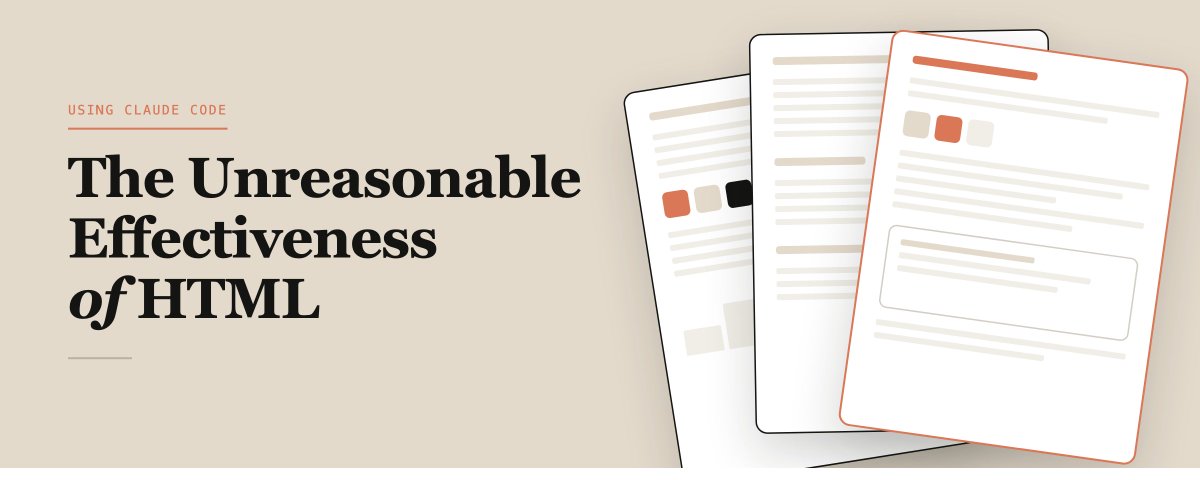
This works really well btw, at the end of your query ask your LLM to "structure your response as HTML", then view the generated file in your browser. I've also had some success asking the LLM to present its output as slideshows, etc.
More generally, imo audio is the human-preferred input to AIs but vision (images/animations/video) is the preferred output from them. Around a ~third of our brains are a massively parallel processor dedicated to vision, it is the 10-lane superhighway of information into brain. As AI improves, I think we'll see a progression that takes advantage:
1) raw text (hard/effortful to read)
2) markdown (bold, italic, headings, tables, a bit easier on the eyes) <-- current default
3) HTML (still procedural with underlying code, but a lot more flexibility on the graphics, layout, even interactivity) <-- early but forming new good default
...4,5,6,...
n) interactive neural videos/simulations
Imo the extrapolation (though the technology doesn't exist just yet) ends in some kind of interactive videos generated directly by a diffusion neural net. Many open questions as to how exact/procedural "Software 1.0" artifacts (e.g. interactive simulations) may be woven together with neural artifacts (diffusion grids), but generally something in the direction of the recently viral nitter.cf/zan2434/status/2046982…
There are also improvements necessary and pending at the input. Audio nor text nor video alone are not enough, e.g. I feel a need to point/gesture to things on the screen, similar to all the things you would do with a person physically next to you and your computer screen.
TLDR The input/output mind meld between humans and AIs is ongoing and there is a lot of work to do and significant progress to be made, way before jumping all the way into neuralink-esque BCIs and all that. For what's worth exploring at the current stage, hot tip try ask for HTML.