

A magazine of U.S. foreign policy and international affairs, founded in 1922. Sign up for our newsletters: https://nitter.cf/t.co/MpbtG0OxgB
New York, NY
Joined February 2009
- Tweets145K
- Following1.9K
- Followers952K
- Likes743




Foreign Affairs retweeted

What will happen next in America's war with Iran? For @ForeignAffairs, I spoke with @AliVaez and Mohammad Ayatollahi Tabaar to find out: foreignaffairs.com/podcasts/…

Foreign Affairs retweeted

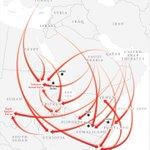
I have a new essay out in @ForeignAffairs about how the Horn of Africa is getting sucked into the Middle East at an ever accelerating pace-- and about how the hard division between the two regions was always ahistorical.
foreignaffairs.com/middle-ea…

Foreign Affairs retweeted

Congrats to @JoshuaASchwartz of @CarnegieMellon, winner of the 2026 PWH–@ForeignAffairs Emerging Scholars Policy Prize! 🏆
His essay "Fighting for Credibility Can Destroy It" will be published by Foreign Affairs in the coming months. Read more:
perryworldhouse.upenn.edu/ne…
Foreign Affairs retweeted

Seven months in, Iran & the U.S. each believe they have tools to make the other blink, fortitude to wait the other out, and disinclination to make concessions the other seeks.
My latest for @ForeignAffairs 👇
tinyurl.com/4vudctak

Foreign Affairs retweeted

On what happens when you're the bully on the playground, and then comes along a bigger bully.
My @ForeignAffairs essay on the world Russia did not want
foreignaffairs.com/united-st…

Foreign Affairs retweeted

On the one-year anniversary of the May 2025 India-Pakistan crisis, I write for @ForeignAffairs about why the next crisis is likely to be more dangerous than the last, and why Washington may struggle to contain it. A🧵... (1): foreignaffairs.com/india/why…

Foreign Affairs retweeted

In my latest for @ForeignAffairs, I argue that a war intended, in part, to weaken #Iran and its regional network — Axis of Resistance — may instead strengthen the social and political conditions that sustain it
foreignaffairs.com/iran/what…

Foreign Affairs retweeted

Iraq long tried to stay out of a regional war. Now it’s being pulled in.
My latest for @ForeignAffairs on how the U.S.-Israeli war against Iran is destabilizing Iraq — from escalating violence to economic shock and societal strain — and how to curb it.
foreignaffairs.com/united-st…

Foreign Affairs retweeted
On 28 Dec, protests in Tehran sparked nationwide unrest.
On 28 Feb, after a bloody crackdown, threats of U.S. intervention, and failed negotiations, the U.S. & Israel went to war against the Islamic Republic.
My @ForeignAffairs piece on how we got here, and where it might go.
foreignaffairs.com/iran/trum…

Foreign Affairs retweeted

“China is Winning by Waiting”
In my NEW piece for @ForeignAffairs, I argue that China shares some of Trump’s transactional approach to geopolitics, using carrots and sticks to get what it wants. The difference is that China is more predictable. foreignaffairs.com/united-st…

Foreign Affairs retweeted

Two decades ago, observers in the advanced liberal democracies said China could never catch up: the technological gulf was too vast and China's authoritarian institutions would obstruct innovation.
How did we get here? My essay in @ForeignAffairs
foreignaffairs.com/china/chi…

Foreign Affairs retweeted

In @ForeignAffairs, @anton_d_leicht and I wrote about how middle powers should navigate an AI revolution that threatens to leave them behind: foreignaffairs.com/united-st…

Foreign Affairs retweeted

In latest issue of @ForeignAffairs , Mara Karlin and I address the stark reality that America’s allies’ can no longer count on US solidarity or support. It’s time to stop pretending the old order can be preserved and time to start working on Plan B.
foreignaffairs.com/united-st…

Foreign Affairs retweeted

Canada, Japan, and Germany should get the bomb. Selective proliferation will benefit both the United States and its allies.
My debut in @ForeignAffairs w/ @ProfMarkRaymond ⤵️
foreignaffairs.com/canada/am…

Foreign Affairs retweeted

Trump’s new world brings risks for African countries, who have limited leverage in the global economy. To thrive, African countries must come together, and Nigeria and South Africa are best equipped to lead the charge.
My latest in Foreign Affairs 👇🏿
foreignaffairs.com/south-afr…

Foreign Affairs retweeted

Sharing my piece in @ForeignAffairs where I argue that, unlike the common perception, China’s overcapacity problem is NOT primarily about government subsidies (many of which have been rolled back) or lack of domestic demand (true in general, but not the leading cause in green tech).
Rather, it stems from three interlocking internal dynamics:
The bureaucratic system’s incentives, reinforced by the fiscal–tax model and worsened by the property market drag.
The financial system’s incentives, rooted in the banking sector’s low risk appetite and its preference for visible, short-term results.
A hypercompetitive, extremely innovative private sector, which paradoxically has made the problem worse.
These three forces reinforce one another and are deeply baked into the system. What makes the problem so hard to unwind is precisely that it’s not just about what the government does or doesn’t do; it’s about aligning a vast network of fragmented and often contradictory incentives.
Hence, what’s needed is not merely a correction, but an institutional reckoning.

Foreign Affairs retweeted

Forty-six years after its 1979 revolution transformed the Middle East, Iran is once again on the cusp of a leadership transition with profound regional and global implications. In my new @ForeignAffairs essay, I explore what could come next. foreignaffairs.com/iran/autu…

Foreign Affairs retweeted

My piece with @JoostHiltermann in today’s @ForeignAffairs
“If the U.S.-led world order is a geopolitical game of Jenga, it could well be Israel that ends up pulling the final piece….Trump has made the first step in reversing course on this trend” foreignaffairs.com/israel/ga…

Foreign Affairs retweeted
10 years ago this week, Russia intervened in Syria to save Assad.
His ouster last December dealt a serious blow to Putin.
But Russia is not done in Syria. It's turning adversity into opportunity.
My essay in @ForeignAffairs
foreignaffairs.com/russia/ru…

Foreign Affairs retweeted

🇪🇺 How can Europe leverage its economy to pay for its defense? @DaliborRohac's and my piece in @ForeignAffairs proposes a path to raise defense spending by cutting red tape, a Savings & Investments Union, a defense bond, and leveraging the private sector. foreignaffairs.com/europe/fi…
