

Photographer. My instagram is more interesting. New book ‘Garçon Style’ is out now.
London
Joined February 2010
- Tweets23.3K
- Following1.2K
- Followers7.9K
- Likes6.9K






Jonathan Daniel Pryce retweeted

“I like to sew on the bus when I’m bored. It’s not good for the fingertips as you bounce around the planet.” @QOTSA's Josh Homme on the cover of @MRPORTERLIVE
mrporter.com/en-it/journal/f…


Jonathan Daniel Pryce retweeted

“The Life And Near Death Of Musician Joshua Homme” - @MRPORTERLIVE #TheJournal
Read the full feature: mrporter.com/en-it/journal/f…
Photographer: @GarconJon
Senior Entertainment Editor: @olivesw
Art Director: Nawal Gurung
Stylist: Kit Swann

Jonathan Daniel Pryce retweeted
‘The Art Of Design’ for Harrod’s: Inspired by the timeless design language of Giorgio Armani & the refined photography of his long-standing collaborator Aldo Fallai, we pay homage to the effortless brand identity cultivated by the pair over their 30-year working relationship…





Jonathan Daniel Pryce retweeted
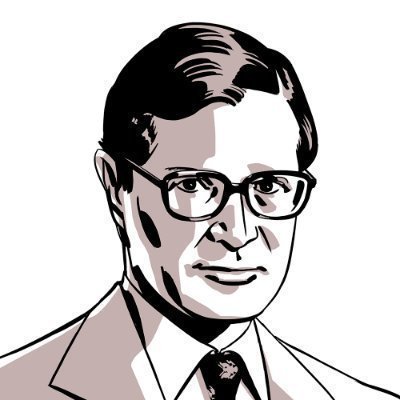
sometimes i think about how frank muytjens did all this great work when he was the head of men's design at j crew 15 years ago. then he left the company, opened a bed & breakfast with his partner in Richmond, MA, and now just tends to his garden and walks his dog


Jonathan Daniel Pryce retweeted

For their latest issue, @portmagazine have asked their cover stars to interpret the logo.
Here’s their first three reveals.


Jonathan Daniel Pryce retweeted

Office life before the invention of AutoCAD and other drafting software was quite different.
Prior to the release of AutoCAD in 1982, engineering drawings were all done by hand using different-grade pencils, erasers, T-squares, and set squares.
Even after all the manual labor, if a change was required, the engineers and toolmakers had to start from scratch and make the sketches all over again. Nowadays, architecture designers and other drafters are mainly just clicking their mouse and keyboard, and not hunched over a giant desk, wondering if any changes will be made to their final drafts.


Jonathan Daniel Pryce retweeted

I returned to NYC from my house on Cape Cod less than a week after 9/11. The first thing I did when I got home was race downtown to see the fallen towers. Many of you know this story, but when I got there and raised my camera to my eyes, a police officer approached me, whapped me on my arm, and said, "No photos. It's a crime scene." I realized then that we'd have no historical record of this horrific event if pictures weren't allowed. I had studied a few historical archives at the Library of Congress in D.C., and I knew I had to be the one to create an archive of this seminal moment in my city's - our global - history. Over the next 9 months, I returned to Ground Zero, a.k.a, The Pile, daily (with a few travel exceptions), to photograph the wreckage, light, architecture, and the incredible group of people who were there to excavate, clean up, rake for remains, and help in any way possible. It was a community of remarkable people - a brother and sisterhood - of ironworkers, NYPD, FDNY, Captains, Chaplains, security workers, and politicians. I snuck in daily to photograph and got kicked out daily. It wasn't until I quite literally stumbled into a group of men from the Arson and Explosion Squad, who asked what an older guy like me with a big old camera was doing down there, that I found my way in without fear of being evicted. They all quickly believed in the importance of the photographic record I was attempting to make. They gave me their phone numbers and said to call them if I had any trouble, and they'd bring me back to the site. Eventually, I got an official mayoral badge that granted me easier access to the Pile. In the end, I made over 8,500 pictures. My focus was never on human remains. I wanted to capture the place, the light, the people. I owe so much of this experience and access to my band of brothers from the Arson and Explosion Squad. Here is merely a tiny selection of some of the pictures. Many can be seen, however, at the Museum of the City of N.Y., World Trade Center Memorial Museum, Smithsonian Museum of American History, Library of Congress, and about 500 in my book, Aftermath: World Trade Center Archive.
1. A Worker in a Raking Field searching for human remains, 2002

Jonathan Daniel Pryce retweeted

As part of our Kindred Spirit series, we connect with creatives who share our passion for craftsmanship, heritage and community. Award-winning photographer @GarconJon captured London-born Leo Westcott, who works in the film industry, wearing our Wool Car Coat.


Jonathan Daniel Pryce retweeted
Our Kindred Spirit @GarconJon photographed stylist @Ayishat_Akanbi in our Wool Blend Checked Shirt Jacket in Mayfair, London.
Shop now: bit.ly/3Z53X9E


Jonathan Daniel Pryce retweeted
Einstein had problems with his feet. In 1952, shoe store owner Peter Hulit got an urgent call from Einstein's housekeeper. She told him that Einstein was in pain and that he could not find a comfortable pair of shoes.
When Hulit made the house call, he recalled, "This magnificent guy came down the stairs... smoking his pipe, and he whipped this folded piece of paper out of his pocket and said, 'Zis is ze problem, Mr. Hulit.'"
Hulit opened the piece of paper (second photo), Einstein had made a sketch of the source of his problem. He was feeling pain on the outer edge of his feet and his big toe. He concluded that he needed a shoe that had more space around the top half of his feet with even distribution of pressure.
Hulit bent down and examined Einstein's feet and noted that "they were tender like a child's, that skin texture; they were soft and easy." After a moment, Hulit looked up and explained to Einstein that "What really happened is that he had gained some weight in his older age and his feet changed size."
Hulit made some measurements and fitted Einstein with a pair of roomy black dress shoes. "The man had never had a pair of black shoes in his life... but I knew he was due to appear at an event in New York City pretty soon. I wasn't going to let him go in brown shoes or sneakers. Even if he was Albert Einstein."


Jonathan Daniel Pryce retweeted

This looks so much like Michael Imperioli’s apartment that I had to Google to check this wasn’t an elaborate bit (it’s not - Eliot lived in the same building, but this belonged to the designer Bernard Nevill who kitted it out. His previous home was uncle Monty’s in Withnail & I!)
This quoted post is unavailable.
Jonathan Daniel Pryce retweeted

New life goal firmly established today as I read about this sumptuously decorated *private train*. Perfect for jaunts to the Highlands, and/or conspiring to murder a common enemy during a snowstorm
worldofinteriors.com/story/t…


Jonathan Daniel Pryce retweeted

On February 22, 1970, an Australian teen named Keith Sapsford snuck onto the tarmac at Sydney Airport and hid inside a Tokyo-bound plane before disaster struck.
At that exact moment, an amateur photographer named John Gilpin was taking pictures at the airport, never expecting, of course, to capture someone’s death.
He didn’t even realize the tragedy he’d photographed until about a week later when he developed the film.

Jonathan Daniel Pryce retweeted
In 1934, photographer A.L. Schafer staged a remarkable protest against censorship through a single, rule-breaking photograph. In an era of increasing restrictions on artistic expression, Schafer's image became an enduring symbol of resistance and the fight for freedom of speech.
Schafer strategically violated multiple rules within the frame of their photograph, pushing artistic boundaries to convey their message. By challenging compositional and technical conventions, Schafer aimed to emphasize the importance of artistic freedom and the rejection of societal norms.
The photograph's visual power transcends time, inspiring viewers to question authority and protect creative autonomy. It serves as a reminder that censorship hampers progress and stifles diverse voices, urging society to safeguard artistic freedom.
Schafer's image is a call to action, reminding us to uphold freedom of expression. In an age where digital media provides greater accessibility, defending the right to artistic self-expression is crucial for fostering a world that embraces diversity and embraces unfettered creativity.
A.L. Schafer's 1934 protest photograph encapsulates the enduring strength of art against censorship. By challenging rules and pushing boundaries, Schafer's defiance remains an inspiration. Let us draw from their courage as we dismantle the chains of censorship, protecting and preserving artistic autonomy in our ever-evolving world.


