

#DataScientist #Machine_Learning #AI #Robotics #BigData #NLP #Data_Mining #Dtata_Analytics #blockchain #Artificial_Intelligence #Neural_Networks #Deep_Learning
Stanford, CA
Joined March 2018
- Tweets2.8K
- Following4.2K
- Followers413
- Likes1.6K




GoDataAnalytics retweeted

Brilliant paper from Google on RSI.
(bookmark it)
Recursive self-improvement (RSI) lets an optimizer agent improve an agent harness on its own. It reads failure traces, edits the prompts, tools and completion checks, and keeps whatever scores better on a benchmark.
This works until the model underneath changes. A harness evolved on Claude Opus, moved to Gemini, scored below Gemini's plain starting harness in every domain Google tested.
When the harness moves to a new model, the only thing carried over is the evolved harness code, meaning the prompts, checks and rules the optimizer added. The record of how each piece got there stays behind, including which failure it targeted and whether it fixed that failure when tested.
So the optimizer working on the new model inherits a set of changes with no reasons attached. It ends up retrying experiments that already failed, or removing fixes it doesn’t understand.
Google's fix is Self-Improvement Memory (SIM), a log kept for the optimizer itself. Each entry is a recurring problem, like an agent declaring a task done before its commands ran, and every fix attempted under it stores:
1. The edit and the reasoning behind it
2. The tasks it was predicted to fix, written down before testing
3. The tasks it actually fixed, failures included
4. The model and benchmark it was tested on
The whole log goes into the optimizer's prompt every round, and new attempts get appended as optimization continues.
The paper shows the difference on one inherited check that stops the agent from finishing early. With SIM, the optimizer read why the check existed and extended it.
Without SIM, it rewrote the same check four times, twice to fix deadlocks it had created itself.
On the Opus-to-Gemini workspace tasks, the run with SIM improved about 3x more from the same starting score. It also finished ahead in 9 of 10 independent coding runs.
The paper is at arxiv.org/abs/2611.18856
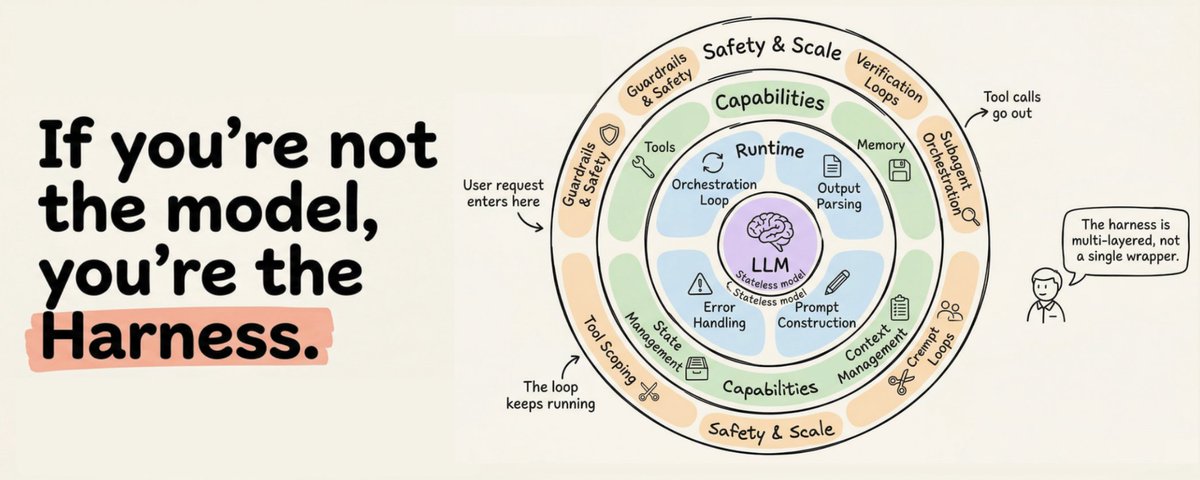
I also wrote an article on a related idea, covering how to make an agent harness diagnose its own failures.
It's built on @Cometml's Opik, which is 100% open source. It goes beyond reading trace logs to finding why a failure happened and stopping it from recurring.
That diagnosis step produces the kind of root causes SIM stores.
The article is quoted below.


GoDataAnalytics retweeted

What we shipped this week @google
Monday: Two new 8th-gen TPUs
Tuesday: Gemini 4 Carbon
- AlphaProof Code verified Signal protocol
- Gemini Robotics 2.5
Wednesday: AlphaGenome 2 for disease research
- Gemini Decisions API in AI Studio
Thursday: Gemini 4 Hydrogen
- intelligent eyewear pre-orders
Friday: U2 new album (ok not us but exciting!)
onwards!
GoDataAnalytics retweeted

گوگل لبز ۱۵ عدد AI Design Skill رو بهصورت متنباز منتشر کرده که میتونن فرایند طراحی رابط کاربری رو برای Agentهای هوش مصنوعی سادهتر و حرفهایتر کنن.
این مجموعه به Agentها یک Workflow آماده برای طراحی UI میده تا بتونن از ایده اولیه تا ساخت رابط کاربری و توسعه اون پیش برن.
این Skillها چه قابلیتهایی دارن؟
🎨 طراحی رابط کاربری از روی متن و تصویر
میتونید فقط با توضیح متنی یا ارائه یک تصویر مرجع، صفحات وب و رابط کاربری اپلیکیشن طراحی کنید. بعد هم با درخواستهای متوالی، طرح رو اصلاح و تکمیل کنید.
🎯 حفظ یکپارچگی طراحی
رنگها، فونتها، کامپوننتها و دستورالعملهای طراحی داخل یک فایل به نام "DESIGN.md" سازماندهی میشن.
این کار باعث میشه وقتی چندین صفحه مختلف طراحی میکنید، همه اونها از یک Design System مشترک پیروی کنن و ظاهر پروژه یکپارچه باقی بمونه.
⚛️ تبدیل طرح به کد React
طرحهای ایجادشده فقط تصویر یا Mockup نیستن؛ میتونید اونها رو به React Components تبدیل کنید و وارد مرحله توسعه واقعی بشید.
🌐 پشتیبانی از وبسایتهای چندصفحهای
امکان طراحی و ساخت وبسایتهایی با چندین صفحه، رابطهای پیچیده و ساختارهای مختلف وجود داره.
🎬 ساخت ویدئوی نمایشی
این مجموعه امکان تولید Demo Video از طراحیها رو هم فراهم میکنه تا بتونید نتیجه کار رو به شکل ویدئو ارائه بدید.
برای چه پروژههایی کاربرد داره؟
- طراحی وبسایتهای معرفی محصول (Product Websites)
- ساخت پنلهای مدیریتی (Admin Dashboards)
- طراحی رابط کاربری اپلیکیشنها
- ساخت نمونه اولیه محصولات (Prototypes)
- تبدیل ایدههای اولیه به رابطهای قابل توسعه
پیشنیاز استفاده:
قبل از استفاده باید Google Stitch MCP رو پیکربندی کنید تا Agent بتونه از قابلیتهای طراحی Stitch استفاده کنه.
در واقع این مجموعه رو میتونید بهعنوان یک جعبهابزار طراحی UI در اختیار Agent قرار بدید تا فرایند طراحی، اصلاح و تبدیل طرح به کد رو مدیریت کنه.
🔗 مخزن GitHub:
github.com/google-labs-code/…
کانال تلگرام : t.me/yarad_ai


GoDataAnalytics retweeted

// CS329A Self-Improving AI Agents (by Stanford) //
Lots of students have been asking me for good lectures on self-improving AI.
This one has good content and lots of good references.
I've started putting together my own notes and will share soon.
(bookmark it)

GoDataAnalytics retweeted

What's Driving the Next Wave of AI?
Dylan Patel of SemiAnalysis and Supermicro CBO Vik Malyala share insights on AI infrastructure and what's ahead.
GoDataAnalytics retweeted

Inkling 2 Small took a while... but it's more interesting than I initially thought!
Using attention residuals (like Kimi K3), but without the linear-attention hybrid.
Food for discussion for the end-of-the-year architecture trends analysis!

GoDataAnalytics retweeted

A thread of early experiments with Claude Fable 5.2:
A 3D model of a cell, built entirely from code one organelle at a time. Built by @kevin_t_ngo.
GoDataAnalytics retweeted

Average discount on cheaper inference is 40.5% and all frontier models are available
Try it: CheaperInference.com
nitter.cf/CheaperInfer/status/21…


We combine customer demand to negotiate bulk discounts with AI labs and data centers.
500+ models available (including all frontier models)
ZDR available
Try us: CheaperInference.com
GoDataAnalytics retweeted

Background subagents in Claude Code now use less of your usage limit.
A running subagent updates its status line every 30 seconds, and each update used to re-read its whole conversation. Now Haiku 5.5 writes it from short notes instead, so each update costs about 99% less.
GoDataAnalytics retweeted

Top 12 agentic use cases for Jev:
(bookmark this)
Jev handles semantic decisions that ordinary code cannot express reliably. It returns typed answers and probabilities, while code continues to cover the workflow.
Here are 12 practical use cases for Jev:
1. Browser next action
> Convert the current DOM state into a bounded action such as click, type, or stop. Code executes only valid operation-target pairs. There are already several open-source Jev web agents.
2. Context compaction
> Decide which events from a long agent trace should remain. The selected text stays verbatim instead of being replaced with a generated summary.
3. Skill and context loading
> Compare the current user turn against the available skills. Load only the instructions needed for that turn instead of filling the context window with every skill.
4. Typed tool-call compilation
> Map a natural-language request to a function and fill its typed arguments. Each argument is evaluated separately before code allows execution.
5. Citation verification
> Check whether a quoted passage exists and whether the surrounding evidence supports the claim. The output can be supported, unsupported, or contradicted.
6. Extraction verification
> Run a cheap extractor first, then use Jev to verify questionable fields. Clean records stay on the fast path while uncertain ones reach a reasoning model.
7. Agent trace evaluation
> Turn raw trajectories into queryable labels such as progress and repetition. This avoids asking another LLM to write a full review of every run.
8. Semantic regression tests
> Replay a trace suite against a new agent build. Semantic checks can then pass or block prompt, model, tool, and policy changes in CI.
9. Jevgrep code search
> Search a codebase by what the code does rather than its exact words. Jev scores candidate snippets and returns the most relevant code first.
10. Entity alignment
> Compare two candidate records and decide whether to merge, review, or keep them separate. Candidate generation remains deterministic while Jev handles semantic identity.
11. Retrieval reranking
> Let embeddings retrieve a broad candidate set, then use Jev to reorder passages by relevance. The generation model receives the most useful evidence first.
12. Memory promotion gate
> Capture a completed agent trace, then judge whether its corrections contain a reusable lesson. Trace-backed lessons can be promoted while task-specific noise is discarded.
If you want to dive deeper, we also wrote a hands-on guide. It covers building a Jev-style decision path with open models, entirely locally.
Read it below.


GoDataAnalytics retweeted
Introducing Hacker Papers!
I absolutely love this HackerTube idea from @karpathy.
So I took his prompt and similar data sources and asked my agent to build the arXiv papers version of it.
Absolute bangers there.
Find all 1K+ papers here: academy.dair.ai/papers/colle…


Weekend hack: HackerTube. I was annoyed with YouTube's recommendations so I had Claude filter down 43M comments over 20 years of HN to 6,454 videos that keep being recommended. *Significantly* better viewing experience, ~2 hours with Opus 5.5:
hackertube.org/
- Excellent recs without any logins (state is kept in local browser session)
- Thumbnail is a representative frame from middle of the video instead of the super duper A/B test hyper-optimized user uploads
- Underlying data from the comment analysis as one zip file, point your Claude at it and ask for your own version
- HackerTube Longs ✊
A bit more on the process:
I use Claude Code (desktop app for Mac), Opus 5.5 on Medium effort as my default. I only talk to Claude and have it do everything, the only "manual work" I helped with in tandem was in the browser (reminiscent of MenuGen): 1) I had to create some kind of API key from Google Cloud UI to query YouTube for video metadata, 2) I booted up a VPS box for serving and 3) I bought the domain name. Once the box was up I gave Claude the IP and told it update, secure, harden, deploy and optimize the code, and it did the whole thing.
Many awesome projects that would have normally taken weeks/months even can now be few-shotted for breakfast. What else are we not thinking of.

GoDataAnalytics retweeted

Weekend hack: HackerTube. I was annoyed with YouTube's recommendations so I had Claude filter down 43M comments over 20 years of HN to 6,454 videos that keep being recommended. *Significantly* better viewing experience, ~2 hours with Opus 5.5:
hackertube.org/
- Excellent recs without any logins (state is kept in local browser session)
- Thumbnail is a representative frame from middle of the video instead of the super duper A/B test hyper-optimized user uploads
- Underlying data from the comment analysis as one zip file, point your Claude at it and ask for your own version
- HackerTube Longs ✊
A bit more on the process:
I use Claude Code (desktop app for Mac), Opus 5.5 on Medium effort as my default. I only talk to Claude and have it do everything, the only "manual work" I helped with in tandem was in the browser (reminiscent of MenuGen): 1) I had to create some kind of API key from Google Cloud UI to query YouTube for video metadata, 2) I booted up a VPS box for serving and 3) I bought the domain name. Once the box was up I gave Claude the IP and told it update, secure, harden, deploy and optimize the code, and it did the whole thing.
Many awesome projects that would have normally taken weeks/months even can now be few-shotted for breakfast. What else are we not thinking of.
GoDataAnalytics retweeted
Recommended read. We are just starting to understand how AI shapes decisions and judgment.
At first glance, this might look like a simple, niche passion research project. However, it's an important research direction for understanding where AI's true value emerges and how to optimize agent-human collaboration.
If we can better understand when to defer to AI and when expert/human judgment matters, I think this unlocks tremendous value. Yes, it matters for organizations adopting AI, but I see it as an interesting way to better measure human-agent collaboration and discover new, optimal ways to augment collective intelligence.

GoDataAnalytics retweeted

Andrej Karpathy spent 8 years at OpenAI and Tesla
Last week he compressed everything he knows into one free 2-hour lecture
Prompts → Agents → Harness → Graphs → Loops
People spend $15k on bootcamps that teach less than this
You probably don't have 2 hours right now
Don't let it vanish from your feed
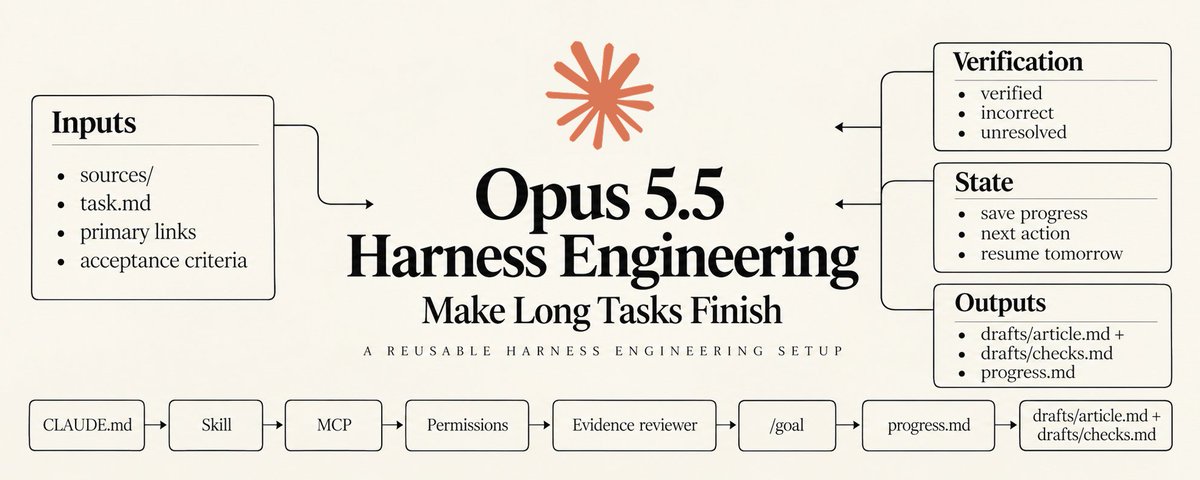
Watch it, then read the full Opus 5.5 harness engineering guide below ↓

GoDataAnalytics retweeted
I did say we'd be releasing our models periodically...introducing Gemini 4 Carbon, our next frontier model.
Following Argon's release just two weeks ago, Carbon shows the pace at which we’re pushing the frontier, it ranks #1 on the recently updated v5.0 of @ArtificialAnlys Intelligence Index at 59. It also leads across key cybersecurity evaluations scoring 88.2% on SEC-bench Pro for finding vulnerabilities, 54.8% on ExploitGym for exploitation, and 71.0% on CWE-bench for patching.
We’re seeing significant improvements in long-horizon tasks even compared to Argon, and we’ve strengthened frontier safeguards.
As we did with Argon, we’re going to roll it out gradually + responsibly. Some trusted cyber defenders will get access starting this week. We'll be expanding it to more partners through our Fairwind Program, ahead of wider availability soon, so hang tight!

GoDataAnalytics retweeted

Anthropic engineer:
“95% of our engineers are using self-improving harnesses + Opus 5.5. Now everyone is building agentic systems around them.”
In 1–2 months, we’ll all be building harnesses to orchestrate self-improving agents. No more raw prompting.
In a 35-minute lecture, Anthropic engineer shows how to build a self-improving agent harness from scratch with Opus 5.5.
Worth more than a $1500 agentic course.
Watch it
Then read the full Opus 5.5 harness engineering guide below ↓