

Global insights on governance and key issues shaping our world🌎
Joined June 2025
- Tweets74
- Following74
- Followers35
- Likes54



GOVERNANCE AND LEADERSHIP EDGE retweeted

Signal President Meredith Whittaker threatens again to pull the encrypted messaging app out of the UK
She tells @MishalHusain why Keir Starmer's approach to phone screening could usher in "mass surveillance" bloom.bg/4vFZ9H5
GOVERNANCE AND LEADERSHIP EDGE retweeted

Ending anonymity. Expanding speech bans. State-ordered takedowns. These are pillars of the Internet in China, Russia, and Iran.
Increasingly, they have become features of European policy. In @ForeignAffairs, @JMchangama examines how Europe lost the plot on online speech.

GOVERNANCE AND LEADERSHIP EDGE retweeted

What you need to know about the new Social Media Ban in the UK:
1. All persons under 16 are prohibited from accessing social media platforms without verified parental supervision.
2. Parental supervision must be logged digitally through the UK. gov app.
3. Parents must approve each post, comment, like, or share in real-time.
4. Failure to supervise constitutes negligent digital guardianship.
5. Penalties for negligent digital guardianship include fines up to £10,000 and potential removal of devices from the household.
6. Educational use is not exempt.
7. Mental health considerations are not exempt.
8. Checking the weather on a browser that could access social media counts as attempted access.
9. Screenshots of banned platforms are treated as contraband.
10. Discussing banned platforms in school counts as conspiracy to access.
11. Parents who express disagreement with these rules online will have their supervision privileges revoked.
12. Any family member can report violations anonymously (encouraged).
Compliance is mandatory.
Britain is safer for it.

146 countries & currency unions, representing over 98% of global GDP, are exploring a #CBDC. In May 2022, that number was only 87. It has since shot up to a high by new inclusions of 77 countries in the advanced phase of exploration, which includes development, pilot, or launch.
Why now? Why the rush?
@BOU_Official
@WorldBankGroup

A Central Bank Digital Currency (CBDC) is the ultimate threat to financial privacy.
It would give the federal government unprecedented visibility and control over how Americans spend their money.
BAN CBDC—FOREVER.
1
22
GOVERNANCE AND LEADERSHIP EDGE retweeted

Our statement on the UK government’s demand that all content on all devices sold or used in the country be scanned, on the presumption of nudity, using a dystopian combination of age verification and content scanning. This proposal will not safeguard children. It endangers us all.
signal.org/blog/pdfs/2026-06…


GOVERNANCE AND LEADERSHIP EDGE retweeted
Who is behind Digital ID?
It’s all the usual suspects and they are not your friends.
Excellent guide!
The #ClarityAct is Washington trying to catch up to reality. Crypto markets have become too large, too political, and too global to keep regulating through lawsuits and ambiguity.
The bill would define which digital assets fall under the @SECGov, which fall under the @CFTC, and establish clearer rules for market participants.
The US is watching capital, talent, and innovation move toward jurisdictions with clearer frameworks. Europe moved first with MiCA. Others are following.
Is it a game of who gets to shape the rules of digital finance?

BREAKING: 🇺🇸 Senate Banking Committee PASSES the Clarity Act in 15-9 vote.
The bill now goes to the full Senate.
21
GOVERNANCE AND LEADERSHIP EDGE retweeted
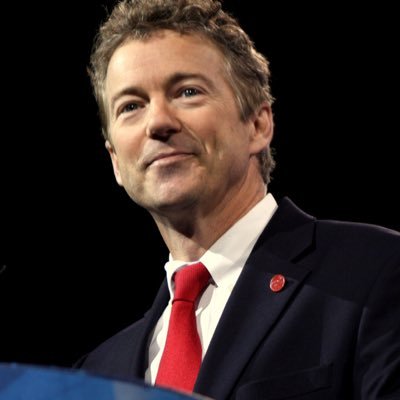
CIA scientists concluded that COVID came from a lab leak. Then someone scribbled out their conclusion at 2 am and changed the report.
Tomorrow, a whistleblower testifies before my committee. The COVID cover-up is unraveling.

"The carelessness of Anthony Fauci...in all likelihood led to this pandemic that 15 million people died, and still, there hasn't been responsibility."
@RandPaul joins @cabot_phillips to discuss new whistleblower testimony surrounding the origins of COVID-19:
GOVERNANCE AND LEADERSHIP EDGE retweeted

@DirectorpdpoUG now speaking at #ID4Africa2026 from @pdpoUG .
Now happening is governance discussions at @ID4Africa from Uganda’s National Data Protection Officer Baker Birikujja on the delicate balance between data exploitation, protection, monetisation, and access within identity ecosystems.
While legal frameworks around identity management and data protection may be clear, the real tension increasingly emerges around how identity data is accessed, shared, monetised, and protected once multiple actors across ecosystems begin deriving value from it.
An important point raised was that data minimisation remains difficult, but essential. Government institutions often tend towards over-collection of data, a challenge increasingly amplified by AI-driven processes such as automated query handling and digital workflows where large volumes of information are continuously gathered and processed.
The concern, of course, is that excessive collection increases exposure and risk if such information ends up in the wrong hands.
It was also acknowledged that carefully documented exceptions do exist, particularly for legitimate government functions and public interest obligations, but governance, proportionality, and accountability remain critical.
Important and evolving conversations on stewardship, sustainability, trust, and digital rights. #ID4Africa2026


Following through on the economics still; @NIRA_Ug ED Rosemary Kisembo at @ID4Africa on value creation, sustainability, and who should ultimately bear the cost of trusted identity verification.
The emerging thinking is that the party deriving operational or commercial value from identity verification should increasingly contribute towards sustaining the infrastructure enabling that trust.
In simple terms, the citizen’s role is primarily to exist and be identifiable. The institution, provider, or business seeking trusted verification for onboarding, compliance, transactions, fraud management, or security derives measurable value from that access.
One important example shared was how stronger national identification capabilities contributed to Uganda strengthening trust and integrity within broader governance and financial systems, including improved ability to identify individuals reliably.
This raises an important question for identification agencies:
do institutions fully understand the scale of value identity ecosystems create across economies, governance, financial systems, and public service delivery, and how responsibly that value can support long-term sustainability?
At the same time, another future-looking question is emerging:
if identity continuously generates value across ecosystems, what forms of value, protection, control, or benefit should eventually flow back to citizens themselves?
Very important conversations at the intersection of identity, economics, sustainability, governance, and digital rights. #ID4Africa2026
Making (more) room for thought crime?

🇪🇺 The EU has published a document examining the feasibility of forcing the merger of US owned social media companies such as X with more EU friendly companies like BlueSky and Mastodon.
BlueSky was singled out as having a moderation system that could be forced across multiple platforms, with the report repeating claims that its approach combats “toxic” elements.
The report also suggests forcing platforms to allow third-party “moderation” systems to access their digital infrastructure, which would enable enhanced censorship.
Follow: @europa

1
5
How does this affect concerns about data privacy, expanded government surveillance, and the possibility that it could become another pathway toward enforcing digital ID systems?

It is for parents to raise their children. Not platforms.
The European Age Verification App is ready ↓ nitter.cf/i/broadcasts/1lJQRvjoX…
Readers added context they thought people might want to know
Russia started internet regulation for exactly the same reason in 2011. Then, gradually, blocklists, VPN bans, Sovereign Internet law, and eventually whitelists in 2026.
loc.gov/item/global-le…
1
5

🏛🇺🇬BEHIND THE BILL: THE PROTECTION OF SOVEREIGNTY BILL,2026
Uganda’s government has put forward a Protection of Sovereignty Bill 2026, a draft law aimed at limiting foreign influence in the country’s political, economic, and social life in a bid to safeguard national interests. The ruling party’s @NRMOnline parliamentary caucus has endorsed the idea and made it a priority for the next legislative session
♤Core features of the proposal
While the full text is yet to be publicly published in its final form, available documents and expert analysis suggest the bill would include measures such as:
a) Broad definitions of foreign influence:
People or entities could be labelled “agents of foreigners” simply for receiving any support from outside Uganda, including Ugandan citizens living abroad.
b) Mandatory disclosure and caps on foreign funding:
Organisations would need to disclose all foreign funds within tight deadlines, and amounts above a relatively low threshold would require prior ministerial approval.
c) Approval requirements for many activities:
Cabinet-level sign‑off could be required for work in sectors like health, education or infrastructure if undertaken by those defined as agents of foreigners.
d) Criminal offences with heavy penalties:
The bill would create new crimes such as “economic sabotage” and broad bans on activities seen as weakening the economy or opposing government policy, with possible prison terms of up to 20 years.
♤Who and what would be affected?
The implications of the bill, if passed, go far beyond just political campaigning:
a) Non‑governmental organisations and charities that rely on foreign grants could fall under strict new rules or risk being labelled foreign agents.
b) Media outlets, civil society groups, and advocacy organisations might face increased scrutiny or sanctions under vague definitions of “foreign influence.”
c) Private sector firms with foreign investment or financing could be captured by the law’s definitions, affecting ordinary business operations as well as development projects.
♤Global approaches to regulating Foreign Influence
Many countries have implemented laws to regulate foreign influence, ranging from disclosure requirements to broad measures affecting political, social, and economic activity. Russia, Georgia, Bosnia’s Republika Srpska, El Salvador, Hungary, Singapore, Taiwan, Australia, and the UK all have systems that require registration, reporting, or oversight of foreign-funded activities, with varying degrees of enforcement and penalties.
These laws vary in scope and enforcement, with some focused on elections or lobbying, and others extending into civil society, media, and business. Observers note that while the goal is often to protect national interests and sovereignty, the balance between oversight, operational freedom, and transparency differs by country, making the impact and interpretation of these laws highly context-dependent.
It will be worth keeping an eye on how Uganda’s Protection of Sovereignty Bill unfolds.

1
23