

Distinguished Professor of Cognitive Sciences & Language Science @UCIrvine; author, The Myth of Mirror Neurons, and Wired for Words (forthcoming!)
Irvine, CA
Joined June 2014
- Tweets7.6K
- Following112
- Followers6K
- Likes1.6K



Pinned Tweet
Today is release day for my new book, Wired for Words! It took me 25 years from book contract to release. It started out as a textbook project but the field was advancing so quickly--eg, we had just proposed the dual stream model--I was compelled to wait. It eventually morphed into a monograph, but still follows the structure and content of my course and is written to be accessible to students without dumbing down the science. Never give up on a worthwhile project!
amazon.com/Wired-Words-Neura…

Gregory Hickok retweeted

Boston University is recruiting Assistant Professors in multiple departments affiliated with our Center for Systems Neuroscience as part of the University-wide convergent search for Advancing Brain and Cognitive Health. For links to specific positions see: bit.ly/4hP8ya0
Our new fMRI study in Clinical Neurophysiology finds disrupted auditory–motor connectivity in aphasia, linked to impaired vocal responses to altered auditory feedback. Lead by Roozbeh Behroozmand.
The findings point to new targets for aphasia therapy.
🔗 doi.org/10.1016/j.clinph.202…
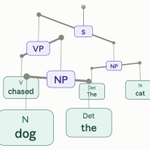
Syntactic hierarchy without linear order. The view from the pMTG according @wmatchin and me.

New work on Assessing Agrammatic Speech led by Zeinab Khoshhal Mollasaraei in @wmatchin lab and our CSTAR team. sciencedirect.com/science/ar…
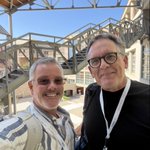
Wonderful time at the FENS Brain Conference in Crete. Lots of great talks and fun conversations. Here with @davidpoeppel

Gregory Hickok retweeted

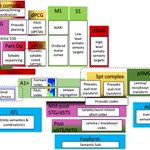
Two posters from the NeuroSyntax Lab at #SNL2026 @SNLmtg in Geneva. One (Friday, Poster F1) led by @JeremyYeaton with @GregoryHickok, @JuliusThor_VPR and others using lesion-symptom mapping in post-stroke aphasia and multinomial processing trees to model two levels of syntactic encoding in the brain. The other (Thursday, Poster D52 w/ @JuliusThor_VPR and others) focuses on non-linguistic semantic processing and factor analysis to see if we can get something actually useful out of commonly used test of non-linguistic measures like the Pyramids and Palm Trees in post-stroke aphasia. Both studies can be interpreted in our theoretical framework (lnkd.in/dm9SgqMf).
If you or anyone you know is interested in a research manager/SLP position, postdoctoral scholar position, or doctoral student position in my lab, please reach out to me (including in person at this year's SNL and Academy of Aphasia). We were recently funded by NIDCD to push this work further :)


This is very cool. Our yet-to-be-published fMRI data also suggests a tight anatomical connection between vocal and limb control.

The revolutionary brain-computer interfaces that help people with severe paralysis speak, type, move prosthetic limbs, and more are typically specialists, using sensors to pick up activity from select brain areas to perform a single function.
Now, scientists have shown just one neural implant—in this case, a grid of minielectrodes surgically placed on the top part of the cortex—can do double duty, successfully “decoding” brain signals from paralyzed people as they attempt to speak as well as gesture with their upper bodies.
The technology can create a computer-animated image of the user in real time, which can do things such as say hello while waving, or nod while saying yes.
Learn more: scim.ag/4Ac98XJ

ALT Single brain implant lets paralyzed people both talk and gesture via an avatar
Typical lesion-symptom mapping analysis returns a single best map. Our new approach, Critical-Network Lesion-Symptom Mapping (CN-LSM), identifies and evaluates networks of lesion locations that predict behavior, rather than betting everything on one map. onlinelibrary.wiley.com/doi/…

Gregory Hickok retweeted

Nature Human Behaviour also published a Research Briefing on the work, with a short overview of the findings, check it out!
nature.com/articles/s41562-0…

Gregory Hickok retweeted
A big thank you to all the patients for participating in our research, all our co-authors including the Viventi Lab, and our neurosurgical team @rshervin @LadNeurosurgery, @GregoryHickok
@Duke_Neurology @Dukeneurosurg @DukeBrain @DukeUBME @DukePsychNeuro @DukeMedSchool
5/5
Gregory Hickok retweeted
Two new papers from the lab in Nature Human Behaviour and Nature Communications, spanning the neural mechanisms of speech production and new approaches to speech neurotechnology!
🧠 Speech plans → fluent motor sequences
🗣️ Speech BCIs across people
Links below 👇
1/3

ALT Graphic announcing two new Cogan Lab papers. The Nature Human Behaviour paper asks how the brain turns a speech plan into fluent movement, illustrated as planning → articulation → monitoring. The Nature Communications paper asks whether a speech BCI can learn from other people, illustrated by neural activity from two individuals converging on a shared latent representation.
I'm thrilled to be involved in this new study with Randy Buckner's group at Harvard. Clearly demonstrates two hierarchical levels in the language network using precision fMRI. More evidence that the neural architecture of language is hierarchical and structured.
biorxiv.org/content/10.64898…

Gregory Hickok retweeted
Former PhD student @JeremyYeaton leading: From structure to sequence: A multinomial processing tree model of syntactic encoding, w/@daniellekfahey, @GregoryHickok, @JuliusThor_VPR, Grant Walker.
link.springer.com/epdf/10.37…
Gregory Hickok retweeted

This most frequent question I get when presenting our n=1 intracortical speech BCI work (like nature.com/articles/s41591-0…) is whether it replicates to other individual.
Strong YES: our multi-user model enables >96% accurate brain-to-text across four @BrainGateTeam participants.


Paper now out in PBR: From structure to sequence: A multinomial processing tree model of syntactic encoding link.springer.com/epdf/10.37…
Some new work from our group on neural mediators of age-related problems with speech recognition in noise. Work led by Samin Ashjaei. scholar.google.com/citations…
Gregory Hickok retweeted
I'm honored to receive the 2026 Chen Institute & Science Prize for AI Accelerated Research and appreciate this opportunity to bring attention to our work using AI and brain-computer interfaces to restore lost speech

🎉 Congratulations to Sergey Stavisky, winner of the 2026 Chen Institute and Science Prize for AI Accelerated Research for developing an AI-powered brain-computer interface that can restore communication for people who have lost the ability to speak.
Learn more: scim.ag/4vw98Ou

The whither, hither and thither of language. @alexander_leff's excellent review of my book, Wired for Words (@MITpress) in the journal Brain. Yeah, you're right, Alex: I did spend a disproportionate amount of time on the perceptual side. Consider it grounding for my more recent emphasis on the sensorimotor architecture of language!
academic.oup.com/brain/advan…

Gregory Hickok retweeted

We stress tested many frontier AI models for multimodal medical reasoning (including GPT-5, Claude 3.5, Gemini 2.5 Pro). They’re not ready. Faulty reasoning, use of inappropriate shortcuts, hallucinations. Published today @NatureMedicine nature.com/articles/s41591-0…

Our new paper just accepted in Psychonomic Bulletin & Review. From Structure To Sequence: A Multinomial Processing Tree Model Of Syntactic Encoding. Work by Jeremy Yeaton, Grant Walker, and team. osf.io/preprints/psyarxiv/w5…
