Science Magazine (@ScienceMagazine) header
Science Magazine (@ScienceMagazine) profile picture

Cutting-edge research, news, commentary, and visuals from the Science family of journals. Follow @NewsfromScience for stories from our News team.

Washington, DC & Cambridge, UK
Joined April 2009
Photo by Science Magazine (@ScienceMagazine)Photo by Science Magazine (@ScienceMagazine)Photo by Science Magazine (@ScienceMagazine)Photo by Science Magazine (@ScienceMagazine)Photo by Science Magazine (@ScienceMagazine)Photo by Science Magazine (@ScienceMagazine)Photo by Science Magazine (@ScienceMagazine)Photo by Science Magazine (@ScienceMagazine)Photo by Science Magazine (@ScienceMagazine)Photo by Science Magazine (@ScienceMagazine)
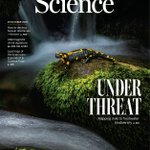
Freshwater species face widespread human pressures, but where those pressures affect biodiversity has remained poorly understood. New Science research maps 45 threats across more than 21,000 freshwater species, revealing hotspots of impact and helping guide conservation and management efforts where they are most urgently needed. Learn more in this week’s issue: scim.ag/4jH5Vtm
2
27
5
128
11,965
A newly resurfaced photo taken by Rosalind Franklin—photo 49—shows she was aware of the helical structure of DNA and explains why her published image—photo 51—does not have indications of her understanding of its shape. Learn more in the latest episode of the #SciencePodcast🎙️: scim.ag/4BpAwly
6
12
6,199
The NOSTER & Science Magazine Microbiome Prize rewards innovative research by early-career investigators on the functional roles of the microbiota in human or veterinary health and disease. Apply by 14 February 2027: bit.ly/4yHVbii
3
6
7,994
Science Magazine retweeted
New article in @ScienceMagazine, with Janet Freilich, Kasper Dinkla & Ingmar Meijer, quantifying the gap between claims & disclosure in drug patents & suggesting broad claims are used as strategic "moats" science.org/doi/10.1126/scie…
1
1
4
6,060
🎉 Congratulations to Gioele La Manno, winner of the 2026 Eppendorf & Science Prize for Neurobiology for his innovative experiments that have uncovered intricate layers of organization in the brain’s lipids—and have deciphered how these fatty molecules shape the diversity of brain cells. Learn more: scim.ag/4yQ0tIv
1
6
51
11,732
Bird songs share surprising similarities with human music and speech, according to a large-scale study comparing vocalizations across hundreds of bird species and dozens of human languages. The findings in Science suggest that these similarities may arise partly from shared biological mechanisms, rather than vocal learning ability alone. Learn more: scim.ag/4ikVRUr
7
112
8
377
27,834
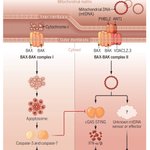
Two proteins that permeabilize mitochondria promote cell death through distinct mechanisms. Learn more in a new #SciencePerspective: scim.ag/4iHh5gH
2
16
2
94
14,935
In a unique human challenge study, researchers interrogate how preexisting immunity and antibodies against the four serotypes of #dengue influence viremia, T cell responses, and immune activation in a safe and controlled setting. @ScienceTM scim.ag/4yPtDHV
3
6
34
9,965
Although cancer is a common cause of death in domestic cats, little is known about the range of cancer genes in cat tumors, and how this range might compare with the oncogenome in people. Researchers in Science have sequenced cancer genes in 493 samples from 13 different types of feline cancer and matched healthy control tissue, gaining a clearer picture of the cat oncogenome and comparing the genes to known cancer-causing mutations in humans. Learn more on #NationalCatDay: scim.ag/4yK4cHD
7
45
4
206
21,088
Japan’s MMX mission aims to retrieve samples from Mars’s mysterious moon. They could reveal how it formed—and hold pieces of Mars itself. Learn more: scim.ag/4sgWWRI @NewsfromScience
10
40
6
178
21,133
A @ScienceTM analysis of trial data from stem cell transplant recipients shows how immune suppression with either cyclophosphamide or tacrolimus shapes T cell reconstitution—and has opposing effects on the risk of graft-versus-host disease or infection post-transplant. scim.ag/47xj5BT
3
9
47
14,196
New in @SciRobotics: The Ultra Mobility Vehicle bicycle robot leverages its own inertia and momentum to perform jumps, track stands, wheelies and other athletic moves. scim.ag/4yyunAT
2
4
1
23
15,491
How should an underwater exoskeleton be designed to help divers move more efficiently, and are there lessons we can apply from exoskeleton-assisted walking and running? Learn more in this @SciRobotics Focus article: scim.ag/4BcQEa9
3
8
44
15,065
"AI safety needs to be addressed at the level of the human–AI system, not the AI model alone," writes Pietro Michelucci in a new #ScienceEditorial. scim.ag/4zSzwEV
7
10
37
14,139
A unique human challenge study illuminates how dengue immunity shapes the nature of repeated infections, researchers identify a targetable molecular driver of skin inflammation in psoriasis, and more this week in #ScienceTranslationalMedicine. scim.ag/4zgXqds
1
3
21
7,183
Science Magazine retweeted
New research reveals how structural remodeling can alter the spatio-temporal organization of neurotransmission. Learn more in this week’s issue of Science Advances: scim.ag/4e5NHyd
1
4
31
7,394
A new @ScienceAdvances study proposes the Bacillus Calmette-Guérin vaccine as a preventative measure against dementia. The vaccine reduces Alzheimer’s-associated phospho-tau proteins, reprograms myeloid immune cells and limits neuroinflammation. scim.ag/47Dk9nR
7
44
2
167
22,257
Carrion crows make decisions faster than monkeys and humans. Learn more in a new #SciencePerspective: scim.ag/4zmOF1i
75
617
96
3,133
152,322
By studying sea slugs in the lab, researchers have determined how structural changes in molecules called transfer RNAs accompany behavioral habituation, an elemental form of learning. @SciSignal scim.ag/3UiULAO
6
16
4
93
18,006
Poetry and other art forms can play a vital role in conservation by giving emotional and cultural meaning to scientific evidence, argue Phillip Levin and David Hassler in a new #ScienceBooks essay. Learn more: scim.ag/4yMAwtk
3
6
2
37
12,990