

Helping clients resolve their unexplained symptoms and coaches establish clinical practice. Healed my own fibromyalgia, MCAS, and trigeminal neuropathy.
Joined September 2015
- Tweets9.4K
- Following856
- Followers21.3K
- Likes14K




I might consider sinus work when:
- sinus symptoms, infections
- frequent colds/flus
- chronic oral issues
- long term health or gut issues
- tight fascia around fascial nerves
- low blood volume
- excessive snot on every immune reaction
- poor nasal breathing
- unexplained nervous system issues
- mold issues
- poor health and nothing else works

Thats been a question I was pondering: do you only use it with symptoms located to the sinus
Did you update the protocol you posted on here since posting it?
Have you ever tried nasal RG3 (red ginseng), interesting therapeutic for neuroinflammation (less sinus, but in the realm of nasal application)
If you look across most gut health coaches that are half decent, most of them use relatively similar protocols.
Partly because there's a few influential voices everyone copies.
But also because the same general principles apply for most when starting a protocol.
But the real magic is the coaching that happens along the journey of the protocol.
Self-healers underestimate what they don't know here.
And new gut health coaches get a rude awakening when problems start to arise 2-4 months in during a protocol they don't know how to problem solve.

People with uncomplicated SIBO will find that a good gut health coach will alleviate their problems fairly easily. It's not hard.
One protocol - usually 3-4 months is enough to make significant in-roads. Maybe 6.
The problem is many other people have associated factors that complicate things.
This is where you're best finding a coach who has deep understanding of gut health but also other areas of physiology too.
I had insomnia so long ago I forgot about it.
But for me, the initial thing that worked best was chocolate milk before bed and throughout the night when I would wake.
During that time I had adrenal issues which would lead me to wake up in sweat every night. And my I had reactive hypoglycaemia issues.
Not recommending this generally to people who can't sleep.

Sinus region is a hot bed for microbes, which is interlinked with nerves, and in close proximity to your brain.
Also breathing properly through your nose is critical for nitric oxide production, oral health, and sleep.
DO NOT underrate your sinus health.
Ross 🧬🔬 retweeted

Quercetin + nettles single handedly saved me from horrible histamine flares when I was recovering from mold exposure. I literally felt the head pressure go away within days, felt very light & like I could breathe again
Two people have constipation.
One is hypothyroid. The other has M. smithii overgrowth.
Both cause constipation.
But if you don't know how to assess, you'll get the wrong protocol.
Very basic example.
Now layer in significant gut issues which often have 8-9 problems overlapping.
Assess, assess, assess. It's the key to solving complex or unexplained issues, especially when your doctor has ruled out any medical issues.
I really do love quercetin. Works well in gut protocols when used in the right soup of supplements/diet.


Such is the nature of gut protocols.
Almost every single person with significant gut issues benefits from eliminating something that in theory will help their gut.
So if it's fiber for example, we might ask what fiber can you tolerate? Modified citrus pectin? PHGG?
Or maybe it's changing the type of foods those fibers come in.
Or maybe it's supplementing the fiber.
Maybe it's using something like tributyrin, to support butyrate while you remove all fiber, so we can heal for a while then bring back fiber for 3-6 months.
We always choose the road of least inflammation and food reactions first, and plan around that.

Ross 🧬🔬 retweeted

I don't talk about the brand very much because I like to treat this account as a safe space to talk about oral health...
BUT, I have been working on a new product for the last year and a half... and it's ready.
We have a few tucked away to give away for our top creators but I begged @CalvinandNOBS to let me give some away to the X family.
What is it?
It's a microbiome balancer disguised as a breath mint. It looks and tastes like a breath mint but it's much more.
Why did I make it?
There is so much time for things to go wrong during the day between your morning and evening routine, and I found a cool way to make it an opportunity for things to go right.
Ok so what does it actually do though?
We call the formula FloraShift, and the name is very intentional.
So many of us are walking around with an imbalance. The same type that can make you have IBS, acid reflux, a yeast infection can also happen in the mouth. This presents as bad breath, gum disease, cavities. We're even finding oral bacteria implicated in cancer, dementia and heart attacks. Oral dysbiosis causes a LOT of problems.
Now, a mint won't solve that by itself but it *can* help nudge you in the right direction.
FloraShift a symphony of ingredients chosen with the goal of restoring balance... encouraging the commensal and symbiotic bacteria, while curbing harmful bacteria.
Not just thinking about what we can get rid of (like most products that just sterilize).
Thinking about what we actually want to thrive:
Xylitol: Starves cavity causing bacteria, stimulates saliva
Beta-cyclodextrin: Plant-starch that will trap odor but more importantly impacts bacterial communication (quorum-quenching activity), interfering with bacterial chemical signaling. That communication can coordinate behaviors like biofilm formation. Basically a signal jammer for the bad bacteria.
Magnesium citrate: Competition within the biofilm. Helping the bacteria we want hold their ground, and makes it harder for the pathogenic bacteria to hold on.
L-arginine: Put useful bacteria to work. Certain mouth bacteria use it to produce acid-neutralizing compounds. Research also shows effects on biofilm structure and competition between health-associated and cavity-associated bacteria.
Potassium bicarbonate: Buffer acid directly. A separate approach to acidity that doesn't depend on bacteria processing an ingredient first. It complements the bacterial route behind arginine.
Potassium nitrate: The oral/systemic connection. Provides nitrate that certain mouth bacteria convert into nitrite, part of a pathway your body uses to make nitric oxide. Nitrate is also being studied for its effects on oral microbial communities.
Zinc acetate: Odor chemistry and biofilm activity. Binds sulfur compounds involved in bad breath rather than just covering them up. Zinc also has laboratory evidence for antimicrobial and anti-biofilm activity.
Peppermint + spearmint oils: More than the mint taste. They bring the flavor and aroma, but also have laboratory research behind their antimicrobial and anti-biofilm effects.
So when I say FloraShift, I'm talking about the whole approach...What bacteria eat. How they communicate. How they compete. The biofilms they live in. The compounds they produce.
That's what we @nobsroutines wanted to account for when making this. Not just some generic probiotic and calling it a day.
Anyway, I have 20ish (maybe more) to give away. All I ask is that you comment with something that has helped your oral health, or even a problem you're currently struggling with. A share would be cool but not a requirement.

This is really a debate about victimhood and self agency.
Every single argument these types make will be from the same perspective.
Doesn’t want anyone to feel guilt even for one second. Even if it enables them to much worse outcomes overall.


The peel of a pomegranate is medicinal.
Prepare it into a tincture at home. It's so simple.
A perfect tool to gently repair your gut microbiome, improve your liver, and even kill parasites + much more.
My favourite recipe is below and how to use it:
My pompeel tincture:
Step 0 - What you'll need:
A few pomegranates
Baking tray
Glass jar
Cloth + coffee filter (for straining)
Glycerin or food-grade ethanol
Step 1 - Prepare
Wash whole pomegranate. Remove fruit. Keep coloured peel + white pith. Cut into thin strips.
Step 2 - Drying
Leave them out for a few sunny days. Or put them into an oven/dehydrator: 50–60°C, 6–12 hrs.
Grind peel in coffee blender. 50g into a glas jar.
Step 3 - Choose your solvent
Pick one:
- 175g glycerin + 75g boiled, purified, cool water
- 105mL 95% food-grade ethanol + 145mL purified water
Glycerin will make it sweet and more enjoyable. Also ethanol free if that's an issue for you. However, it may be slightly weaker in effect.
Step 4 - Extraction
Pour solvent over peel in jar, submerge fully. Lid on.
Store away from direct light. Shake daily first week, then only occasionally. Strain through cloth, squeeze. Filter through coffee filter. Store tincture cool/dark place. Refrigerate glycerine option after opening.
Step 5 - How to use
Here is is what I would use it for:
- blood pressure reduction
- increasing glutathione
- antimicrobial
- beneficial bacteria
- liver function
- blood glucose and insulin sensitivity
- mitochondrial function
5ml, twice daily.
Won't be spoiled by adding to teas.

This is exactly the best way to treat gut/digestive issues lasting over 5/10 years.
Supplementing direct weaknesses, an elimination diet, and progressive overload/re-introduction of particular fibers.
Sometimes also need antimcrobial phase, but not always.
After improving my near decade long constipation issues through working on the cholinergic system (high dose thiamine, choline) and a well adopted elimination diet
Fiber has improved my baseline motility to the next level. Specifically I am talking to soluble, low to medium fermentable ones which do not cause proximal bloating
Titrating up on PHGG, Chia, Flax and Psyllium the last weeks really made a difference
After that I will trial combinations of those fibers with resistant starches to get the butyrate production on point, while trying more bifidogenic fibers in low controlled dosages like inulin

Ross 🧬🔬 retweeted
The lore surrounding hydroxyapatite is rife with rumors, myths and falsehoods (from both sides!)
It's gotten so bad, that I don't blame people for opting out completely because of how confusing it is. My hope is that I can simplify it for you here, with some history of the politics.
Disclaimer: I am biased towards hydroxyapatite as I am an owner of a brand that uses it, @nobsroutines
Myth 1: It's dangerous
Hydroxyapatite is the mineral your teeth are made of. Enamel is about 96% minerals and nearly all of it is hydroxyapatite. Your bones are built on it too.
The fear comes from the word “nano.” The EU’s SCCS first reviewed nano-hydroxyapatite (nHA) about a decade ago, their answer was basically “we don’t have enough data yet.” Somewhere that became labeled "it's not safe"
The follow-up reviews got a lot less attention. The committee drew the line at particle shape. Rod-shaped particles cleared, needle-shaped particles were out. In 2025 they concluded rod-shaped (this one is important, we'll come back to it), uncoated nHA is safe in toothpaste at up to 29.5%.
You’ll also hear “the EU banned nano ingredients.” The 2024 regulation people point to did ban 12 nanomaterials. Hydroxyapatite wasn’t one of them. It was approved with conditions. That's the main takeaway; Nano is a size, not a specific thing. There are good nano particles, and bad ones.
And if you swallow meets stomach acid, which breaks it down into calcium and phosphate. The same minerals already in your food. Basically a harmless and under-dosed supplement.
Myth 2: It heals cavities
This one mostly comes from overzealous influencers trying to get engagement, equally as harmful to the mission as the people who lie against it.
A cavity starts as a weak, chalky spot where acid has pulled minerals out of the enamel. At that stage the surface is still intact and the tooth can take minerals back in. That’s the type of remineralization where nHA does its best work at reversing.
Once decay breaks through the enamel and becomes an actual diagnosable cavity, no toothpaste/gum/mouthwash/powder is fixing it.
nHA can help an early weak spot get stronger, a true cavity still needs a dentist.
Myth 3: It doesn't work
Japan has been putting hydroxyapatite in toothpaste since for almost 50 years and officially approved it as an anti-cavity ingredient in 1993. That’s over 30 years on shelves.
Since then, over 13,000 randomized controlled trials and systematic reviews have shown it remineralizes early enamel lesions and reduces tooth sensitivity.
Sensitivity is usually what people notice first. The particles plug the tiny open channels in exposed dentin, the ones that carry cold and sweet straight to the nerve. This is my magic trick for patients in the dental chair, it works almost immediately.
When someone says “it doesn’t work,” they’re usually reacting to one of two things. The wild claims from Myth 2, or the fact that it isn’t FDA approved for cavities. That second one is a regulatory story, and I’ll get to it more later.
Finally, if I may brag a little bit, we've been at this for 4 years, with millions of people that have used it and if it didn't work, we'd probably know by now.
Myth 4: More is better (arguably the most important one)
Spend a few minutes googling hydroxyapatite and you'll see two wildly different opinions, either:
ITS DANGEROUS or YOU NEED TWICE AS MUCH
The percentage number tells you how much is in the tube. It doesn’t tell you:
- how small the particles are
- what shape they are
- what else in the formula is working with or against it
- whether the finished product was ever tested on actual teeth
Those are the things that decide what ends up on your enamel. A formula with published data behind it tells you more than the biggest number on the shelf.
Same goes for how you use it. A pea-sized amount (or one tablet) is plenty, brushing harder doesn’t push more mineral in, and you want to spit, not rinse, so it has time to sit on your teeth.
10% gets thrown around as the "minimum for efficacy" This is a lie peddled by a few brands that picked concentration as their marketing angle. The myth has become immortalized and will live on long beyond those lying brand owners.
It's simply not true, while NOBS uses 5%... 2-3% is shown to be sufficient at preventing cavities in certain studies. Not only that, some studies even show that LESS concentration has more protection (this is explained by the fact that shape/size etc are equally important).
Most times brands that use 10% are buying second rate raw materials, so it's basically bunk.
Myth 5: Everyone is lying
It's a seven front war out here, and candidly, I'm one of the fighters.
Fluoride people scream that it doesn't work.
Certain brands scream that you need more.
Other people yell that it's dangerous
At this point, no one can stop talking about nano hydroxyapatite for better or for worse. This may come as a shock, but I'm tired of the ingredient even though I love it and will always use it... leading me to my next point....
Myth 6: Nothing Else Matters
Somewhere along the way people get so emotional about hydroxyapatite that there is no mention of other ingredients. Kind of like how everyone forgot about other viruses during covid. Remineralizing agents are super important, but they aren't the only thing that matters.
In fact, the peer-reviewed study we conducted on NOBS ended with the following conclusion: cavities are a bacterial disease, and while mineral loss is part of that disease... there are many ingredients that control the pathogenicity and colonization of the cavity causing bacteria.
I hope this cleared some things up, and that you take my opinion with a grain of biased salt.


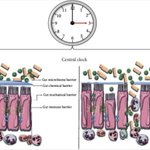
Leaky gut is as broad as the term IBS.
You can have damage to brush boarders, intracellular and paracellular permeability.
You can have damage to the mucus layer, the cells producing the mucus, and the immune cells regulating the mucus (secretory IgA).
You can have improper signalling to the stem cells that produce the intestinal cells due to changes in the microbiome.
Inflammation, oxidative stress and immune signalling all play a role in chronic and acute levels of leaky gut.
Parasites like giardia damage the brush boarders. Other parasites can cleave parts of the gut lining.
Gliadin sensitivity is common, even in non celiac, which causes immune cells to attack the gut lining.
Candida, which has an epitope similar to gliadin, may drive gluten sensitivity in some.
Bile can be cytotoxic to the gut lining, and changes in microbiome can cause changes to bile physiology.
SIBO and nervous system issues can drive motility problems, which can be irritating for the gut lining.
Some with post infectious IBS or severe IBS have immune cell activity behind the gut wall, which complicates the integrity of the gut lining.
