











Hardhat Chad ⛏️ retweeted

SoV of SoVs
#1 or bust
$ORE

The most interesting part of $ORE's design isn't live yet.
TLDR: Today, revenue generated by the ORE Reserve auto-compounds in isolation. Eventually, that revenue could be streamed to uORE holders (miners holding unclaimed rewards) as SOL mining credits, allowing the protocol to increasingly fund its own mining activity. The result is a flywheel that could strengthen mining incentives, lift staking yield, and put ORE on a path to net deflation.
First, it's worth understanding why ORE is different.
Bitcoin, Zcash, Ethereum, and Solana all use their native assets to incentivize network security. ORE doesn't have that requirement. It inherits Solana’s security, so it can direct its incentives toward a different objective: rewarding those who accumulate and hold the asset.
ORE is a store of value by design, and nearly every mechanism in the protocol reinforces this objective.
Consider how value flows through ORE today:
- Miners deploy SOL to earn ORE, aiming to acquire it below market price.
- A 10% refining fee on claimed rewards is redistributed to holders of unclaimed rewards (uORE).
- Mining revenue funds ORE buybacks, burial, staking rewards, and the Reserve.
- The Reserve provides liquidity while generating its own revenue through LP fees and yield-bearing assets like JitoSOL and USDv.
The result is a system where mining activity supports holders through multiple mechanisms, while the Reserve continues to grow and generate additional liquidity and revenue.
But there's one more piece to the design. Arguably the most interesting.
In AI, recursive self-improvement (RSI) describes a system capable of improving its own capabilities, with each improvement enabling further improvements.
ORE has a potential economic equivalent.
Today, the simplified flow looks like this:
Mining → Reserve → LP fees + yield → Reserve.
The Reserve grows, generates revenue through LP fees and yield, and reinvests that revenue into itself. A straightforward compounding mechanism.
But the loop back to mining remains open.
Now consider what happens when Reserve revenue is redirected to uORE holders as SOL credits, usable exclusively for mining ORE.
The flow becomes:
Mining → Reserve → LP fees + yield → SOL mining credits → Mining → Reserve.
The loop closes.
This is the recursive moment.
Consider the significance of this change.
Today, mining depends on SOL supplied by users. With mining credits, the Reserve’s own revenue becomes a new source of capital to fund that same activity.
Originally powered by user capital, ORE could become increasingly self-powered.
A protocol generating its own fuel.
There are two particularly interesting second-order effects here.
First, Reserve-funded mining credits could increase competition for ORE rewards, driving up production costs. To the extent this stimulates incremental mining activity, it generates additional protocol revenue, supporting buybacks, burial, staking rewards, and Reserve growth.
Second, and perhaps most importantly, this creates a potential path toward sustained net deflation.
At sufficient scale, additional protocol revenue could fund enough buybacks and burial to consistently exceed new ORE issuance.
To be clear, mining credits aren't live today, and it may be years before the economics justify turning them on.
The Reserve first needs sufficient scale and sustainable revenue to fund meaningful mining incentives without compromising its liquidity or long-term growth.
More importantly, the incremental mining activity needs to generate enough additional value to justify redirecting revenue away from direct compounding.
But the potential end state is worth considering: an economic system that compounds recursively, under its own power.


Hardhat Chad ⛏️ retweeted

This is what makes @ORE interesting.
Built on @solana , $ORE is designed around more than just scarcity. its reserve uses protocol revenue to create buy-side liquidity and buy back $ORE when the price drops.
The long-term vision is ambitious: "build enough reserve liquidity to absorb the supply before the reserve runs out."
an interesting approach to a store of value. ⛏️

The SoV of SoVs is built on @solana.
With enough liquidity in the Reserve, the idea is that supply could go to zero before price does.
Hardhat Chad ⛏️ retweeted

The most interesting part of $ORE's design isn't live yet.
TLDR: Today, revenue generated by the ORE Reserve auto-compounds in isolation. Eventually, that revenue could be streamed to uORE holders (miners holding unclaimed rewards) as SOL mining credits, allowing the protocol to increasingly fund its own mining activity. The result is a flywheel that could strengthen mining incentives, lift staking yield, and put ORE on a path to net deflation.
First, it's worth understanding why ORE is different.
Bitcoin, Zcash, Ethereum, and Solana all use their native assets to incentivize network security. ORE doesn't have that requirement. It inherits Solana’s security, so it can direct its incentives toward a different objective: rewarding those who accumulate and hold the asset.
ORE is a store of value by design, and nearly every mechanism in the protocol reinforces this objective.
Consider how value flows through ORE today:
- Miners deploy SOL to earn ORE, aiming to acquire it below market price.
- A 10% refining fee on claimed rewards is redistributed to holders of unclaimed rewards (uORE).
- Mining revenue funds ORE buybacks, burial, staking rewards, and the Reserve.
- The Reserve provides liquidity while generating its own revenue through LP fees and yield-bearing assets like JitoSOL and USDv.
The result is a system where mining activity supports holders through multiple mechanisms, while the Reserve continues to grow and generate additional liquidity and revenue.
But there's one more piece to the design. Arguably the most interesting.
In AI, recursive self-improvement (RSI) describes a system capable of improving its own capabilities, with each improvement enabling further improvements.
ORE has a potential economic equivalent.
Today, the simplified flow looks like this:
Mining → Reserve → LP fees + yield → Reserve.
The Reserve grows, generates revenue through LP fees and yield, and reinvests that revenue into itself. A straightforward compounding mechanism.
But the loop back to mining remains open.
Now consider what happens when Reserve revenue is redirected to uORE holders as SOL credits, usable exclusively for mining ORE.
The flow becomes:
Mining → Reserve → LP fees + yield → SOL mining credits → Mining → Reserve.
The loop closes.
This is the recursive moment.
Consider the significance of this change.
Today, mining depends on SOL supplied by users. With mining credits, the Reserve’s own revenue becomes a new source of capital to fund that same activity.
Originally powered by user capital, ORE could become increasingly self-powered.
A protocol generating its own fuel.
There are two particularly interesting second-order effects here.
First, Reserve-funded mining credits could increase competition for ORE rewards, driving up production costs. To the extent this stimulates incremental mining activity, it generates additional protocol revenue, supporting buybacks, burial, staking rewards, and Reserve growth.
Second, and perhaps most importantly, this creates a potential path toward sustained net deflation.
At sufficient scale, additional protocol revenue could fund enough buybacks and burial to consistently exceed new ORE issuance.
To be clear, mining credits aren't live today, and it may be years before the economics justify turning them on.
The Reserve first needs sufficient scale and sustainable revenue to fund meaningful mining incentives without compromising its liquidity or long-term growth.
More importantly, the incremental mining activity needs to generate enough additional value to justify redirecting revenue away from direct compounding.
But the potential end state is worth considering: an economic system that compounds recursively, under its own power.

Hardhat Chad ⛏️ retweeted

Uuhh. Is it just me or solana:oreoU2P8bN6jkk3jbaiVxYnG1dCXcYxwhwyK9jSybcp 's got like the most awesome recovery?!
I was so ready for a prolonged pullback like the rest of the market and suddenly today like, 1) what?!
SoV² is no joke.
Study @ORE , study resilience.


Hardhat Chad ⛏️ retweeted

Hard to overstate how big of a deal this is.
tl;dr — ANY unpatched Linux server with even a single TCP port exposed to the internet (say for HTTP or SSH) and MPTCP active (default for many Go web servers) is vulnerable to complete takeover.

What a disaster atlasum.net/blog/cve-2026-98…


Hardhat Chad ⛏️ retweeted
worth a read
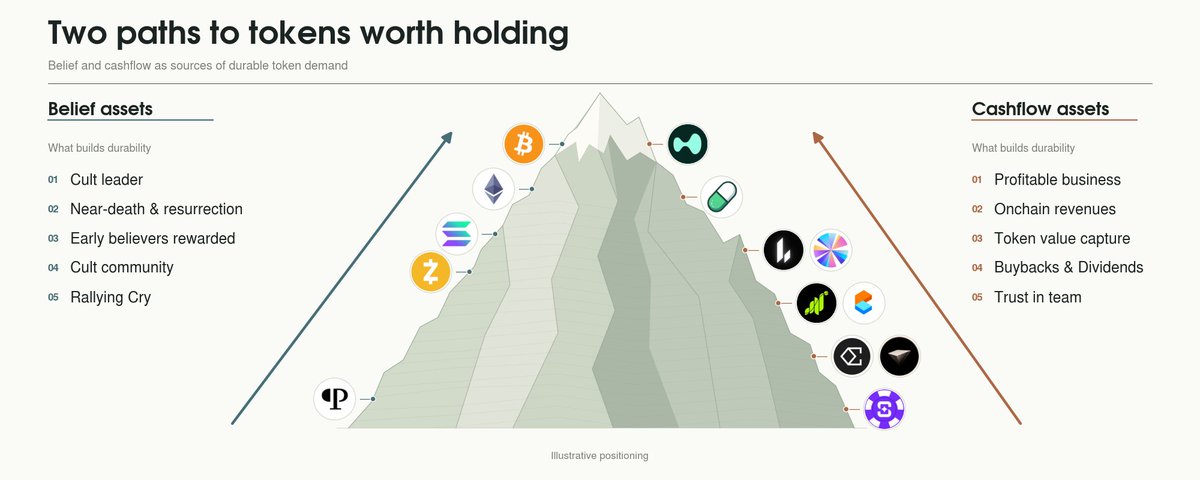
ore is unique like hype, in that it satisfies both sides of the barbell
it differs in that the belief side is far more important than the revenue side (the revenue is there simply to be channeled into things that improve the belief)



Hardhat Chad ⛏️ retweeted

Hardhat Chad ⛏️ retweeted
looks like we need a defi-native SoV that incentivizes you to stay onchain
who's building this?


Hardhat Chad ⛏️ retweeted

How does the ORE Reserve build liquidity?
As protocol revenue flows into the Reserve, funds are deployed across multiple assets and price ranges below the current ORE price.
@HardhatChad explains how these layers of liquidity accumulate over time.
Since this recording on October 1st, the Reserve has grown more than 5x, from $104K to $539K, and added two productive assets, JitoSOL and USDv.