

Our lab uses a variety of molecular techniques to define how mechanical signals regulate skeletal muscle mass
Madison WI
Joined December 2018
- Tweets1.4K
- Following176
- Followers2.6K
- Likes2.9K




The Hornberger Lab retweeted

Worms live longer in cool conditions thanks to a muscle-derived molecule nature.com/articles/d41586-0…

The Hornberger Lab retweeted

Today I smiled for real for the first time in more than 5 years. Thank you to the jury, judge, court officer and clerk. And of course to my rockstar legal team. I truly wish the best for everyone involved.

A civil jury ruled in favor of ex-MIT scientist David Sabatini, who was accused by a younger colleague of inappropriate sexual conduct in his Cambridge research lab, and awarded him $6 million in damages. trib.al/s3v9VIX

The Hornberger Lab retweeted

New @ISMCopenhagen publication with Casper @Soendenbroe on human muscle fibre type remodelling with age and exercise🏃💪
Nice to see such simple observations still have value!
#myotwitter
link.springer.com/article/10…

The Hornberger Lab retweeted

“A Hypertrophic Stimulus Drives Age-Dependent Transcript Isoform Switching With and Without Differential Gene Expression in Skeletal Muscle” by @PJKoopmansPhD w/@AhmedIsmaeelPhD @yuan_wen16220 and Nelson lab at U of A @AgingCell onlinelibrary.wiley.com/doi/… #myotwitter

Great summary Brad. I always enjoy reading your objective and open minded perspectives

Lengthened partial repetitions have received considerable attention as a strategy for maximizing muscle hypertrophy. Most research indicates that the lengthened portion of a rep is more hypertrophic than the shortened portion. But research comparing lengthened partials vs full ROM training have produced mixed results.
A new study from @drmikeroberts lab, led by Daniel Plotkin, sheds additional light on the topic (PMID: 42841600). The study employed a within-subject design in resistance-trained men, with one leg assigned to lengthened partials and the other to full ROM. Training was performed twice weekly using leg presses, leg extensions, and lying leg curls for 8 weeks. Whole muscle growth was assessed using MRI and fiber type growth assessed by biopsy.
Results showed both conditions promoted appreciable growth of the vastus lateralis, with no clear difference between conditions in CSA or fiber type hypertrophy. Moreover, both protocols produced broadly similar changes in anabolic signaling and gene expression following exercise.
Notably, these findings were only a portion of the overall study, which also included MRI of the lower body muscles. Based on the preprint, quad and glute hypertrophy was similar between conditions. Interestingly, however, lengthened partials showed a tendency to produce greater overall hamstring hypertrophy, largely driven by greater growth of the semitendinosus. This suggests that the effects of ROM manipulation may be muscle- and exercise-specific.
From a practical standpoint, these findings challenge the notion that lengthened partials are universally superior to full ROM training for hypertrophy—consistent with a study from our lab on the topic (PMID: 39959841), amongst others. Both approaches appear capable of producing meaningful muscle growth, even in experienced lifters. However, the potential advantages of lengthened partials may depend on the specific muscle and exercise being trained.
Bottom Line: Rather than establishing one approach as universally superior, the emerging evidence suggests that the hypertrophic benefits of different ROM strategies may be muscle-specific. It is also conceivable that combining approaches could produce complementary, or perhaps even synergistic, hypertrophic adaptations. Moreover, given the joint-angle specificity of strength adaptations, incorporating a substantial amount of full ROM training would seem prudent to maximize the overall benefits of resistance training.
pubmed.ncbi.nlm.nih.gov/4284…

The Hornberger Lab retweeted

Lengthened partial repetitions have received considerable attention as a strategy for maximizing muscle hypertrophy. Most research indicates that the lengthened portion of a rep is more hypertrophic than the shortened portion. But research comparing lengthened partials vs full ROM training have produced mixed results.
A new study from @drmikeroberts lab, led by Daniel Plotkin, sheds additional light on the topic (PMID: 42841600). The study employed a within-subject design in resistance-trained men, with one leg assigned to lengthened partials and the other to full ROM. Training was performed twice weekly using leg presses, leg extensions, and lying leg curls for 8 weeks. Whole muscle growth was assessed using MRI and fiber type growth assessed by biopsy.
Results showed both conditions promoted appreciable growth of the vastus lateralis, with no clear difference between conditions in CSA or fiber type hypertrophy. Moreover, both protocols produced broadly similar changes in anabolic signaling and gene expression following exercise.
Notably, these findings were only a portion of the overall study, which also included MRI of the lower body muscles. Based on the preprint, quad and glute hypertrophy was similar between conditions. Interestingly, however, lengthened partials showed a tendency to produce greater overall hamstring hypertrophy, largely driven by greater growth of the semitendinosus. This suggests that the effects of ROM manipulation may be muscle- and exercise-specific.
From a practical standpoint, these findings challenge the notion that lengthened partials are universally superior to full ROM training for hypertrophy—consistent with a study from our lab on the topic (PMID: 39959841), amongst others. Both approaches appear capable of producing meaningful muscle growth, even in experienced lifters. However, the potential advantages of lengthened partials may depend on the specific muscle and exercise being trained.
Bottom Line: Rather than establishing one approach as universally superior, the emerging evidence suggests that the hypertrophic benefits of different ROM strategies may be muscle-specific. It is also conceivable that combining approaches could produce complementary, or perhaps even synergistic, hypertrophic adaptations. Moreover, given the joint-angle specificity of strength adaptations, incorporating a substantial amount of full ROM training would seem prudent to maximize the overall benefits of resistance training.
pubmed.ncbi.nlm.nih.gov/4284…
Contraction type dependence of serial sarcomere addition following resistance training biorxiv.org/content/10.64898…

The Hornberger Lab retweeted
Our latest (preprint): In young and older women💪, short-term prehabilitative exercise mitigates the consequences of limb immobilization by establishing greater muscle and strength reserve, rather than by attenuating the molecular responses to disuse.
@ISMCopenhagen
#myotwitter

New preprint: "Prehabilitative Exercise Mitigates Immobilization-Induced Atrophy Through Muscle Reserve Rather Than Resistance to Disuse: The PRE-EX Randomized Controlled Trial"
medrxiv.org/content/10.64898…

When David Sabatini says he thinks your new paper is important you simply have to retweet it. Thanks David 😁

This paper is important: physoc.onlinelibrary.wiley.c…

Why do muscle fibres shrink with age?
Not because myofibrils get smaller — because there are fewer of them.
We followed this from whole-muscle down to individual myofibrils, in humans and mice, across ageing and disuse.
Tweetorial below
Open Access here: physoc.onlinelibrary.wiley.c…


1/ Why do muscles atrophy with aging and disuse?
Is it because each tiny little myofibril gets smaller… or is it because we lose myofibrils?
In our new study, we addressed this in humans and mice. biorxiv.org/cgi/content/shor…
Full breakdown of the findings in this thread 👇
What do you do when a fire drill forces you to leave the building during the middle of a lab meeting??? You take advantage of it.

The Hornberger Lab retweeted

December 1-3 2027. Note the date as it will be the @CellCellPress Exercise Metabolism conference at the @HelmholtzMunich. Great opportunity to present FOR5795 HyperMet data!

FSHD is a very interesting muscular dystrophy (e.g., asymmetric muscle loss), and the idea that people with FSHD should avoid heavy lifting weights is a textbook case of dogma outliving its evidence. Great job telling this story, Marius!

Is high-load resistance training (RT) harmful in #FSHD? Probably not. Is it beneficial? Theoretically, it should be, but the evidence is thin. Our new review finds the consensus on RT in FSHD rests on a few poorly designed studies. The door is wide open. doi.org/10.1007/s00415-026-1…

The Hornberger Lab retweeted
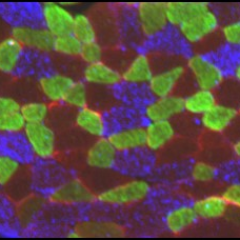
Feeding-induced muscle mTORC1 signaling regulates postprandial protein synthesis and endurance but not muscle size
insight.jci.org/articles/vie…
The Hornberger Lab retweeted
Why do some people gain more muscle than others?
Last year I participated in the 2025 Inter-Individual Variation in Resistance Training Response Conference at the University of Jyväskylä, organized by @DrMikeRoberts, where leading researchers discussed why hypertrophy responses can vary so widely between individuals. The findings were summarized in a recent paper published in JAP (PMID: 42172438)
Some key takeaways:
--Programming matters. Evidence suggests ~10 sets per muscle per week is sufficient to efficiently promote hypertrophy for most people, with diminishing returns as volume increases. Rest periods should generally be at least 60 seconds—and ≥2 minutes for multi-joint exercises—with sets performed close to failure (~2 RIR or less).
--“Non-responders” may not really be non-responders. A single pre/post measurement can reflect measurement error and normal biological variation rather than someone's true response to training.
--Genetics aren't destiny. Despite substantial variability in muscle growth, we currently lack strong evidence that genetic testing can meaningfully predict who will or won't respond well to resistance training. Hypertrophy appears to result from a complex interaction of numerous biological and environmental factors.
--Age doesn't automatically make you a poor responder. Some older adults respond very well to resistance training, and chronological age alone shouldn’t be viewed as a barrier to gaining muscle. Resistance training remains a potent strategy for combating age-related declines in muscle mass and strength.
--Before blaming your biology, get the basics right. If progress is poor, first examine training consistency, progressive overload, sleep, and dietary habits. Supplements play a comparatively minor role in muscle-building.
Bottom Line: Yes, people differ in how much muscle they gain from resistance training—but determining someone's true responsiveness is far more complicated than labeling them a “high responder” or “non-responder.”
The most important controllable factor remains remarkably straightforward: Train consistently, apply progressive overload, and keep doing it for the long haul.
journals.physiology.org/doi/…

The Hornberger Lab retweeted
Personalized phosphoproteomics establish mTORC1 as a regulator of exercise-induced insulin sensitization in human skeletal muscle
biorxiv.org/content/10.64898…

Skeletal Muscles Do Not Compete for Growth: Activating Additional Muscle Mass Does Not Compromise Changes in Muscle Size ovid.com/10.1519/JSC.0000000…

This looks like a very interesting paper, but the PDF that you can download from the journal doesn't contain the figures. Does anyone have a link to the full manuscript with figures?

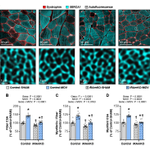
Aging preserves mTORC1 but attenuates JNK-SMAD2L signaling sensitivity to passive stretch-induced tension development in isolated mouse skeletal muscle
sciencedirect.com/science/ar…
