

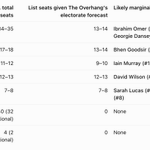




It's incredibly depressing how useless New Zealand's left wing parties have become on education. Total abdication in the face of 30 years of failure.
5
259

The "AI means the end of academic math" take confuses me. academic math exists because (a) undergrads want to major in math and (b) universities compete by hiring the most prestigious researchers to be teachers. Unless AI changes either (a) or (b) then academic math will survive.
1
142

Wilbur retweeted

Scenario planning is much more important than prediction right now

I think people need to admit that we've moved on from risk to Knightean uncertainty where forecasts are largely meaningless. No one knows anything is extreme but closer to the truth than not. We have decades of work showing that the most we can do in these cases is scenario planning and maxmin, trying to avoid the worst scenarios and navigating towards the best ones.
Are Labour going to release an education policy? Or have they kinda conceded that education is something they can't do well. Or do parties not like "release an education policy" these days.
1
197
I've been stewing over Labour's plan to bring back the ever-increasing minimum age for buying tobacco --- mostly because it's a dumb & controlling & patronising policy ---- but also because it speaks to the class they consider target voters and the class they've given up on.
1
11
858


Wilbur retweeted

Yes, AI will accelerate inequality. But the tech-enabled generous welfare state is unlikely. The wealthy don't want it, and they will control the politics more than ever.
The zeitgeist is already shrinking the circle of social responsibility—illegal immigrants are out, legal immigrants are not far behind, and next it will the poor.
We have the most tech-wealth-aligned adminstration ever and they are shrinking the welfare state and the circle of our responsibility.
The working class has had some power over the generations, because masses were needed to grow food and run machines. It's hard to predict whether the labor share will continue falling, but it sure looks like a possibility!
It's naive to think we'll respond by ever expanding the welfare state to low-productivity people around the world. More likely the powerful will build higher walls and tell themselves it's not their problem.
Happy 2026!

New blog post w @pawtrammell: Capital in the 22nd Century
Where we argue that while Piketty was wrong about the past, he’s probably right about the future.
Piketty argued that without strong redistribution of wealth, inequality will indefinitely increase. Historically, however, income inequality from capital accumulation has actually been self-correcting. Labor and capital are complements, so if you build up lots of capital, you’ll lower its returns and raise wages (since labor now becomes the bottleneck).
But once AI/robotics fully substitute for labor, this correction mechanism breaks.
For centuries, the share of GDP that goes to paying wages has been 2/3, and the share of GDP that’s been income from owning stuff has been 1/3.
With full automation, capital’s share of GDP goes to 100% (since datacenters and solar panels and the robot factories that build all the above plus more robot factories are all “capital”).
And inequality among capital holders will also skyrocket - in favor of larger and more sophisticated investors. A lot of AI wealth is being generated in private markets. You can’t get direct exposure to xAI from your 401k, but the Sultan of Oman can. A cheap house (the main form of wealth for many Americans) is a form of capital almost uniquely ill-suited to taking advantage of a leap in automation: it plays no part in the production, operation, or transportation of computers, robots, data, or energy.
Also, international catch-up growth may end. Poor countries historically grew faster by combining their cheap labor with imported capital/know-how. Without labor as a bottleneck, their main value-add disappears.
Inequality seems especially hard to justify in this world. So if we don’t want inequality to just keep increasing forever - with the descendants of the most patient and sophisticated of today’s AI investors controlling all the galaxies - what can we do? The obvious place to start is with Piketty’s headline recommendation: highly and progressively tax wealth. This might discourage saving, but it would no longer penalize those who have earned a lot by their hard work and creativity. The wealth - even the investment decisions - will be made by the robots, and they will work just as hard and smart however much we tax their owners.
But taxing capital is pointless if people can just shift their future investment to lower tax countries. And since capital stocks could grow really fast (robots building robots and all that), pretty soon tax havens go from marginal outposts to the majority of global GDP. But how do you get global coordination on taxing capital, when the benefits to defecting are so high and so accessible?
Full automation will probably lead to ever-increasing inequality. We don’t see an obvious solution to this problem. And we think it’s weird how little thought has gone into what to do about it.
Many more thoughts from re-reading Piketty with our AGI hats on at the post in the link below.
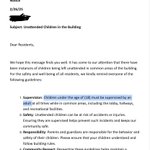
a new high for american safety culture -- no children aged under 18 (!!!!) left unsupervised

1
3
303
anyone have a good take on neck pillows for long haul flights? worth it? are fancy brands much better?
1
427
are "the purpose of a system is what it does" people familiar with the debates among analytical marxists during the 1980s about functionalist theories in the social sciences?
2
5
510
Wilbur retweeted

Personally I think the way to save the humanities is by blowing the whistle on what mathematicians are up to
Wilbur retweeted

brat... last hurrah of millennial culture? pc music production; big whiff of bodyrox's yeah yeah on von dutch; 'von dutch'; ironic antidesign blogosphere ad album art; everyone changing avis to a set template; marketing campaign overextending into liberal cringe... it's all there

economist friends (or other people) --- has anyone figured out how to ID an MMP vote share from an FPP vote share a la Agarwal on school choice?

Not defending FPP.
But you can’t just extrapolate votes from each FPP seat race & add it together to compare it to a MMP style popular vote share.
People vote strategically in seats. Some don’t bother voting in safe seats. Polls predicting a landslide, lowers turnout etc.
2
371