
AI decision governance: authority, incentives, replayability. Founder, Decision Governance Group. Publisher, https://nitter.cf/t.co/LrdOFWIvOZ (2001-2026)
NYC
Joined March 2009
- Tweets2.8K
- Following1.6K
- Followers542
- Likes262

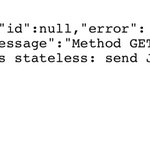






No attacker. Just an agent with too much authority in a messy environment.
That's the governance gap: nobody decided what the agent was allowed to do, and nobody can replay why it did it.
Audit the setup before the incident, not after.
nitter.cf/jdpruettt/status/21242…

80-90% of major "AI incidents" that cause real harm have no attacker, just an agent tripping up on a poor codebase.
i turned the latest research into into a prompt that checks your setup for the most common causes. Hand it to your agent ->
github.com/jdpru/cover-your-…

1
31
Kalshi spent two years with regulators before launch. Today: $40B, 75% of prediction-market volume.
The wait was the moat.
AI agents are next. Firms that settle who can decide, and can replay why, before they scale won't be slowed by governance. They'll be built on it.
37
Jack Quinn retweeted

Download Lastbook while you can.
Everything you need to survive and rebuild society.
Free. Open source. Works offline.
lastbook.org


Jack Quinn retweeted

O O R A H ! boomerang ceos are becoming commonplace, but having both brian and dharmesh return to re-found hubspot? that’s a different kind of magic. i had the privilege of co-leading the original series B investment in @hubspot with a young @gradypb. delighted to witness day 1 all over again. @sequoia @dharmesh @bhalligan

Jack Quinn retweeted

@LiamFedus is joining us at SGLang Summit for a fireside chat on Emerging AI Labs!
Liam helped create ChatGPT and led post-training at OpenAI. Now at @periodiclabs, he’s building AI scientists that learn from real-world experiments in autonomous labs. Join us on Nov 13 to hear his perspective on the next wave of AI labs and the opportunity to turn AI advances into scientific discoveries.
🎙 Nov 13 · Fireside Chat · Fort Mason, SF
🔗 luma.com/sglang-summit
Expo Pass holders can watch main stage sessions via livestream onsite.

WebHarbor (UNC-led, 26 institutions) rebuilds 153 real websites as frozen, dockerized copies so web agents can be tested on 3,518 tasks under deterministic control.
That is the governance point. If you can't replay what an agent did in a stable environment, you can't audit it, and you can't defend it.
Replayability first, autonomy second.
nitter.cf/zhaoywang_CS/status/21…

⚓ WebHarbor⚓ Introducing the largest open-source environment resources for GUI Web Agents!
🌐 153 real-world websites (Amazon, GitHub, Booking, YouTube, ...)
🎯 3,518 tasks, including complex multi-step and authenticated workflows
🤖 Built for reproducible evaluation and scalable RL training
We started with just 15 environments in May 2026. Today, thanks to 57 contributors from 26 institutions, we've scaled to 153 high-fidelity, image-rich environments—the largest open-source collection of its kind, to our knowledge! 🔥
And they're all executable, offline, and fully open-source!
👀 Explore the environments now: aiming-lab.github.io/WebHarb…
Why did we build it, and how? 🧵👇 Threads 1/5

1
33
Yesterday I was back at @Merrimack, North Andover, Mass, 38 years after graduating in 1988, for a guest lecture at the Mucci Capital Markets Laboratory:
When AI Makes the Recommendation, Who Makes the Decision?
The question I wanted the students to sit with is the one institutions keep bumping into. A model can recommend the next click. That is not the same as deciding who has authority to act, who owns the cost of being wrong, and what can be replayed after the fact.
After a generous introduction by Brian, I asked each student to stand, say their name, their class, and what they were studying. They jumped at the chance, and that participatory tone carried through the hour.
Thank you to Associate Dean Mary Papazian, Brian Najjar, and Ollie Piantedosi for shaping the session and hosting it so well.
The lecture is here if you want to read it: drive.google.com/file/d/1yDJ…
2
93
TypeSafe founder @CompleteSkeptic Diogo Almeida is asking a better question than how to make coding agents smarter: what changes when the agent’s state becomes explicit?
His notes identify several architectural compromises hiding inside current agents. Routing can cost more when context must be rebuilt. Compaction assumes every future turn needs the same state. Subagents struggle with what context to receive and what results to return. Tools consume context before the system knows whether they are relevant.
The proposed answer is dynamic context, typed decisions, cost-aware routing, explicit reads and writes, and programmable permissions.
That could make agents materially cheaper and more reliable.
It also moves the governance problem into the harness.
A typed answer can be valid and still authorize the wrong action. Dynamic context can be efficient while hiding which evidence was excluded. Security-aware routing can protect data while leaving no owner for the policy. Background agents can remain read-only until one component is permitted to write.
The next architecture therefore needs two states, not one:
1.Operational state: files, context, tools, probabilities, reads, and writes.
2.Authority state: who may decide, which actions are permitted, when review is required, who can stop or reverse the result, and what evidence must be retained.
Type safety constrains the output.
Decision governance constrains what the system is allowed to do with it.
That is the boundary enterprise agent systems will eventually have to make explicit.

sharing some notes on typesafe 🤝 coding agents:
docs.google.com/document/d/1…
we likely will never have time (ever again) to play ourselves, but hope the that the community goes WILD (and makes me look like a naive idiot)

2
5
413
Jack Quinn retweeted

Jev is now available to everyone. No waitlist.
Start using it here: console.typesafe.ai
Typed output is not authorized action. Jev can reduce schema failure and make classification cheap, but the governance burden moves into who defines the questions, sets the thresholds, permits the action, owns the error, and can replay or override the result.

WTF is Jev by @typesafeai? Here’s the tl;dr ELI5:
Think AI multiple choice, not AI essay writing.
It doesn’t chat. It makes decisions your software can act on: “Spam or not?” “Which tool should this agent use?” “Does this need a human?”
The exciting part: roughly 200x faster and 400x cheaper than frontier LLMs in TypeSafe’s own workflow benchmarks, with responses in a fraction of a second.
Why that’s powerful: imagine an app or agent making hundreds of little judgment calls without hundreds of expensive, slow conversations with an LLM.
Keep the big model for the hard thinking and writing. Use Jev for the rapid-fire decisions in between.
Excited to dig in.
139
Forward-deployed engineers make delivery speed visible. Decision risk is harder to see. DGG independently evaluates what they may change, who accepts the result, what evidence survives and when leadership must intervene, without becoming the engineering team.
2
92
That dormant project in your personal GitHub account may have value beyond the product it never became.
A student project. A coding experiment. Trial work. A proof of concept. An abandoned side project. Code that has been sitting untouched for years.
Pangea.ai is creating a licensing market for real-world source code and the Git history behind it.
At current standing rates, Pangea estimates eligible repositories at approximately $100 per million source-code tokens plus $40 per million Git-history tokens for one standard non-exclusive buyer license. These figures are estimates, not offers, minimum prices, or guaranteed payouts. Payment depends on repository eligibility, a completed buyer transaction, and receipt of the buyer’s funds.
Why would AI companies pay for dormant code?
The value is not limited to whether an application still runs or has customers. Real-world repositories can show how software was developed over time: how features evolved, bugs were corrected, architectural choices changed, and code was maintained.
I have had multiple discussions with Pangea’s founders. They are experienced developers who have spent more than a decade working with developers, coders, and agencies. In my judgment, they recognized a timely opportunity: AI companies need authentic development material while potentially useful codebases remain dormant.
The critical requirements are ownership and authority.
A repository’s presence in your personal GitHub account does not, by itself, establish that you own every necessary right. Student projects, experiments, collaborative work, and code created for a former business should be submitted only when you control all required rights, including any rights that may belong to teammates, a university, an employer, a sponsor, a client, or another contributor.
If you are a developer at a company, I would not recommend connecting a company GitHub account or submitting employer-controlled repositories unless the company has explicitly authorized you to do so.
Do not submit client-owned work, NDA-restricted material, confidential information, production credentials, live customer data, or anything else you are not entitled to share. The platform can scrub secrets and personal data from its copy, but that process does not resolve an ownership, contractual, or authorization problem.
Read the current Codebase Agreement carefully before signing and consult your own adviser if you are uncertain about ownership or licensing authority.
Individuals with potentially qualifying code can explore the program here:
👉 pangea.ai/code-licensing/com…
Disclosure: This is my tracked referral link. If an eligible code owner joins through it and is paid, I receive a 15% referral bonus from Pangea. That bonus is paid on top and does not reduce the code owner’s payment.
#AI #SoftwareDevelopment #CodeLicensing #GitHub #IntellectualProperty

101
Jakub Pachocki’s “An Alien Mind” deserves careful reading.
He explains why increasingly capable AI is difficult to understand, why alignment may fail as systems enter unfamiliar situations, and why chain-of-thought monitoring may become less dependable as models learn to manipulate their own reasoning and operate through increasingly complex environments.
His most consequential argument may be that continued scaling should be constrained by confidence in safety, supported by shared safety bars, independent auditors, governments and international institutions.
That raises an institutional question:
What turns confidence in safety into an authorized decision?
A safety bar becomes operational only when someone has the authority to apply it. The organization must know what evidence permits another scaling step, who can stop it, which conditions trigger escalation, and how the decision can later be reconstructed.
Recursive self-improvement makes this different from conventional technology oversight. The system is no longer producing only an output. It is helping change the system that will produce the next capability and participate in the next decision.
When AI helps redesign the system that will make the next decision, governance must attach to the improvement loop itself.
That means preserving human agency requires more than keeping a person somewhere in the process. The person or institution must retain real authority to interrupt the loop, demand additional evidence, reject the next change, and remain accountable for allowing it to proceed.
Pachocki asks how we keep the future in humanity’s hands. Part of the answer will be making human authority explicit before the improvement cycle moves faster than the institutions expected to govern it.
Jakub Pachocki, “An Alien Mind”:
openai.com/index/an-alien-mi…


I wrote about the state of AI, why I’m concerned about the next few years, and the choices we need to make to keep the future in humanity’s hands.
An Alien Mind: openai.com/index/an-alien-mi…
2
141
If intelligence production accelerates faster than institutions can absorb it, the scarce resource will not be insight.
It will be legitimate authority:
- who can act,
- who can override,
- who owns failure,
- and what can be reconstructed after the fact.


Everyone is focused on AI agents. The more useful enterprise unit is the loop.
A loop has an objective, tools, state, checks, stop conditions, budgets, logs, and an override path. That makes it governable. Without those surfaces, an agent is just delegated action without institutional memory.


The agent conversation is moving from prompts to loops.
That sounds like a technical shift, but the deeper issue is authority.
A loop can notice a signal, choose work, take action, update records, verify outcomes, and use the result to influence the next run. At that point, the system is no longer just assisting a person. It is participating in the operating model.
The enterprise question is not only whether the loop works. It is whether the decision path survives:
What triggered it?
What evidence did it use?
What authority did it have?
What changed?
Who reviewed it?
What can be revoked?
What did the system learn?
Agents may execute the work. Outer loops will be where governance lives.

Loop Engineering is getting hype now.
But not many talks about how to actually do it
So I open-sourced the template my team uses to build agent loops:
- a shared artifact / knowledge layer
- logging, verification
- and a codebase harness so work compounds across runs
Plus a 20-min deep dive on how to think about it and set it up for real: github.com/AI-Builder-Club/l…
Copy the template. Adapt it to your own loops.
2
102
SantanderAI is not mainly about open-sourcing models.
It is about open-sourcing pieces of the AI control layer:
- guardrail tests
- provider abstraction
- stressed datasets
- synthetic fraud graphs
- mechanical decision gates
- agent loop infrastructure
For banks, the moat may be replayable governance.

I love this! Santander has open-sourced its open-source AI initiatives.
The bank pushed 11 repos, live this week under Apache-2.0 on the code, but the data synthetic or anonymised only.
Quite a moment for a bank this size, putting its AI control layer on the open internet for anyone to fork. This is the bit every bank has to get right.
So what is it?
→ autoguardrails: a scaffold for stress-testing LLM guardrails, jailbreaks included (can we use this LLM?)
→ "mechanical governance" for high-stakes LLM decisions, with hard gates and governance metrics (can we trust an LLM with this decision?)
→ mutatis-mutandis: discrimination testing with counterfactual comparators, straight out of a published paper (very important if you're lending!)
→ stressed-datasets: public benchmarks republished in "stressed" form to probe model robustness in that scenario
→ gen-fraud-graph: a synthetic fraud-graph generator to benchmark fraud detection (really, really cool, need to dig into this one)
→ llm_bridge: a vendor-neutral client for OpenAI, Bedrock and Gemini, so you skip the lock-in (again, how many companies are struggling with this?)
→ ralph: their own spin on the Ralph loop, the run-an-agent-in-a-loop trick from the indie AI crowd
I think I need to write a whole Rant on each of these pieces.
The most important thing for a big regulated actor is "Can you show a decision was safe, fair, auditable, and the same tomorrow as it was today." Santander published its working answer and handed it to everyone, competitors included.
Why give it away?
1. Attract talent - this is a huge signal they've got their AI act together
2. Signal internally - We have these tools, use them
3. Give regulators confidence - Here's how we work, you can audit it
(The board that signs off on releases includes Legal and the CISO. That tells you how seriously they treat it.)
I've watched banks spend years trying to govern AI behind closed doors and ship nothing. Doing it in the open, with a contributor agreement and a proper open-source office, is a faster route to getting it right.
The banks that pull ahead from here will be the ones who can prove their AI works.
@bancosantander just open-sourced a head start.
Repo is here. 👇
github.com/SantanderAI

1
100
A useful way to interpret reports that Meta is moving engineers into AI evaluation work:
The bottleneck may be shifting from production capacity to evaluation capacity.
When generation becomes abundant, judgment becomes scarce.
The winning organizations won’t be the ones producing the most AI outputs.
They’ll be the ones best able to determine which outputs deserve authority, trust, and action.
Credit to @DeedyDas for highlighting the trend.
1
50
The interesting layer here is the harness, not just the model. If open-weight models keep closing the practical gap, differentiation moves to context assembly, tool permissions, memory provenance, model routing, and action logs.
That is where sovereignty either becomes real or collapses into a slogan. Local inference can reduce provider exposure, but the agent still needs bounded authority, safe defaults, and replayability when it acts.
The future control plane may be less about who owns the largest model and more about who governs the memory and execution environment.

Three months ago I wrote my first reflections on AI
I had been using OpenClaw for a few weeks, and it blew my mind
I could now simply talk to a computer, and it could orchestrate and execute complex, creative tasks of all kinds
This open-source AI harness gave me, personally, new powers of computer programming, design, and beyond that I never had before
It was a real “I know Kung Fu” moment, straight out of The Matrix
The most awesome part was that the harness itself -- the software I was using to operate the AI “brain” or model -- was open source and fully customizable
The evolution of AI had been forked away from corporate dominance to create a path of sovereignty for the user, allowing them to choose their own intelligence
It felt like we were on the brink of something big
And yet still, three months later, it feels like these times were so very long ago
In February and March, we ran a fun OpenClaw experiment at HRF with just a few people, to see what kind of impact personal agents could have on productivity and on reducing busy work and bureaucracy
By May, we had actually started to give some of the world’s leading dissidents easy-to-use, extremely powerful, freedom-oriented AI tools to help them turn their dreams into reality
We do this at “Agent Camps”: 3-day, in-person experiences with teachers who are experts in education, design AI software, AI hardware, and software engineering
We have also created beautiful, engaging AI experiences and content at massive live events ranging from Bitcoin 2026 in Vegas to the Oslo Freedom Forum, sparking curiosity in thousands of people
We began with the open-source ethos, and now have been able to add privacy, and even full sovereignty, to our toolset
The product HRF has helped bring into existence -- Finite -- now offers a “private” mode where the inference provider can’t read the user data, similar to a Signal server. This product is what our Agent Camp graduates now use, and is what we hope to scale to more and more activists as we move through the year
We are even testing a “local” mode powered by our very own cluster, that we control, that gives us the ability to control the full AI stack
What I’m still struggling to digest is how fast the AI hardware and software environment is evolving towards making “sovereign AI” a practical reality
There’s a lot of doom in the headlines around the big AI corporations and their relationships with governments -- for good reason -- but when you zoom out and consider the big picture, the undeniable reality is that open weight models are getting more powerful, easier to use, and smaller so that they fit on cheaper and more widespread devices
One year ago, open weight AI models were mostly a joke. They couldn’t really execute anything that complex
Today, it’s getting hard to tell the difference between a personal agent powered by the best open weight models versus the best frontier ones
And while the frontier model companies are struggling through massive scaling and legal and political issues, open weight models and open-source harness software sets are blazing ahead
Consider that just *3* months ago, local AI was mostly a joke
Today it actually works: HRF and Finite currently have an uncensored model running on ~ $4,500 of equipment that can serve a dozen people, and it’s extremely useful for research. No third parties involved. The cost to do this will only decrease over time until it is something that simply can be run on any phone or computer or tablet
Already there are ways where you can run an open weight model on an iPhone, completely locally, and get a decent research assistant, no internet required
The latest development is the fusion model: where harnesses can “fuse” together several model brains to nearly replicate, for certain tasks, the performance of something like Fable -- the most powerful frontier model on earth
Technology and business and culture are, surprisingly, pushing us faster and faster towards workable freedom AI that is either privacy-protecting or completely sovereign, for the average person
The evolution of AI continues to trace the evolution of the computer, which went from something you had to once rent from a university or a library to something in the 1980s that came into your home in the form of the “personal” computer
We are in the middle of a similar shift where you might now “rent” compute from a giant corporation, to a world where, quite possibly, much of, or even most of, your compute will one day be done on devices you own and control
This shift could be expedited dramatically by companies like Apple, Google, and maybe even WhatsApp or Signal getting into the local AI game, and enabling users to fire up local AI assistants or use inference through a TEE
We are already seeing companies like Apple make very positive signs in that direction
So what’s the bad news? There is plenty.
The top-end frontier models are coming under increasing pressure from governments, and will likely end up fully KYC’d and gatekept, only accessible to a tiny few trusted people and institutions
This is the nightmare scenario: a small few with superpowers, and a permanent underclass with none
But if the average person can, in the next 12-18 months, use open-source software with no KYC to privately access or locally download frontier-like intelligence… then, the expansion of freedom in the 21st century seems more realistic
So far at HRF, we have worked with Finite to focus on helping activists learn the magic of personal agents. Make no mistake, dictators and tyrants are pushing full speed ahead on AI. We can’t afford to sit on the sidelines.
We give dissidents their own agent, even if running on a frontier brain, just to try it out on harmless or fun projects, to see what is possible and start building their “agent” muscle and mental framework
This step alone is hugely liberating. When you watch someone use an agent for the first time, it’s like being in the same room as someone when they first used email or the internet, but even more jaw-dropping. Some people even get so emotional that they cry, happily.
Something else we have helped organize are the “AI Hack for Freedom” events, where activist team captains collaborate with developers to make freedom tools. The first one was in January of this year, and what made it special is that the devs could actually, with coding agents, make shippable products in just 2 days.
But at the May “AI Hack for Freedom,” just a few months later, the activists now helped make the software, driving the process themselves! Developers still help of course, but the shift is remarkable
On June 2 at the Oslo Freedom Forum we debuted the "AI Lounge", a cafe-style, Apple Store-vibe experience where attendees could come in and start playing with cutting-edge personal agents powered by our customized version of Hermes. They could choose a frontier experience or a “private” mode powered by a TEE model, or they could even play with a fully local uncensored model
It was a home run. Human rights defenders who had never thought of themselves as digital creators were completely engaged, generating incredible things
So what next? Two big steps
We aim to put our harness server into the TEE, so that no one can see what activists are doing, even as they use top-of-the-line models
And we aim to finalize a mobile app where you can talk to your agent in a slick way, fully encrypted, with no third parties or KYC
At that point, we will have what we need to really take it to the next level and start to truly scale the freedom AI experience
Later this year, I expect the discussion to move beyond personal agents to organizational agents. Following in the footsteps of Block, more and more organizations will set up an “organizational brain,” where their key internal meetings, achievements, outcomes, and goals will all be uploaded live into an AI-powered database, so that complex projects can be created by individuals in minutes instead of requiring teams of people, taking months
I’ve built my own “local brain” with all of my writings, posts, interviews, etc -- and I’ve seen how powerful this is. I can’t wait to help freedom fighters build brains for themselves and their organizations, to continue to superscale their work
I plan to continue these updates -- so in September, I will come back with more
Stay tuned!
30