

Physician, diabetes, endocrine Humanist, science nerd Passionate about social equality and education. Outdoors enthusiast Views own
Joined February 2015
- Tweets437
- Following331
- Followers36
- Likes2.8K



Jan Klepacki retweeted

Calling metformin a mitochondrial poison sounds dramatic, but it's an accurate description of how the most prescribed diabetes drug in the world actually lowers blood glucose. Unfortunately, the mechanism is a kind of blunt instrument.
One of metformin's best-described actions is that it inhibits complex I of the mitochondrial electron transport chain, the first step cells use to turn the fuel we eat into ATP. With complex I partly blocked, the cell makes less energy, and that energy shortfall activates AMPK and slows how much glucose the liver makes and releases into the blood. Put plainly, metformin lowers glucose largely by making cells a little worse at producing energy, and the liver and gut wall take the heaviest exposure because they pull the drug in through their transporters.
That matters most in muscle when someone is trying to get healthier through exercise, since the main benefits of training come from muscle building more and better mitochondria and becoming more sensitive to insulin.
In older adults doing 12 weeks of aerobic training, the group taking metformin lost much of the gain in mitochondrial respiration that exercise produced, and the improvement in whole-body insulin sensitivity was blunted compared with the group on placebo.
In another trial of older adults doing 14 weeks of resistance training, the people taking metformin gained less muscle mass and less thigh muscle than those taking placebo, and the usual training response in their muscle tissue was dampened.
I'm not overtly opposed to metformin, and for a sedentary person with high blood glucose it can have a place, but I see its usefulness dropping as exercise goes up, since the more someone trains, the more the drug works against the very adaptations they're working for.
I also find it bizarre that metformin gets promoted as a longevity hack, because it's hard for me to believe that a drug that compromises mitochondrial function, which is so central to healthy aging, would be the key to living longer.
For anyone using exercise to improve their metabolic health, and especially for older adults trying to hold on to muscle, it's worth knowing that metformin and exercise can pull in opposite directions inside the muscle cell.

Jan Klepacki retweeted
The fat you eat is not the fat in your blood.
A 6-month trial just showed that a higher-fat, low-carbohydrate diet lowered circulating saturated fat compared with a higher-carbohydrate diet, even though people on the low-carb diet ate far more saturated fat. Palmitoleic acid, a marker of the liver making new fat from carbohydrates, also fell. All of this matches up with previously published data: when carbohydrate comes down, circulating saturated fat comes down with it.
That is the part the diet-heart story often misses. Much of the saturated fat in the blood is not arriving from the meal, but is being made. Cut the carbohydrates, insulin comes down, and the fat-generating signal to the liver turns down.
All of this matters for insulin resistance. When circulating saturated fats in the blood come to a cell, they can be used to make ceramides--the very molecules that impair insulin signaling. Less saturated fat in circulation means less raw material for that process.
sciencedirect.com/science/ar…
Jan Klepacki retweeted

In 2024, applications for IMT outstripped the number of posts available by 73%.
‘We risk abandoning a generation of UK medical graduates to an uncertain future. We urgently need to understand why competition ratios are changing so quickly and improve the way we shortlist, interview and appoint doctors in training.’
Chair of our Student Foundation Doctor Network, @SeanCoghlan_, speaks out as we publish a new position statement on competition ratios.
In our new position statement, we’re calling on the UK government and NHS England to take this situation seriously and bring forward solutions in time for the 2026 recruitment round: ow.ly/AOpN50V1Qy7

Jan Klepacki retweeted

This is not sustainable @wesstreeting. It’s also a gross waste of taxpayers money to be training people in the UK for them to have no job. So much for doubling medical student numbers - our brightest 16-18 year olds know to look at a graph like 👇and look elsewhere


Reports from @FT show 6k+ applicants for just 1700 training posts last year.
Doctors are being left in limbo, without posts and unable to progress in their career.
In an understaffed NHS this is a scandal. Government must urgently increase training posts. ft.com/content/ddb51e41-8b24…

Jan Klepacki retweeted

UK is facing a critical failure in medical workforce planning
Thousands of doctors are trapped in a bottleneck, blocked from progressing due to a shortage of training posts
A crisis that was foreseeable and entirely preventable
@wesstreeting @NHSE_WTE
ft.com/content/ddb51e41-8b24…

Jan Klepacki retweeted
In a world where Kim Kardashian promotes whole body scans, the money men see the potential in guidable politicians & NHS leaders
CDCs connected to AI via an App
Healthcare is taken away from well trained, experienced clinicians who save the NHS £billions but what do they know🤷🏻♂️


So this is the new great idea🤔
I’m pretty sure if Sarah had seen a GP she wouldn’t have needed to have a CT scan, no need to speak to the ENT registrar & yes it could be managed in the community
Why does NHS England always underestimate the skills of GPs
england.nhs.uk/long-read/ref…

Jan Klepacki retweeted

When firefighters are sent out in crews of just three in a fire engine, lives are put at risk.
The fragmentation of the fire and rescue service has led to a dangerous post-code lottery for firefighter crews.
To protect firefighters and the public, we need national standards.
Jan Klepacki retweeted

Hyponatraemia
In order to investigate the cause of hyponatraemia, first check the serum and urine sodium and osmolality at the same time.
medschool.co/

Jan Klepacki retweeted

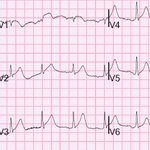
23 year old female who was brought in an agitated and troubled state to the ER. She wasn't verbalising coherently and was unable to provide an account of her symptoms.
Caregivers in her family noted the restless behaviour, anxiety, palpitations and sleep deprivation with constipation; and were convinced she had "mobile phone addiction" and took her to a psychiatrist who started risperidone (a medication for psychosis) and benzodiazepines (sedatives) 3 days ago.
We noted bradycardia at presentation and an irregular pulse. This was her ECG.
Thoughts?
#MedTwitter

Jan Klepacki retweeted

Number of people who go bankrupt every year because of medical bills or illness-related work loss:
Australia 0
Canada 0
Denmark 0
Finland 0
France 0
Germany 0
Iceland 0
Ireland 0
Italy 0
Japan 0
Netherlands 0
Norway 0
Portugal 0
Spain 0
Sweden 0
UK 0
United States 530,000
There’s a lesson there.
Jan Klepacki retweeted

Drs are NOT ‘choosing’ to be out of training
Last year there were 26,000 drs applying to 9,000 training posts
Drs are choosing not to be unemployed so they can put food on the table
On current trajectory most Drs will never become consultants
Dire state of affairs
@gmcuk
Jan Klepacki retweeted

There has been a 201% increase in applications to specialty training but only a 9% increase in posts over the last decade.
Doctors are not "choosing" to go into LE jobs.
Many doctors are now in fact facing unemployment.
This is abysmal workforce planning.

Jan Klepacki retweeted

Here are 10 things that expert clinicians do everyday, often without realizing it🩺
(and how we can all start to implement these in our own practice)
A 🧵
#foamed #MedTwitter

Jan Klepacki retweeted

💥What is Type 1 Diabetes?💥
Have you seen #DigiBete's animation helping to educate young people and families on what #type1diabetes is? You can watch the full film in your #DigiBeteApp age page or learn more here:
digibete.org/type-1-awarenes…
It's also great to share this animation with family, friends and schools to help them understand and raise awareness of what type 1 diabetes is.
#T1D #Diabetes #DiabetesAwareness #GBdoc #Core20plus5 #CommunityLed #ClinicallyApproved #t1dlookslikeme

Jan Klepacki retweeted

This is @thelizcarr, in 1 minute 30 seconds, summing up perfectly why assisted suicide is a disability rights issue.
Jan Klepacki retweeted

Palliative Care Doctor, Dr Rachel Clarke,
"The predicament of those of us who work in palliative care - and I've worked with thousands of patients approaching the end of their life - is that the real world, right now, is one in which palliative care services are failing patients because they're underfunded understaffed"
"Wes Streeting himself admitted this"
"The lack of care might coerce patients into feeling that their only option is to take their life, because we're not giving them a life worth livinG"
Jan Klepacki retweeted

Approx 29k resident doctors applied for 9k training posts this year. They're not "choosing" to forgo specialist training, @gmcuk, they're being forced out of it by the decision to artificially suppress numbers of doctor training posts, even though we're so short of consultants.

We're pleased to share the second in our annual series of #StateOfMed reports – Workforce. This focuses on the changing shape of the medical workforce across the UK.
This year’s report shows that the medical register continues to grow, as does the diversity of the doctors on it.
Doctors’ career paths are also changing, with more doctors than ever before choosing locally employed (LE) roles, working outside of formal postgraduate training pathways and with local contracts.
In England and Wales, where data is currently available to us, the number of LE doctors grew by 75% between 2019 and 2023 – this makes this the fastest growing cohort on the register.
As we look to the next decade, it’s critical that all doctors have the infrastructure, support and resources they need to achieve their ambitions. That’s in the interests of doctors, as well as the interests of a growing and ageing population.
Discover more insights and key statistics by reading the report on our website gmc-uk.org/-/media/documents…


The College has responded to today’s gmcuk workforce report. Read the full statement from our President @AndrewElder: rcpe.ac.uk/news/college-comm…

46
Jan Klepacki retweeted

Today's #StateOfMed report shows a medical training system under severe strain.
There aren't enough training jobs available for resident doctors. This means unprecedented competition for posts, with both UK and IMG medics left to wonder if their vocation is still worth it. (1/2)