
Partner @a16z investing in infrastructure & AI
San Francisco, CA
Joined August 2010
- Tweets1.5K
- Following1.3K
- Followers5.2K
- Likes10.8K


Jason Cui retweeted

General Translation has raised $27m led by @martin_casado at @a16z to localize the world’s best companies.
Today, @generaltxn serves Ramp, Cursor, and Sierra by translating apps, sites, docs, slide decks, and even product videos into dozens of languages.
a16z invested alongside @upfrontvc, Peter Thiel, Fei-Fei Li, and more. 🧵
Jason Cui retweeted

Inferact now serves more than 7 trillion tokens a day.
That traffic runs on the Inferact Platform, which serves frontier models with optimized vLLM across heterogeneous hardware and diverse workloads. For context, OpenRouter averaged 19 trillion tokens a day of open-weight traffic over the past 30 days, across all of its providers.
The platform improves through a data flywheel. Production traffic shows us where to improve vLLM, partnerships with accelerators like NVIDIA, AMD, and Google bring those improvements to new hardware, and partnerships with model labs like MiniMax and Kimi bring them to new models from launch day.
Next, we’re automating that flywheel with agents that find and validate optimizations on their own, so the platform improves with every token it serves.
inferact.ai/news/7-trillion-…





Jason Cui retweeted

We formally announced Mirendil less than 4 months ago. Today, I'm excited to share an important milestone for:
Pretraining at scale without a pretraining team.
Mirendil's mission is to solve Recursive Self-Improvement (RSI) and use it to democratize frontier AI development, ultimately accelerating science and technology. At Mirendil, when we think about RSI, we think holistically about the company as an intelligent entity that self-improves toward its goal. From that perspective, the most powerful notion of acceleration is reducing the time and resources (number of human experts, compute, and other costs) needed to achieve ambitious goals.
Given that pretraining is perhaps the most important yet most challenging part of frontier AI development, we decided to run an ambitious controlled experiment: Starting fully from scratch, can we significantly reduce the time, number of human experts, and compute resources needed to go all the way to successfully pretraining a strong coding model at scale?
Mirendil-Base is the result of this experiment. Our first pretrained model was built by one researcher in 3.5 months, with less than $10M in compute. This includes all the research and small-scale experiments it took to get there, as well as the final training run.
The recipe holds up as the models get bigger. For reference, Mirendil-Base is in the 100B-500B parameter range, Mirendil-Base-Large in the 500B-2T range, and Mirendil-Base-XL in the 2T-10T range.
We're beginning to see a world where a single researcher, empowered by AI, can take on work that once required an entire research organization. As these systems improve, the bottleneck shifts from the size of a team to the ambition and judgment of the people directing them. This has profound implications for who gets to build AI and, ultimately, who gets to push the frontiers of science and technology forward.
We’ll share independent evaluations, post-training benchmarks and API-access sooner than you think so stay tuned!


Jason Cui retweeted
Our new website is live! Along with a new visual identity for Inferact.
Inferact gives AI teams production inference they control, run optimized inference wherever your compute lives.
Come check it out inferact.ai?url

Jason Cui retweeted

In 2022, Berkeley PhD student Woosuk Kwon thought he could make Meta's new open-weight model, OPT-175B, run faster in two weeks.
Four years and 3,000 contributors later, that project is @vllm_project, one of the largest open-source inference engines, running on ~500,000 GPUs at any given time.
He and fellow researchers Simon Mo, Kaichao You, and Roger Wang borrowed "virtual memory" from operating systems, handing out memory only as it's needed so each GPU can juggle requests of wildly different sizes. (The "v" in vLLM is for virtual.)
Their first user, Berkeley neighbor @arena, cut its GPU needs in half. Today Google, Amazon, and Meta all run vLLM in production.
In January, the core maintainers founded @inferact and raised $150M to give vLLM a full-time team.
They're hiring across eng, marketing, and devrel in SF and Singapore: a16zjobs.substack.com/p/infe…
@simon_mo_ @woosuk_k @KaichaoYou @rogerw0108


Jason Cui retweeted


🎉 Day-0 support for Meta's open-weight Muse Spark Open is
live on vLLM, verified on NVIDIA and AMD GPUs as well as on TPUs!
816B parameters, 42B active per token, a 1M-token image, video and audio inputs, built for long-horizon agentic coding.
We’re excited to have worked with Meta Superintelligence Labs to bring Muse Spark Open to vLLM from day one as the most capable US open-weight model.
✨ 1M context for large, complex codebases
👀 Native image, video, audio & document understanding
⚡ BF16, NVFP4 & MXFP4 support
🚀 DSpark speculative decoding on both CUDA and ROCm
1/6

Jason Cui retweeted

If you did science fairs in high school and are interested in startups and technology, @JasonSCui, @pchopra28 and I are hosting a happy hour in San Francisco 10/27! RSVP below.
luma.com/zbtk9ejh

Jason Cui retweeted

Exa just passed $100m in annualized revenue.
We've grown almost exactly 10x per year for 3 years. We now handle 2 billion requests a month from 200k+ teams. And it’s still so early:
We predict agents will search 1000x more than humans by 2030.
Agents don't search like humans. They write long, complex queries and want all the world's data, not just the web. We've spent 5 years building a search engine designed for them.
We now serve personal agents, AI labs, coding agents, GTM agents, really any agent. Exa gives these agents access to 100s of billions of web documents and tons of proprietary data.
Our customers are increasingly noticing that information is the bottleneck to agent performance. While the world seems close to perfect intelligence with models like Fable and Astra, we are very far from perfect information.
To our small but legendary team, thank you for getting us here, from engineering to research to GTM to ops.
To our customers, it is an honor to serve you. We have some exciting releases coming soon and can't wait to share them 🫡

Jason Cui retweeted

launched a model
accidentally served trillions of tokens a day
29.4% of the fortune 500 showed up
raised a really big series A from @a16z
it's been 3 weeks
we would like to sleep now
Jason Cui retweeted
AWS CEO Matt Garman with a16z's Raghu Raghuram on the biggest cloud provider in the world being rebuilt for the agentic era:
$220B in CapEx for 2026, two million NVIDIA GPUs on order, AWS's AI chips sold out through next year, and a new 30-second AWS account with no credit card required so agents can get rolling.
0:55 $170B in revenue, growing 37%
2:40 30-40% of revenue started as startups
4:55 Startups want a cloud for agents
9:10 An AWS account in 30 seconds
12:25 Agents don't need bulletproof databases
16:30 Why AWS won't sell every GPU to the frontier labs
22:00 Why Matt isn't worried about a bubble
24:45 Why AWS builds its own power plants
27:45 Planning for the next supply shortage
30:25 Saving one county $5K per resident
33:10 How AWS built its own chips
40:05 What's holding enterprise agents back
45:35 Why Bedrock never sends your data to the model
49:30 AWS's new AI security tool
51:50 Why AWS teams of 10 are now 3-4
YouTube: youtube.com/watch?v=rn_afJaP…
@mattsgarman @awscloud @RaghuRaghuram
Jason Cui retweeted
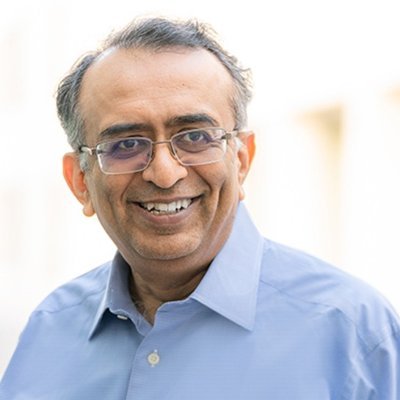
a16z is officially in Japan, led by Hitoshi Yoshida as Head of Japan, with the opening of our Japan office.
It was an honor welcoming Governor Koike at the opening earlier today. Japan combines world-class industrial capabilities with growing innovation in AI, cybersecurity, robotics, and defense. By bringing our portfolio companies and the Japanese ecosystem together, we aim to accelerate Japan’s AI-native economy and strengthen the ties between Silicon Valley and Japan.
As the former President of Microsoft Japan and Hewlett-Packard Japan, Hitoshi brings decades of technology leadership and deep relationships across business, industry, and government. We’re thrilled to have him lead our efforts in Japan and look forward to doing great work in partnership with the Japanese technology community.
日本代表として吉田仁志を迎え、日本オフィスを開設できたことを大変心強く光栄に思います。日本は、世界有数の産業基盤と、AI・サイバーセキュリティ・ロボティクス・防衛などの分野における目覚ましいイノベーションを兼ね備えています。
我々はこれまでになかった機会を、日本の若い世代に提供していくことを目指します。日本のテクノロジーコミュニティの皆様と共に、日本の市場やエコシステムの発展に貢献していけることを楽しみにしています。

Jason Cui retweeted

Best Edit Model is here by @ideogram_ai
It's unfair there are two guys in particular look good in every outfit, including the duck suit.

Jason Cui retweeted
I don’t normally write these things. But this one hits a bit different. Nearly three years ago I told a16z I wanted to spend part time outside the firm helping @drfeifei start and build a frontier model company. And what followed were some of the most remarkable moments of my career. From being at the founding table. To watching the first git commits. Seeing the very early very rough results that hinted at something much greater. Contributing to the open source. Watching the creation of new model architectures that pushed the state of the art in multiple areas.
I saw the team spin magic from nothing again and again. And I was very privileged to be within the walls. I’m very proud of what was accomplished, and am so excited for what lies ahead.
So congratulations to AMD for entering into an agreement with the leading spatial intelligence frontier lab. And congratulations to the World Labs team on a partner that has the vision, ambition and leadership to be the top AI technology provider globally.
Also congratulations to Dr. Su and Dr. Li. Two world class CEOs with a common vision. The both of you working together is unimaginably legendary. Arguably the smartest leaders in tech with the shared goal of building the world's leading AI capabilities. I know you both share an optimistic view of AIs ability to aid humanity. We need far more of that.
As everyone knows. I’m World Lab’s biggest fan. And will remain so. Thanks to @drfeifei , @BenMildenhall , @jcjohnss and the entire team for letting me tag along. What a crazy fucking ride. You stood at the frontier, and moved it. And will continue to. Again, many congratulations to everyone involved. The future of AI will be so much brighter with this partnership. I can’t wait to see where it leads. Here’s to new worlds!


Jason Cui retweeted

jev isn't production ready. today @modaicdev is launching Mo, the first multimodal decision model that learns from its mistakes.
most production tasks involve subjective decision-making, where the last mile of calibration and alignment has always fallen on the developer. Mo closes that gap on its own. it refines its instructions and weights from the signals already in your workflow to learn what a good decision means for you.
use Mo for the decisions where alpha matters the most like LLM judging, lead scoring and qualification, content moderation, resume screening, and more.
if you're already using another decision model like jev, plug it into Modaic and it becomes self-improving too :) 🐙
modaic.dev
docs.modaic.dev


Jason Cui retweeted
@fal's H3 Max generates video faster than you can watch it. With director mode and voice prompting, you can direct a scene as it plays - moving the camera and guiding the action just by talking to the model.
The leap isn’t just speed. It’s creative control. That’s what takes AI from impressive demos to a serious technology for Hollywood and professional filmmakers.
Inspiring convo with @gorkem and @isidentical on what possibilities are unfolding in generative media.

.@fal's Gorkem Yurtseven and Batuhan Taskaya on making an open source video model 35x faster, and what Hollywood wanted after they built it:
Last month, MiniMax released H3, an open source video model. fal rebuilt it - they cut down the steps the model takes to make a video, rewrote the code under each stage, and got the GPUs to 70-80% of their theoretical ceiling instead of their usual 30-40%. No quality loss.
Video now generates faster than you can film it. The models have gotten so cheap and fast that end users aren't even asking for improvements in either category anymore. The gap has moved to quality, or how closely the model follows the prompt.
Hollywood wasn't a customer a year ago and is now fal's fastest growing segment. Studios love it for the little things - extending a shot, moving the camera, changing the lighting. Those edits land 80-90% of the time. fal is chasing 99.9%.
In this conversation with a16z's Jennifer Li:
00:00 Intro
01:45 The first open model worth rebuilding
03:45 The industry ran out of compute in April
06:25 35x faster without losing quality
11:05 5s of video generated in 1.5s
14:25 The weekend fal dropped everything
16:15 3 viral projects nobody planned
18:20 Teaching a video model to remember
20:25 An hour of video that's consistent
23:30 2x the usage of other models in 3 weeks
26:35 The case for giving video away for free
29:00 Blender sketch in, finished shot out
30:40 Chasing 99.9% reliability
34:15 Hollywood, fal's fastest-growing customer
36:50 Why studios wouldn't touch it until now
YouTube: youtu.be/SDbRJXQrYGY
@gorkem @isidentical @fal @JenniferHli