

Goodgoodnotbad | Psychiatry ⚕️ Ψ | Neuroscience 🧠 | Music lover 💿 https://nitter.cf/t.co/7AUSvY0cUm
Joined August 2009
- Tweets11.8K
- Following418
- Followers226
- Likes2.6K





Pinned Tweet
Catatonia isn't just schizophrenia. It's a complex neuropsychiatric syndrome across mood, neurological, and medical conditions.
Our new review explores its mechanisms, diagnosis, and treatment, with a special focus on pediatric presentations.
🔗 researchgate.net/publication…


José E Oliva retweeted

This paper answers why can’t you remember being a baby?
For over a century, science said you can't remember being a baby because your infant brain was just too "immature" to record anything. researchers assumed your hard drive was basically turned off for the first two years of life.
But this wild paper from Yale completely rewrites how we understand human memory..
Researchers literally put awake babies (between 4 and 25 months old) into an fMRI scanner to watch their brains process new visual experiences in real-time.
and what they found is mindblowing..
the infant hippocampus isn't turned off at all. it is actively firing, capturing, and encoding episodic memories. they proved that babies with higher hippocampal activity during a new experience formed a highly stable memory trace.
the babies are recording the data. the memory of your first birthday, your first steps, the exact layout of the room you slept in.. it was all successfully saved to your brain.
so why can't you remember it?
the paper concludes that infantile amnesia isn't an "encoding" problem.. it is a "retrieval" problem.
your brain recorded everything perfectly. but as you grew, your brain underwent massive developmental shifts, like explosive neurogenesis (the rapid birth of new neurons), which completely restructured your neural networks. the pathways to access those early files got buried or locked away.
you didn't fail to make the memories.. you just lost the encryption key to open them.
somewhere deep in your hippocampus, the exact first-person memory of being a 1-year-old might still be sitting there. you just can't access the file anymore..
the human brain is terrifyingly beautiful.

José E Oliva retweeted

Parkinson’s is more than movement: The emotional ONs and OFFs we may be missing. This important review by Sousa and colleagues resonates deeply with me because it highlights something I have witnessed repeatedly in caring for people with Parkinson’s disease: sometimes the most disabling fluctuations are not the ones we can see. We spend enormous amounts of time measuring tremor, stiffness, dyskinesia, and walking, yet we may miss the anxiety, sadness, apathy, fatigue, and difficulty thinking that can emerge as Parkinson’s medications wear off. Equally important, when dopamine levels rise, some people experience dramatic changes in mood, energy, impulsivity, and behavior. These neuropsychiatric fluctuations can occur even when movement seems relatively unchanged, and their impact on quality of life can be profound. What particularly resonates with me is the authors’ call to recognize these fluctuations earlier, ask better questions, and tailor treatments to the whole person rather than simply their motor symptoms. We still need better tools and stronger clinical trials, but this review reminds us of a fundamental principle of Parkinson’s care: we are not just treating movement; we are treating a person whose emotions, motivation, thinking, and sense of self matter every bit as much.
movementdisorders.onlinelibr…

¿Existe un "nuevo subtipo" de depresión? Un estudio en australiano (n=2,604) identificó un subtipo circadiano en el 23% de los casos, definido por cumplir ≥3 criterios: jetlag social, estacionalidad, mid-sleep tardío, cronotipo vespertino, inercia del sueño e hipersomnia.

New study proposes a "Circadian Subtype" in 1 in 4 with #depression:
psych-partners.com/a-circadi…
Whether it's valid, time will tell. Suggestion is that night owls, fatigue, and winter depression point to poorer SSRI response and risks for bipolar, ADHD, and worse metabolic health.

Asimismo, se observó correlación genómica con rasgos metabólicos e inflamatorios: mayor PGS para índice de masa corporal, triglicéridos, resistencia a la insulina e IL-6. Los hallazgos respaldan la validez clínica de este subtipo para guiarse hacia tx personalizados.
La cognición social no depende solo de la corteza cerebral. Un estudio revisa cómo las alteraciones en los núcleos basales (presentes en el Parkinson, Huntington o Tourette) afectan de forma directa la empatía y la capacidad de entender a los demás. 🧵👇
tandfonline.com/doi/full/10.…

Si examinas distintas condiciones, aparece una constante inquietante: la desregulación dopaminérgica en los núcleos basales inclina el sesgo interpretativo hacia la hostilidad. Ante la ambigüedad social, el cerebro neuropatológico asume mala intención por defecto.
José E Oliva retweeted

Top signs that a depression is a bipolar type:
▪ Early onset, frequent recurrence, postpartum onset
▪ Family history of bipolar
▪ Suicide attempts, psychotic features
▪ Cyclothymic temperament, mixed features
From new meta-analysis:
psych-partners.com/red-flags…

José E Oliva retweeted

💡 JAMA Insights: #Psilocybin is not approved by the US Food and Drug Administration for any indication as of June 2026, although Oregon and Colorado allow supervised use through state-regulated programs outside clinical trials.
This JAMA Insights discusses low-certainty evidence indicating that psilocybin combined with psychological support may benefit patients with #MajorDepressiveDisorder, treatment-resistant depression, and nicotine use disorders.
🔗 ja.ma/4zgZCkz

José E Oliva retweeted

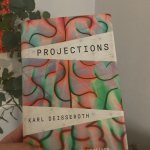
Quick primer on Optogenetics. The Nobel Prize in Physiology or Medicine 2026 is awarded for optogenetics:
Peter Hegemann and Georg Nagel discovered a remarkable protein, channelrhodopsin, in a single-celled alga.
Karl Deisseroth transformed the protein into a light-controlled switch for nerve cells.


José E Oliva retweeted

No basta con resolver el problema hay que revisar la representación mental del mismo y ese es un grado mayor de inteligencia.
La capacidad de “reencuadre adaptativo” que describe este trabajo es, en términos de salud mental una forma de flexibilidad cognitiva: no solo resolver un problema ya definido, sino darse cuenta de cuándo la forma en que lo estamos entendiendo ya no sirve y poder cambiarla.
Una persona deprimida puede quedarse atrapada en la idea de que “todo es culpa mía y no hay salida”, o alguien con ansiedad puede interpretar cualquier señal ambigua como amenaza; el tratamiento no consiste solo en darles una solución al problema que creen tener, sino en ayudarles a revisar esa representación cuando llega información nueva o cambia el contexto.
El artículo sugiere que esta capacidad de revisar el problema mismo —no solo resolverlo— es una dimensión central de la inteligencia humana y, por extensión, algo que los sistemas de inteligencia artificial todavía no manejan bien.

I’m very proud of this new preprint.
We start from a simple observation: most research on human and artificial intelligence treats intelligence as problem solving.
The problem can be extremely difficult. But it’s already defined.
In the real world, we often have to figure out what the problem is in the first place.
Something happens. We have to make sense of it and construct a representation of the problem.
Then new information arrives. Circumstances change. And the way we understood the problem may no longer work.
We argue that the capacity to revise problem representation, which we call adaptive reframing, is a critical and understudied dimension of intelligence.
To study it, we formed a multidisciplinary group spanning neuroscience, cognitive science, robotics, behavioral economics, and complex systems.
Together, we developed three tasks designed to measure three complementary aspects of adaptive reframing.
The tasks are intended to be adaptable to experiments with humans, LLMs, and robots.
We hope this work will inspire new research on human and artificial intelligence.
*
Full paper in the first reply
with @antoniolieto, Francesco Rea, @gsandini, @alefreedot, @GalleseVittorio, @Walter4C

José E Oliva retweeted
Aún en nuestros tiempos, hay quienes señalan erróneamente a la psiquiatría como una "pseudociencia. Este Nobel demuestra de forma contundente lo contrario: es una disciplina médica con bases biológicas sólidas, capaz de iluminar (literalmente) los misterios complejos del cerebro
José E Oliva retweeted

“There is a big picture that brings it all into relief and my hope is that we can increase empathy and understanding,” says 2026 medicine laureate Karl Deisseroth.
As a medical student, Deisseroth completed part of his training at a psychiatric clinic. He was struck by the patients’ suffering and their need for help. At the same time, he began to wonder how the brain could function so differently from one person to another.
Deisseroth was awarded this year's medicine prize, together with Peter Hegemann and Georg Nagel, for discoveries leading to optogenetics – a biological technique making it possible to switch the activity of individual nerve cells in a living brain on or off.
Optogenetics is now helping us understand more about how nerve cells shape memories, emotions and behaviour in the living brain.
Learn more about the 2026 medicine prize: bit.ly/4ru82ml

ALT Karl Deisseroth in a white shirt sits at a table, thoughtfully holding a model of a brain in one hand. Photo by Christopher Michel.