

Prof of History emphasizing global themes: environment, science, technology, medicine, and disease.
Lexington KY
Joined August 2012
- Tweets23.2K
- Following12.7K
- Followers12K
- Likes21.5K






John P. Davis, Historian retweeted

Now @washingtonpost glorifies neo-Nazi Azov leader, who states that withdrawal from Donbas in peace deal is "unacceptable." He threatened Zelensky not to make peace deal after Russian invasion. Azov vetoed peace deal in Donbas in 2019. WP calls "White leader" "powerful leader," "lauded leader" & "top Ukrainian commander."


John P. Davis, Historian retweeted
Biden bragged in 1997 that he dismissed Russia's concerns about NATO expansion. Moscow could be ignored as the US was the only game in town - Biden mocked Russia's warning it would have to align with China, and joked that Russia could also partner with Iran as the crowd laughed
John P. Davis, Historian retweeted

Rosa Luxembourg was murdered by the SPD. And I have no doubt that its current leaders would do the same today.
I've heard of a man talking out of both sides of his mouth, but how many sides to one's mouth can one man possibly have? He certainly has the right initials....BS.

John P. Davis, Historian retweeted
On the day before the Maidan protests began, a member of the Ukrainian Parliament (Oleg Tsarev) warned that the US was planning to provoke unrest and instigate civil war in Ukraine.
John P. Davis, Historian retweeted

March 16, 1968. A 24-year-old Army helicopter pilot was flying low over a village in South Vietnam when he saw bodies everywhere.
Women. Children. Old men.
Then he realized who was doing the killing.
American soldiers.
He landed his helicopter between the soldiers and a group of terrified villagers. Then he turned to his gunner and gave him an order:
“Train your M-60 on the GIs.”
His name was Hugh Thompson Jr. The village was My Lai.
He was a scout pilot from Georgia, flying a small observation helicopter with two crewmen: Larry Colburn, his gunner, and Glenn Andreotta, his crew chief.
That morning, American troops of Charlie Company had gone into the village expecting to find enemy fighters. There weren’t any.
What Thompson saw from the air didn’t make sense at first. Bodies everywhere. Then he watched an American officer kill a wounded young woman in front of him.
“It was our guys doing the killing,” Colburn said later.
Thompson radioed: “There’s something wrong here.”
He saw a group of civilians running for a bunker, with soldiers coming after them. So he put his helicopter down in between.
His orders to Colburn were plain: keep the machine gun on the American soldiers, and fire if they opened fire on the villagers.
Then Thompson got out and confronted their platoon leader.
“These people were looking at me for help,” he said later, “and there was no way I could turn my back on them.”
He coaxed eleven Vietnamese out of the bunker and got them flown to safety.
Back in the air, his crew spotted movement in a ditch full of bodies. They landed again. Andreotta climbed down into the ditch and pulled out a small boy, alive.
His name was Do Ba. They flew him to a hospital.
“I had a son at home about the same age,” Thompson said.
Then Thompson flew back to base and angrily reported what he had seen. The killings in the village were ordered stopped.
By then, hundreds of unarmed villagers were dead.
The Army gave Thompson a Distinguished Flying Cross. The citation made up a story about rescuing a child from “intense crossfire.” He threw it away.
“It was only to keep me quiet,” he said.
When the massacre became public and he testified, he was not treated as a hero. Many fellow soldiers shunned him. Some questioned his loyalty to his country. He received death threats.
For thirty years, he lived with it.
Then, on March 6, 1998, at the Vietnam Veterans Memorial in Washington, the Army awarded Thompson, Colburn and Andreotta the Soldier’s Medal, its highest award for bravery not involving contact with the enemy.
Andreotta’s was posthumous. He had not survived the war.
That same month, Thompson and Colburn went back to My Lai and met survivors.
“I just wish our crew that day could have helped more people than we did,” Thompson said.
He died in 2006. He was 62.
A helicopter pilot.
A gun pointed the wrong way, for the right reason.
Eleven people out of a bunker. One small boy out of a ditch.
Now you know his name.


John P. Davis, Historian retweeted

Volodymyr Zelenskyy continues to surprise both the world and Ukrainians with his statements. Here are just a few from a single evening:
✔️ A journalist asked Zelenskyy whether he considered the strike on a ship in another country's port, rather than in international waters, a mistake.
"All of this is about our, how should I put it, just will," Zelenskyy replied.
✔️ In the same interview, he suggested that Trump would probably have liked Hitler too.
✔️ He also refused to give a direct answer when asked whether he knew who "Vova" was in the Mindich tapes.
"You can ask the anti-corruption institutions. They have publicly said they have no questions for me. I think that is the answer," he said, conveniently forgetting to mention that he will lose his immunity once he leaves office.
✔️ He additionally claimed that he could not stop the security services from attacking Ukraine's anti-corruption agencies because they are "independent institutions."
What is particularly important is that, this time, the BBC asked Zelenskyy some tough questions, whereas previous interviews had been little more than friendly softball sessions.
Public sentiment in the UK towards the war in Ukraine and Zelenskyy is now shifting significantly. The country's largest broadcaster can hardly ignore growing public pressure for tougher questions.
These changes began in May, immediately after Yermak was served with a notice of suspicion.


John P. Davis, Historian retweeted

In 1917 Einstein's equations said the Universe couldn't sit still. A static universe was what almost everyone assumed, so he added an extra term to make one possible.
Hubble showed in 1929 that the galaxies are moving apart, and in 1931 Einstein dropped the term, calling the static solution unstable and the term no longer needed.
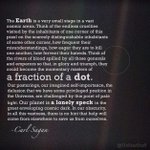
In the book Sagan gives two rules for science: no sacred truths, and throw out whatever the facts contradict. Einstein discarding his own fix once the facts changed is a clean case of the second rule.

John P. Davis, Historian retweeted
.@shada_islam on Mette Fredriksen, who seems to feel liberated to say out loud all the nasty racist thoughts that have long informed her politics of conspicuous cruelty and victim-blaming. Pairs well with the unhinged warmongering of her foreign policy.
theguardian.com/commentisfre…

John P. Davis, Historian retweeted
With such overwhelming evidence of how NATO expansion provoked the Ukraine War, how can we explain why even making this argument elicits such a vicious response from our political-media establishment?
glenndiesen.substack.com/p/h…

John P. Davis, Historian retweeted

excellent conversation. John Robb sees further and more accurately into the future than else anyone I know.

John P. Davis, Historian retweeted
.@N_Gavalakis, editor at @ips_journal, has written a powerful playdoyer against the narrowing of permissible discourse, enforced by disturbing legal tools (eg sanctions, basically a sort of civil death) and reverberating through European societies.
ips-journal.eu/topics/democr…

John P. Davis, Historian retweeted
Academic freedom has steadily deteriorated since I returned to Norway in 2020. However, the main turning point came when I ran for parliament last year as the knives came out on all fronts. Thereafter, I withdrew from the election campaign, my position at the university became increasingly untenable, government-funded “NGOs” intensified their attacks, and the media became even more vicious in its dissemination of unsubstantiated accusations. The campaign of censorship and cancellation was legitimised on the grounds that academics should face scrutiny and challenges to their arguments—a principle with which I wholeheartedly agree. Yet there was no substantive debate or discussion of my arguments. Instead, arguments were replaced with empty labels and unsubstantiated accusations: “controversial”, “propaganda”, “conspiracy theory”, “pro-Russian”, and “anti-Ukrainian” etc. These labels were not intended to facilitate debate but to shut it down, and questions from the media were exclusively limited to asking me to respond to accusations, and then journalists selected quotes and sometimes even changed the context in the most brazen way to fit their pre-written conclusions. Rather than challenging the arguments, they only went after the person making them. I wrote this article at the time.
glenndiesen.substack.com/p/h…

John P. Davis, Historian retweeted
...plundered the people's wealth and took it right into these same tony European capitals and their banks and luxury real estate

John P. Davis, Historian retweeted

Thomas Massie just revealed his plans for 2027.
“I’m going to invent at least 12 different things I’ve been working on … ”
“Things that allow people to have private communications that don’t have backdoors for the government to spy.”
“To grow food without chemicals.”
“To live in sustainable fashion.”
“There’s a whole constellation of inventions … in my head.”
“I can guarantee you I will be doing things … outside of politics.”
@RepThomasMassie @ChildrensHD @maryhollandnyc
John P. Davis, Historian retweeted

Boris Johnson calls for NATO troops to be sent to Ukraine.
He says there will be no risk of war with Russia.
This is from the man who personally sabotaged the peace deal in 2022.
John P. Davis, Historian retweeted
Friedrich "10% approval" Merz keeps telling those entitled, irresponsible, workshy Germans that despite record tax revenue they can't have the tax-funded things anymore they "got used to". Except war. I guess because they're not used to that. Yet.
