






Khaleb retweeted
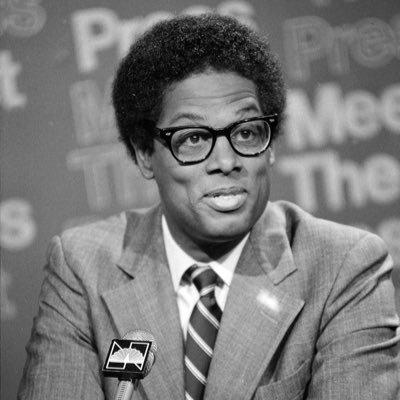
“Socialism in general has a record of failure so blatant that only an intellectual could ignore or evade it.”
— Thomas Sowell
Khaleb retweeted

People get irritated by you, not disappointed (unlike Enny). You cannot disappoint us because we never thought highly of you in the first place.
Disappointment is, in a way, evidence that someone mattered enough for you to expect better. 🤷♀️

Y’all would have physically beaten me to get an apology out of me.
If i ever say anything, I would stand on it and double down on it.
Shout out to Eni and his apology is valid.
But 100% i do not rate you people enough to retract a statement I said that I believe in, simply because y’all are pissed at me for saying it?
He has his reasons for saying what he said, and you have every right to disagree as your own truth is also different.
But me apologizing to Nigerians because they didnt like what i said. GOD FORBID. Bruh, GIVE ME ALL THE SMOKE.
Let us dance.
Khaleb retweeted

THANK YOU!
I am truly humbled and deeply grateful for the overwhelming goodwill, kind words, congratulatory messages and prayers I have received following my appointment to serve on the FIFA Normalisation Committee for the NFF.
It is crystal clear to me that this appointment is a responsibility and a call to service. Football occupies a special place in the hearts of millions of Nigerians, and the task before us demands humility, integrity, hard work, collaboration, and an unwavering commitment to the greater good of the game.
It is also very clear to me that the work ahead is more important than the honour of the appointment. I pray that we can leave in six months knowing that we have left it better than we met it.
God bless.
Khaleb retweeted

In 2022, I was head of strategy in Atiku’s team with only 11 of us. Since, I left I cannot say anything against Atiku. The privilege of being in that room is one that I consider imposes moral obligation on me.
I am scandalized at the immorality of the current set of youths. That is another reason I respect the likes of Osita Chidoka, being in the room of power for more than a decade and remaining respectable is how to be great.
Khaleb retweeted

For next year ileya, someone needs to buy you as Ram. Not to kill you for meat, but to make you fight other rams. At least, they can make sure you use your head for once.


Khaleb retweeted

Stanford was a weird place. Every week, a billionaire or famous exec would show up. Many of them made self-deprecating jokes about how they wished they'd gotten into Stanford but were rejected. Eric Schmidt taught a class, Sheryl Sandberg came by on a random afternoon, Alexandr Wang was in our classroom. It all looks very fancy.
But I don't think having access to people in these positions gives you as much of a leg up in life as people assume. If your startup sucks, it's going to suck. Getting Vinod Khosla's corporate email after a fireside chat won't help you much. Plus, interviews are available online, and there aren't many secrets revealed at events with 100 people in the room.
What I think most students walk away with is the visceral feeling that these are all just human beings, and there isn't anything innately different about them. It gives you a sense of agency. The confidence that perhaps we can do what they have done as well.
Looking back, I feel like that might be the ultimate value of going to institutions like Stanford and Harvard. It's realizing that you don't need anyone to give you permission, or someone in a position of power to tell you: you can do it. At some point, you know you can do it. And you don't need someone more accomplished or famous to tell you so. The sooner we can realize that, even without any fancy brands or degrees, the better.
People say, enjoy this period, because you'll lose all this proximity to important people after graduation. But I'd argue, instead of trying to get closer to them, why not fight to become one of them and do something epic and of real consequence?

Khaleb retweeted

Socialism's greatest trick is convincing people that the natural state of an economy is abundance.

Khaleb retweeted

“Any day the NDC presidential candidate, Mr Peter Obi, comes to Anambra State for a town hall meeting or campaign, it will be a free day for all of you so everyone can attend and participate.”
— An Anambra-based mechanic tells the boys learning work under him.
Khaleb retweeted

Esto que acaba de pasar en la Amazonía brasileña no es una curiosidad. Es una alerta. Es un grito.
Unos 20 integrantes del pueblo Awá, que lleva más de 50 años en aislamiento voluntario, salieron de la selva. Con sus arcos y flechas, de forma pacífica, pidieron ñames, pidieron comida a una aldea vecina y regresaron a la selva.
¿Entendemos lo que significa eso?
Un pueblo que eligió aislarse para sobrevivir al colonialismo, a la masacre, al despojo, decide romper 50 años de silencio y acercarse porque ya no tiene qué comer. Porque su selva está siendo talada. Porque madereros ilegales, cazadores y ganaderos han reducido su territorio hasta el hambre.
Eso no es contacto. Es desplazamiento forzado por hambre.
Y aquí viene lo más grave: esa gente no tiene inmunidad para nuestras enfermedades. Una gripe nuestra puede ser una sentencia de muerte para ellos. Un resfriado que para nosotras es una incapacidad de dos días, para ellos es un etnocidio. Por eso FUNAI y el Ministerio de Pueblos Indígenas de Brasil activaron vigilancia de emergencia.
Les pido que no miremos esto como una postal exótica. Los Awá no son un espectáculo. Son cerca de 350 personas en total. Unas 100 siguen en la selva sin contacto permanente. Son agricultores que se volvieron nómadas en el siglo XIX para escapar de los colonizadores europeos. Resistieron. Siguen resistiendo.
Esto no es un tema de sensibilidades. Es un tema de derechos. El derecho a existir. El derecho al territorio. El derecho al aislamiento voluntario, que es un derecho reconocido internacionalmente.
No podemos romantizar el aislamiento y al mismo tiempo permitir la deforestación que lo hace imposible. No podemos decir que defendemos la Amazonía mientras consumimos la cadena que la destruye.
Como educomunicadora les digo: aquí falla la comprensión y falla el entendimiento. Comprendemos que hay deforestación. No hemos entendido que esa deforestación mata culturas completas. Que lo que pasa en Arariboia nos concierne. Que la economía de la atención nos hace mirar 5 segundos y seguir scrolleando, mientras un pueblo entero está pidiendo ñames para no morir.
El camino no es ir a contactarlos. El camino es proteger su selva. Sacar a los ilegales de su territorio. Garantizar que puedan seguir eligiendo no tener contacto con nosotras. Ese es el principio de la autodeterminación.
El pueblo Awá nos está haciendo una pregunta elemental, con un protocolo comunicacional clarísimo: ¿nos dejan vivir?
Y esa pregunta nos toca responderla en todos los espacios. Con pedagogía, con política pública, con consumo consciente, con presión internacional.
Que este hecho no se vuelva viral 24 horas y se olvide. Que se vuelva una cátedra de honestidad cognitiva. La Paz también es eso: dejar vivir.
#MarCandela
#PuebloAwá #Amazonia #DerechosIndigenas #AislamientoVoluntario #Brasil
Khaleb retweeted

To the unknown whistleblowers of Deutsche Bank @DeutscheBank:
No one knows your names. I know your future, because I have lived it.
You just did the bravest and loneliest thing a person inside a bank can do. You told the truth about where the money goes. You took no payment and you set no conditions.
My name is Everett Stern. In 2010 I was a compliance officer at @HSBC in New Castle, Delaware. I watched money move to drug cartels, terrorist organizations, and sanctioned regimes, and I took what I saw to the @FBI and the @CIA.
I also saw something investigators need to hear today. While I was at HSBC, I saw Deutsche Bank move money through HSBC’s correspondent banking division. Correspondent banking is how one bank moves dollars through another, and it is where the trail of who really owns the money can go cold.
I do not believe Deutsche Bank moved this money alone. No bank moves money across borders alone. I believe HSBC, one of the largest correspondent banks in the world, probably carried some of it, and I believe other banks did as well. That is my belief, based on what I saw with my own eyes. The correspondent banking trail needs to be investigated, bank by bank.
To my fellow Americans, here is why these 15 million files matter to you.
Sanctions are how America confronts hostile regimes without sending our sons and daughters to war. They only work if banks enforce them. According to this week’s reporting, in 2020 Deutsche Bank approved a transfer of 1.1 billion euros that its own investigators suspected was for the benefit of a Russian oligarch already under U.S. sanctions. The same files reportedly show $582 million in suspicious payments linked to Jeffrey Epstein, a convicted sex offender.
According to that reporting, the warnings were written down and the money kept moving. When a bank that moves American dollars looks away, a sanction is no longer a wall. It is a suggestion.
Now, to the two of you. Here is what comes next, because nobody told me.
The bank is already saying this is all in the past. HSBC said the same thing.
If your names ever come out, expect the bank to do everything in its power to discredit you. Your motives, your record and your character will all be questioned. That is the playbook. It is aimed at you because the files cannot be discredited.
Then the headlines will move on. The quiet afterward is when you will ask yourself whether it was worth it.
Here is my answer. Blowing the whistle cost me my banking career, and I would do it again. I rebuilt my life. Fourteen years ago I founded Tactical Rabbit, a private intelligence agency, and it is still standing today.
I have always pictured the whistleblower standing at the edge of a swift, raging river. There is no bridge and no way around. The way to the other side is not over. It is through.
It is going to get hard, and it is going to get dark. But there is always hope. The good guys do win in the end.
What matters is your honor and your integrity, and you have both. No one can take them from you, no matter how hard they attack your credibility.
You do not have to cross alone. Tactical Rabbit offers whistleblower support, and we are here for you. I also serve on the board of Whistleblowers of America, and they can help you as well. That offer stands for every whistleblower reading this, and for everyone thinking about becoming one.
To @TheJusticeDept and @SecScottBessent: these two people handed you the evidence. Protect them. Pay them, because the reward program Congress created has yet to pay a single whistleblower. Follow the correspondent banking trail. And prosecute people. Deutsche Bank has reportedly paid more than 20 billion euros in fines and settlements since 2000. HSBC paid $1.92 billion in 2012 and no one went to prison. Fines do not work.
To the two of you: you have already done the hard part. Keep going.
Sincerely,
Everett A. Stern
HSBC Whistleblower
Founder and Intelligence Director, Tactical Rabbit
Khaleb retweeted

"The men that conquered this land slept in mud, and their grandkids complained about the temperature of the wine"
-Julius Caesar
Readers added context they thought people might want to know
This quote is not from Julius Caesar. It appears nowhere in his writings or ancient biographies such as Plutarch's Life of Caesar.
en.wikiquote.org/wiki/Gaius_Jul…
graciousquotes.com/julius-caesar/
perseus.tufts.edu/hopper/text?do…


Khaleb retweeted

The unattractive truth that we (myself included) have avoided for decades is that every society that came out of external domination and became an industrial power first went through a very violent period of internal reorganisation. An indigenous political movement first swept across the land and fought a bitter, violent conflict with the existing political and social order.
For the new society to be born, the previous one and its entire social hierarchy, economic system and even religion in some cases needed to die. And the old societial structures never quietly agreed to die. They had to be dragged kicking and screaming to the gallows, often literally.
China - Chinese civil war, Cultural Revolution, Great Leap Forward
Russia - Bolshevik Revolution, Russian Civil War
Vietnam - Vietnam war
Both Koreas - Korean War
For China to get a society led by Deng Xiaopings, Hu Jinataos, Jiang Zemins and Xi Jinpings, the hierarchy led by Chiang Kai-sheks had to be totally defeated and banished to Taiwan. For the USSR to exist and become the greatest force for human advancement the world had ever witnessed before modern China, the old Imperial Russian landlords and Tsars all had to die - often very violent and traumatic deaths.
Africa on the other hand, tried to "leapfrog" its way directly from a colonial society to an "independent" one without ever having the large-scale, violent internal conflict needed to define that "independence". Africa has never had a proper civil war. Everything that we call a "civil war" here boils down to an outsider knocking 2 African heads together and then supplying each of them arms to kill each other so that the cobalt which is coincidentally also bought by the same outsider, can be 15% cheaper in Q4, which boosts profit and EBITDA in London and Brussels. There has never actually been an ideological civil war anywhere in modern Africa. Prove me wrong.
Most of the people who midwifed and managed the transition were the African elites and noblemen from the colonial era. They were the Africans who were the most relatively privileged and least affected by the worst aspects of colonialism - and thus the LEAST QUALIFIED to create a new, post-colonial society. They were already in power during the colonial era. "Independence" to them was just an opportunity to gain more power by replacing European colonial officers and adapting their colonial systems slightly to give them a local flavour.
When you examine our "independence" across West and East Africa through this lens, you understand people like Obafemi Awolowo, JB Danquah, Kofi Busia, Jomo Kenyatta and Odimegwu Ojukwu better. They didn't necessarily see themselves as terrible people intentionally doing terrible things - they were just people in power who were never going to negotiate themselves out of power.
Mao Zedong was a commoner and a child of rural peasants who struggled to educate himself, eventually building the philosophy behind what is now modern China while working as a university librarian. JB Danquah was a rich lawyer and the descendant of a powerful lineage from Akyem that had spent centuries dealing with Europeans not as dangerous invaders but as trading and military partners. Why on earth would he care about "freeing" the average Akosua on the street? In his elite world, local commoners were as different from him as he was from the British colonials - in fact he probably felt more in common with the colonials than with the average Kwesi who statistically was still shitting in a hole in the bush in 1957. What did he know about Kwesi and why would he care?
Mao on the other hand understood the suffering of the Chinese people and the need for wide-ranging societal change because he was born into the full experience of Chinese peasantry. Kwame Nkrumah was likewise born into the Ghanaian peasantry and he experienced the full range of possibility, going from growing up in a small ethnic minority village to gaining an education overseas and eventually becoming the most important man in Ghana. Leaders like Mao, Nkrumah and Ho-Chi Minh who actually experienced life outside the elite bubble and were fortunate enough to gain a good education while at it, were the leaders who would care about social mobility and uplifting the peasant classes - upturning the entire structure of their colonial societies.
Property-owning rich boys who grew up in the city like Herbert Macaulay, Jomo Kenyatta, Odimegwu Ojukwu and JB Danquah were the very worst type of people to lead any kind of independence project because their projects were invariably elite projects that sought to change nothing about their societies except replacing white faces in the boardroom with their family and friends. Life was already good for them - why would they want to rip it all up and carry out a radical reorganisation of society to benefit the commoners they were already exploiting? They had absolutely nothing to gain from doing that, and it is obvious that this is the exact reason why the Europeans placed them in charge of these "independence" projects.
That's also the exact reason why the Europeans hated and feared the likes of Nyerere, Nkrumah, Sankara, Murtala Mohammed, and Ibrahim Traore, never failing to describe this group as "headstrong", "arrogant", "proud", and "reckless", or accuse them of being puppeted by tHe cOmMunIstS/dEh rUsSiaNs. Unfortunately Ghana in particular has yet to come to terms with this basic ideological civil war at the heart of Ghanaian society - whether Nkrumah's Water For All or Danquah's Champagne For A Few is the right economic and social model to run a country on. For some reason that only Ghanaians can explain, that is still a very big everlasting debate raging at the core of every Ghanaian soul. I wish I understood it, but I don't🤷🏿
TLDR: Basically, most of Africa never attained any significant independence despite the new flags and anthems because most of Africa did not break the things and spill the blood required to fundamentally change how the old colonial territories operated. And as a corollary to that, if your country's independence project was headlined by a city boy lawyer from a rich family instead of a peasant villager who worked to earn a good education, there's a good chance that project never got off the gorund at all.
Khaleb retweeted

Great books of 2026: Thought-provoking, perhaps controversial, and certainly worth reading!
"Steering Structural Change: Rethinking Government Policy to Support Fundamental Economic Transformations" by Pierre-Olivier Gourinchas, Maurice Obstfeld, and Petia Topalova.
link.amazon/B0aaSokDz
"How to guide and support societal changes driven by geopolitical turbulence, technological advances like AI, and the green energy transition: Steering Structural Change explores looming transformations that both advanced and developing economies face as rising geopolitical tensions, accelerating climate change, and advances in technology disrupt economic structures. These seismic factors demand a fundamental reconsideration of economic policies. Even though there is a general understanding of the policy measures and reforms needed at this juncture, the unequal economic effects and political economy obstacles that they entail can impede their implementation. Technological advances, such as digitalization, automation, and AI, will disrupt labor markets as productivity improvements enhance some occupations but obviate others. The clear aggregate benefits of technological progress will come with large and long-lasting adjustment costs. Uniquely captured in this edited collection, the current debate among experts and economists will help guide the design of effective policies to prepare workers, ease the process of reallocation, and ensure that the collective benefits are broadly shared."
link.amazon/B0aaSokDz

Khaleb retweeted

“The world is not against you. Nor is it in your favor. It was never thinking of you.”
—Marcus Aurelius, Meditations
Khaleb retweeted

Nigerians need to rate themselves more so the stupid leaders will start rating Nigerians
