
Dean’s Chaired Prof and Ex-Mayer Chair in Finance, Univ of Maryland, Smith School; Ex-ED of AERC, Pan Afr econ policy and knowledge network. bio - link below.
College Park, MD USA
Joined August 2011
- Tweets2.2K
- Following712
- Followers1.8K
- Likes1.2K






Lemma W. Senbet retweeted
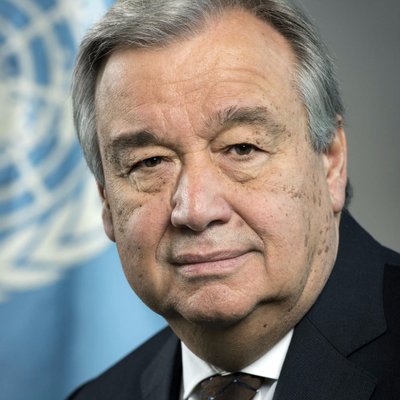
Africa’s future must be shaped by Africans, for Africans.
And the world must stand with Africa as it strives to achieve the Sustainable Development Goals & build inclusive prosperity.
My remarks to the Global Africa Business Initiative: un.org/sg/en/content/sg/stat…

Lemma W. Senbet retweeted

I’ve been thinking a lot about the extraordinary outbursts of the President of the United States against female journalists... well, actually against journalists in general and journalism. But it feels like he saves his most childlike behavior and irrational language for female reporters, calling them all kinds of names that kids in kindergarten are given times out for. It’s stunning to me to witness such behavior from any leader, any CEO, any person of influence or importance. I’ve never witnessed someone like this raging, this weekend with @meetthepress host @kwelkernbc, just last week in the Oval Office with @cnn’s @kaitlancollins, calling women stupid or piggy, telling them to “smile”, calling them darling, demeaning their credibility. Every good man should denounce this behavior. Every person should be able to stand up for their colleagues and say “No more.”
Imagine this man screaming like this at your daughter, your wife, your sister, your mother... would you stand for it? No, you wouldn’t! And neither should any of us. It’s unacceptable and undignified. Period. End of story.
Lemma W. Senbet retweeted

Speaking at the inauguration of the United Nations Nairobi Expansion Project in Gigiri, UN Secretary-General António Guterres criticised the global financial system for forcing African countries to pay borrowing costs three times higher than those of developed nations, despite some having stronger financial stability and growth prospects. Guterres also called for permanent African representation on the UN Security Council and a stronger voice for Africa within the IMF and World Bank.
Lemma W. Senbet retweeted

Ambassador Massinga met with the leadership of the U.S.-Ethiopia Alumni Association (@USalumnieth).
They discussed the embassy’s growing network of alumni chapters across #Ethiopia and the association’s contributions to fostering innovation and economic opportunities.
With seven new regional chapters launched since January 2025, alumni are expanding their impact through civic engagement, community service, and professional collaboration, reflecting the lasting values of U.S. exchange programs and the shared commitment to building stronger communities.
#ExchangeAlumni


Lemma W. Senbet retweeted

The whole continent of Africa is rich in natural resources, but its wealth is concentrated and controlled in a few cities Johannesburg, Cape Town, Lagos, and Cairo
These hubs are products of systems, capital markets, and institutional depth.
Cities that invest in financial markets, ease of doing business, and capital mobility will define Africa’s next phase of growth.
One day, we must aim to build more financial hubs network of competitive African cities driving capital within Africa.
Because in the end, Africa doesn’t lack wealth.
It lacks enough places where wealth feels safe to stay and grow. The era of massive corruption and inconsistent policies should end in Africa.

Lemma W. Senbet retweeted

We’ve waited 60 years to see Africa trade with itself. Kwame Nkrumah must be smiling.

Nigeria's 🇳🇬 Dangote Refinery in Lagos has begun direct jet fuel supply to Ethiopian Airlines 🇪🇹, deepening energy ties with Africa’s largest carrier.
This is a major step for the refinery as it expands across the continent and supports regional aviation.
The deal also helps reduce reliance on fuel imports from outside Africa at a time of tight global supply.
The refinery is operating at full capacity of 650,000 barrels per day, with jet fuel exports rising to about 158,000 barrels per day. Demand has grown after supply disruptions in the Strait of Hormuz.
Europe remains the biggest buyer, but exports within Africa are increasing, strengthening Nigeria’s role in global energy markets.

Lemma W. Senbet retweeted

A man spends 50 years teaching at MIT.
He knows his time is running out.
So he records one last lecture — everything he knows, distilled into a single hour.
He died 5 months later.
This is that lecture.
The most important hour you'll watch this week. 👇
Bookmark it for later
Lemma W. Senbet retweeted

Africa has ~20 companies generating more than $10 billion in annual revenue. You probably know some of them.
MTN. Shoprite. Eskom. Sanlam. Dangote Group — bolstered by its new oil refinery.
I posted yesterday that Africa has more billion-dollar companies than many people think: nitter.cf/eajene/status/20461156….
Here's a deeper look at them:
• About 5% generate over $10B annually; the balance sit in the $1B–$10B range — the backbone of Africa's large-company ecosystem.
• 70% of total revenues generated by these companies come from just 6 sectors: oil & gas, mining, financial services, retail & consumer goods, manufacturing, and telecoms.
• Roughly 50% of the companies are in services (financial services, telecoms, transport/logistics, CPG/retail, healthcare, IT); another ~30% are in extractives (oil & gas, mining & metals); ~15% are in industrials (construction, manufacturing, power & utilities).
The sector concentration points both to the depth of what's been built to date — and the breadth of what hasn't been built yet.
Agriculture, for example, which employs more Africans than any other sector, accounts for just ~2% of these companies.
More big companies will be built across Africa as the continent's markets mature.
The question is whether the next wave of African giants will reflect the full breadth of the continent's economy — not just its most extractable parts.
—
Afridigest Intelligence — real intelligence to win in Africa's growth markets: afridigest.com/intelligence | Follow Afridigest on LinkedIn & Instagram


Africa has more billion-dollar companies than many people think.
At least 345 companies operating on the continent generate $1 billion or more in annual revenue.
Collectively, they generate over $1 trillion annually.
Of these companies:
• 147 — nearly half of them — are headquartered in South Africa, a country that accounts for just 13% of the continent's GDP.
• 43% are publicly traded, 40% are privately held, and 17% are state-owned.
• 230 of them are homegrown — African-owned and built for African markets, while a third (115) are African subsidiaries of foreign multinationals.
The geographic concentration and foreign ownership share both point to the same thing:
The continent's map of big business doesn't yet match its atlas of opportunities.
Nigeria, for example, has ~4x South Africa's population and ~80% of its GDP. Yet it has 16% as many companies generating $1 billion annually.
More big companies will be built across Africa as the continent's markets mature.
The question is by whom — and which communities benefit.
--
Afridigest Intelligence — real intelligence to win in Africa's growth markets: afridigest.com/intelligence | Follow Afridigest on LinkedIn & Instagram

Lemma W. Senbet retweeted

Pleased to share my new paper. It examines how the U.S. is using trade policy tools to secure #criticalminerals supply chains. It offers one of the first comprehensive & empirical analysis of the recent U.S. critical minerals trade deals with six countries shorturl.at/DTUEx

Lemma W. Senbet retweeted

Extractives dominate Africa's exports: 13 countries have energy-related commofiyiesxas their top; another 19 have minerals. This needs to change. After 6 decades of diversification policy prescriptions coming mostly from Washington, time has come to look East.

Lemma W. Senbet retweeted

Down on Paper, Up in Reality: #Ethiopia’s Inflation Paradox
According to the latest Consumer Price Index (#CPI) released by the Ethiopian Statistical Service (#ESS), Ethiopia’s general inflation rate declined to 9.4% in March 2026, compared with the same period in the previous year. During the same period, food inflation stood at 11%, while non-food inflation was recorded at 7%. In fact, official data indicate a sustained downward trend in the general inflation rate since April 2025, with inflation standing at 14.7% and gradually falling into single-digit territory by December 2025, when it reached 9.7%.
Despite this easing in official inflation figures, the lived reality for millions of Ethiopians in both urban and rural areas tells a markedly different story. Domestically produced commodities have recorded significant price increases in the past year: coffee prices have nearly doubled, rising by 95%, while teff and wheat—key components of the Ethiopian diet—have increased by more than 60%. The situation is even more pronounced for imported essentials. A five-liter container of cooking oil and a kilogram of imported sugar now cost 150% more than they did a year ago. Fuel prices have followed a similar trajectory. Between October 2024 and March 2026, the price of gasoline (benzene) increased by approximately 50%, rising from 91 birr to 142.41 birr per liter.
A recent analysis published by Addis Standard highlights this glaring contradiction: while official reports indicate inflation is cooling, the real-world cost of living tells a much grimmer story.
Want to understand why official data points to disinflation while markets scream otherwise? Read the full article.
addisstandard.com/?p=54111

Lemma W. Senbet retweeted

Africa's Wealthiest Women and How They Built Some Of the Continent’s Most Successful Enterprises
Kate Fotso, Cameroon's wealthiest private business woman, is investing $28.3 million in a new brewery project. Fotso made her fortune in cocoa. The investment marks one of the largest private industrial projects in Cameroon’s recent history.
Fotso’s story raises the story of who are the wealthiest women in Africa, who didn’t make their fortune from present or past foundational benefits from state/power connections or from a spouse or parents who were presidents (like Angola’s Isabel dos Santos or Kenya’s Mama Ngina Kenyatta).
As of early 2026, Forbes reports no women among the official $1 billion plus class in Africa, following the asset freezes of Isabel dos Santos and the market fluctuations affecting Folorunsho Alakija.
Listed here are the TOP 10.
1. Folorunsho Alakija (Nigeria)
Estimated Net Worth: $1 Billion Alakija is a self-made titan. She began her career in fashion before pivoting to the oil industry. Her wealth primarily comes from Famfa Oil, which holds a major stake in the Agbami Oilfield.
2. Hajia Bola Shagaya (Nigeria)
Estimated Net Worth: $950 Million Shagaya is one of Africa’s most prolific entrepreneurs. She built her empire through Bolmus Group International, with diversified interests in real estate, banking (Unity Bank), and photography (she was the sole distributor of Konica in West Africa for decades).
3. Stella Okoli (Nigeria)
Estimated Net Worth: $850 Million Dr. Okoli is the founder of Emzor Pharmaceutical, one of the largest indigenous pharmaceutical companies in Nigeria. She started as a small chemist shop in 1977 and scaled it into a multi-billion naira manufacturer of over 50 different products.
4. Wendy Appelbaum (South Africa)
Estimated Net Worth: $260 Million The daughter of billionaire Donald Gordon, Appelbaum has carved out her own path as a major player in South African agriculture and finance. She owns DeMorgenzon Wine Estate and held significant stakes in Liberty Investors and various insurance firms.
5. Kate Fotso (Cameroon)
Estimated Net Worth: $252 Million Often called the "Iron Lady" of cocoa, Fotso runs Telcar Cocoa, the largest cocoa exporter in Cameroon. Her wealth is rooted in agricultural trade, banking, and she’s now makinglarge-scale investments in the brewing industry.
6. Wendy Ackerman (South Africa)
Estimated Net Worth: $200 Million Ackerman was instrumental in building Pick n Pay, one of South Africa’s largest retail chains. While she co-founded the business with her husband, she served as a long-term executive director and is a powerhouse in the African retail sector.
7. Irene Charnley (South Africa)
Estimated Net Worth: $150 Million A former trade unionist who transitioned into the corporate world, Charnley was a key executive at MTN Group, where she spearheaded the company's expansion across Africa. She later founded Smile Telecoms, a telecommunications provider operating in several African nations.
8. Bridgette Radebe (South Africa)
Estimated Net Worth: $100 Million The founder of Mmakau Mining, Radebe was South Africa’s first black female mining entrepreneur. Although her brother is billionaire Patrice Motsepe and her husband is a politician, she built Mmakau independently as a contract mining firm before acquiring her own mining shafts.
9. Divine Ndhlukula (Zimbabwe)
Estimated Net Worth: $50M - $80M (Estimated) Ndhlukula is the founder of SECURICO, one of Zimbabwe’s largest private security firms. She started the company in the late 1990s with only four employees and a few hundred dollars; today, it employs thousands and is a regional leader in the sector.
10. Bethlehem Tilahun Alemu (Ethiopia)
Estimated Net Worth: $40M - $60M (Estimated) Alemu is the founder of soleRebels, a globally recognised eco-friendly footwear brand. Her wealth is entirely self-made, built on transforming traditional Ethiopian "selate" (tyre) shoes into a high-end international export sold in over 50 countries.
Many of these women lead private companies, meaning their net worth is estimated based on company revenue, sector valuations, and known assets rather than public stock prices. Contest any if you think information is inaccurate, or indicate who should be on the list and has been left out.

Lemma W. Senbet retweeted

“Africa is not short of vision,” Prof Carlos Lopes told delegates at the Consultative Dialogue on the New African Financial Architecture for Development (#NAFAD).
Speaking at the dialogue in Abidjan, Lopes underscored that the continent has long been clear about its direction. Through Agenda 2063, Africa has set out a compelling vision, one that is integrated, prosperous, and driven by its own citizens.
Lemma W. Senbet retweeted
At its core, the New African Financial Architecture for Development (#NAFAD) rests on a simple proposition: Capital should be deployed at the right level by the right institution with the right instruments.
WATCH below for more from African Development Bank Group President Sidi Ould Tah, at the Consultative Dialogue in Abidjan on 9 April 2026. ⬇️
Lemma W. Senbet retweeted

African governments turn to complex derivatives as debt costs rise
10 Apr 2026
Governments have defended the swaps as cost-effective compared with bond markets
ft.com/content/9b76876e-a2f4…
# africa economics debt


Lemma W. Senbet retweeted
TODAY: Launch of @AfDB_Group’s 2026 Africa’s Macroeconomic Performance and Outlook (MEO) report.
Amid global uncertainty, #AfricaMEO2026 provides evidence-based insights into economic trends across Africa and its short- to medium-term outlook: bit.ly/4dixfuJ
Lemma W. Senbet retweeted

🚨 POWELL BIG WARNING 🚨
FED CHAIR POWELL:
U.S. DEBT IS GROWING MUCH FASTER THAN THE ECONOMY & CALLS IT “NOT SUSTAINABLE.”
ALSO WARNS: “IT WILL NOT END WELL IF WE DON’T ACT SOON.”
U.S. DEBT ~$39 TRILLION WITH INTEREST COSTS ~$1 TRILLION A YEAR.
TRUMP MAY LOSE MID… Show more
Lemma W. Senbet retweeted

The CEO of a $3 trillion company just admitted the biggest threat to AI has nothing to do with the technology itself.
It is YOU.
Satya Nadella spoke at Davos and said the real obstacle to AI is getting people to actually change how they work.
He gave a personal example.
Before Davos, his team would spend days preparing briefing notes, filtering up through layers of staff before reaching him.
That process had not changed since he joined Microsoft in 1992.
Now he types one sentence into Copilot and gets a full 360-degree brief in seconds what Microsoft is doing for a client, what that client is doing for Microsoft, the whole picture at once.
Nadella said that kind of capability does not just speed things up, it completely inverts how information flows through an entire organization.
The old model, departments hoarding knowledge, information trickling upward through hierarchy, is now structurally obsolete.
Most companies have not figured that out yet.
He said firms will see almost zero productivity gains from AI unless leaders actively redesign their structures, retrain their people, and rebuild how context moves through the organization.
The companies that refuse to change will not just fall behind and they will become irrelevant to the ones that do.
His exact words: "That's why you're going to see the challenge of why am I not seeing immediate results in productivity. You have to do the hard work."
The hard work is convincing an entire workforce to let go of how they have operated for decades.
That is the actual AI race and most companies are losing it before it even starts.
