

Price the tail
Joined February 2024
- Tweets660
- Following943
- Followers1.4K
- Likes2.3K





Rockstar built a largely self-consistent world that renders in real time, presumably without help from a frontier lab, with roughly half the development cycle taking place before coding agents were even usable. That’s a pretty nontrivial engineering achievement.

3
156
Leo the Bayesian retweeted

Looped models are weird. A layer can write to itself or read from "future" layers.
@thinkymachines gave us early access to Inkling 2 Mini so we could study its inner mechanisms. We uncover how it coordinates information flow across layers, blocks, and loops.
Studying Inkling 2 Mini gave us cause for optimism: as transformers continue to evolve, we believe our ability to understand their internal mechanisms can evolve with them.
Read the full post: goodfire.com/research/interp…

Some of you thought that Inkling 2 Small was too big at 594B parameters. We heard you: Inkling 2 Mini is a looped transformer with just 26B parameters, small enough to run on your laptop, powerful enough for agentic work with a score of 20.1 on AA Index.
thinkingmachines.ai/news/ink…

Benchmarks have quietly become a distribution strategy. Publish once, then re-tag a fresh set of researchers every time a lab ships a model, and if you can put Grok at #1, you might even get the Musk repost.
The real problem is a measurement gap. Models are moving to 10T+ parameters and RSI-pilled, but most evals still reward a single score instead of out-of-sample, held-out, independently run tests.
Who funds evals that can keep up with the models they're meant to grade?
4
25
1,421

Hollywood’s cultural hegemony is partly a consequence of the capital intensity of representation. Whoever finances the production of believable worlds acquires a veto over what enters the collective imagination. Better video models and cheaper inference make that veto contestable. Narrative sovereignty becomes less dependent on whether HBO, Netflix, or their financiers find your worldview commercially legible. I see no reason to preserve that dependence. Yet infinite tokens have their own political economy: the capacity to manufacture appearances becomes abundant, while the power to make them socially authoritative remains scarce. Baudrillard gives us a language for this condition. What remains unsettled is how authority gets constituted when everyone can produce a world, and no one can assume theirs will be shared.

Someone should use a video model to tell the real story of what happened. Don't need to be bottlenecked on Hollywood anymore.
3
204
Ban everyone replying “go bears” to the original post. You’re making our entire industry look unserious.

The reason Berkeley kids love YC so much (or visa versa) is because YC is literally just filling out an application for $500k and Berkeley kids are really good at bullshitting applications.
Real entrepreneurs playing the real game don’t do these little league circle-jerk-economy incubators full of teenagers. They seek real capital from real people who are serious. Garry Tan is the furthest thing from serious (he also has a polycule but that’s for another day)
6
411
paradigm is still at the frontier

EFFECTIVE SWARM RIDING FOR ENGINEERS
I think we are entering an era where software development feels a lot more like magic.
But you need the right attitude, the right infra, and some incantations.
These are some things that have worked well for me & I hope for you! 1/N

208

Leo the Bayesian retweeted
With all the noise around formal verification today, it is easy to forget that the Lean or Dafny approach is not the only game in town. When you look closely at how different paradigms connect specifications, proofs, and executable code, four distinct philosophies emerge—each differing on who does the work of finding the witness.
1. Program, Then Prove (Lean, Dafny)
In Dafny or Lean, you write an algorithm that computes the value you want—the witness—alongside a proof that the witness satisfies your specification. In Dafny, the specification and implementation languages are distinct. Yet even in Lean, which fuses them via dependent types, the proof is erased at compile time; at runtime, the machine simply executes the deterministic algorithm you wrote.
2. Program Calculation (Squiggol / Bird–Meertens)
In the Squiggol style, you start with an obviously correct, albeit inefficient, executable program. There is no separate specification and implementation—the specification is the implementation. From there, you apply algebraic, correctness-preserving transformations (like fusion and promotion) to calculate an efficient algorithm. Every equational step is its own proof, though you are still manually deriving the algorithm that computes the witness.
3. Constructive Proof Extraction & Refinement (Rocq, Isabelle/HOL)
Rocq (formerly Coq) and Isabelle/HOL take this a step further through code extraction. In Rocq’s constructive logic, you don't even have to write the algorithm first: you can prove an existential theorem (∃ witness), and Rocq will erase the purely logical steps to extract the computational skeleton of your proof directly into an OCaml program. Classical systems like Isabelle/HOL achieve a similar result through stepwise data refinement, transforming abstract mathematical specs into executable code. Still, the human must construct the proof—and thus the underlying algorithm—ahead of time.
4. Proof Search as Execution (Logic Programming)
Logic programming collapses the entire divide at runtime. You state the axioms, and your query is the existential theorem you want to prove. Execution is the proof search itself, using unification and resolution to dynamically construct the witness you are after.
In the first three approaches, the human invents or vibe codes the algorithm (or proof) that produces the witness, and the machine verifies it.
Only in logic programming do you state what makes a witness valid and let execution itself find both the proof and the witness together—which is why logic programming is my favorite paradigm for formal verification.
GLM 5.5 soon. @jietang will save this market.

3
271
Whoever picked that creepy Black Mirror soundtrack for Anthropic IPO and made Dario and co. look like they work for the Elders of Zion is the greatest whistleblower of our time.
6
332


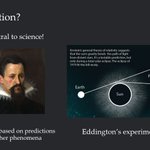
- Prediction is central to science (x)
- Prediction is the central sceince (√)
(Slide from Deep Learning Alchemy lec.1)

airdrop economy

Monaco received our allocation in tomorrow’s ANT IPO, and we’re giving the shares to our customers.
Each customer who signs up for Monaco in November will receive 10 shares of ANT transferred to their personal brokerage account.
Most startups pay third-party advertisers to track potential customers and serve them ads. We’d rather spend that money to benefit our customers directly.
We’re obsessed with delivering value to our customers in every way we can think of. Including our marketing spend.
1
7
507

So the situational awareness crowd gets to run the supply chain trade all over again, this time hunting for biotech’s equivalents of optics, memory, neocloud and power.

6
511
Jensen is so back I accidentally called him Jensus while talking to friends today.

Over the past week, I’ve been overwhelmed by the love and support of friends, industry colleagues, and people I've never met. Thank you to everyone who has shown kindness to my family and me. It means the world to me.
I came to the United States 53 years ago, and becoming an American citizen is one of the greatest gifts and proudest moments of my life. NVIDIA has been my life’s work. Building it into the company it is today alongside my colleagues has been a privilege and an honor. Nowhere but in America could a company like NVIDIA be possible. I love our country, and I love NVIDIA.
I did not live up to the standards expected of everyone at NVIDIA, and I have made serious mistakes in my personal life. I created problems for the Board that I deeply regret. I own my mistakes completely, and I am committed to cooperating with the Board’s independent investigation.
Since my departure, I’ve seen an outpouring of calls from NVIDIA’s employees, investors, business partners, and customers for me to return as CEO. Many continue to reach out to me directly as the company navigates complex technology, market, competitive, and geopolitical dynamics. NVIDIA is a once-in-a-generation company. If the Board of Directors decides that my return is in the best interest of our shareholders, our employees, the company, and America, I would be honored to answer these calls and return as CEO.
Thank you again to everyone who has shared their good wishes. I am profoundly humbled by your support. To my family: I love you, and I will spend the rest of my life being worthy of yours.
Jensen
4
282