

Pre-historical, Historical, and Archaeological analysis of the biblical texts, and the historical, geopolitical, & cultural context of the theological texts.
New England
Joined March 2024
- Tweets40.6K
- Following94
- Followers583
- Likes36.5K


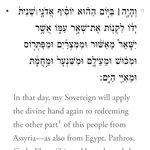

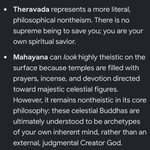


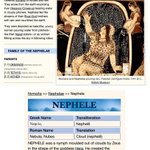


Sounds of Nyx retweeted

Hallan 184 tablillas del archivo del Imperio Hitita: hablan de fiebres que mataban niños y de augures que viajaban ino.to/AQktKdI

Sounds of Nyx retweeted

ملوك سلالة بابل الأولى
خلفاء حمورابي والأخطار الداخلية والسياسية
حكم بعد حمورابي خمسة ملوك ورثوا مملكة موحدة شملت العراق وأجزاء من بلاد الشام، وشغل هؤلاء الملوك معظم سنوات حكمهم بالمحافظة على المملكة ورد المحاولات الانفصالية والهجمات الخارجية.
عهد سمسو-إيلونا (1749 – 1712 ق.م): خلف والده حمورابي واجه بحزم محاولات الانفصال في بداية حكمه. تطلب ذلك جهداً عسكرياً كبيراً لإخماد ثورة قادها شخص يُدعى "ريم-سين" في الأقاليم التاخمة لبلاد عيلام (وهو غير ريم-سين ملك لارسة الذي قضى عليه حمورابي)، واستغرق إخمادها عامين.
نشوء سلالة القطر البحري: استغل "إيلوما-إيلو" (الذي ادعى نسبه لملك أيسن) الاضطرابات، واستقل بالمناطق الجنوبية والأهوار ليعلن تأسيس سلالة "القطر البحري" (سلالة بابل الثانية: 1740 – 1500 ق.م). وشهدت المنطقة حروباً متواصلة تسببت في دمار مدن جنوبية كبرى مثل "أور".
انفصال آشور: استغلت بلاد آشور الأوضاع وانفصلت عن التبعية البابلية بقيادة ملوك من أشهرهم الملك "أداسي" الذي أرجعته أثبات الملوك إلى أنه خلص آشور من العبودية.
التحديات الخارجية وظهور الكشيين
ترافقت الأخطار الداخلية مع تهديدات خارجية مستجدة، أبرزها زحف الكشيين من منطقة الفرات الأوسط:
صدّ الملك "سمسو-إيلونا" جيشاً كشياً في السنة التاسعة من حكمه، إلا أنهم تمكنوا لاحقاً من التغلغل كعمال وزراع، ثم أسسوا كياناً سياسياً في منطقة عانة (خاتة).
واصل الملوك الأربعة الذين تلو "سمسو-إيلونا" الدفاع عن المملكة طوال القرن التابع لحكمهم، ومنهم الملك أبي-إيشوخ (1711 – 1684 ق.م) الذي صد هجوماً كشياً آخر، وحاول إخضاع القطر البحري دون أن يفلح.
الإنجازات العمرانية والإدارية
رغم النزاعات، شهدت هذه الحقبة أعمالاً عمرانية وتنموية مهمة تشمل:
تأسيس المدن والحصون وتجديد المعابد وإنشاء التماثيل.
حفر أنهار الري وتنظيم الإدارة والشؤون القضائية عبر المنشورات والتعليمات الملكية (Edict) لمعالجة مشكلات الضرائب والديون، كما في عهد الملك عمي-صادوقا (1646 – 1626 ق.م).
الغزو الحثي ونهاية السلالة البابلية الأولى
جاءت الضربة القاضية للسلالة البابلية الأولى على يد الحثيين القادمين من بلاد الأناضول (تركيا حالياً).
قاد الملك الحثي مورسيلس (1620 – 1950 ق.م) حملة عسكرية واسعة استولى فيها على مدن في بلاد الشام وحلب وكركميش، ثم زحف جنوباً نحو بابل في عهد آخر ملوكها سمسو-ديتانا (1625 – 1595 ق.م).
اقتحم الحثيون بابل واستولوا على الغنائم والأسرى، ومن ضمنها تمثال الإله "مردوخ" وزوجته "صر بنيتم"، ثم انسحبوا لأسباب غير معلومة وتركوا التماثيل في منطقة "عانة".
استغل الكشيون هذا الفراغ بقيادة ملكهم أجوم كاكريمه (1602 – 1585 ق.م) حيث أعاد تماثيل الآلهة إلى بابل، واستولى الكشيون على الحكم ليتأسس ما يُعرف بـ سلالة بابل الثالثة.
عوامل الانهيار
يُعزى سقوط الإمبراطورية التي بنى حمورابي أركانها إلى عدة عوامل أساسية:
1. اعتماد الإمبراطورية بشكل مفرط على الشخصية القيادية القوية للملك حمورابي.
2. نزعة العراق القديم التاريخية ونظام "دولة المدينة" الفردية المحبذ لدى السكان، مما غذى محاولات الانفصال المتكررة.
3. حصر الاهتمام الاقتصادي والثقافي والديني بالعاصمة بابل على حساب المدن والأقاليم التابعة لها، مما أضعف تماسك الدولة وأدى لتقلص رقعتها وتداعيها أمام الغزوات الخارجية
Kings of the First Dynasty of Babylon
The Successors of Hammurabi and the Internal and Political Threats
Five kings ruled after Hammurabi, inheriting a unified kingdom that encompassed Mesopotamia and parts of the Levant. Most of their reigns were devoted to preserving the kingdom, suppressing separatist movements, and repelling foreign invasions.
The Reign of Samsu-iluna (1749–1712 BC)
Samsu-iluna succeeded his father Hammurabi and firmly confronted attempts at secession early in his reign. This required considerable military effort to suppress a rebellion led by a man named Rim-Sin in the regions bordering Elam. This was not Rim-Sin, the King of Larsa, who had been defeated by Hammurabi. The rebellion took two years to put down.
The Rise of the Sealand Dynasty
Taking advantage of the political turmoil, Ilum-ma-ilī, who claimed descent from a king of Isin, broke away from Babylonian control and established an independent kingdom in the southern regions and marshlands, founding the Sealand Dynasty (the Second Dynasty of Babylon, 1740–1500 BC).
The region subsequently witnessed continuous warfare, which resulted in the destruction of major southern cities, including Ur.
The Secession of Assyria
Assyria also exploited the political instability to break away from Babylonian rule. This process was associated with kings such as Adasi, whom the Assyrian King List credits with liberating Assyria from subjugation.
External Threats and the Emergence of the Kassites
Internal instability coincided with new external threats, most notably the advance of the Kassites from the Middle Euphrates region.
* King Samsu-iluna repelled a Kassite army in the ninth year of his reign. However, the Kassites later managed to infiltrate the kingdom as laborers and agricultural settlers before establishing a political entity in the region of Hana (around modern-day Ana).
* The four kings who succeeded Samsu-iluna continued defending the kingdom throughout the following century. Among them was King Abi-Eshuh (1711–1684 BC), who repelled another Kassite invasion and attempted, unsuccessfully, to bring the Sealand under Babylonian control.
Architectural and Administrative Achievements
Despite the ongoing conflicts, this period witnessed significant architectural and developmental projects, including:
* The foundation of cities and fortresses, the restoration of temples, and the construction of statues.
* The excavation of irrigation canals and the organization of administrative and judicial affairs through royal edicts and instructions (Edicts), which addressed issues such as taxation and debt. Notable examples include the reign of King Ammi-Saduqa (1646–1626 BC).
### The Hittite Invasion and the Fall of the First Babylonian Dynasty
The decisive blow to the First Babylonian Dynasty came from the Hittites, who advanced from Anatolia (modern-day Turkey).
The Hittite king Mursili I (1620–1595 BC) led a major military campaign, capturing cities in the Levant, including Aleppo and Carchemish, before advancing southward toward Babylon during the reign of its last king, Samsu-Ditana (1625–1595 BC).
The Hittites stormed Babylon and seized its treasures and captives, including the statues of the god Marduk and his consort, Ṣarpānītu. They subsequently withdrew for reasons that remain unknown, leaving the divine statues in the region of Ana.
The Kassites exploited this power vacuum under their king Agum-Kakrime (1602–1585 BC), who restored the statues of the gods to Babylon. The Kassites subsequently seized power, establishing what became known as the Third Dynasty of Babylon.
Factors Behind the Collapse
The fall of the empire established by Hammurabi can be attributed to several fundamental factors:
1\. Overdependence on Hammurabi's leadership: The empire relied excessively on the authority and exceptional leadership of Hammurabi himself, making it difficult for his successors to maintain its unity.
2\. The historical tendency toward political fragmentation: The traditional political structure of ancient Mesopotamia, characterized by independent city-states, encouraged local autonomy and repeatedly fueled separatist movements.
3\. The concentration of economic, cultural, and religious interests in Babylon: Excessive centralization in the capital at the expense of subordinate cities and provinces weakened the cohesion of the kingdom, contributing to its territorial decline and eventual vulnerability to foreign invasions.
.

Sounds of Nyx retweeted

🟡The ancient Mesopotamian civilisation’s weirdest job? Meet the veterinary exorcist In the cradle of civilisation, illness wasn’t just a medical problem — it was a supernatural one. That’s why Mesopotamians turned to exorcists not only to treat people, but animals too..

Sounds of Nyx retweeted

Herodotus proved right AGAIN. thetimes.com/uk/history/arti…

King David taught us that horrible human beings can transfer their atonement of “sins” onto completely innocent human beings…. and remain “holy” & “just”.

Sounds of Nyx retweeted

Archaeologists have found evidence that devotees of the goddess Cybele in Roman Thrace may not have gotten—or cared to hear—the word that pagan worship was outlawed in A.D. 392. A temple in Bulgaria continued to conduct rites into the mid-fifth century!
archaeology.org/news/2026/10…

ALT Thracian temple and art (📸 Bulgaria’s National History Museum)

ALT Thracian temple and art (📸 Bulgaria’s National History Museum)
Sounds of Nyx retweeted

"...I learned Greek to read the New Testament in the original. Big mistake. [...] The more I read the text in Greek and the more I learned about the textual tradition, the less I believed that the Bible was the word of God."
Our definition of "church trauma" should include the malpractice being led to believe the Bible was given to us as a complete whole like the Ten Commandments or the Book of Mormon, because that's unsustainable.


Sounds of Nyx retweeted

Magi Round the Sacred Fire
Colorized engraving of Zoroastrian priests in their temple.
From Cassell’s Illustrated Universal History, Vol. I (London, 1882)

Sounds of Nyx retweeted

THE MESSIAH THE TANAKH ACTUALLY PROMISES
Mashiach is not a figure who comes, dies, rises, and leaves the world waiting for the rest of the promises to happen.
In Tanakh it describes a future of restoration, justice, peace, the reunification of Israel, and the universal recognition of HaShem.
Lets look at what the prophets actually say......
1. MASHIACH IS CONNECTED TO THE RESTORATION OF ISRAEL
Jeremiah 23:5–8
A righteous Branch from David who will reign as king, administer justice, and bring Judah AND Israel to dwell securely. It even describes the gathering of Israel from the lands where they were scattered.
Ezekiel 37:21–28
The gathering of the children of Israel from the nations, our reunification as one nation, and David as our king. HaShem establishes an everlasting covenant of peace with us not a new testament.
This is not merely a promise of an invisible spiritual kingdom. The prophecy speaks about Israel, its people, its restoration, and its future under HaShem's appointed ruler.
2. MASHIACHS REIGN BRINGS WORLDWIDE PEACE
Isaiah 2:2–4 describes the nations coming to learn HaShems ways. Not mashiachs ways
They will turn their weapons into agricultural tools, and nation will no longer lift up sword against nation.
Micah 4:1–4 repeats this vision, describing people living securely, each under their own vine and fig tree, without fear.
Isaiah 11:6–9
A world in which violence and destruction cease.
These are extraordinary promises. The prophets describe a transformed world, not simply a religious movement spreading while warfare, oppression, and injustice continue.
3. THE NATIONS WILL RECOGNIZE HASHEM NO OTHER NAME.
Zechariah 14:9 HaShem will be King over all the earth.
Isaiah 45:23 declares that every knee will bow and every tongue will swear allegiance to Him (HaShem)
Jeremiah 16:19–21 nations coming from the ends of the earth and recognizing that their former gods were false.
The destination of the nations is the worship and recognition of HaShem. The prophets repeatedly direct humanity toward the G-D of Israel.
4. THE TORAH REMAINS CENTRAL TO THE FUTURE
Isaiah 2:3 says that Torah will go forth from Zion and the word of HaShem from Jerusalem.
Micah 4:2 gives the same vision.
Ezekiel 36:26–27 describes HaShem giving Israel a new heart and putting His spirit within them so they will walk in His statutes and observe His commandments.
Jeremiah 31:31–34 Arenewed covenant with the house of Israel and the house of Judah, with TORAH written upon their hearts.
Notice what the prophets envision people living in obedience to HaShem, not the disappearance of His Torah or worship of another.
5. THE DAVIDIC MESSIAH SERVES HASHEM
Jeremiah 33:14–17 HaShem fulfilling His promise to David through a righteous Branch who will execute justice and righteousness.
Ezekiel 34:23–24 describes David as a shepherd over Israel, while HaShem Himself remains our G-D.
Ezekiel 37:24–25 again identifies David as HaShem's servant and king.
The picture is consistent HaShem appoints His ruler, establishes His kingdom, restores His people, and brings justice to the earth.
THE POINT
Christianity has its interpretation of these passages, but an interpretation is not the same as the plain promises written in the Hebrew.
The prophets describe Israel restored, Jerusalem elevated, the nations learning Torah, worldwide peace, justice, and the universal recognition of HaShem.
These promises should not be dismissed, spiritualized away, or treated as unimportant.
I stand with the words of the prophets. I believe HaShem's promises. I believe His covenant remains meaningful, His Torah remains holy, and His word will accomplish everything He has declared.
The future belongs to HaShem.
All nations will recognize His sovereignty. All creation will witness His greatness. And His Name will be exalted throughout the earth.
All glory belongs to HaShem alone.


Sounds of Nyx retweeted

The Tower of Babel has a big problem
#maklelan3545
youtu.be/e99d8t_CTC0

Sounds of Nyx retweeted

A new atlas of language and writing is coming out by Gaston Dorren, author of the acclaimed pop linguistics books Babel: Around the World in Twenty Languages and Lingo: Around Europe in Sixty Languages. Each of the over 100 maps and diagrams were created by data journalist Marco Giannini @Dataspoiler

The Ain Dara temple was the closest representation of Solomon’s Temple, found in the ancient Levant,
It was in Syria.


Sounds of Nyx retweeted

1/7
Josephus marks the exact moment the Jewish war against Rome began.
Not a battle. A liturgical decision – one young priest cancelled one sacrifice.
War of the Jews, Book II, Chapter 17. 🧵
Sounds of Nyx retweeted

A cluster of chareidi rabbis avoid looking at non-people (women) while they admire themselves in the mirror.
This is burka-style thinking by a religious leadership that reminds girls that they are “others” who are at the whim of the patriarchy.
Sad.

Sounds of Nyx retweeted

ما هي أقدم إشارة تاريخية معاصرة للنبي محمد ( صل الله عليه وآله وسلم)
وللفتوحات العربية الإسلامية ؟
هي المخطوطة السريانية
( British Library,Add14661)، المعروفة باسم «رواية عام 637»،المحفوظة في المتحف البريطاني
وهي من أقدم الشهادات السريانية للنبي محمد ( ص) ، إذ دُوّنت بخط اليد على صفحة فارغة من مخطوطة إنجيل تعود إلى 637 ميلادي
ويرد في المخطوطة النص الثالي
الكاهن، مار إلياس محمد ... وجاءوا ... و ... ومن ... قوي ... شهر ... والرومان ... وفي يناير ... تلقى أهل إميسا تطمينات على حياتهم. دُمرت قرى كثيرة بسبب قتل ... محمد وقُتل كثيرون. وأسرى ... من الجليل إلى بيت ... ونزل هؤلاء العرب ... ورأينا ... في كل مكان ... و ... أنهم ... و ... لهم. وفي السادس والعشرين من مايو ... ذهب ... من إميسا. وطاردهم الرومان... وفي العاشر... فرّ الرومان من دمشق... كثيرون، نحو عشرة آلاف. وفي العام التالي، جاء الرومان. في العشرين من أغسطس عام 947 [أي 636 م]، اجتمع في جابيثا... الرومان وكثير من الناس... وقُتل من الرومان نحو خمسين ألفًا... في عام 948
ملاحظة/ معركة الجابيثة او الجابية هي معركة اليرموك التي يفترض أنها حدثت عهد خلافة عمر بن الخطاب لكن الوثيقة تذكر أنها حدثت في عهد وقيادة النبي محمد ( ص) شخصيا


Sounds of Nyx retweeted
The Hebrew Bible is replete with examples of God overriding free will of humans, forcing them to murder, if it suited him, or to lie. Sometimes His Ruach would make them wise, or do something stupid.
The apologetic that God won't override free will ignores the text.
#EBAMeme
