

professor and pioneer of Deep learning back 1998.Provocateur, flanêur and author of Generative Constraint Theory
Joined May 2013
- Tweets4.4K
- Following3.7K
- Followers1.3K
- Likes5.1K
Armando Vieira retweeted

Google solved one of the oldest problems in education.
They killed the traditional textbook.
They built a system powered by LearnLM and Gemini that takes any static textbook PDF and dynamically rebuilds it around the student.
Here is how the pipeline works:
First, it asks for your grade level and what you actually care about (sports, music, food).
It re-levels the entire textbook to match your comprehension without cutting the core material, then rewrites the generic examples around your personal interests.
Then it applies "Dual Coding Theory", the cognitive science principle that your brain builds stronger mental models when it engages with the same concept across multiple formats.
Using specialized AI agents and a fine-tuned educational illustration model, it automatically turns one boring PDF into five interactive experiences:
• Immersive text broken into digestible chunks with custom visuals
• Narrated slides with interactive fill-in-the-blanks
• Zoomable mind maps that jump from the big picture to fine details
• Section-level quizzes that catch your exact knowledge gaps in real time
• Audio lessons featuring a simulated teacher and student
To see if it actually worked, Google ran a randomized controlled study with 60 high school students in Chicago.
Both groups got 40 minutes to learn about adolescent brain development.
Half got a standard digital textbook PDF. Half got Learn Your Way.
The results aren't even close:
• Students using Learn Your Way scored 9% higher on the immediate test
• 3 to 5 days later, they scored 11 percentage points higher on long-term retention (78% vs. 67%)
• 100% of them felt more comfortable taking the exam (compared to 70% with the PDF)
• 93% said they wanted to use it for future learning
And when human subject-matter experts graded the AI-transformed textbooks across subjects from history to physics, they rated them 0.85+ across accuracy and learning science principles.
Static textbooks were never the best way to learn.
They were just the only way we could scale printing.
For 500 years, students had to adapt their brains to fit the book.
Now, the book adapts to fit the student.

New paper by Yuhang He & Si Wu (Peking University): everything a brain knows or wants acts as a constraint with its own Lagrange multiplier, carried by neurons and synapses. Their last line could be GCT's: "A mind is life that learns its own constraints." arxiv.org/abs/2611.10737

44
Armando Vieira retweeted

Researchers proved AI has deleted every reason universities exist.
Harvard University ran a controlled experiment pitting a custom AI against their own top-tier classrooms.
And the results are going to collapse the higher education bubble.
They took 194 undergraduates and split them up.
One group learned physics in one of Harvard’s best hands-on, active-learning physical classrooms. Group work. Instructor support. The premium university experience.
The other group went home and learned the exact same material with an AI tutor.
The AI didn't just win. It embarrassed the institution.
Students using the AI learned more than twice as much as the students in the elite Harvard classroom.
They scored 30% higher on the final assessment.
And they did it in less time.
Let that sink in.
A piece of software sitting on a laptop outperformed a world-class faculty in one of the most elite learning environments on Earth.
Universities have always justified their exorbitant tuition with two things: access to elite knowledge and the physical classroom experience.
This study just proved both of those moats are gone.
When software can teach you complex physics twice as well as a $60,000-a-year institution, the math of higher education breaks permanently.
The AI didn't just give the students answers. It used strict pedagogical guardrails. It guided. It questioned. It forced the students to do the cognitive work.
It offered perfect, one-to-one tutoring, personalized to the exact moment a student misunderstood a concept.
That level of attention is mathematically impossible to scale in a physical lecture hall.
For a thousand years, the university was the only place to get a premium education.
Now, it’s the bottleneck.
If AI can double your learning speed for a fraction of the cost, what exactly are students taking on decades of debt to pay for?
(Link in the comments)

Armando Vieira retweeted
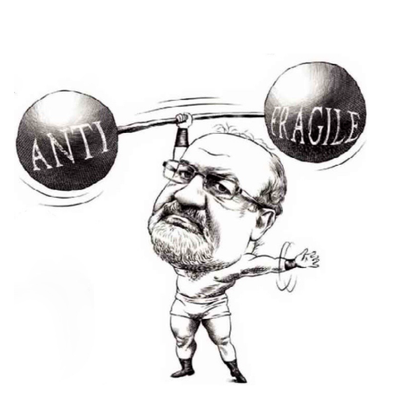
"It certainly takes bravery to remain skeptical; it takes inordinate courage to introspect, to confront oneself, to accept one's limitations--Scientists are seeing more and more evidence that we are specifically designed by mother nature to fool ourselves." - Taleb
Antireflective bilayer metasurfaces with complete wavefront control | Nature Nanotechnology share.google/0dnkS1qBVyJ3yDz…

27
"Wherever law ends, tyranny begins." John Locke, Second Treatise of Government (1689) nitter.cf/Glenn_Diesen/status/21…

This is what the EU does to its own citizens. No crime committed, no day in court. You just wake up one day to find that your government has frozen your bank accounts to starve your family and imposed a travel ban so they cannot flee. All rights are suspended because once the EU sanctions its own citizens. The first instinct of our journalists is to ignore or justify it. Absolutely chilling.
34
Great paper by Sarp Kargı: complex systems are fully physical, but knowing them takes interaction and memory, both limited. So the full causal picture is out of reach and emergence is epistemic. Close to ECF: knowledge as constraint built by interaction. nitter.cf/cogsciadam/status/2123…

Bu sabah müthiş bir makale okudum!
Felsefe, fizik ve hatta bilişsel bilimi çok iyi birleştirmiş.
Fiziksel indirgemecilikten başlıyor, karmaşık sistemlere, oradan enformasyon teorisine, termodinamiğe, oradan neden "belirimin" zorunlu olduğuna uzanıyor.
Yetmiyor, tüm bunların, "bellek, hatırlama, öğrenme, algı, normativite, fenomenoloji ve benlik" gibi kavramları temellendirmek için nasıl bir zemin sağladığına değiniyor.
Uzun yıllardır okuduğum en sıkı felsefe işi.
Hatta bana kalırsa ideal bir felsefe metninin neye benzemesi gerektiğine çok güzel bir örnek.
Bilim felsefesi, metafizik, fizik ve bilişsel bilimle ilgilenen herkese şiddetle öneriyorum.

1
106
Armando Vieira retweeted

Early fascinating work on how an AI science community would work. 35 human labs deployed agents that worked with each other to do science. They published 936 papers, publicly retracted mistakes, were willing to publish nulls more than humans, and founded a peer review journal.


Europe descending into dark ages

By my own count, if one includes these latest sanctions, the EU has now sanctioned 8 European citizens for speech:
- 3 German citizens: Alina Lipp, Thomas Röper and Hüseyin Doğru
- 3 French citizens: Xavier Moreau, Adrien Bocquet and Sylvain Afoua (aka Egountchi Behanzin)
- 1 Lithuanian citizen: Ernest Mackevičius
- 1 Irish citizen: Chay Bowes
The sanctions include freezing these people's assets and making it a crime for anyone in the EU to pay them, hire them or even lend them a single euro.
They also include a travel ban, which leads to some absurd situations: Doğru - based in Germany - was invited by some members of the EU parliament to Brussels to plead his case but he couldn't go due to the travel ban. As one of the MEPs who invited him - and made 40 phone calls to try, unsuccessfully, to get him cleared to come - put it: "It really was like something out of a Kafka novel" (berliner-zeitung.de/article/…).
And, probably worst of all, all of this was decided without any charge, trial or court ruling - simply as a unilateral decision of government ministers. Yesterday's sanctions, for instance, were decided at the Foreign Affairs Council meeting of EU Foreign Ministers and were simply signed by Kaja Kallas alone on behalf of the Council (eur-lex.europa.eu/legal-cont…).
Put it all together, and this violates at least half a dozen of what the EU keeps saying are the fundamental values and principles it supposedly fights for:
1) Separation of powers: here we have government ministers - members of the executive branch of their countries - acting as prosecutor, judge and jury
2) Presumption of innocence (Article 48 of the EU’s own Charter of Fundamental Rights): they’re punished without guilt ever being established, and without being given a chance to plead their case before the decision
3) Right to a fair trial (Article 47): there was no trial at all, let alone a fair one
4) Freedom of expression and of the media (Article 11): they were sanctioned - explicitly so - for what they said and published. For instance, in these latest sanctions, Chay Bowes was sanctioned for, among other things, the speech crime of "participat[ing] in the spreading of anti-Western and anti-Ukraine disinformation at the UN Security Council" (eur-lex.europa.eu/legal-cont…). Sanctioned in part for a speech at the UN, a forum that exists precisely so that clashing views on international matters can be heard, quite the message to send from the EU...
5) Freedom of movement (Article 45): they're under a travel ban
6) Right to work and to property (Articles 15 and 17): their assets are frozen and nobody may employ or pay them
You can think whatever you want about these 8 people. But ask yourself this: even if you are pro-Ukraine, pro-EU, anti-Russia and you view these people as malignant Russian operatives... what is the EU fighting for here, exactly?
This is more profound than you may think: we're speaking about the very foundation of modern European civilization, built on the very idea that political power alone cannot decide what is true.
I'm not exaggerating. What we’re witnessing is a return to the pre-Enlightenment playbook, when monarchic or religious authorities defined the truth, deviations from it were called heresy, and heretics were excommunicated - cut off from the community, so that no one could trade with them, employ them or help them. In Europe's darkest times, heretics were even famously burned at the stake - like Joan of Arc or Giordano Bruno.
It took literal centuries of religious wars and debates, and the likes of Voltaire, Kant and Mill, to replace it with a basic idea: that no single power, however legitimate, gets to be the final judge of what is true, and that you answer for your words only before a court, under laws written via a process separate from the power that does the accusation.
You can find countless works of European literature on this very matter. Take Spinoza, excommunicated in 1656 by the Portuguese-Jewish community of Amsterdam, with a decree ordering that "no one should communicate with him" nor "accord him any favor". He went on to write the Theological-Political Treatise, one of the founding texts of the Enlightenment, with an entire chapter arguing that "in a free state every man may think what he likes, and say what he thinks." Or Mill, two centuries later in On Liberty, Chapter 2: "All silencing of discussion is an assumption of infallibility." Or Kafka’s The Trial, the story of a man accused by an authority nobody can quite locate, of something nobody will explain.
How is what Europe is presently doing anything other than going back to that very system, under new appellations? The authority: government ministers. The heresy: "disinformation". The excommunication: assets frozen, banned from travelling and nobody may pay them, hire them or lend them a single euro.
It’s basically Spinoza’s excommunication decree on EU letterhead, with a bit of Kafka sprinkled in given that the man invited to the European Parliament to contest his punishment couldn’t attend because of the very punishment he wanted to contest.
You don’t have to like these 8 people, or even care about them, to see the problem. Heck, this system was developed precisely for the people nobody likes: consensual ideas never needed protecting.
No, the real question here is this: do you want Europe to be the heir of Spinoza - or of Voltaire, or of Galileo, or of any of the countless Europeans who suffered or even died for thinking differently - or of their persecutors?

32
"The goal of intelligence is not to minimize surprise, but to maximize sense. A mind does not flee from prediction errors; it is pulled toward the elegant resolution of its own contradictions."
1
41
1/ Can machines have values? Pedro Domingos says the consensus is "never", and that control is an engineering problem. I think that misreads what values are. A thread, through the lens of ECF (Entropic Constraint Framework) 🧵
1
34
4/ But agents that learn continually, keep memory and rewrite their own constraints are different. Their past reshapes their future options. That's the same path-dependent process that gives animals and people their values, and nothing in it requires biology.
1
10
5/ So the real question isn't "can machines have values?" but "which architectures form their own constraints, and what futures do those constraints protect?" That makes alignment a science problem, not just engineering. More: ecf.armandoscience.com
14
Armando Vieira retweeted

China represents an existential problem for Western elites for one fundamental reason. Its civilizational code has proven completely immune to the ideological pathogens that successfully dismantled the Soviet Union and subjugated Western societies. The Chinese political architecture, built upon a tradition of meritocracy and Confucian statism spanning millennia, has developed a robust immunity to any form of external ideological subjugation. The strategies that worked in Eastern Europe during the 1990s, such as softening elites through cultural hegemony, economic dependency, and networks of influence, hit an impenetrable wall of civilizational sovereignty in China.
This immunity possesses both historical and technological dimensions. Historically, China has never experienced the trauma of ideological capitulation to the West in the same manner as Russia did after 1991. The Chinese Communist Party studied the collapse of the Soviet Union with surgical precision, extracting critical lessons on how elite openness, media capture, and personnel substitution inevitably lead to the collapse of a superpower. Technologically, China has built a digital sovereignty that makes the infiltration of Western narrative structures into the national information space impossible. The Great Firewall is not merely censorship. It is a civilizational membrane protecting the cognitive environment from external manipulation. As a result, the West finds itself in a paradoxical situation. The only superpower that cannot be neutralized through traditional soft power methods is simultaneously the only one whose development model offers a viable alternative to Western hegemony for the entire Global South.
Incredible

California professor who teaches at nine colleges rakes in $800,000-a-year by holding 30 classes with 1,100 students | Victor Heller, Daily Mail
A new investigation found that professors are playing California's education system by teaching dozens of classes with pre-recorded online lectures, allowing them to cash in big time.
Thien-Huong Ninh Villarreal, who teaches sociology, ethnic studies and business, has managed to hold two full-time and seven part-time jobs at different community colleges in the Golden State and made nearly $800,000 in 2024.
Ninh Villarreal is currently teaching 30 classes to as many as 1,100 students, an investigation by CalMatters revealed.
And she is not alone.
There are no rules limiting how many colleges or districts an instructor can work within and no tracking systems to monitor a professor's workload as each of California's 73 districts is governed independently.
This has led to a widespread phenomenon, where more than 70 teachers are leveraging these conditions to their advantage and giving lectures across at least five different community college districts, Cal State or University of California campuses at the same time, CalMatters found.
Sarah Thompson, president of the Faculty Association of California Community Colleges, told the outlet: 'Obviously no one has enough time in a week to teach 30 classes and do a good job, so that’s very problematic.'
Another instructor, Andrew Vanden Heuvel, taught around 50 online classes and labs in astronomy to students in various California cities and even at schools in New Mexico, Michigan, Washington and Florida - all from an office above his garage in Michigan.
He instructed as many as 1,000 students in a single semester, which earned him a salary of $758,485 total in 2024, according to the report.
Vanden Heuvel insisted his students still get excellent education from his material, and that he is the only astronomy professor available at some rural colleges. He posts much of his material on Youtube, where he has garnered millions of views.
He told CalMatters: 'Now, did I push it further than some people think is morally conscionable? I don't think so.'
He also explained that 'in its current form, I am not grading anything' but instead all of his quizzes are multiple choice and graded by computer.
Bobby Seals also teaches 14 extra courses at four districts aside from his full-time job as ethnic studies professor at Evergreen Valley College in San Jose. He has about 930 students this semester.
CalMatters listed four more professors teaching 10 or more classes at different campuses, including disciplines such as computer science, psychology, business and art history.
Community colleges evaluate the quality of all courses, but have no insight into the actual workload of their professors.
The Cal State and University of California systems can track employment and limit the number of courses each professor can teach.
But they might not know whether a professor is simultaneously teaching courses at a community college.
Read more:
dailymail.com/news/article-1…

52
