

Regional Energy Hub Developer: Founder @1UEnergy Ph.D. @UWaterloo Fellow @WorldNuclearUni Fellow @EFET_Europe - Life thinks, so should you. - Attalian Flaneur
Basking Ridge, New Jersey
Joined March 2009
- Tweets11.3K
- Following4.2K
- Followers655
- Likes7.9K






Burak Guler retweeted

NEW – COP31 cover decision "reflections" text
For now, it's a long list of everyone's priorities
✅electrification
✅finance from developed countries
✅responding to 1.5C overshoot
✅resurrecting Kyoto Protocol
✅CCUS
More details over at CB Connect: connect.carbonbrief.org/t/ne…

Burak Guler retweeted

I enjoyed the Constantinople to Istanbul: One City, Two Empires exhibition at the V&A that opens today. My review for @FT
ft.com/content/d76bc5c3-1f43…



Burak Guler retweeted

This is not possibly Gaussian. It has no left tail.
Quiz: find a better distribution using the same parameters: v, m, k T
This quoted post is unavailable.
Burak Guler retweeted
European natural gas prices are now above where they were on a comparable time scale in 2022 after Russia's invasion of Ukraine. This is adding to the debt woes that have engulfed Europe and are weighing on high-debt countries, with Italy top of the list.
robinjbrooks.substack.com/p/…


Burak Guler retweeted

Adding density across a volume gives mass. Adding force’s contribution along a path gives work. Adding the perpendicular flow through a surface gives a flow rate. The geometry determines what gets added, and how.

Burak Guler retweeted

BIS (Bank for International Settlements) just published a report on circular financing among AI companies.
> Over half the money flowing into AI companies comes from other AI companies: between 2021 and 2025, peers supplied 55.2% of AI firms' incoming investment value, while AI investors sent 28.7% of their own deal value to AI targets.
> Circular deals are rare but big: only 16.1% of AI-to-AI deals involved firms that also buy from or sell to each other, yet they held 46.4% of the money. That figure is partly inflated, because an entire funding round counts as circular if just 1 of its AI investors also trades with the company.
> Chip, cloud and infrastructure suppliers are the investor in 73% of circular ties, and in 64% of all such ties the investor also sells to the firm it funds. Data tool and model makers rarely invest this way, since their products are more interchangeable.
> AI is unusually suited to these deals: suppliers can track customers' compute use, chips and data centres are custom-built, few firms make critical tools such as photolithography machines, and capital needs are too big for normal lenders. In AI compute and cloud, 15.2% of supplier-customer ties also involve financing, versus just 3.3% with equity stakes in a broad 2006 US study.
> Some AI sales are paid for by the sellers themselves, because money a supplier invests in a customer partly returns as the supplier's revenue. Lucent and Nortel did this in the late 1990s, then lost money on the loans and lost the sales when the telecom firms they funded stalled.
> A supplier that invests in its customer can lose twice: if the customer struggles, both the stake and the future orders shrink. Because these deals involve a few giant suppliers, 1 shock could spread through sales and finance at the same time.
> Much of this risk is hidden: many AI firms are private, deals mix cash with long-term purchase promises, and pledges to cover any fall in the value of chips and data centre equipment stay off the books until a downturn forces payment. Because these firms span many sectors and countries, no single regulator sees the full picture, and the research names no companies or overall dollar total.


Burak Guler retweeted

Electricity creates charge, and motion gives birth to magnetism. Bound by Maxwell’s equations, field lines weave together, transforming static potential into light, power, and continuous radiation.
Through these twelve principles, the cosmos translates forces into pure geometry.

Burak Guler retweeted
A Brief History of Mechanics
Calculus gave physicists a language for change. Newton used it to connect falling objects and planetary orbits through the same laws of motion and gravity. Lagrange and Hamilton recast mechanics using energy and action, making complex systems easier to describe.

Burak Guler retweeted
Entropy measures how many microscopic arrangements are compatible with the same macroscopic state: S = k_B ln Ω.
Thermodynamically, reversible heat transfer changes entropy by dS = δQ_rev/T. An isolated system overwhelmingly evolves toward macrostates with more accessible microstates, so its total entropy does not decrease. Local entropy can fall, but only while the surroundings gain enough entropy to preserve the overall second law.


Burak Guler retweeted

[Stanford University]
Rethinking the way we teach maths: Beyond right and wrong
ed.stanford.edu/news/rethink…

Burak Guler retweeted

Shell-led consortium backs $23bn expansion of LNG Canada project ft.com/content/364d5454-876d… via @ft

Burak Guler retweeted

A professor published 200+ papers and as many as 14 books this year. I'll leave it there.
gift link wapo.st/4d3vD7n

Burak Guler retweeted
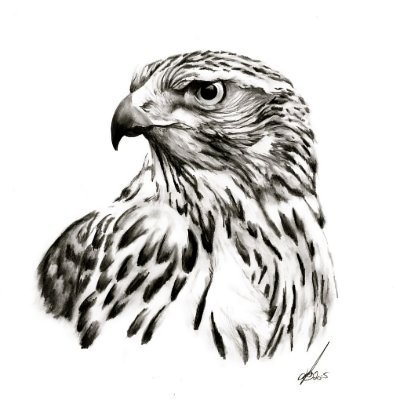
Nassim Taleb closed 200,000 option trades over 12 years.
Then he locked himself in his attic for 6 months, 14 hours a day, 7 days a week, to study probability and reflect on the "thousands of mishedges" he committed.
That's how Dynamic Hedging was written.


Burak Guler retweeted

Here's the paper by Chris Zeeman himself - a good read even for non-mathematicians. The seven types of catastrophe.
Source: | iMechanica share.google/zMLngLFHLRk4caI…



Burak Guler retweeted

MIT published a brutally honest report on what AI is doing to students.
A committee of professors and students spent five months studying how AI changed learning on campus, and the findings read like a warning to every university on the planet.
Study groups are disappearing. Office hours are emptying out. Problem sets and take-home exams no longer prove anything, because AI can produce credible solutions to almost any written assignment in the undergraduate curriculum. Students who lean on chatbots lose mastery and confidence, and some slip into what the report calls cognitive surrender, reaching for AI at the first hint of struggle.
The numbers are rough. 46 percent of surveyed MIT undergrads use LLMs daily. 90 percent worry about their own overreliance. Undergrads who feel AI makes them replaceable now outnumber those who feel it makes them capable.
The committee's answer surprised me. They refused to fight AI with surveillance. The report calls AI detectors unreliable, says lockdown browsers feel like spying, and warns that policing students builds a classroom atmosphere of mutual distrust.
Instead, MIT wants to rebuild education around the things AI can't replace. That means oral exams, semester portfolios, in-person project work, and a required social component in every subject. The report even floats the idea of rethinking grades entirely, since without a GPA to optimize, much of the incentive to cheat with AI evaporates.
The committee warns professors against replacing undergrad research assistants with AI agents just because they're cheaper, because a university exists to grow people, not output.
The most famous tech school on earth admitted the machines broke its way of teaching. Its answer is more humans, not more software.

Burak Guler retweeted

I am absolutely loving this book.
Everyone has struggled to understand tensor calculus (I mean the real "tensors" with Christoffel symbols, metric etc).
Most textbooks just puts out magical definitions for you to memorize without providing any insights or giving you any explanations of where things came from.
On the other hand, pop-sci/pop-math books just tells you how amazing things are but without any details on what exactly those things are.
The gap is so serious that it has haunted me for decades and I have started to take things in my own hand (I mean put it in AI's hand). 🧵

ALT Vector: A Surprising Story of Space, Time, and Mathematical Transformation, Robyn Arianrhod