

الماضي أشبه بالآتي من الماء بلماء
ʿUthmāniyya
Joined January 2026
- Tweets758
- Following105
- Followers1.1K
- Likes6.4K



Pinned Tweet
Before Imam Ibn al-Salah became one of the most celebrated authorities in the history of hadith, he sat before a woman in Nishapur.
She transmitted Sahih al-Bukhari, preserved the writings of Imam Abu al-Qasim al-Qushayri, inherited the learning of distinguished men and women of Khurasan, and stood within a remarkable scholarly lineage reaching back through Imam Ibn Furak to Imam Abu al-Hasan al-Ash'ari.
Her students would include some of the most influential hadith scholars and historians of the following generation.
Her name was Umm al-Mu'ayyad Zaynab bint Abd al-Rahman al-Shi'riyya, also known as Hurra Naz.
And al-Dhahabi introduced her with a title of extraordinary distinction:
“The venerable shaykha, the great authority of transmission in Khurasan.”
These were not empty words of praise. To be recognized as a musnida was to possess a distinguished position in the preservation and transmission of the Prophet's hadith and the scholarly inheritance of earlier generations.
Zaynab was one of the most remarkable women to occupy that position.
Born in 524 AH (c. 1130 CE), she belonged to a scholarly family of Jurjani ancestry established in Nishapur, one of the great intellectual capitals of the eastern Islamic world.
This was the city of Imam Muslim ibn al-Hajjaj, the great hadith traditionists of Khurasan, the Shafi'i jurists, and the Ash'ari scholars whose writings would profoundly influence the development of Sunni theology. It was also the city in which Imam al-Qushayri had brought together theology, hadith, and spiritual discipline in one of the most influential intellectual traditions of his age.
It was within this environment that Zaynab received her education.
Her father, Abu al-Qasim Abd al-Rahman al-Shi'ri, belonged to a learned household associated with religious scholarship and spiritual discipline. Her brother, Abd al-Rahim al-Shi'ri, was himself a recognized transmitter of hadith.
Zaynab would become the most illustrious representative of this family's scholarly inheritance.
Her teachers were among the distinguished authorities of Khurasan.
Al-Dhahabi names Isma'il al-Qari, Zahir ibn Tahir al-Shahhami, his brother Wajih al-Shahhami, Abu al-Ma'ali al-Farisi, Abd Allah al-Farawi, Abd al-Jabbar al-Khuwari, Abd al-Razzaq al-Tabasi, and Abd al-Wahhab ibn Shah al-Shadhiyakhi.
She also received knowledge from learned women, including Fatima bint Za'bal and Fatima bint Khalaf al-Shahhamiyya.
This is an important part of her story. Zaynab did not emerge as an isolated exception to an otherwise exclusively male intellectual tradition. She inherited knowledge from women who were respected authorities in their own right, and she would later become a teacher to subsequent generations of women as well as men.
Yet among her scholarly connections, one is particularly remarkable.
Zaynab stood within the intellectual inheritance of Imam Abu al-Qasim al-Qushayri (d. 465 AH), the celebrated Ash'ari theologian, Shafi'i scholar, and master of Islamic spirituality.
Among her teachers was Abd al-Mun'im ibn Abd al-Karim ibn Hawazin al-Qushayri, a son of that illustrious Imam.
Her connection to al-Qushayri's inheritance was even more substantial than this family relationship suggests.
The hadith scholar Ibn Nuqta, who personally heard from Zaynab, records a striking detail concerning the books she had received:
“And she heard the Risala and the Mi'raj of Abu al-Qasim al-Qushayri.”
The Risala al-Qushayriyya is among the most celebrated works of classical Islamic spirituality, bringing together the teachings of early spiritual masters with a profound concern for religious knowledge, sincerity, divine transcendence, and disciplined devotion.
Its opening theological discussion presents the beliefs of the spiritual masters as grounded in the principles of Sunni monotheism, rejecting both anthropomorphism and the negation of the divine attributes.
The Mi'raj, likewise, belonged to the scholarly literature associated with al-Qushayri's treatment of the Prophet's Night Journey and Ascension.
Zaynab had received both works through the scholarly transmission of her age.
But the connection becomes even more extraordinary when we follow one of her recorded chains backward.
Al-Dhahabi preserves a hadith transmitted through the following sequence:
Imam Abu al-Hasan al-Ash'ari
↓
Imam Abu al-Hasan al-Bahili
↓
Imam Abu Bakr Ibn Furak
↓
Imam Abu al-Qasim al-Qushayri
↓
Abd al-Wahhab ibn Shah
↓
Zaynab al-Shi'riyya
The earlier relationships belong to the documented scholarly lineage of Ash'ari theology, while the transmission from Ibn Furak through al-Qushayri and Abd al-Wahhab to Zaynab is preserved in an actual hadith isnad.
The report concerns beautifying the recitation of the Qur'an:
“Beautify the Qur'an with your voices, for a beautiful voice increases the Qur'an in beauty.”
A woman scholar in sixth-century Nishapur stood at the receiving end of a chain passing through two of the great figures of classical Ash'ari scholarship, while her own students would carry that knowledge into the seventh century and beyond.
Nor was her distinction confined to this scholarly inheritance.
Zaynab was also an authority in the transmission of Sahih al-Bukhari.
Ibn Nuqta records her reception of the collection through Wajih al-Shahhami and Abd al-Wahhab ibn Shah, as well as through Abu al-Ma'ali al-Farisi.
One of these routes passed through Sa'id al-Ayyar, Ibn Shabawayh, and Muhammad ibn Yusuf al-Firabri, the celebrated transmitter of Imam al-Bukhari's Sahih.
For the scholars of hadith, these chains possessed immense significance.
The value of an isnad lay not merely in the distinguished names that composed it, but in its documented continuity. As generations passed, the opportunity to receive a work through a relatively short chain to an earlier authority became increasingly precious.
Zaynab's unusually long life meant that she preserved connections to scholars who had died many decades before the students who eventually came to learn from her were born.
She became a bridge between generations.
Her scholarly reach also extended beyond the canonical hadith collections.
In al-Nashr fi al-Qira'at al-Ashr, Imam Ibn al-Jazari preserves her within a chain for the transmission of Kitab al-Ghaya, the important work on Qur'anic readings by Ibn Mihran. Her reception of the book is explicitly distinguished as sama', or direct audition.
She also received ijazas from distinguished authorities, including Abd al-Ghafir al-Farisi and the renowned grammarian al-Zamakhshari, author of al-Kashshaf.
Her documented learning embraced prophetic traditions, the transmission of classical religious texts, Qur'anic scholarship, and the literary inheritance of the great masters of the Islamic East.
And for more than sixty years, she continued to transmit knowledge.
Yet perhaps the greatest testimony to her standing is not simply the extraordinary teachers from whom she received knowledge.
It is the identity of the scholars who came after her.
For the woman known as the Musnida of Khurasan would become a teacher to men whose works still define the study of Islamic scholarship today.
Continued in Part II.

حسن المعبري retweeted

“He whose resolve is high raises hismself above trivial matters toward the loftiest of them. He whose resolve is low simply does not care, and so he falls into ignorance and strays from the religion. Behold, then, what lies before you: soundness or ruin, felicity or misery.”
— Shaykh al-Islām Zakariyyā (d. 926) قدس الله روحه

ALT لب الأصول
حسن المعبري retweeted

Le ʿilm al-kalām était déjà étudié et enseigné chez les premiers malikites, bien avant l’apparition de l’école ashʿarite !
Ce récit nous montre que Muḥammad ibn Saḥnūn (m. 256 H), fils du célèbre imam Saḥnūn (m. 240 H), enseignait le fiqh, le ʿilm al-kalām et l’art de la controverse (jadal). Il participait également à des débats interreligieux, notamment avec des savants juifs.
Plus intéressant encore : il réprimanda sévèrement l’un de ses élèves pour avoir débattu sans en avoir les compétences, risquant ainsi de semer le doute chez les musulmans.
Déjà à cette époque, certains s’improvisaient débatteurs sans maîtriser les sciences nécessaires… Comme quoi, certaines choses ne changent pas !
Un témoignage précieux sur la place ancienne du kalām dans les milieux malikites et sur l’importance accordée à la maîtrise de l’argumentation.
Le débat de Muḥammad ibn Saḥnūn (202-256 H) avec un savant juif en Égypte.
« On rapporte également qu’un jeune homme appelé Abū al-Faḍl ibn Ḥumayd, frère du vizir ʿAlī ibn Ḥumayd, fréquentait Muḥammad ibn Saḥnūn.
Il étudiait auprès de lui le droit musulman (fiqh), la théologie dialectique (ʿilm al-kalām) et les questions relatives au licite.
Cependant, il n’était pas particulièrement habile dans la science de la controverse (jadal).
Il partit un jour accomplir le pèlerinage et passa par l’Égypte.
Il entra dans un établissement de bains où se trouvait un homme juif.
Lorsqu’il sortit du bain, il engagea avec ce dernier une controverse au sujet des croyances juives.
Mais le juif prit le dessus sur lui dans le débat.
Après avoir accompli son pèlerinage, le jeune homme retourna à Kairouan, le cœur rempli de regrets, car il ne possédait pas une maîtrise suffisante de la controverse pour réfuter les arguments de son adversaire.
À son retour, il se présenta auprès de Muḥammad ibn Saḥnūn, mais il éprouva trop de respect et de crainte révérencielle à son égard pour oser lui raconter ce qui s’était passé.
Puis Allah, le Très-Haut, décréta que Muḥammad ibn Saḥnūn partirait lui aussi accomplir le pèlerinage peu de temps après.
Le jeune homme l’accompagna jusqu’en Égypte.
Il lui dit alors :
« Allons aux bains, qu’Allah te fasse miséricorde ! »
Ibn Saḥnūn accepta.
Le jeune homme le conduisit précisément dans l’établissement de bains où se trouvait ce même juif.
Lorsque Ibn Saḥnūn eut terminé, le jeune homme sortit avant lui et engagea immédiatement une controverse avec le juif.
Quand Ibn Saḥnūn sortit à son tour, il les trouva tous deux en plein débat.
Le juif avait pris le dessus sur le jeune homme, grâce à la multiplicité de ses arguments et à son habileté dans la controverse fondée sur le faux, tandis que son adversaire était faible et peu expérimenté dans l’art du débat.
Muḥammad ibn Saḥnūn intervint alors dans leur discussion.
Le débat se poursuivit désormais entre le juif et Muḥammad ibn Saḥnūn, jusqu’à l’arrivée de l’heure de la prière du ẓuhr.
Muḥammad fit alors établir la prière et l’accomplit.
Puis il reprit le débat jusqu’à l’heure de la prière du ʿaṣr.
Il fit de nouveau établir la prière, accomplit celle du ʿaṣr, puis retourna à la controverse.
Le débat se prolongea ainsi jusqu’à la prière du maghrib.
Entre-temps, des gens étaient venus de toutes parts pour assister à leur confrontation.
La nouvelle s’était répandue à travers l’Égypte, et les gens se disaient les uns aux autres :
« Venez écouter le débat entre le jurisconsulte maghrébin et le juif ! »
Lorsque arriva l’heure de la prière du maghrib, le juif se retrouva dans l’incapacité de poursuivre son argumentation.
Il ne disposait plus d’arguments à opposer à son adversaire.
Ibn Saḥnūn avait pris le dessus sur lui grâce à des preuves claires et à une argumentation décisive.
Lorsque le juif reconnut la vérité grâce à la démonstration et qu’Allah, Puissant et Majestueux, voulut le guider, il déclara :
« J’atteste qu’il n’y a de divinité digne d’adoration qu’Allah, et j’atteste que Muḥammad est le Messager d’Allah ! »
Il embrassa ainsi l’islam et devint un bon musulman.
À cet instant, les gens proclamèrent la grandeur d’Allah (takbīr), et leurs voix s’élevèrent en répétant :
« Le juif a embrassé l’islam grâce au jurisconsulte maghrébin ! »
Muḥammad ibn Saḥnūn se leva alors en essuyant la sueur de son front.
Puis il se tourna vers son compagnon et lui dit :
« Qu’Allah ne te récompense pas en bien pour ce que tu m’as fait ! »
Il lui adressa ensuite de très sévères reproches :
« Tu as failli provoquer une immense fitna (épreuve et trouble religieux) !
Comment peux-tu aller trouver un juif pour débattre avec lui alors que tu es faible dans l’art de la controverse et de l’argumentation ?
Si une personne qu’Allah, Puissant et Majestueux, voulait éprouver avait vu ce juif te vaincre et prendre le dessus sur toi grâce à ses arguments erronés, tu aurais été la cause d’une épreuve pour cette personne et tu aurais introduit le doute dans sa religion.
Ne recommence donc jamais une chose pareille et repens-toi auprès d’Allah, Puissant et Majestueux, pour ce que tu as fait !
Et si je n’avais pas craint que les gens soient exposés à une épreuve et que le doute ne s’introduise dans leur religion, je n’aurais même pas débattu avec lui. »
Source :
Abū Bakr al-Mālikī (mort après 453 H), Riyāḍ al-Nufūs fī Ṭabaqāt ʿUlamāʾ al-Qayrawān wa-Ifrīqiya.


حسن المعبري retweeted
Sh. Hīto رحمة الله عليه said: The strangest question posed to me in the entirety of my academic life is: “Are the Ashʿarīs considered from Ahl al-Sunnah wa al-Jamāʿah?” For anyone who has smelled even the fragrance of knowledge knows that the Ashʿarīs are the Ahl al-Sunnah.

حسن المعبري retweeted

The argument made by @muslimorthodoxy that believing in the signification model would imply the existence of two or more different Qur’an is indeed inconsistent with arguing against Christians that different modes of readings and textual variants do not constitutes different


حسن المعبري retweeted

4 years after Mu'awiya's (ra) death, and only months after Yazid passed away, Mu'awiya II abdicated without designating a successor and left the matter to shurā.
This power vacuum fragmented the Muslim world and led to a second civil war that lasted ~9 years until Abd al-Malik ibn Marwan reunited the caliphate under Umayyad rule ..
This reflects the concern that motivated Mu'awiya (ra) to designate a successor in the first place: to preserve the relative peace that had prevailed since al-Hasan (ra) relinquished the caliphate to Mu'awiya (ra).
It also explains why the majority of the Sahaba pledged bay'ah to Yazid during Mu'awiya's (ra) reign, as an orderly succession within the Umayyad house, which had the most cohesive and loyal power base, would have been preferable to the risks of a contested succession ..

حسن المعبري retweeted
Ibn Khaldun regarding Egypt and Cairo specifically:
“[Cairo was] the metropolis of the world and the garden of the universe, the gathering place of nations and the meeting ground of the countless generations of humankind; the pavilion of Islam and the throne of kingship.

حسن المعبري retweeted

With all due respect, this is precisely why I advised you to consult a reliable scholar before attempting to criticize a theological position you have not properly conceptualized.
We do not believe in two distinct Qurʾāns, one Arabic and another heavenly.
This is an extraordinary strawman, comparable to those Christians you debate who mistakenly claim that the seven modes of recitation constitute seven different Qurʾāns.
The designation Qurʾān is used in reference to the written muṣḥaf, the recitation, and Allah’s uncreated Speech.
However, these usages do not entail that the physical book, the servant’s act of recitation, and Allah’s eternal Attribute are ontologically identical.
Consider the authentic narration in which the Prophet ﷺ prohibited traveling into enemy territory carrying the Qurʾān.
Are we supposed to believe that Allah’s eternal Attribute of Speech can literally be carried from one created location to another? Obviously not.
The relationship is one of dalālah (indication).
Imām al-Bukhārī himself provides the example of people writing, memorizing, and invoking the name الله. Their writing and invocation are created acts, but Allah Himself is the uncreated Creator.
The distinction between an expression and what it signifies should not be difficult to understand.
Likewise, kalām nafsī is neither some imagined internal dialogue nor simply another designation for divine Knowledge.
Speech and Knowledge are conceptually distinct attributes.
Knowing a proposition is not identical to asserting it, commanding something, or prohibiting it.
As for your objection concerning letters and sounds, negating letters and sounds of Allah’s eternal Speech does not entail negating the possibility of hearing or understanding His Speech.
What we deny is that Allah’s eternal Attribute consists of successively articulated letters or vibrations arising in a physical medium.
We affirm that Allah’s Speech can be heard directly, without its being a created sound.
This is precisely how Imām al-Ghazālī explains the distinction in al-Iqtiṣād fī al-Iʿtiqād, discussing the direct hearing granted to the Prophet Mūsā عليه السلام.
As for your assertion that Speech without letters and sounds is meaningless, I suggest revisiting the introductory works of Arabic grammar before making such sweeping claims.
Muḥammad Muḥyī al-Dīn ʿAbd al-Ḥamīd explains in al-Tuḥfah al-Saniyyah, his commentary on al-Ājurrūmiyyah, that kalām in its broader linguistic sense encompasses that through which a meaning is conveyed, whether articulated verbally or otherwise, including writing and gestures.
This establishes that even at the linguistic level, the broader application of kalām is not restricted to audible, articulated speech.
Regarding Allah’s actions, neither side disputes that created effects occur successively.
What we dispute is your assumption that the succession of effects necessitates the succession of newly arising attributes within The Eternal.
You have simply imposed this metaphysical premise upon us without demonstrating it.
Where is your proof that everything attributed to an agent requires the origination of an additional intrinsic accident within that agent?
Indeed, if you maintain that direction is a relational attribution meaningfully predicated of Allah, why should meaningful predication always require the kind of intrinsic ontological addition you demand in the case of divine actions?
Our position is straightforward: Allah creates by His eternal Power and Will. His Will specifies the existence of contingent things at their appointed times, and His Power brings them into existence accordingly.
The effects are temporal and successive. It does not follow that His Essence must undergo change or that new attributes arise within Him.
You are welcome to challenge this position, but you must first represent it accurately and then demonstrate the metaphysical premises upon which your objection depends.


With all respect, this is the problem with the Ash’ari school.
“We believe Allah speaks!” But what they really mean is speech used in an idiosyncratic meaningless way.
“We believe Allah’s actions are successive” But what we really mean is that the created effects are successive while God himself doesn’t act in succession.
“We believe the Quran is uncreated!” But what we really mean is that the Arabic Quran we recite is created, what is uncreated is this thing called “internal speech” that is not comprised of letter or sound.
If you will disagree, do so with manners in the comments. Thanks
حسن المعبري retweeted

A Medieval Muslim Traveler Describes Snow Skating in Russia
Abu Hamid al-Andalusi (d. 565 AH/1170 CE), in his “Tuhfat al-Albab wa-Nukhbat al-I'jab” (The Gift of Hearts and the Choice of Wonders), also known as “Rihla Gharnati: ila Urubba wa-Asiya” (A al-Gharnati Journey to Europe and Asia), describes the city of Yura—which was most likely located in Russia, in the area of what is now Khanty-Mansiysk—as follows: page XVI (16)
“The road leading to them passes through a land where snow never disappears. The people make wooden boards for their feet, which they carve themselves. Each board is one cubit in length and one span in width. Both the front and rear ends of the board are raised above the ground. In the middle of each board is a place where the person walking can put his foot. There is a hole in it through which they fasten strong leather straps, which they tie around their feet.The person then connects the two boards worn on his feet with a long rein, like a horse's bridle, which he holds in his left hand. In his right hand, he carries a staff as tall as a man. At the bottom of the staff is something resembling a ball made of cloth, lightly stuffed with a great deal of wool, about the size of a human head.He plants this staff in the snow and pushes it backwards behind his body, just as a sailor does when propelling a boat. In this manner, he travels swiftly across the snow. Were it not for this contrivance, no one could possibly walk there at all, because the snow covering the ground is like sand and does not compact. Any animal that walks upon it sinks into it and dies, with the exception of dogs and lightweight animals such as foxes and rabbits, which can move across it lightly and swiftly.The foxes and rabbits in that land turn white, until their fur becomes like cotton. The same is true of wolves in the region of Bulghar, whose fur also turns white during the winter.”


حسن المعبري retweeted
Administration Under Abū Bakr al-Ṣiddīq رضي الله عنه
Below is a short list of some of the judges, administrators, governors, secretaries, tax officials, and commanders who served under the caliphate of Abū Bakr al-Ṣiddīq رضي الله عنه:
Abū ʿUbaydah رضي الله عنه handled financial affairs.
ʿUmar b. al-Khaṭṭāb رضي الله عنه handled judicial matters.
Zayd b. Thābit رضي الله عنه served as his secretary.
ʿUthmān b. ʿAffān رضي الله عنه was his advisor and provided him with information and counsel.
Among his regional governors and officials were:
- ʿAttāb b. Asīd over Makkah
- ʿUthmān b. Abī al-ʿĀṣ over al-Ṭāʾif
- al-Muhājir b. Abī Umayyah over Ṣanʿāʾ
- Ziyād b. Labīd over Ḥaḍramawt
- Yaʿlā b. Umayyah over Khawlān
- Abū Mūsā al-Ashʿarī over Zabīd and Rimaʿ
- Muʿādh b. Jabal over al-Janad
- al-ʿAlāʾ b. al-Ḥaḍramī over al-Baḥrayn
- Jarīr b. ʿAbd Allāh over Najrān
- ʿAbd Allāh b. Thawr over the district of Jurash
- ʿIyāḍ b. Ghanm al-Fihrī over Dūmat al-Jandal.
In military affairs, Khālid b. al-Walīd رضي الله عنه served as Commander-in-Chief.
In Syria, Abū ʿUbaydah al-Jarrāḥ, Shuraḥbīl b. Ḥasanah, and Yazīd b. Abī Sufyān رضي الله عنهم commanded separate divisions.
This gives a useful glimpse into how the early caliphate was administered through a competent network of regional governors, secretaries, judges, financial officers, and military commanders.
[Tārīkh al-Rusul wa-l-Mulūk]
حسن المعبري retweeted
My paper criticising professor @GabrielSaidR theory that the Qur'an repetitions points to two pre-canonical subcorpora and that the Qur'an is a result of written composition and combination and redaction is out.
Zenodo: zenodo.org/records/24395745
Academia: academia.edu/181470875/The_Q…

حسن المعبري retweeted
The early Persian Zaydi exegete Muqatil b. Sulayman (d. 150 AH) claims the Prophet ﷺ to be a misguided individual who did not even know that there is no real diety but Allah and that he only gained this Iman when he ﷺ became a prophet in the episode of chest splitting.


حسن المعبري retweeted

﷽
C'est avec beaucoup d'humilité et de gratitude que je vous partage ma traduction, d'une épître d'introduction à la science du Kalām, écrite par le grand savant l'imam Jalāl al-Dīn al-Dawānī, éditée et présentée par le Sh. Saʿid Fūdah, et révisée par le Sh. Nizār Hammādī, un travail nourri par le cursus que j'ai l'honneur de suivre auprès du Sh. Fūdah.
La science du Kalām n'est pas un simple exercice intellectuel, c'est le bouclier de la foi, la lumière qui dissipe les doutes et la voie par laquelle le cœur s'apaise en connaissant son Créateur avec certitude et discernement.
Dans une époque où les esprits sont souvent traversés par le doute et la confusion, revenir aux fondements rationnels et spirituels de notre croyance est une véritable bouffée d'oxygène, comprendre ce que l'on croit et pourquoi on le croit donne à la foi une solidité inébranlable.
Qu'Allah accepte ce modeste effort, préserve nos savants, nous fasse bénéficier de cet écrit, nous illumine de Sa lumière et ouvre les cœurs à la compréhension de cette noble science, ne serait-ce qu'un peu, par le biais cette traduction.
حياكم الله
drive.google.com/file/d/1URH…
حسن المعبري retweeted

How Baybars denied the Abysinnian emperor from getting his new Bishop and defended the Muslims in the Horn:
In 1274, Ethiopia’s Yekuno Amlak sent a letter to Sultan Baybars routed through Yemen and the Zayla port corridor boasting of "100'000 Muslim horsemen," which Baybars already knew it was false information. Only for Baybars to reply that Cairo already knew the real news from the Horn, reaching from Zeyla to Yemen and then to Cairo.
Baybars responded with: News of those lands reaches us and is not hidden from us. May God multiply the armies of the Muslims!"
As self proclaimed Sultan al-Islam wal-Muslimin, victor over the Mongols at Ain Jalut and the Crusaders, Baybars refused to let a Christian king claim Muslim troops as his own.
By replying "May God multiply the armies of the Muslims!", he flipped Yekuno Amlak's boast, reclaiming those warriors for the Muslim Ummah and Mamluk sphere of influence.


حسن المعبري retweeted
After Hulagu's sack of Baghdad, the Mamluk victory at Ain Jalut, and Berke Khan's conversion to Islam, Sultan Baybars and Berke Khan of the Golden Horde plotted a massive two-front invasion in 1263 CE (661 AH) to wipe out the Ilkhanate once and for all, even agreeing on how to split the conquered lands.
The joint invasion never took off due to year long communication delays via Constantinople, Berke’s death in 1266, and Baybars campaigns against the Crusaders but their alliance still trapped the Ilkhanate in a two front war for decades.


حسن المعبري retweeted
Umm Ḥarām (ra) reports that the Prophet ﷺ said:
'The first army from my Ummah to wage war by sea has be assured [Paradise]'. She asked: will I be among them? He ﷺ replied: 'You will be among them'.
Then the Prophet ﷺ said: 'The first army from my Ummah to wage war against Caesar's city are forgiven'.
The first naval expedition was led by Mu'āwiya ibn Abi Sufyan (ra), while his son Yazīd led the first campaign against Constantinople.

حسن المعبري retweeted
These are words of truth by which falsehood can be intended.
What does remaining silent about the disputes between the Companions actually mean?
The principle of refraining from discussing the disputes that occurred among the Companions should not be misunderstood as permission to establish one’s preferred historical position and then demand silence from anyone who questions it.
Consider al-Ḥasan ibn Muḥammad ibn al-Ḥanafiyyah, the grandson of Sayyidunā ʿAlī رضي الله عنه.
He advocated suspending judgment concerning those involved in the Fitnah, including ʿAlī, ʿUthmān, Ṭalḥah, and al-Zubayr رضي الله عنهم.
His father, Muḥammad ibn al-Ḥanafiyyah, strongly objected to this position, asking:
«لا تولّي أباك عليًّا؟»
“Do you not affirm allegiance to your father, ʿAlī?”
This demonstrates that the meaning and limits of refraining from judgment were themselves matters of discussion and disagreement.
One may hold that a particular Companion was closer to the truth while maintaining respect for all those involved.
However, to insist upon one’s own interpretation of the Fitnah, treat it as beyond dispute, and then invoke the obligation of silence whenever that interpretation is challenged is not genuine abstention.
It is merely the assertion of a position while denying others the opportunity to examine it.
Silence concerning the Companions should not become a means of insulating historical judgments from scrutiny.
Its purpose is to preserve their honor, not to make one’s own understanding of their disagreements unquestionable.


حسن المعبري retweeted
As much as I see disgusting posts and hatred toward the Sahaba, the most important thing we should all do is uphold their adalah and hold both extreme sides accountable. May Allah SWT burn the tongues of the extremists who revile Imam Ali and Mu'awiya رضي الله عنهما.
حسن المعبري retweeted

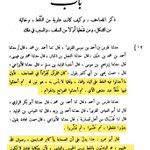
Abu al-Walid al-Baji al-Maliki al-Ash‘ari (ق) (d. 474 AH) reminds us of the great status and virtue of the Companions of the Prophet ﷺ, and teaches us how we should view them. He emphasises the importance of loving them, honouring them, and always thinking well of them.

ALT “An-Nasihah al-Waladiyyah” (Wasiyyat Abi al-Walid al-Baji li-Waladayhi) by Abi al-Walid Sulayman ibn Khalaf al-Baji (ق) (d. 474 AH) Footnote: (1) Narrated by al-Bukhari (3673) and Muslim (2540, 2541).