

Canada Research Chair in Life Course Health Development. Epidemiologist, psychologist. RT≠ endorsement #EpiTwitter #DOHaD https://nitter.cf/t.co/G3PqLKwq3B. https://nitter.cf/t.co/rtkEBuL7MZ
Kingston, Ontario
Joined May 2011
- Tweets6.3K
- Following1.4K
- Followers1.3K
- Likes10.4K






Pinned Tweet
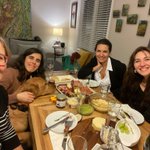
Meet my new research support staff: "Manitos de Manteca" y "Ojitos Moraditos". They were my childhood dolls and now they work with kids of my research team & colleagues to "discuss science" . They have a very important role in Zoom meetings now 😂😂😂

4
43
Maria B. Ospina 🇨🇴🇨🇦🌎 retweeted

Upcoming funding opportunities at CIHR!
- @gacd_media 2027: Implementation research focused on strategies targeting chronic non-communicable diseases (NCD) in children and young people
- Pan-Canadian 2S/LGBTQI+ Knowledge-to-Action Hub
cihr-irsc.gc.ca/e/51605.html…

ALT Upcoming funding opportunities
Maria B. Ospina 🇨🇴🇨🇦🌎 retweeted

Google 把“读博最痛苦的部分”,直接做成了一条全自动流水线!
他们推出的 ScientistTwo,是一套端到端的多智能体科研框架。
你只需要给它一个研究问题,它就会自己读文献、寻找现有方法的漏洞、提出新假设、写代码、跑实验、做消融测试,最后生成论文。
写完还不算,它甚至会模拟同行评审,根据审稿意见继续修改。
官方公布的结果是:ScientistTwo 在 107 个研究任务中,有 86 个超过了人类论文中的 SOTA,平均相对提升 25.2%。生成的代码可以运行,论文引用也经过核验。
以前我们觉得 AI 最多帮研究生查资料、润色论文,现在它开始直接接管整套科研流程了。
当然,这还是一篇预印本,评审也主要由 AI 完成,距离真正取代科学家还早。
但有一点已经很明显:未来最值钱的能力,可能不再是亲手完成每一步,而是能不能提出一个真正值得研究的问题。
官网:scientist-two.github.io/
论文:arxiv.org/abs/2609.19644

Maria B. Ospina 🇨🇴🇨🇦🌎 retweeted

From medical school to scientific research, and now the U.S. Senate.
Meet Abdul El-Sayed.
A Columbia-trained medical doctor, Oxford PhD, Rhodes Scholar, and former professor of epidemiology.
With over 4,200 research citations and more than 100 scientific publications, his academic career is impressive in its own right. Now, he has become the first Muslim elected to the U.S. Senate.

Maria B. Ospina 🇨🇴🇨🇦🌎 retweeted

New on our Science Blog: How AI is beginning to change scientific modeling.
Scientific models help researchers explain and predict real-world systems—like how a single nerve cell fires, or what happens when neutron stars collide. Recent advances have transformed how scientists fit complex models to data. But scientists still typically write the models manually, and usually need to weigh up several competing versions, each of which might explain the data in a different way.
In a guest post, Jakob Macke, Daniel Gedon, and Stefan Wahl describe how AI is starting to help with these parts of the process. By writing, running, fitting, and revising scientific models as code, AI can explore many possible model structures, and find out which explanations the data support.
anthropic.com/research/teach…

Maria B. Ospina 🇨🇴🇨🇦🌎 retweeted

What if a child’s emotional development is connected to the trillions of microorganisms living in their gut?
At the European DOHaD Conference, research from Finland’s FinnBrain Birth Cohort explored this connection in 885 children aged 2–9.
Researchers found differences in gut microbiota composition among children with greater social-emotional difficulties and autism-related symptoms.
Some bacterial groups were associated with externalising behaviours, while associations with internalising symptoms were seen only in boys.
Could the gut microbiome be part of the biological environment that shapes children’s emotional and social development?
We often discuss children’s behaviour in terms of the brain, parenting and environment.
Perhaps we should also ask how these systems communicate.
The developing brain does not exist in isolation from the developing body.
#DOHaD #GutBrainAxis


Maria B. Ospina 🇨🇴🇨🇦🌎 retweeted

Published in @JAMA_current , brilliant demonstration of selective reporting. #Cochrane #MetaAnalyses: for each outcome, on average less than half the eligible trials contributed to estimates. The fewer included, the larger the effect size! Studies with null effect weren’t reporting!
pubmed.ncbi.nlm.nih.gov/1728…

Maria B. Ospina 🇨🇴🇨🇦🌎 retweeted

📣 Umbrella review out in @JAMAPediatrics. “Screen-based media exposure was associated with poorer outcomes for many developmental and mental health domains and may represent a potentially modifiable factor relevant for children’s well-being.” jamanetwork.com/journals/jam…

Maria B. Ospina 🇨🇴🇨🇦🌎 retweeted
How should CIHR’s Project Grant program evolve for a sustainable future? Our discussion paper explores options to manage application pressure, strengthen peer review and improve program design. We want your feedback. Read + take the survey: ca1.voxco.com/S2/?st=f3oOQBc…

ALT Project grant: Building a sustainable future for curiosity-driven research
Maria B. Ospina 🇨🇴🇨🇦🌎 retweeted

New review published in @NatImmunol re #IDEALpediatrics (Immune Development in Early Life) research group including Paolo Palma @bambinogesu, @donnafarber3, @LizaKonnikova at @YalePediatrics and @levy_o at @BostonChildrens identifies the first 1,000 days as a decisive window for immune development and for future risk of infections, #asthma, #allergy, and low #vaccine responses. This impactful review highlights the #NIH #NIAID-supported #IDEALpediatrics collaboration between @bambinogesu and @bostonchildrens
Read full review here: pubmed.ncbi.nlm.nih.gov/4217…

Reporting of dog-assisted intervention trials: extension of the SPIRIT 2025 and CONSORT 2025 statement
rdcu.be/fgU99
2
37
Maria B. Ospina 🇨🇴🇨🇦🌎 retweeted

◤Call for Applications: CSEAS Fellowship 2027◢
The CSEAS Fellowship for Visiting Research Scholars, 2027, is now open.
kyoto.cseas.kyoto-u.ac.jp/en…
The application deadline is April 30, 2026.

Maria B. Ospina 🇨🇴🇨🇦🌎 retweeted

Here’s what the human-dog connection has to do with the gut-brain connection
thefarmersdog.com/digest/new…

Maria B. Ospina 🇨🇴🇨🇦🌎 retweeted

Nature research paper: Mapping the genetic landscape across 14 psychiatric disorders
go.nature.com/4oKui8b

Maria B. Ospina 🇨🇴🇨🇦🌎 retweeted
Analysis of more than 1 million people shows that mental-health disorders fall into five clusters, each of them linked to a specific set of genetic variants
go.nature.com/4pYy2nz


Maria B. Ospina 🇨🇴🇨🇦🌎 retweeted

Hipótesis de la patogénesis de la #Depresión
Hipótesis inflamatoria
Hipótesis de las monoaminas
Disregulación del eje HPA
Aspecto Social Psicológico
Genética
Conectividad y funcionalidad
Epigenética
Es más compleja de lo que muchos piensan
pubmed.ncbi.nlm.nih.gov/3833…

Maria B. Ospina 🇨🇴🇨🇦🌎 retweeted

While research investment is a great thing, I will never understand why we can't focus this investment on scientists that are here. I mean have you seen the resources CERCs get? But Carney says "Not enough 🇨🇦 talent" apparently.

Maria B. Ospina 🇨🇴🇨🇦🌎 retweeted

Premature babies who hear their mother's voice more show accelerated brain development
In a randomized trial, preterm babies who heard ~2.67 extra hours/day of maternal speech showed more mature white matter in the left arcuate fasciculus (an important language pathway)

Maria B. Ospina 🇨🇴🇨🇦🌎 retweeted

Toddler Gut Bacteria Linked to Childhood Anxiety and Depression
Early gut bacteria may help shape a child’s emotional future.
Researchers found that toddlers with higher levels of certain microbes—specifically those from the Clostridiales and Lachnospiraceae families—were more likely to develop anxiety and depression symptoms later in childhood.
These microbes appear to influence how brain networks involved in emotion communicate.
The findings suggest that the gut microbiome could be a powerful early marker for mental health, potentially modifiable through diet or probiotics.

ALT This shows a child, a brain and bacteria.