

Business journalist. Political and data analyst. Proud Jew and Zionist. Host of The Power Pod with Mathew Cohen
Joined July 2023
- Tweets3.4K
- Following342
- Followers1K
- Likes9.5K




This guy has no understanding of Israeli politics. Relying on Haaretz for trustworthy Israeli news is like turning to the Taliban on women's rights issues. The Arab parties are in no way considered part of the opposition bloc. Only the far-left Haaretz could consider them to be.

Most sensible Israelis would tend to agree with you, although one thing stands in the way: egos. @netanyahu, @naftalibennett and @gadi_eisenkot MUST put their differences aside for the good of the country. They actually have more in common than what sets them apart.

The vote count is complete. The Reservists and Economic Party received the support of approximately 152,000 voters, who appear to have come in roughly equal numbers from both political “blocs,” and from socioeconomic clusters reflecting the full political, economic, and identity spectrum of those who rushed to the front lines to defend the country on October 7. In doing so, we became the only party in these elections whose agenda and voters alike transcended the division into political “blocs.”
But it is possible that, despite not being represented in the Knesset, the election results will nevertheless allow us to achieve the very thing for which we sought to enter it. The results hold enormous political potential. Precisely because neither side got what it wanted, an opportunity has opened up to form the government Israel needs: a broad, centrist Zionist government that will finally begin confronting the country's fundamental challenges.
What do the results tell us?
Netanyahu's coalition does not have a majority to return in its current composition. That is over.
The change bloc does not have a majority to form a government without relying on parties and members of Knesset who hold explicitly antizionist and Palestinianist positions.
And it seems it will take time to fully grasp the significance of the scale of political support for anti-Zionist Arab and ultra-Orthodox parties, especially in a scenario of their full voter mobilization. The possibility of political cooperation between anti-Zionist Arab and ultra-Orthodox parties, and the emergence of an “antizionist bloc” that increasingly places the interests of these two groups above the shared Zionist interest, represents a strategic threat to the future of the State of Israel. For Zionist parties to rely on anti-Zionist parties in order to defeat a Zionist political rival is dangerous behavior.
And here lies the paradox: an outcome that makes almost nobody happy individually could turn out to be an excellent result for the State of Israel and Zionism. Precisely because neither side can get everything it wants, the necessity of working together has emerged.
The right government for Israel at this moment is a government of Likud, Yashar, Lieberman, and Bennett. A broad, centrist Zionist government, without the ultra-Orthodox and Arab parties, and also without the less centrist Zionist parties.
Such a government could, if it chose to, commit to preserving the existing legal situation, under which there are no longer any arrangements granting exemptions from service and the law currently in force is the Defense Service Law. It could ensure that state services and public-sector positions are reserved for those who serve and defend the country. It could guarantee state Zionist education, in Hebrew, for all Israeli children. And it could put an end to the economic mechanisms through which Israel's welfare state has, for decades, encouraged draft evasion and separation from the Zionist enterprise. (And it certainly wouldn't hurt to lower the electoral threshold to encourage Zionist Arab and Zionist ultra-Orthodox political representation.)
Such a government could confront the enormous diplomatic and security challenges ahead, finally begin working to dismantle Palestinianism at home and abroad, and return Israel to a Zionist and productive path.
There are no serious security or economic differences between the parties of Netanyahu, Eisenkot, Bennett, and Lieberman that justify continued paralysis or another election. They have far more in common than our political discourse allows us to see. If they wanted to, they could form an excellent government.
But for that to happen, both sides would have to give something up.
Netanyahu cannot insist on preserving every component of his current coalition and expect everyone else simply to join it. The election results neither allow nor justify that.
Conversely, the change bloc cannot insist on boycotting Netanyahu at the price of relying on antizionist and Palestinianist forces.
The danger now is that, instead of seizing the opportunity, both sides will choose escalation, which could look like this:
Netanyahu will entrench himself in a coalition that lacks a majority, while the other side will use its parliamentary majority to pass confrontational legislation and paralyze the government. Each side will respond with further escalation, and Israel will find itself in a prolonged political and institutional crisis, precisely when it needs a functioning government more than ever.
This is exactly where we wanted to play a political role.
We did not seek to be the kingmaker who determines who becomes prime minister. We sought to be the spearhead for establishing a broad, centrist Zionist government. A political force capable of standing up to either side that refused to compromise, and making it clear that refusal carries a price.
This was our message throughout the campaign: What, not who.
Israel is a parliamentary, coalition-based democracy. The prime minister, as the English name suggests, is the first among ministers, not a president and not a king. The identity of the prime minister matters, but the composition of the coalition and the policies it advances matter far more.
Therefore, the question of who will be prime minister is secondary to the question of what kind of governing coalition we will have.
Will it be a government that continues subsidizing draft evasion and separation from the rest of society, or one that restores service, Zionist education, and shared responsibility to the center of Israeli life? Will we continue postponing the confrontation with our fundamental problems, or will we seize the opportunity to halt processes that have been endangering our future for decades? These are the questions that truly matter. And if we fail to confront them now, the future price will be far higher — and the damage may not even be reversible.
We ran in these elections to change the direction in which Israel is heading. We had hoped to do so from within the Knesset, and we are disappointed that we will not be able to. But the results have created a genuine opportunity to achieve the very goal for which we embarked on this journey.
The responsibility now lies with the leaders who were elected. They can continue to entrench in political blocs that have led Israel into repeated election cycles and governments dominated by the extremes, or they can recognize that the new political reality requires them to do something different.
If a broad, centrist Zionist government is formed here, without the ultra-Orthodox and Arab parties, and finally begins confronting the fundamental questions facing the State of Israel, that will be the achievement we sought.
And that will be reward enough for us.
An insightful analysis. A perspective that probably very few people, if any, have considered.

⭕️ NETANYAHU'S GREATEST ADVANTAGE: HE CAN AFFORD TO WAIT—BUT CAN THE OPPOSITION?
Israel's election results have produced a fascinating political reality: Neither bloc has a majority, but Prime Minister Benjamin Netanyahu may have a significant strategic advantage.
With 53 seats for Netanyahu's bloc, 48 for the change bloc, and 19 for the Arab parties, the opposition faces a difficult political dilemma.
Without the Arab parties, the change bloc cannot reach 61 seats on its own. But relying on their support presents serious political and ideological obstacles, particularly after campaign commitments and amid controversy surrounding allegations of foreign election interference.
And with 19 seats, the Arab parties would represent a substantial parliamentary force, not an insignificant addition to the coalition equation.
NETANYAHU KNOWS THE ARITHMETIC.
In my assessment, Netanyahu has little incentive to offer the opposition everything it wants merely to establish a unity government.
Any potential partners would have to make compromises, and Netanyahu can negotiate knowing that his opponents face difficult alternatives.
He does not need to chase them. He can afford to let them come to him.
TIME IS AN IMPORTANT PART OF HIS STRATEGY.
Under Israeli law, the outgoing government continues serving until a new government is formed. If coalition negotiations collapse, another election is possible.
That gives Netanyahu an alternative to accepting an unfavorable coalition agreement: remain in office in a caretaker capacity while the political process unfolds.
A new election carries risks for everyone. But Netanyahu may calculate that returning to the voters is preferable to surrendering major concessions to political rivals.
He may even believe that another election could strengthen his bloc enough to reduce his dependence on opposition partners. That is a political gamble, but one he has the option of considering.
THE OPPOSITION ALSO FACES A CREDIBILITY TEST.
During the campaign, opposition leaders portrayed Haredi military conscription as an urgent national security necessity, essential to the IDF and Israel's survival.
Now, any attempt to negotiate a compromise with ultra-Orthodox parties to secure their coalition support would invite serious questions about those earlier commitments.
The same questions apply to left-leaning media commentators who championed uncompromising positions during the campaign but may now find themselves defending coalition concessions they previously criticized.
If the Haredi draft was an existential national issue before the election, why should its urgency change afterward?
And if those principles become negotiable for political convenience, what will voters make of those promises in the next election?
WHO BLINKS FIRST? BENNETT-LAPID OR EIZENKOT?
This is where Netanyahu's negotiating advantage becomes particularly interesting.
Netanyahu does not need the entire opposition to join him. He needs only one opposition faction capable of delivering the seats necessary for a majority.
That creates a potential competition between Bennett-Lapid and Eizenkot.
Each must consider whether the other could reach an agreement with Netanyahu first, securing greater influence, more significant cabinet positions, and better coalition terms.
The first to strike a deal could negotiate from a stronger position. Anyone approaching Netanyahu afterward might discover that his need for additional partners has diminished considerably.
And Netanyahu understands that dynamic.
Why should he offer major concessions today when waiting could improve his negotiating position tomorrow?
He can allow the opposition factions to weigh their options, assess their risks, and decide whether remaining outside government is worth the political cost.
THE BOTTOM LINE: NETANYAHU HAS OPTIONS. HIS OPPONENTS HAVE DIFFICULT DECISIONS.
He can negotiate a unity government, maintain his position while coalition talks continue, or take his chances with another election if the political process leads there.
His opponents must decide whether to compromise with the very man they spent the campaign trying to remove, attempt a difficult alternative coalition, or face voters again.
Netanyahu may not have won an outright parliamentary majority, but he could still hold substantial leverage over what happens next.
THE REAL QUESTION IS WHICH OPPOSITION FACTION, IF ANY, WILL BLINK FIRST—AND HOW MUCH LEVERAGE IT WILL STILL HAVE WHEN IT FINALLY COMES TO THE NEGOTIATING TABLE.

Mathew Cohen retweeted

I'm telling you this publicly, so hopefully others can see it. Give my people enough freedom, and they will reference old religious texts to literally kill you. Don't be so naive, there are foundational issues in my culture, and people like you stop us from fixing them.
Lol. Blocked for criticising their fear tactics. While many of us are guilty of blocking trolls, if you can't handle legitimate criticism, then don't spend time on X. It really is as simple as that.

Mathew Cohen retweeted

⭕ ISRAEL’S LEFT-LEANING POLLSTERS HAVE A CREDIBILITY PROBLEM
Channels 11, 12 and 13 owe the public an explanation for their polling failures, especially compared with the accuracy of Channel 14 and i24.
When the same outlets repeatedly miss in a direction that suits their politics, “honest mistake” becomes a less convincing excuse. In my view, these left-leaning broadcasters are pushing an agenda through their polling—trying to shape public opinion while presenting themselves as impartial observers.
Viewers deserve transparent methods and accountability. A television news logo should never be a shield against scrutiny.
Mathew Cohen retweeted

Netanyahu has spent three years fighting a war that has redrawn the Middle East. His opponents promise change, but Israel has much to lose by abandoning the strategy that brought it this far, writes Gadi Taub. thefp.com/p/why-netanyahu-co…

"Angry right-wing person?" Okay, well, we've all seen your lefty frustration online for the longest time, so that is quite hypocritical coming from you. But how about this? Here are the facts of where Israel has been headed under the leadership of Netanyahu, proving why I am correct and you are clueless:
Economy:
In September, Israel’s annual inflation fell to 1.6%, down from a wartime peak of 3.7% in October 2023.
In October, Israel’s fiscal deficit continued to fall, comprising just 3.2% of GDP.
In Q2 of 2026, Israel's quarterly GDP expanded by 3.50%, with an annualised growth rate of 15.40%.
In early October 2026, Finance Minister Bezalel Smotrich signed an order to cut Israel's fuel tax, reducing the maximum price of 95-octane gasoline at self-service pumps by NIS 0.50. This intervention dropped the price per litre from a record high of NIS 8.27 down to NIS 7.77. Meanwhile, South Africa faces record fuel prices.
Unemployment has cooled to 3% even as a war continues, down from 3.4% in May 2024 and 5% back in September 2021 when there wasn't a stable government coalition.
Security:
IDF Chief of Staff Eyal Zamir stated during a closed security briefing that Hamas has been “defeated” and is now a “defeated organisation,” with the IDF controlling 64% of the Gaza Strip.
US Intelligence data suggests that 80% of Iran's air defence systems were wiped out during the initial waves of the 2026 strikes, with more than 90% of Iran's naval fleet being destroyed since the start of the war.
Additionally, 90% of Iran's weapons factories were attacked, including the complete destruction of all sites responsible for manufacturing Shahed one-way attack drones.
Lebanon's government has been forced into submission, leading to historic direct talks with Israel, whereby they agreed that Hezbollah must be disarmed. Israel has continued to pressure Hezbollah hard on the battlefield.
And let's not forget the historic beeper operation.
I'd say that is independent journalist/podcaster - 1
The DA's chief strategist - 0
unavailable
Mathew Cohen retweeted
As someone who actually speaks Hebrew and speaks with top Israeli public figures regularly, I stand by my statement. Benjamin Netanyahu is by far the most qualified to lead the country. Also, your decision to deepen the rift with the United States is fucking disgraceful.
Adriaan and @News24 adore the ANC❤️and people wonder where their bias comes from lol


Arabs are turning out in record numbers, yes, because they fear Ben Gvir. Perhaps it is because he understands their mentality and knows that a hardline approach is necessary. Anyway, @netanyahu for the win!🇮🇱
unavailable
Are the DA strategists actually retarded? Do they seriously expect us to believe that the ANC and EFF will enter the Cape Town government if the DA slips to 49%-50%? These 20-year old scare tactics are getting really tiring.
unavailable
Well maybe if your beloved opposition bloc cared more about building a stable coalition than ousting Bibi, we wouldn't be in this mess. But of course they have to let their vanity get in the way.
unavailable
He has a point. Why are people who proclaim themselves "classically liberal" celebrating the victory of a far-left socialist? The two schools of thought are literally incompatible.

Mathew Cohen retweeted

The people praising that filthy commie Lula would never want to live in Brazil.
For them, it’s all about vibes and feeling good about the fact that democracy has supposedly triumphed over “right-wing authoritarianism”, “misinformation”, and other such hogwash.
While they celebrate the defeat of Trump and his “evil right-wing allies”, it is the Brazilian people who will continue to bear the brunt of disastrous policies.
Brazil needs a proper right-wing leader without any scandals as @JacoKleynhans has correctly argued.
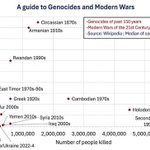
Also interesting that they claim that Israel is the problem when the Syrian civil war, the war with the Houthis in Yemen, and the insurgency of ISIS had nothing to do with Israel🤔what's more, the casualties from those wars far exceed those of the Gaza war.

That's okay. The Islamic extremists and antisemites have done nothing to help South Africa advance anyway. Why the @VFPlus weren't participating in the first place is strange but their inclusion is certainly an upgrade.

🚨 𝐃𝐄𝐁𝐀𝐓𝐄 𝐔𝐏𝐃𝐀𝐓𝐄! 🇿🇦
Al Jama-ah has withdrawn from Tuesday's Truth Report debate, citing discomfort with our platform featuring pro-Zionist views.
They've been replaced by Emre Uygun from the FF Plus!
🔥 FOUR PARTIES. ONE STAGE.
🎟️ Book now:
quicket.co.za/events/403644-…


