






On the Shroud of Turin and the DNA recovered from it:
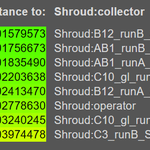
1. 0.015 is somewhat rare for individuals of the same population and same location that are supposed to be separated by 2000 years
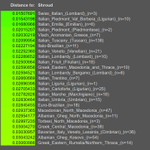
2. All samples have high genetic similarity PLUS Imperial Roman ancestry and Germanic ancestry and Celtic ancestry. This combination (in these proportions) does not exist until the collapse of the western empire, and conveniently only exists in the same location this shroud has been located for 500 years
3. We have dense sampling from most of the Middle East across most civilizational time periods. We know what they looked like genetically. Nothing like this
It’s obviously contaminated, though not all libraries must come from the same individual
Even if we do get the uncontaminated origin sample data it will likely have a northern French genetic profile as this is most likely where the shroud originated

North Italians galore, the collector's similarity to the supposedly uncontaminated closest run makes it clear.
Also the genetic profile is post Germanic migration medieval-modern period north Italy. Impossible without time travel


DNA from the Shroud of Turin
Contaminated by this guy: imdb.com/name/nm9148303/
North Italians are contaminating so many samples. They need to be shut out completely this is getting fucking tiresome
aDNA from so many countries been contam by these people


DNA from the Shroud of Turin
Contaminated by this guy: imdb.com/name/nm9148303/
North Italians are contaminating so many samples. They need to be shut out completely this is getting fucking tiresome
aDNA from so many countries been contam by these people


New ancient individual master sheet had to be regenerated. Here is the new link: dropbox.com/scl/fi/jcg8qw7w8…
Samples yet to be integrated (lack of metadata and dating) are still here: dropbox.com/scl/fi/gyeqmlps1…

Taking over the G25 ancient individual spreadsheets from Ajeje.
This is the most comprehensive listing of ancient DNA samples that exists (far more comprehensive than the AADR), and is updated constantly
Samples use the same generic labels found in published studies and the AADR, but each entry also displays its coverage and mean date. The Undated sheet holds samples for which dates aren't yet available. I might replace these generic labels with my more nuanced ones in the future.
If you know of any missing samples, higher-quality versions of existing ones, or samples that are mislabeled or mischaracterized, please let me know.
dropbox.com/scl/fi/0q39lrsyn…
dropbox.com/scl/fi/gyeqmlps1…
Comprehensive listing of all ancient DNA samples and their coordinates, organized by date, with the exception of some very poor quality samples (~12% coverage and below) which have not been included.
Much more comprehensive than the AADR, again with the exception of samples below a ~12% cut-off (some below this are included).
Miro C retweeted

Completely untrue and just fully made up buzzword soup. Read literally any literature on Craniometry, even just humanphenotypes, and it will tell you Alpinids are a very ancient type that existed since at least the Mesolithic.
The Nordid Type has also existed in a proto-form since the Corded Ware culture (~2800bc), and the Hallstatt Celts were not a new population produced from some kind of new mix of Nord + Local, but are in direct continuity with the Urnfield, Tumulus, Straubing and Late Central European Beaker Culture.
Also i made that Map


Miro C retweeted

Improved dataset based on official EIGENSTRAT data.
Plink Data: mediafire.com/file/y6ov4ny7q…
EIGENSTRAT data: zenodo.org/records/19963881
G25 Coordinates:
pastebin.com/yQq4hUZg

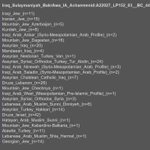
New Mesopotamian samples from Bakr Awa. Very cool stuff.
Upper Mesopotamian ancestry here likely comes from Hurrians (and to a lesser extent possibly East Semites).
The Southern Caspian ancestry may be from Kassites (Burnished Grey Ware intrusion into the Northern-central Zagros and surrounding foothills).
The Canaanite ancestry is likely from Aramaeans (we need the dates for these new samples to confirm this)
The Indo-Iranian likely comes from Mitanni (we need dates to confirm these aren't simply West Iranians)
The Lchashen Metsamor is a placeholder for Trialeti-Vanadzor ancestry (which has a lower quality average). This ancestry likely comes from Northern-central Zagros populations (like Lullubians, Turukkaeans, and Gutians)
There's likely Amorite admixture here but it's difficult to parse the Northern Levantine profile from the Upper Mesopotamian one. The Amorite related gene flow will fall into the Canaanite and/or Upper Mesopotamian buckets in this overly complicated model

Taking over the G25 ancient individual spreadsheets from Ajeje.
This is the most comprehensive listing of ancient DNA samples that exists (far more comprehensive than the AADR), and is updated constantly
Samples use the same generic labels found in published studies and the AADR, but each entry also displays its coverage and mean date. The Undated sheet holds samples for which dates aren't yet available. I might replace these generic labels with my more nuanced ones in the future.
If you know of any missing samples, higher-quality versions of existing ones, or samples that are mislabeled or mischaracterized, please let me know.
dropbox.com/scl/fi/0q39lrsyn…
dropbox.com/scl/fi/gyeqmlps1…


Canaanite ancestry in the _2 Urmia profile is obviously just noise - it should be Upper Meso ancestry.
The Northern Levant in the Steppe-rich samples may also be Upper Mesopotamian ancestry (Upper Meso and Northern Levant in this period have a distance of ~0.025 from each other, and are therefore very hard to separate in a complicated model).