

God First☦️ | All Things Health Optimization, Chronic Illness Help & Systems Physiology
Live Long, Die Fast →
Joined March 2024
- Tweets7.6K
- Following516
- Followers12.6K
- Likes21.9K


You must watch this (my favorite episode that we've ever done up to this point)


New podcast with Holistic Dynasty out now!
2.5 hours of discussion covering nutrition, light, and the overarching patterns of disease and aging
Watch it here:
youtu.be/MO_09Mv1Cnw?is=QBI5…

Some post-meal crashes become much clearer once the person stands.
Someone can finish eating without much trouble, get out of the chair, and suddenly feel weak, lightheaded, or hit with a pounding heart.
Eating and standing place two different demands on circulation.
Blood flow through the digestive organs rises after a meal, while gravity makes it harder to maintain blood return to the heart once someone gets upright.
In POTS, that combination can push the heart rate higher while reducing how much blood the heart pumps with each beat. A small glucose-challenge study (PMID: 35232225) captured this pattern even though blood pressure remained stable.
Because the crash follows food, it is easy to attribute the entire event to glucose, digestion, or a reaction to the meal.
Those can all contribute. But if the worst symptoms consistently appear after standing, posture belongs in the explanation too.
In this specific POTS pattern, a post-meal crash may partly be an orthostatic circulation problem.

8
869

At one point in my health journey, I was afraid to eat the smallest amount of a single blueberry.
That fear made sense after what eating had done to me.
It also showed me there was more inside the reaction than the food itself.


One of the biggest ways people screw themselves during a health journey is by convincing themselves they need to understand the entire path from A to B before they make another move.
Then they end up with 20 new theories and absolutely no momentum.


@Seasonal_Ryan and I did a podcast with the legend himself @ricciflowhealth
We go DEEP into mitochondrial health🌞
You can watch here:
youtu.be/YLEPH6c2kFI?is=tixB…

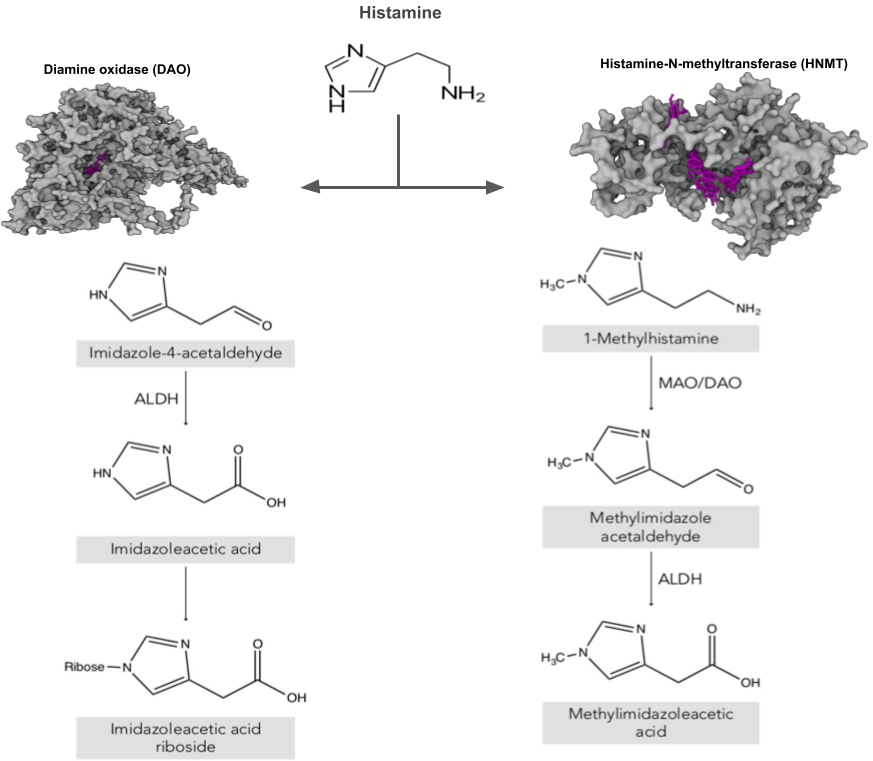
DAO is important.
If someone reacts to wine, leftovers, fermented foods, aged meat, bone broth, or certain probiotics, lowering the incoming histamine load and supporting gut-level clearance can be very helpful.
But the histamine conversation gets incomplete very fast when DAO becomes the only enzyme anyone talks about. There is more to the story.
There's another enzyme called HNMT, which stands for histamine N-methyltransferase.
HNMT helps clear histamine inside cells by methylating it into N-methylhistamine. In plain English, HNMT uses a methyl group from SAMe to help shut down histamine signaling.
This is where methylation becomes relevant.
Not in the lazy internet way where every problem becomes “MTHFR” and everyone gets thrown methylated B vitamins.
That is how people end up wired, anxious, irritable, overstimulated, or feeling worse while technically “supporting methylation.”
The actual physiology is farrrr more interesting than that.
SAMe comes from the methionine cycle. And that cycle is tied into one-carbon metabolism, which depends on things like folate, B12, methionine, choline, betaine, B6, riboflavin, and the body’s ability to recycle homocysteine or move sulfur chemistry downstream appropriately.
So when someone is dealing with histamine issues, removing histamine foods can calm the fire. Good. Do that when it is needed.
But that does not automatically tell us what is happening with gut DAO, mast cell release, nervous system state, intracellular clearance through HNMT, or methylation capacity.
And this is where people get themselves into trouble.
They find out HNMT depends on methylation and immediately think the answer is more methyl donors.
Maybe. Maybe not.
Some people genuinely need support there. Other people take methylated B vitamins and feel like they drank five coffees while being hunted by a bear.
More anxiety. More insomnia. More adrenaline. More reactivity.
That response is information, I like to call it biofeedback.
The biofeedback in this context tells you the system receiving the support may not be ready for that kind of push.
Histamine intolerance needs systems thinking because food load, gut clearance, mast cell behavior, the gut lining, methylation, and the nervous system are all part of the same conversation.
This is how we stop turning every pathway into an indefinite supplement protocol.
And this my friends, is how you start thinking about histamine like a human system instead of a food list.
Got a ton of this in my fam, things like EDS, POTS, dysautonomia, MCAS, etc have impacted several close family members
I always find data like this on things like EDS to be super interesting
It shows how connected many of these systems are and how something like an issue with collagen remodeling can possibly yield some more systemic impacts
