

Engineer digging into AI infrastructure, photonics & overlooked tech stocks. Sharing the research behind my investments. Portfolio journey: 80k → 100k.
Joined June 2024
- Tweets477
- Following67
- Followers401
- Likes690


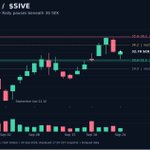


$SIVE’s U.S. dual listing timeline is now in the EGM notice: expected completion in H1 2027.
The proposed switch from Deloitte to EY follows 10 years with Deloitte. Sivers specifically highlights EY’s U.S. capital markets and SEC reporting experience as it prepares for the potential listing.

JUST IN: $SIVE just put a DATE on the U.S. listing. BULLISH!
—> August: “evaluating” Nasdaq New York.
—> Tonight: dual listing expected in 1H 2027.
33 days later they called an Oct 22 EGM to rip out Deloitte and install EY, specifically for SEC reporting.
This is finally a timetable.
Pipeline: $1.2B. Glasgow InP fab scaling to 100M+ lasers/year. Same optics desks that trade $LITE $COHR $AAOI are about to get a ticker they can actually buy.
I am long. NFA.
PS: Credits for sharing @carrioresearch.


Silicon photonics is one of my highest-conviction AI infrastructure themes. $SIVE $AAOI.
The “VCSEL kills SiPh” argument ignores a critical point: SiPh can deliver enormous bandwidth using wide-and-slow NRZ too.
CPO describes packaging. Both VCSEL and SiPh engines can use it.
Ayar’s preliminary TeraPHY specs: 16 wavelengths × 32Gb/s = 512Gb/s per port per direction, without optical FEC. WDM stacks data channels onto the same fiber without forcing every lane into high-baud PAM4.
The InP CW laser makes the light. Silicon modulators encode the data. The laser itself doesn’t need to switch at the data rate.
That is precisely why Sivers’ laser arrays and AAOI’s CW/ELSFP development excite me.
On September 21, Lumentum announced BOTH a 1060nm VCSEL scale-up demonstration and an eight-wavelength DWDM external-laser module for CPO/NPO scale-up. The company developing VCSELs is also developing external lasers for this market.
I expect silicon photonics to become fundamental to AI interconnects. As those platforms scale, qualified light-source suppliers have an enormous commercial opportunity.
That’s why I expect $SIVE and $AAOI to be major beneficiaries of the silicon-photonics buildout. I’m extremely bullish on both.


I think $SIVE can be right on time for the big CPO ramp. Potentially even early.
The pluggables wave arrived first. $LITE and $AAOI had established optical businesses ready to serve it, and demand is now stretching supply.
Sivers expanded into pluggables in Q3 2025. Its newer programs still need customer qualification and production ramp-up. Jabil’s expected H2 2027 ramp helps explain why the larger pluggables revenue is taking longer to arrive.
But Sivers’ laser-array partnership with Ayar Labs dates back to 2021. The groundwork for optical I/O has been years in the making, with manufacturing readiness already a focus of their expanded partnership.
That’s the beautiful part.
As optics move closer to the chips, the industry is moving toward technology Sivers has spent years developing. I think that gives it a real chance to meet the larger CPO wave with years of engineering and customer work already behind it.
Imagine that work turning into repeat laser shipments as deployment scales.
Years of being early could finally become being ready at exactly the right time.

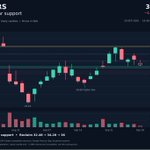
$AAOI reclaiming the 50DMA and holding above the downtrend would be a real change after all this selling.
About~74% upside in a wave-B rebound. I’d watch the retest closely: buyers defending the breakout would make the bullish case a lot stronger. 👀

$AAOI Is nearly an easy buy 👀
Price is sitting below the 50DMA and a trendline.
Flipping these levels to support is a low risk buy, with a stop loss below the light blue 50WMA.
Wave B target: 74% 🚀


$SIVE is putting a 12+ year Amkor veteran in charge of Photonics engineering.
David Clark starts October 31. His background: advanced packaging commercialization and production ramps.
Now put that next to the planned $30M Glasgow expansion.
They’re preparing more laser capacity and adding someone who’s helped take complex semiconductor technology into production.
For Sivers’ CPO ambitions and plans, that’s the kind of experience I want leading their engineering team.

I did some more detective work on $SIVE, and found something pretty exciting on the quantum side.
Sivers has a documented quantum connection with Infleqtion.
The University of Glasgow lists Sivers, Alter and Infleqtion as partners on a project developing 780 nm lasers for quantum navigation.
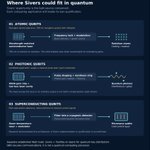
Now look at Infleqtion’s computing research. A 2026 paper uses 780 nm light to image rubidium atoms in a quantum computing testbed. Infleqtion’s PICAS cold-atom hardware specifies that wavelength too.
That gives Sivers a concrete application to pursue: supplying precision light sources used to prepare and measure atomic qubits.
The missing step is computing qualification. This project does not confirm that Sivers supplies Sqale, and matching the wavelength alone isn’t enough.
Glasgow also names Sivers alongside Toshiba in a separate project developing lasers for quantum-secure communications.
AI optics is one market for Sivers’ laser expertise. Quantum could become another. The development relationships are documented; a qualified computing component or production design win is the next evidence I’d want.


Reminds me of how the CEO of $SIVE said “Viewing the ecosystem vendors as competitors is the wrong way to go about it in supercycles where demand far outstrips supply.”
Bullish — $LITE $IQE $SIVE $AAOI
Morgan Stanley: “Most component and system suppliers have already sold out their production capacity for the next 12–18 months.”
MS is saying the physical optics line is already booked through 2027–1H28. That is a scarcity statement, bullish!
Bottleneck validated again: InP substrates first, then lasers (EML/CW/pump).
Optics is starting to get more and more institutional validation and coverage.
Position before it’s too late.
I am long every stock mentioned here. NFA.


