

founding partner @supercruisecap - backing bootstrapping founders ready for takeoff; prev: @quietcapital @geodesiccap @Accel
Cruising
Joined February 2011
- Tweets836
- Following1.6K
- Followers2.7K
- Likes9.9K




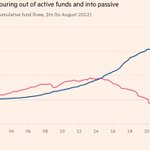


Given what's going on, I see why investor sentiment on software is down.
On the other hand, this feels like pretty clear evidence that current critical software isn't good enough and the infrastructure needs an overhaul.
So you could argue infra / software are THE most important areas for investors to focus on
I read a post by @harris I can't stop thinking about. He argues there’s exactly one good reason to raise: capital is the limit on your growth.
For most software companies, it isn’t. The constraint is distribution, product, or a sales motion that doesn’t repeat yet. Money doesn’t fix those.
3
12
350
My thoughts here: theafterburner.substack.com/…
Aaron's post: postround.substack.com/p/why…
5
86
This is so awesome. Congrats @klemenselakovic
With so much unknown about how AI changes and the financing landscape in the coming years, putting your future in someone else's hands is the last place I'd want to be as a founder.

As we are seeing, the AI race has transitioned into a capital race. Most of the companies in the AI landscape are now either tied to some form of circular financing, debt financing, or venture financing.
At @Astra__AI, we are proud that despite serving more than 17M users and growing revenues to tens of millions of dollars in 3 years, we have taken $0 from VCs and are fully bootstrapped.
Even if financing conditions for AI companies tighten, for us, it doesn't matter; we'll keep focusing on executing our product and delivering the best user experience. Many companies don't have that privilege.
2
7
321
Airtable was valued at $11.7B in 2021. Miro at $17.5B in 2022. Five weeks apart this quarter, Bending Spoons bought both for ~$1.3B EV each. Neither ran out of cash or lost customers. A thread on what a company is actually worth
3
14
746
AI-native companies are priced against a different line item. The nth AI receptionist for dental clinics isn’t competing with other software. It’s competing with the hire. Software isn’t dying. Selling against the software budget is.
1
1
51
If you sell into the software budget, plan for 2-3x ARR and keep the stack light enough that the outcome still works for you and your team. If you sell into the labor budget, the ceiling is higher, but only if you replace the work.
Full piece: theafterburner.substack.com/…
1
47
88% of VC-backed founders walk away with zero.
People share that stat like it's a gotcha, but it's just part of the model. The venture model isn't broken. It's just built for a different bet than most founders actually need to make.
Founders should be asking themselves if VC is really the right path for them.


4
9
398
Record dollars in. 18 IPOs in Q3. For most software founders, the exit gets designed at the first raise
1
9
564
Point 3 here is the @supercruisecap thesis in one stat
There's a funding gap right where sub-$10m ARR, 3-5x growers used to live. And many of these companies don't need $20m checks
That's exactly what we started Supercruise for
If you're growing fast, but out of favor for some reason, there's less competition for you than there's ever been

ok, my monthly VC/LP debrief is here.
10 things I've found interesting in Sep '26:
1/ a historic liquidity wave may finally break the VC driven by active AI M&A (e.g. Cursor at $60B, Hugging Face at $12.9B) and a massive IPO pipeline. just 3 companies (Anthropic, OpenAI, SpaceX) could represent ~$5T in aggregate EV at IPO, so if VCs retain 40-50% equity, that translates to $2–2.5T in fund-attributable value which is roughly 20-25x the actual LP liquidity generated across all of 2022–2024. (h/t @samirkaji)
2/ $50B+ VC-backed IPOs, the aggregate IRR since day 1 sits at -4% annually, compared to an 18% annual return for the QQQ over the same periods, so holding companies private longer at inflated valuations forces one-dimensional growth that public markets heavily punish once cash flows are scrutinized. (h/t @Curiousjorge65)
3/ median Series A checks skyrocketed from $4.5M a decade ago to $19.4M today, causing the number of funds sized to lead them to collapse from 200 to just 50. this has squeezed out mid-tier startups ($3-5M ARR growing 3-5x) while forcing Series A investors to fund only two extremes: highly quantitative 10x growers or early-stage, massive AI/ambition narratives. (h/t @jaydimonte)
4/ @a16z published a chart arguing that 5% of VC investors generate 90% of returns, concluding LPs should concentrate capital in mega funds. the underlying NBER study measures profit dollars from individuals (not fund-level returns), so a $5M fund returning 39x ranks below a $1B fund returning 1.2x by this metric.
5/ per commonplace research: LP appetite for alternatives has reached a 5-year high, with 63% planning to increase allocations over the next 12 months (vs 54% in 2025). rather than pulling back amid market uncertainty, allocators are doubling down on control and economics: co-investment participation surged to a record 64%, while capital is aggressively concentrating in North America (53% of deployment interest).
6/ as large VC funds have grown more common, the typical number of LPs contributing to each fund has declined. in the first half of 2026, the median fund between $100M and $250M had 44 different LPs. in 2025, the median fund of that size had 59 LPs. over the past four years, median LP count for these nine-figure funds is down 45%. (h/t @cartainc)
7/ the fund of funds most likely to anchor an emerging manager's Fund I is about as young as the fund itself. across 49 FoFs actively backing EMs, more than 60% (30 funds) were launched in 2020 or later, and 28 of those 30 are dedicated EM specialists. established institutional allocators remain largely sidelined, leaving first-time GPs to build their early LP bases alongside a "new guard" of FoFs. (h/t @murphcapital)
8/ LPs are simultaneously forced to make re-ups into mega-funds while tracking the market's largest platforms. even when an LP has genuine interest in emerging managers, their attention, IC bandwidth, and available risk budget are limited which means a good GP may not get a meeting bc it isn't explained quickly and "clearly enough". (h/t @jeff)
9/ as a fund becomes more lead/co-lead oriented, its relationships with other investors change. people who were once natural collaborators can become direct competitors for lead allocation, which isn't necessarily bad, but it changes the sourcing economics. an access investor sees almost every deal bc they're not perceived as a threat to control or ownership, but once a fund wants to take 10%+ and lead the round, some of the network goodwill it previously had becomes less available. (h/t @jmj)
10/ more LPs are demanding "upfront fees only, zero carry" on SPVs and co-investments. while counterintuitive (paying 5% upfront regardless of deal outcome) the math works heavily in the LP's favor on big winners: on a $2M co-invest with a 3x return, a 5% upfront fee costs $100K versus $800K under a traditional 20% carry structure, saving $700K. (h/t @samhuleatt)
we're monitoring the situation in VC/LP world in
@murphcapital monthly newsletter: murphcapital.substack.com/p/…

2
12
648
We've seen this movie before.
Open-weight models closed the gap with the closed frontier from ~13 points to ~6 in a year. Inference costs 6x–60x less than closed labs for the same job.
Linux. Postgres. K8s. Cheap and open keep winning.
The model is becoming the commodity. How founders harness it is where the companies get built.
What happens to the traditional raise when building stops needing that much capital?
3
9
617
Software acquirers are paying 6.0x trailing revenue
If you're growing 50% YOY, that's 4.0x forward revenue
If you're raising at 100x forward revenue, you need to grow 25x just to get back to LRP
Do what you want with this info
5
482
Median VC-backed tech company age at IPO is now 12-13 years, up from 6-9 in the '90s; last year's median IPO company had ~$132M trailing revenue versus ~$40M in 1995 (inflation-adjusted).
General quality of company in venture is significantly higher today IMO (bullish, generally).
But some things to consider when thinking about early stage investing:
1) Does the legacy fund model (10 + 2) still make sense?
2) Are LPs prepared for bigger funds, faster cycles, and less DPI?
3) Alternative exit paths are necessary for most companies, most won't get to an IPO
4) New options for liquidity/exists need to keep up (secondaries, etc)
2
4
461
The Palantir comparison fits the structure. The harder question is how founder control squares with the argument that this technology needs outside oversight because it can't be controlled.

Anthropic is asking shareholders to give its seven co-founders a combined 50.1% of voting power ahead of its IPO. The Palantir-style structure could preserve founder control despite their relatively small ownership stakes.
Read more: thein.fo/4iIn8Cd

7
363