

Usually in Budapest but frequently back in NYC. MGoBlue. Go Gunners. RT ≠ endorsement
Budapest/NYC
Joined November 2014
- Tweets564
- Following1.6K
- Followers525
- Likes21K


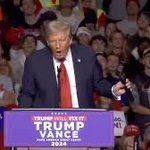
The 163rd anniversary of America’s most moving and profound political oratory: Lincoln’s Gettysburg Address. Shocking in this day and age that a politician could conjure something so perfect in so few words. Not everything has gotten better with time.
29
NKabcenell retweeted

"He's my friend"--here one of the most obscene sentences uttered in the 21st century. These are two men for whom other people's lives mean nothing at all; neither one is capable of friendship.

NKabcenell retweeted

A Prague street in 1968 filled with the latest Western propaganda false talking points.


Russian “imperialist agenda” is the latest Western propaganda false talking point.
Russia has never invaded Europe.
It was in fact Europeans who’ve invaded and threatened Russia repeatedly.
Napoleon, Hitler, British and then USA through NATO.
#Ireland @MichealMartinTD @SimonHarrisTD @LeoVaradkar @MaryLouMcDonald
Readers added context they thought people might want to know
Russia has invaded European countries. It has attacked Ukraine since 2014, with a full-scale invasion in 2022. The USSR invaded Poland and Finland in 1939, occupied the Baltic states in 1940, and invaded Hungary in 1956 and Czechoslovakia in 1968.
en.wikipedia.org/wiki/Russian_i…
en.wikipedia.org/wiki/Soviet_in…
en.wikipedia.org/wiki/Winter_War
NKabcenell retweeted

This Forbes investigation is a must-read.
Donald Trump pulled in roughly $1.4 billion from crypto in 2025, plus more than $200 million from real estate, and faced a projected tax bill north of $500 million. So his company donated the "development rights" to his Jupiter, Florida golf course to a land trust, argued the course was a natural habitat worth protecting, and kept right on running the club. Forbes estimates the write-off could land around $825 million.
He has done this at least five times since 2005. New York's attorney general alleged two of those appraisals were inflated. In Doral, he claimed a deduction of up to $323 million, more than double what he paid for the entire resort.
A month after the Jupiter deal, he sued the IRS. The settlement his own Justice Department signed bars claims against him over matters that "could be pending," language that appears broad enough to cover this year's taxes. A federal judge found the case was brought to manipulate the judicial process. And the man now running the IRS, who took the job as this deal was being assembled, has a home backing onto those same Jupiter fairways.
This is absolutely ridiculous. Nobody should be able to use the presidency to write his own tax bill.
forbes.com/sites/danalexande…

NKabcenell retweeted

Russia and the United States carried out a devastating attack on Ukraine’s energy infrastructure in Kyiv and Kharkiv last night.
The American side facilitated the attack by denying interceptor missiles to the defenders, denying early warning, and denying Starlink capabilities.
NKabcenell retweeted

Have you all seen Trump’s announcement of his SUPER PUTIN DEAL? Russia promises to immediately supply more than 300,000 tonnes of diesel to the market, including the US, followed by another 500,000 tonnes in November. Then come promises of EVEN BIGGER volumes. Because the deal has to be HUGE. At least in the post.
OFAC, of course, wasted no time issuing a temporary waiver until April 7 to accommodate the president’s latest “GENIUS” deal.
Except the BIG DEAL is not actually that big. More of a stage prop. Very Trump.
Let’s do the maths. Actual numbers. TERRIBLE, I know.
300,000 tonnes is roughly 2.2 million barrels of diesel.
500,000 tonnes is roughly 3.7 million barrels.
In September, Russia managed to export just 0.1 million barrels. Basically none, as there is export ban.
So Putin has already “sold” Trump a volume 22 TIMES larger than Russia’s entire September exports. Making promises is, of course, easier than rebuilding refineries after Ukrainian strikes. MUCH EASIER. SOME SAY THE EASIEST.
Meanwhile, Russia’s diesel export ban remains in force until October 31: the fuel is needed domestically, and Ukrainian drones have significantly reduced Russia’s ability to produce it. A VERY SUCCESSFUL phone call with Trump is unlikely to have fixed those problems.
Now for another comparison. Russia’s average monthly diesel exports last year were 18.3 million barrels. The promised deliveries amount to just 12% and 20% of that volume, respectively.
So we have a promise that Russia still needs to find a way to fulfil, given the state of its refineries. And even if delivered, it looks considerably less impressive than the presidential CAPS LOCK. Not quite THE GREATEST DEAL IN HISTORY.
The political logic is clear. The war with Iran and high fuel prices are a bad backdrop for the elections. One would hope politically FATAL, at this point. The administration desperately needs a story about how the president is about to FIX EVERYTHING. Preferably IMMEDIATELY. Preferably without explaining how we got here in the first place.
So perhaps the main product of this deal is not even diesel. It is another attempt to calm the market with a BIG, BEAUTIFUL ANNOUNCEMENT. Let’s see how much credibility these announcements still have.
Russia, of course, will sell this as a HUGE VICTORY. And why wouldn’t it? Promise diesel you still need to find somewhere, get a sanctions waiver UPFRONT. Plus another opportunity to tell the world that it simply CANNOT MANAGE WITHOUT RUSSIA.
But what worries me most is that this spectacle could weaken our European partners’ resolve. Trump’s latest “breakthrough” must not become an excuse to ease sanctions pressure on Russia — precisely when that pressure needs to INCREASE.
Of course, this decision will benefit Russia by generating additional revenues. We’ll be watching how much of its export capacity Russia actually manages to restore. One thing is CLEAR: Ukrainian strikes on Russian refineries need to INTENSIFY.
NKabcenell retweeted

We know, because you said it publicly, that you belong to the white flag school of diplomacy vis-a-vis Russia.
We also know that historically that has never served Hungarian families.
NKabcenell retweeted

A fascinating scoop

🚨Haaretz exposé: Israeli Prime Minister Benjamin Netanyahu received an explicit warning from UAE President bin Zayed days before October 7. He didn't brief Israel's security chiefs. @shlomieldar
🔗Link to full exposé in bio
Photos: Haim Goldberg/Flash90, Khalil Hamra/AP, Mandel Ngan/AFP. Editing: Masha Tzur
NKabcenell retweeted

ב15 בספטמבר הגיעה לשבכ התרעה על כוונת סינואר לתקוף. בדיון בהול אצל רהמ המליץ ראש השבכ לתקוף ולסכל את האיום. נתניהו לא קיבל החלטה. שבוע אחרי התקשר שליט האמירויות לנתניהו והזהירו באופן אישי מפני מלחמה. נתניהו לא עדכן איש על השיחה.
תחקיר שלומי אלדר ורותי יובל
haaretz.co.il/magazine/2026-…

NKabcenell retweeted

It’s quite telling that the only party willing to cooperate with the AfD is Sahra Wagenknecht’s BSW (short for Bündnis Sahra Wagenknecht). These political opposites disagree on virtually every domestic issue, but they have one thing in common: both love Russia.

NKabcenell retweeted

The attempted drone attack on a Ukrainian cargo plane at Leipzig/Halle Airport was carried out with Russian involvement, Germany's interior minister says. Berlin says the evidence points to Russia in hybrid operations that were planned, executed, and ultimately thwarted.
And a really informative review by the knoweldgeable @adamlebor

An important book by one of our best historians.
How Vienna became ‘a laboratory for the Holocaust’
thetimes.com/article/b47821f…
NKabcenell retweeted

What business could US C-17 have in Moscow?
With the current US-administration, it could even be some kind of direct aid to russia 🤷🤡

NKabcenell retweeted

Donald Trump is responsible for 1/3 of the federal debt.
The other 44 Presidents together equal the other 2/3
NKabcenell retweeted

Hear me out. What if instead of selling food below cost to all comers at taxpayer expense, and then using more taxpayer dollars to subsidize private companies that can't compete with those prices, we had a program that targeted nutritional assistance just to the people who needed it, as a supplement? We could call it, I don't know, supplemental nutritional assistance

NKabcenell retweeted

From former naval officer Bryan Clark in @PostOpinions on the consequences of Trump’s bizarre obsession with steam catapults:
Redesigning the USS Doris Miller, already under construction, to replace its electromagnetic catapults with steam systems will exacerbate the readiness crisis. The change is estimated to cost billions of dollars and delay the ship’s launch into the late 2030s. And that’s only if the Navy can convince a manufacturer to start building steam catapults again after a nearly three-decade hiatus.
Delayed carrier production will drop the fleet to 10 flattops next year, with the USS Nimitz retiring and the USS John F. Kennedy not ready to deploy. Continued construction and redesign delays for the USS Miller would shrink the fleet to nine carriers during the next decade. The Navy would need to work the smaller force harder, wearing out its people and equipment faster, and accelerating the readiness decline.
washingtonpost.com/opinions/…

NKabcenell retweeted

@DAcemogluMIT went from authoring the liberal establishment’s favorite book about prosperity, Why Nations Fail (2012), to writing a book, What Happened to Liberal Democracy? (2026), that attacks the same establishment by analyzing why liberal institutions break down from the inside. In response, in the past few days, @TheEconomist & co have been busy taking down Acemoglu as “oddly unconvincing.” This post is not about the new Acemoglu’s latest book, but about how the old-Acemoglu-style establishment narrative gets key developmental stories wrong.
Why Nations Fail appealed to the establishment because it argued that liberal institutions are the ultimate cause of long-run prosperity: secure property rights, the rule of law, and open markets are supposed to set a society on a stable upward path, a self-reinforcing virtuous cycle. The logical corollary: nations fall behind because anti-liberal forces, such as extractive elites, choke off growth to protect their power. The danger to liberal order is exogenous: external subversion or the path dependence of a dysfunctional cultural legacy.
This narrative ignores that liberalism has multiple currents that often conflict: economic liberalism undermines political liberalism. Yet, as the new Acemoglu asserts, liberalism has become a servant of established economic interests, offering a twisted reading of developmental success and failure.
Nowhere was this script deployed with more conviction than on authoritarian capitalism in Hungary, where for 16 years Orbánism was viewed as an external disturbance, read variously as a flashback of Hungarians’ “Eastern” (i.e., authoritarian) “national psyche,” or as the work of a devious strongman conspiring with other devious strongmen. By the same logic, the exhaustion of Orbánism and Fidesz’s defeat in 2026 is read as a happy ending.
An equally problematic rival reading comes from scholarship on East Asian developmental states. This tradition, popular among pro-Orbán circles and some institutionalist political economists, treats the authoritarian state as a precondition for catch-up. Their premise: insulation from popular pressure lets governments discipline economic actors, a prerequisite for developmental success. Here, Orbán’s centralization of power was the corrective to three decades of failed neoliberalism, the move that would finally deliver a genuine development miracle. The problem, in this account, was that authoritarian capitalism did not have enough time to deploy state power for development.
For many, the collapse of Orbánism looks like yet another vindication of the why-nations-fail-type liberal narrative. Orbánism is out, liberalism is back in as the ultimate winner of the historical contest of ideas about development.
In my new open-access article in New Political Economy, I offer an alternative reading of authoritarian capitalism that transcends these two narratives.
The empirics focus on Hungary, but the theory examines the social coalitions and institutional conditions that make development possible outside the capitalist core. Successful developmental upgrading does not rest solely on liberal institutions nor on strong states characteristic of authoritarian governments. It requires a social coalition that devises country-specific rules, charts a long-time-horizon economic plan, and constructs a capable state bureaucracy that enforces these developmental scripts even against economic-political elites’ short-term push to maximize wealth accumulation within the prevailing structures.
I call the regime that governed Hungary from 2010 to 2026 an accumulative state, a formation with its own logic that diverges from the developmental state and from the liberal regulatory state. Orbánism did not descend on Hungary from the “East.” It grew out of the contradictions of the liberal-dependent economy that preceded it. Fidesz assembled its power bloc out of those failures.
This model rested on a tripartite coalition: a nationalist political class, a national bourgeoisie emancipated through politically allocated assets and rents, and transnational capital retained for its exports and investment. This coalition built real institutional capacity and intervened across the economy with considerable coherence. It was very effective in maximizing wealth generation for the three constitutive elements of the ruling coalition. However, it lacked long time horizons and bureaucratic autonomy. Its loyalty-based state apparatus served the ruling coalition instead of disciplining it.
The outcome was accumulation without development. Wealth flowed upward to the dominant bloc, while structural upgrading stayed foreclosed and dependency reproduced itself. Hungary was the only country in the region where wages kept falling as a share of GDP through the 2010s. Its domestic value added in exports is among the lowest in the OECD. Its capacity to innovate, which exceeded South Korea’s until the late 1980s, has declined to levels last seen after the collapse of state socialism. Over fifteen years of Orbánism, real median income fell from the third-highest among the ten Eastern EU members to the lowest.
The exhaustion of Orbánism does not point back toward the pre-Orbán path. That path is where Orbánism came from. By extension: the way out of the global crisis of democracy does not lead backward to the pre-crisis era of imagined liberal peace and prosperity. That model birthed its own demise.
So, I am with the new Acemoglu against the old Acemoglu. The story of liberal democracy is a story of internal breakdown. The pathway out of this impasse leads toward a democratic eco-social developmental state.
👉 doi.org/10.1080/13563467.202…
#development #PoliticalEconomy #StateCapitalism #authoritarianism @GUQatar

NKabcenell retweeted

You can’t talk about debt without talking about how we got into a bad predicament, and there’s only one correct answer: tax cuts enacted this century

NKabcenell retweeted

Was on @nbc earlier about the Treasury interventions we are seeing.
The market has liquidity problems, which the Treasury can help with on the long end. However, the fundamental problems that we face have not changed:
1) Federal debt issuance held by the public eclipsed WWII levels earlier this year. Deficits and debt continue to rise.
2) Inflation is still a worry and the conflict is still with us. Diesel prices get into just about everything. That is a problem.
3) AI-related debt is competing with Treasury debt.
4)If we issue shorter term debt to lower long term yields, it will need to be financed sooner, and likely at higher rates.
5) Sovereign debt issuance has soared, which is already exceeding demand a jet rise in rates needed to get investors to lend.
6) Gulf states with large wealth funds need to turn even more inward due to Middle East conflict. That means less demand for debt and more defense outlays, another issue global in scope and inflationary. Dovetails with the AI boom.
Bottom Line: we get some relief in long duration rates, including mortgages but the trend is still in the wrong direction on rates. Even with interventions, rates still above the level prior to rate cuts by the Fed. Rate hikes are going to make the short end duration rise, which is even more interest expense. Bond vigilantes getting restless in this debt environment.


