
founder @osec_io | web/pwn with @redpwnctf + @dicegangctf | prev @dfsec_com
Joined September 2018
- Tweets630
- Following706
- Followers8K
- Likes6.7K






Robert Chen retweeted

This week, @fund_defi, @jump_ ,@paradigm, @SolanaInstitute and @Uniswap submitted a comment letter to @USTreasury on its proposed GENIUS Act Section 3 implementation rulemaking. The GENIUS Act established important statutory protections for DeFi and developers of blockchain technology. We believe that Treasury’s final rule must respect these statutory boundaries.

Robert Chen retweeted


Another fun bug, we turned a Linux kernel timer UAF into a kernel read/write on Android, root + SELinux permissive. Great work @ryaagard!
Stay tuned for more 🦦
Robert Chen retweeted

The Firedancer bug bounty platform is live at bounty.firedancer.io! Now thru Nov 20th: 2x rewards across the board; 3x for Alpenglow.
We’re sharing our experience running a $1,000,000 bounty contest: how Firedancer’s security model works, notable bugs researchers found, what we learned, and some lessons about triaging AI-assisted reports at scale.
Read it here. jumpcrypto.com/resources/har…
Robert Chen retweeted

turns out that everything's open source (and broken) by default
so grateful to have worked on this at @osec_io


Robert Chen retweeted

Introducing Underdog x Stripe
Shop with Underdog. It finds the best option, saving you money and time. In a local browser, it gets a one-time Link card for the exact amount, and waits for your approval
The first on-device Agent Payment in Underdog: Your Private Personal AI
Robert Chen retweeted

I’ve been researching @Zcash security as part of our internal work at @osec_io.
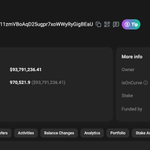
Today, I’m happy to share that the total amount I’ll be receiving in bug bounties from @Zcash has finally been confirmed at $972K.
I’m really proud of what came out of this research. More importantly, I’m glad our work contributed to improving Zcash’s security and got more security researchers interested in Zcash. It’s especially great to see that many researchers are still looking into Zcash, finding and reporting bugs, and keeping an eye on its security.
Huge thanks to the teams across the Zcash ecosystem, including @Zcash, @zodl_co, @ZcashFoundation, @ValarGroup, @ShieldedLabs, @TachyonZcash, and @ZcashCommGrants, for taking security seriously and rewarding researchers, and to the entire Zcash community for all the support.
I’ll keep doing my best to find more bugs.
Robert Chen retweeted

@StefanDGeorge has been one of the most prolific builders in Ethereum.
Stefan was building back when no one thought Ethereum was going to work.
He built the original Gnosis Multisig, Safe, CowSwap and many other important primitives.
nitter.cf/JaschaSamadi/status/21…

1/
Today @greenfield_cap published an open letter on the @safe Community Forum explaining why we have filed a supervisory complaint with the Swiss Federal Supervisory Authority for Foundations (ESA) concerning the Safe Ecosystem Foundation. Here is why, and what we are asking for.


Robert Chen retweeted

We’re disclosing HEIF Heist, a months-long investigation into libheif that allowed us to hack OpenAI, Slack, Meta, GitHub Ent, Rails, Next.js, ImageMagick, and many more.
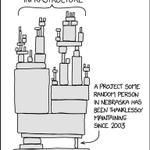
It was literally xkcd #234, one obscure image library beneath a huge number of apps. 🧵

Robert Chen retweeted

We found some stuff. Actually, quite a lot of stuff.
Back in July, our team @rootxharsh, @S1r1u5_, and @iamnoooob managed to compromise multiple OpenAI employees’ ChatGPT accounts.
In theory, any ChatGPT connector can be affected. This includes Slack, github, email, and other services. 🧵

Robert Chen retweeted
On July 25, we hacked OpenAI.
Two bugs let us take over ChatGPT/Codex accounts of OpenAI employees (+some unaffiliated users) and reach connected services: Outlook, Slack, GitHub, etc.
We proved it with a PR in OpenAI’s internal codebase . It took us <72h. 🧵

Robert Chen retweeted

1/
We found a full collision for the Poseidon1 Collision Prize instance and submitted it on July 31.
Two different messages, identical 16-word output after all 28 rounds, verified on the Initiative's official implementation.
The technical breakdown and full story ⬇️

Robert Chen retweeted

Acctual is joining Altitude to bring invoicing into the global operating account, alongside a deeper bill pay experience.
We’re bringing more of how businesses get paid, pay bills, move money, and run finance into one connected system.
Invoicing, now in your Altitude account.
Robert Chen retweeted

I’ve joined @thinkymachines to work on safety & alignment.
The default trajectory is that as AI gets more powerful, control over it will concentrate in the hands of a few. I’d rather build safety systems that let control over AI be shared widely.
Longer thoughts below.
Robert Chen retweeted

Solana is the most battle-tested network.
Each stress test on Solana has been met with major improvements by the core engineering teams and further improved the network resiliency time over time.
Solana's resiliency isn't just about surviving the worst days, but also making ambition for a better future possible.
thestreet.com/crypto/innovat…

Robert Chen retweeted

📌 AI made finding bugs cheap, but it didn’t make responsible disclosure optional.
Finding and exploiting vulnerabilities has never been easier. A few hours of prompting now does what used to take a skilled researcher weeks. Unfortunately, defenders no longer enjoy the asymmetry they relied on. Security is still a cat-and-mouse game, but with many more cats, the user suffers.
Which is exactly why the process around disclosure matters more than ever.
How it works, and it is not complicated:
➤ A researcher finds a bug and contacts the vendor privately.
➤ The vendor reproduces, acknowledges, and both sides agree on a timeline. 90 days is the common default, more or less depending on severity, capacity to fix...
➤ During that window both sides keep it secret while the vendor fixes and ships.
➤ Once users are protected, both sides publish. The ecosystem learns. The researcher usually gets paid.
The issue now is the barrier is so low that anyone can surface a finding with no security background, and some skip straight to the audience:
❗Presenting a reproduction of an already-fixed bug as a live compromise.
❗Full disclosure of a bug that is not fixed yet.
❗"Critical vulnerability found" teasers, dripping details for engagement.
Call it what it is: attention farming with someone else's risk. When the bug sits between a user and their funds, this is reckless. Especially in crypto, where there is no chargeback. But the damage doesn't require live funds to be at stake. Manufactured panic causes harm of its own, because it drives people away from self-custody, and that damages the whole ecosystem.
So I have three asks:
1️⃣ For users: software and hardware have bugs, always. The single most effective thing you can do is stay updated and follow basic security hygiene. That has never mattered more than today. The time between releases and malicious actors exploiting the vulnerabilities have shrunk dramatically due to LLMs and that one can't afford to be passive and postpone security updates any more
2️⃣ For new researchers with a fresh model and a real, validated finding: welcome, we need you. Use the vendor's disclosure process. That is not bureaucracy. It is the difference between making the ecosystem safer and putting users in the crosshairs for a few likes. Remember that security communication must be accurate and proportionate. State the severity, affected versions, and fix status in the first sentence, not the tenth.
3️⃣ And to everyone building in this industry, vendors and researchers alike: let's make coordinated disclosure the norm we defend out loud, not the fine print. Reward the researchers who do it right. Refuse to amplify the ones who trade user safety for reach. This is how we win, together.
Some of the actors already support the initiative. @Ledger @Trezor @FoundationHQ @AnchorWatch @_SEAL_Org and others
Spread the message.
Robert Chen retweeted

@0x10n found a cool thing in v8.

@QED_Audit found CVE-2026-19174, an integer overflow in V8 that gives you arbitrary code execution in Chrome. The bug is one line of constant arithmetic. It survived 3.5 years of fuzzing, manual audit, and LLM-driven review. (1/n)

