






Otso Lovikka retweeted

YLE ei kyllä petä! Taas oli kutsuttu sitoutumaton asiantuntija Elina Palonen (VAS) YLEn aamuutelevisioon kommentoimaan vaihtoehtobudjetteja. Kuulemma Paleface oli estynyt. Voi helvata tätä YLEn asiantuntijavalintoja. Tarvitaan iso ryhtiliike YLEen,YLE vero lakkautettava, ja vapaaehtoinen YLE- maksu tilalle joka on maksumuurin takana. YLEn julkista tehtävää varten perustetaan oma pieni kanava, joka tulee valtion budjetin kautta. #YLE #media


Otso Lovikka retweeted

Vaalien lähestyessä kannattaa pitää mielessä, että suurin osa puolueista tällä hetkellä myy ajatusta että veroja kiristämällä meidän julkisen sektorin kautta kulkeva osuus taloudesta olisi vieläkin suurempi kuin nykyinen, jo valmiiksi maailman korkein taso.
Julkinen sektori ei luo uusia innovaatioita ja talouskasvua, vaan asettaa kaikelle yksityiselle yrittämiselle ja taloudelliselle aktiivisuudelle kivirepun selkään kannettavaksi.
Mitä suurempi kivireppu yksityisellä sektorilla on kannettavana, sitä vaikeampaa suomalaisten yritysten on kilpailla globaalissa markkinassa, kasvaa ja palkata uutta työvoimaa.
Tämä kivireppu kasvaa tällä hetkellä joka vuosi ennen näkemättömällä vauhdilla julkisen velan kasvaessa ja korkomenojen syödessä yhä suuremman osan kaikesta kerätystä rahasta.
Ainoa realistinen keino pelastaa hyvinvointiyhteiskunta on kutistaa julkisen sektorin osuus BKTsta alle 50%:n tason, ja kiihdyttää yksityisen sektorin kasvu 3% vuositasolle, jolloin velan BKT-osuus pienenee ajan yli kohtuullisemmalle tasolle.
Ja julkisella sektorilla tarkoitan tässä sekä tulonsiirtoja että julkisen sektorin toimintakuluja.
On selvää, että meidän pitää myös tukea kotimaisen pääomien ja varallisuuden kertymistä tänne, tai kaikki paikalliset yritykset ovat ulkomaisessa omistuksessa ja meille ei jää tänne mitään globaalisti kilpailukykyistä taloudellista aktiviteettia.
Esim Ruotsi on toiminut näin, ja siellä velan BKT osuus on 35%, julkisen sektorin osuus koko taloudesta on 50%, joka on 8%-yksikköä vähemmän kuin meillä.
Ruotsissa myös yritysten pääomista 56% tulee paikallisilta omistajilta kun Suomessa sama luku on 35%. Tämän takia Suomi on kiihtyvällä tahdilla muuttumassa tytäryhtiötaloudeksi.
Suomen etua oman etunsa sijaan ajava poliitikko ei voi rehellisesti väittää, että veroja kiristämällä ja sitä myöten julkisen sektorin osuuden kasvattamisella taloudesta me voisimme pärjätä jatkossa, siinä on kyse vain ja ainoastaan omasta suojatyöpaikasta eduskunnassa julkisen sektorin maksamien verovapaiden korvauksien nauttijana.

Otso Lovikka retweeted

Vasemmiston verotus ei ole varastamista. Ei ole. Näillä veroilla tehdään hyvii juttui. Varsinkin valtion tuloveroilla, joita kunnolliset pienituloiset eivät maksa. Ainoa kunnollinen kansanosa. Muut ovat riistäjiä.


Otso Lovikka retweeted

(🚨) VOTE NOW: Is Donald Trump a traitor to the United States?
Please RETWEET to ensure the largest data sample for this poll.
97%Yes
1%No
1%Not Sure
25,342 votes • Final resultsAdded 30% more of $NAUT
It will probably not rise too soon so I have time to accumulate more.
86
Otso Lovikka retweeted

Dear Muslims,
We waited for GTA VI longer than Mohammad waited for his wife to mature.


Otso Lovikka retweeted

$IBRX Deloitte just named ImmunityBio the No. 2 fastest growing tech company in North America. Out of 500. Everyone will quote that ranking. We read the whole press release instead. At the end of the CEO's quote we found six words this company had not used in a year of releases.
The award lands in a rough stretch. Sales dipped last quarter and the report didn't say why; the explanation only came a week later, on a London stage. Still no guidance. Longtime supporters are frustrated, and they are saying so out loud.
We hear them. We do not share the mood. When the noise gets loud, we read.
So before anyone quotes the ranking, here is what is actually in the November 19 release.
THE NUMBER EVERYONE WILL QUOTE
On November 18, Deloitte released its 2026 Technology Fast 500, its ranking of North America's fastest growing technology companies, now in its 32nd year.
ImmunityBio: No. 2 of 500. Revenue growth of 47,103 percent, fiscal 2022 to fiscal 2025. A year ago it ranked No. 67.
Here is the math inside that percentage:
- 2022 revenue: $240,000. Pre-approval. Licensing and grants
- 2025 revenue: $113 million. ANKTIVA on the market
- That is 472x in three years
Any company that goes from almost nothing to real sales posts a giant percentage. Geron, at No. 4, is the same story: first product launched in 2024. So hold the percentage loosely.
The dollars are the real story: from a quarter of a million to 113 million in three years.
THE SIX WORDS ALMOST EVERYONE WILL SKIP
CEO Richard Adcock's quote in the release walks through the growth: 700 percent net product revenue growth in 2025, 92 percent through the first nine months of 2026, broader clinical adoption of ANKTIVA in the US and globally.
Then it ends:
"...expanding patient access, strengthening our global commercial presence, and delivering long-term value to our stockholders."
Read the last six words again.
"Delivering long-term value to our stockholders."
WHY THE ENDING STOPPED US
We went back through this year's record. The Q1, Q2 and Q3 earnings releases. The October approval announcement. The November trial results. The Jim Yong Kim appointment. Both London investor sessions from November 16.
Every quote closes on the medicine: patients, access, clinical progress. The closest thing to investor language all year was "supporting long-term growth."
Not one ends on stockholders. This one does.
ONE SENTENCE IS NOT A STRATEGY
The phrase itself is ordinary corporate language. In an award release it is almost expected. And we reviewed this year's record, not every page the company ever published.
But press-release quotes are drafted, reviewed and signed off before they cross the wire. Endings are chosen.
And in the exact month when the questions got loudest, an executive quote ends on the people who own the company. First time in anything we reviewed.
THE FOUNDER SAID HIS VERSION THREE DAYS EARLIER
The CEO is not the only one choosing words carefully.
On November 16, three days before this press release, founder Patrick Soon-Shiong posted about the London conferences and the trial win. Read how his post ends:
"Immunotherapy 2.0 slowly but surely."
The same week. The same company. Two quote endings chosen at the top: slowly but surely, and long-term value.
And this is not a new phrase for him. He used it about combination immunotherapy back in 2022. He used it about the science this January. On November 12 he wrote "Decades of quiet, private work" and "Over next 12 months much will be revealed... Stay tuned."
Neither man is promising next quarter.
In October we asked in these pages what this company's medicine could one day sell in a year. The $50 to $90 billion question. The founder shared that post himself.
That question still stands. What changed this month is the timeframe the top of the company is speaking in. Long-term. Slowly. Surely.
Nobody up there is selling instant miracles. They are asking for patience. And for the first time in anything we reviewed, they are saying it directly to the owners.
THE SLIDES THAT CONNECT THE DOTS
Our October post asked the long-run question with one comparison: Keytruda. Merck's checkpoint drug that grew from a single approval in 2014 into $31.7 billion a year.
In London this month, ImmunityBio's own investor deck made the same comparison. Three slides in a row. KEYTRUDA printed next to ANKTIVA on the origin-story slide. Keytruda's 19 tumor types laid out approval by approval, 2014 to 2026, as the path a successor could follow. Then the checkpoint patent cliff that opens the door.
When we drew that parallel in October, it was a thesis from the outside. In November it is on the company's own slides, shown to institutional investors.
THE FAST VERSION EVERYONE IS DREAMING ABOUT
Now the twist everyone is whispering about.
On November 17, a small cancer-vaccine company called SELLAS announced its Phase 3 leukemia trial met its survival endpoint. The stock had closed at $7.47, after spending much of the year with roughly 30 percent of its float sold short.
Before the market even opened, it was halted and reopened, and a market report that morning recorded prints as high as $34 on thin volume. Up over 350 percent at the peak, before the first regular trade. In the session it touched $24.89 and closed at $19.15, up 156 percent on the day.
A lot of IBRX holders watched that and thought: that could be us.
So let's say it plainly. Could that shape of day happen here? The ingredients exist. Short interest most recently reported around 31 percent of the float. And a calendar of hard catalysts ahead: the sBLA filing, then the trial numbers at a medical congress.
Is it guaranteed? No. SELLAS did not jump because people wished for it. The data landed, and a crowded short side met it all at once. A catalyst has to land here too.
And look at what happened next. From $34 in the premarket to $24 at the open. To $19.15 by the close. To $17.95 the day after.
A squeeze is weather. It passes. What a company keeps is whatever its sales, its approvals and its pipeline can hold up. Without fundamentals underneath, even the wildest day gives itself back.
So yes, the fast version is possible here. It is just not the plan. The plan is the one the founder and the CEO just put into words: slowly, surely, long-term. A spike would be a day to enjoy. The fundamentals are what remain after it.
THE NEXT TEST IS ALREADY ON THE CALENDAR
The sBLA for ANKTIVA plus BCG in BCG-naive bladder cancer is due at FDA before 2026 closes out. That is the timing management gave investors in London on November 16.
When that release crosses the wire, go straight to the CEO quote and read how it ends.
If it ends on stockholders again, this was not a slip of the pen. It is ImmunityBio learning to talk to the people who own it.
And what both voices at the top of ImmunityBio are telling the people who own it is the same thing: from the ANKTIVA filing due before 2026 ends to everything on the road after it, this is a long game, and it is being played to be won.
Patience is the plan.

Otso Lovikka retweeted
ImmunityBio ranked No. 2 on the 2026 @Deloitte Technology Fast 500™, reflecting revenue growth of more than 47,000% from 2022 to 2025.
Thank you to our employees and partners for their contributions to this milestone.
Read the full announcement: immunitybio.com/immunitybio-…
$IBRX #fast500
Otso Lovikka retweeted

Russian journalists rent a motorhome and set off on a trip around the central regions of Russia
What they found? dilapidated houses, entire apartment buildings with no indoor plumbing, kids under 10 selling alcohol and families defecating in buckets
Otso Lovikka retweeted

Could not make UBS and Jeffries conference but our team did a great job ..revealed that the Anktiva plus BCG resulted in a highly significant improvement of efficacy in patients who were BCG naive with bladder cancer compared to BCG alone..at p value less than 0.01. Immunotherapy 2.0 slowly but surely.
Otso Lovikka retweeted

Samalla logiikalla voidaankin todeta, että peräti miljoonat kärsivät, koska Suomi ei lahjoita 100% bruttokansantuotteestaan kehitysmaihin.
Kyllä se Suomi vaan on syyllinen koko maailman kärsimykseen.

Otso Lovikka retweeted

Corporation: “We made $6 Billion, but after expenses we only made $150 Million.”
Government: “Okay, tax the $150 Million.”
You: “i made $82k, but after rent, groceries, insurance, gas and everything else, I’ve got like $3 left.”
Government: “Cool. Taxing the $82k.”
You: did you hear the part about the $3?”
Government: “April 15th.”
Otso Lovikka retweeted

I have run the numbers. NMIBC is a competitive market, but IBRX will take 30-40% of the size through 2035.
The ghost factor is this:
If NMIBC was the ONLY illness they served, their cap would be around 4B-6B depending on Price-to-Sales Multiples
Do you all understand what this means? It means all they have to do is communicate better!!!!!!!
1) This is a 15B stock right now if they communicate to wall street more effectively.
Listen, wall street is not looking as close as we are, and all the trading yesterday was leverage washouts.
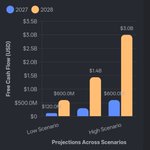
2) This is a 25-35B stock in 2028 if they get NSCLC, Colorectal and Sepsis "TRIALS" back. Not FDA approval, just trials.
Not many people are receiving my messages, although i post across X, stonktwits, and discord/patreon.
So, I will turn to video form....retweet this pleeeez if its the last thing you do.
$IBRX
Otso Lovikka retweeted

Months after a fund tied to Donald Trump Jr. and Eric Trump put about $30 million into a nearly bankrupt spa company, the Trump administration awarded that company nearly $40 million in federal contracts to screen for Ebola.
The company made most of its money from airport spas and waxing salons.
It had never worked with Ebola.
It had never worked overseas.
Yet part of the money is for work in the Democratic Republic of Congo, where Ebola has killed more than 5,000 people this year. The company's CEO said, "I'm not sure we can do it."
This keeps happening. The same Trump-linked fund invested in a drone company, and five months later that company got an Air Force contract worth up to $90 million. A startup linked to Trump Jr. got a $620 million Pentagon loan after a top White House aide stepped in.
Their fund buys in, and federal money follows. Taxpayers foot the bill, and with Ebola, our safety is on the line too.
This is all totally corrupt.
Americans deserve answers under oath, and our conflict of interest and procurement laws must be enforced.
propublica.org/article/trump…

Otso Lovikka retweeted
Thanks
Astute observations!
I began the release of our stealth, self-funded programs at Nantworks at a speech at Stanford last night. Decades of quiet, private work with our brilliant scientists dedicated to make the world a better place.
Over next 12 months much will be revealed ..from the country’s first approved blockchain empowered tokenized exchange empowering both companies and the investor, to predictive actionable patient data in real time for physicians to act and save lives ( and already FDA approved), to WIgig and novel optic chips moving Gigabits of data at the speed of light, to antibody “google” search engines of novel camelid antibodies to light up tumors by PET scans and then zap them with precision radio isotopes, to transforming global communications from space to earth with space certified chip sets, to next generation optic chip foundries in the USA and chip sets that interconnect Ai data centers, to new ways to build and even launch satellites with optic communication terminals , to batteries that work in the Arctic cold, to non toxic ways to create Graphene, to replacing plastics with biodegradable natural products from the ocean, to identifying toxic products in food and baby food in real time at point of purchase, through machine vision …Nant at quiet work to address global challenges facing humanity ….
…. oh, and the one program that is public @ImmunityBio .. finally having the world recognize that the collapse of the immune system and lymphopenia results in early mortality, cancer and early death from sepsis..and that for the first time in medical history these could be addressed with a simple injection of a molecule that the NCI and FDA itself acknowledged way back in 2007…. IL-15 !
Longevity at work. Book of our patient’s stories soon.
Unstoppable.
Stay tuned as each of these programs are revealed . Living the American dream. Peace through Health.

$IBRX Release the Kraken.
Not my words. The man who runs American healthcare said them on Monday night, under a MAHA banner, at a Washington reception most investors have never heard of.
Ever since ImmunityBio's earnings landed, the boards have been three straight days of doom and gloom. Perfect conditions for missing the thing that actually matters.
Because while the panic was soaking up all the attention, something happened behind the scenes that could reshape American healthcare. And at the end of that chain, quietly, sits ImmunityBio. Promised nothing, as you will see. Positioned close.
It did not start Monday. In late January, the founder of ImmunityBio went on this movement's own show and asked it for help. On Monday night, nine months later, the movement declared the road clear.
Each event was easy to miss on its own. Put them side by side and they tell a story.
Every quote below is word for word. At the end, you decide.
THE NIGHT THE FOUNDER WENT ON THEIR SHOW
MAHA, Make America Healthy Again, is the movement Robert F. Kennedy Jr. runs from the top of HHS. Its organizing arm outside government, MAHA Action, is run by Tony Lyons (@tonylyonspub), Kennedy's own book publisher. Weekly livestream. Monthly Washington parties. A tracker they say covers every health bill in the country.
In late January, that livestream had a first-time guest.
Patrick Soon-Shiong (@DrPatrick).
LISTEN TO HOW THEY INTRODUCED HIM
Before Soon-Shiong said a single word, the movement set the stage for him. First, the host named the enemy. Word for word:
"We talk a lot about all the things that we do that make us sick. All the terrible foods that we've been persuaded to put into our body, that we've been lied to, we've been propagandized. And those kinds of things have led to the incredible increase in cancer."
Then, in the same breath, he introduced his guest:
"He is a physician, a scientist... pioneering cancer therapies. But he's also just a visionary... a lot of entrenched groups, a lot of powerful people, would prefer that he didn't have these ideas... that he couldn't actually use these ideas to make people so much more healthy and to cure so much cancer in this country."
And then the line that tells you exactly where this movement places this man:
"He's putting everything on the line. He's going on every podcast. He's at this day and night, because he wants to cure cancer. He believes that he can do it. And so many of these forces are conspiring to slow that down, because they have other priorities."
Hold that sequence. Their diagnosis: poisoned food, rising cancer. Their guest: the man who says he can treat it. That pairing was the movement's choice, not mine. The host speaking is Tony Lyons himself, MAHA's chief organizer, Kennedy's own publisher.
WHAT THE FOUNDER ASKED FOR, AND WHAT MAHA PROMISED
The founder looked at the movement's audience and told them that the thing he has pursued for 35 years is, in his words, "truly I believe a core principle of MAHA."
Then the founder introduced them to IL-15, the molecule he says the National Cancer Institute called "the most important molecule that could cure cancer." And to the drug built on it, ANKTIVA, which wakes up the body's natural killer cells and T cells, the immune cells whose job is hunting cancer. FDA approved, "but just for bladder cancer."
And then Soon-Shiong started dropping lines that should have made every holder sit up:
- "The Saudi government came and visited us and said, we have 37 million people... we want this for our nation. And they just approved it now in Saudi Arabia."
- "I have 13,000 requests now sitting. Desperate calls for this treatment."
- "We need to bring this to this country. It's invented here. And this is really what we really mean by America first."
Tony Lyons listened to all of it. And then the host answered his guest.
Word for word:
"These are ideas that can change real people's lives, cure millions of people from the scourge of cancer that has overtaken this country... we need to find a way to cure cancer. And I want you to help us get there."
And then Lyons made him a promise:
"I want to do everything that I can do to make sure that you get the platform and the access that are necessary to make the arguments. And I believe that those arguments will succeed."
The platform and the access. To help cure the scourge the movement exists to fight. Their words.
That alone would be a story. But a week later the founder came back, and the second call made the first one look shy.
THE SECOND CALL, AND WHO WAS WAITING TO SPEAK
February 4. Same movement. Soon-Shiong opened by going further than in January: "the core essence of MAHA, to make America healthy again, is actually your immune system." Their whole name, his life's work.
And then the ImmunityBio founder stopped explaining and started pleading, straight at Washington:
- "During the Biden administration, four years, 700,000 pages of review. And then finally they gave us the approval for a tiny little piece of bladder cancer."
- "In frustration, I moved my attention to Saudi Arabia, and very quickly, literally quickly, they approved this for lung cancer."
- "I just had a call this morning with the United Arab Emirates, who want this as well. This should be something that Americans should be able to have access to. We are now 13,000 requests and growing."
- "It should not be who you know... it should be anybody and everybody."
- "I'm just struggling, I must say, openly, to convince the current FDA..."
And then one sentence that reads differently now than it did in February:
"Please help me help the American public have access to this."
Those are Soon-Shiong's claims, made on a political platform, and I quote them exactly as that. Now the part that made me sit up.
The speaker who came on right after the founder was Dr. Mehmet Oz.
The sitting administrator of Medicare and Medicaid. Who, Soon-Shiong mentioned, had shared with him his own father's book on the lymphatic system.
Read that again. A plea about FDA access, delivered to the movement's base, with the man who runs Medicare waiting for the microphone.
And how did Tony Lyons close that second visit?
Like this:
"We've got this generation where we've destroyed our immune systems, and so we have to rebuild them and use technologies like yours to strengthen them to get that power back."
Technologies like yours.
That was January and February. The movement heard the ImmunityBio founder, twice, and said so in its own words. But a movement that is being throttled cannot act on what it hears.
Then, last week, the throttle came off.
WHAT CHANGED LAST WEEK
Republicans lost Congress in the midterms. The headlines called it a defeat.
Inside this movement, something else happened entirely.
- Friday, November 6: Susie Wiles' last day as White House chief of staff. Kennedy thanked her publicly the same day, and posted: "Next to me, Stephen Miller is the strongest MAHA supporter in the administration. It's time to unleash the Kraken."
- Monday, November 9: Miller took over the White House.
Three days. A changing of the guard.
And on the very evening Miller took over, the movement threw a party.
MONDAY NIGHT, NOVEMBER 9
MAHA Action's monthly Washington reception. Reporters in the room. And mark that date twice. It was the new chief of staff's first day in power. And it was the same Monday ImmunityBio's earnings landed and the boards went dark.
While the boards filled with doom, Kennedy stood up at that party and explained, calmly and in detail, why he believes the next two years will not look like the first two.
He began with grace for the woman who had just left. Wiles, he told the room, had been "vilified this week," but "without Susie, I wouldn't be here."
Then the other half: "There were things that we didn't get done. And that was very frustrating to me. And they were very, very important things."
Then, what those first two years actually felt like. His words:
"You get throttled in this position by a lot of different people. People in the agency... people in the White House and with access to the White House, and people in Congress."
Then the sentence the clips carried and never explained:
"Every time I tried to do something robust, I would get calls saying, if you do that, we're not going to confirm your appointees."
Here is what that means, because it is genuinely strange.
While his own party held the Senate, every senator had a personal veto to trade: give me what I want, or your people never get the job.
After the midterms?
Once the new Senate is seated in January, confirmations are dead either way. The other party will not confirm his people. His own party can no longer deliver the votes. A threat to withhold what nobody can grant is an empty threat.
"The Senate no longer has any leverage over me."
Sit with that.
Losing the election is what freed him. That is the paradox the room was toasting.
THE DINNER THE DAY AFTER HALLOWEEN
Then Kennedy told the room about a dinner at Stephen Miller's house, the day after Halloween. Where the incoming White House chief of staff said to the secretary:
"I'm the only one in the administration who's more radical than you are on MAHA."
And Kennedy, about the road ahead:
"I don't think anything is going to get in our way now."
What exactly are they going to do? Kennedy would not say. "There's a lot of press here, and I don't want to unveil our strategies."
Only this:
"I said, just write: release the kraken. Because that's what we're about to do. And so stand by."
CANCER WAS IN THE ROOM TOO
Tony Lyons had opened that same night by naming the destination:
"We could be the beacon of health in the world, so that people would come here for treatment."
People would come HERE. For treatment. Hold that phrase against everything you read above from January.
And then Kennedy, introducing an Iowa candidate, named the issue that now dominates that state's politics:
"Iowa has the highest cancer rate in the country. Iowa and Kentucky, the fastest growing cancer rate in the entire world. And it's coming from the nitrates and the pesticides and all of these contaminants."
That cause is Kennedy's claim, and I quote it as exactly that. But hear what the room heard: the movement that just declared nothing is in its way treats cancer as its unfinished business.
So run the thread once. In January, this movement said poisoned food is driving cancer up, and put ImmunityBio's founder on its own stage, describing Soon-Shiong as a man fighting "day and night, because he wants to cure cancer."
In February it told him: we have to rebuild our immune systems "and use technologies like yours."
And on Monday night it declared the road clear.
Who stood on their stage talking about that disease in January and February, you already know.
HAVE WE HEARD ALL OF THIS BEFORE?
Yes. We have. And this is the section that keeps your feet on the floor.
The 2024 campaign promised sweeping change. Two years in, the movement's own stage recited what actually landed:
- Dietary guidelines rewritten around one line: eat real food
- A draft FDA policy expanding access to six peptides
- Psychedelic-therapy research advancing, including trials in veterans' hospitals
- Cell phone legislation in schools in half the states, which Kennedy credits to the movement
- By the organizer's own count: 230 state bills backed this year, 31 signed into law across more than a dozen states, under both parties
A real list. And not the 2024 list. No transformation of chronic disease yet. Nothing in those plans that touches cancer care.
Although one cancer move did land this year, from the FDA itself: in October it approved ANKTIVA's expansion to papillary bladder tumors nearly three months ahead of its own deadline. Nobody promised that either. It happened anyway.
They delivered some of it. Not all of it. Both facts are true, and the room knows both.
That is exactly why "I don't think anything is going to get in our way now" was the sentence of the night.
So calibrate: the next two years will probably rhyme.
Some of it. Not all of it.
QUESTION ONE: DO THEY BELIEVE THE SCIENCE?
Does this movement believe in the science ImmunityBio is built on, immune restoration through NK cells and IL-15?
On the record: yes.
- They put its inventor on their own platform twice in two weeks
- Their host introduced him as a man working "day and night, because he wants to cure cancer" while "forces are conspiring to slow that down."
- Their chief organizer promised him "the platform and the access."
- The man who runs Medicare spoke right after him
- And in neither session did anyone push back. The movement embraced the pitch as its own
Tick the first box.
QUESTION TWO: DID ANYONE NAME IMMUNITYBIO ON MONDAY?
On Monday night, with the road supposedly clear, did anyone name ImmunityBio, ANKTIVA, or cancer therapeutics in the plans?
No. Peptides, psychedelics research, vaccine studies, food. Not one word about cancer drugs. Not one company in those plans.
The second box is empty.
That is the whole picture. One tick, one empty box, and anyone who tells you more than that is selling you a feeling.
THE OTHER EMPIRE AT THE TABLE
One more thread, because ImmunityBio is not the only thing Patrick Soon-Shiong brings to Washington.
Around the public company sits his private Nant empire, a decade and a half in the making, built on one idea: American healthcare runs on broken plumbing, and somebody should rebuild it.
- AirStrip, a NantWorks company, puts live hospital monitoring on a doctor's phone, and partnered with GE HealthCare to push that into hospital systems nationwide
- His fiber-optic work is aimed, in the founder's own words, at "moving data at the speed of light.
- His newest tease, alongside one of the world's top photonic scientists: detecting disease with light itself
- And NantIQ, the AI app for giving patients their own records, which Soon-Shiong announced at the White House in July 2025, at the launch of the government's health-data initiative, standing alongside Apple, Google and Amazon, thanking Dr. Oz by name
Now ask the question the loudest voices skip. When one founder keeps handing the government working machinery for its health agenda, does the goodwill stay in one pocket? History says no.
Is any of this a promise to ImmunityBio? No. But every useful thing the Nant side gives this administration makes the founder harder to ignore when his medicine asks for a hearing.
WHAT IS HIS, AND WHAT IS THE COMPANY'S
Now the precision, because precision matters most when people are scared. Look at where that Nant machinery lives:
- NantIQ, the patient-records app: private
- The health-data networks: private
- The laser-based diagnostics: private
- AirStrip: private
Whatever doors this movement opens for those, the value lands with the founder, not inside $IBRX shares. The public company owns the medicine, ANKTIVA. Keep the two separate, because the loudest voices this week will not.
Can they deliver the next two years?
Unknown.
The first two already answered that in advance: partially.
Count on some. Never on all.
TWO ROOMS, NINE MONTHS APART
Nobody in power has promised ImmunityBio anything.
Keep that fact where you can see it.
Now hold the sequence one last time.
In January and February, the movement that runs American health policy heard the founder of ImmunityBio say that restoring the immune system, the exact thing his approved drug ANKTIVA exists to do, is the core of what their own name means.
Their organizer promised him a platform.
The man who runs Medicare took the microphone right after him. And the founder's last words to them were: "please help me help the American public have access to this."
On Monday night, November 9, the very evening ImmunityBio's earnings had the boards in despair, that same movement stood up and declared the road clear.
The Senate has no leverage. The new White House chief of staff calls himself more radical on their mission than Kennedy himself.
And the secretary who oversees the FDA said, with reporters in the room: "I don't think anything is going to get in our way now."
Release the kraken. Stand by.
What swims out, and whether any of it swims toward ImmunityBio, is promised to no one.
I connected the dots as far as the receipts reach.
Not one inch further.
Whether they connect the rest of the way, nobody can guarantee you, and nobody should.
Read it again. Then you decide.

Otso Lovikka retweeted

Suomalaisen veronmaksajan ei pitäisi joutua jatkuvasti erikseen perustelemaan päättäjille, miksi hänen omilla verorahoillaan pitäisi huolehtia ennen kaikkea suomalaisista.
Aina kun kehitysavusta tai ulkomaille lähetettävistä rahoista keskustellaan, syvemmin tiedostavat ihmiset kiirehtivät vakuuttelemaan, etteivät nämä rahat ole pois suomalaisilta ja ettei asioita pitäisi asettaa vastakkain. Että maailma ei muka ole niin mustavalkoinen.
Mutta kyllä nämä asiat ovat vastakkain. Eivätkä ne lakkaa olemasta vastakkain sillä, että poliitikot kieltäytyvät myöntämästä sitä. Samaa euroa kun ei voi käyttää kahteen kertaan.
Kaikki nämä menot rahoitetaan samasta valtion kassasta, samoilla veronmaksajien rahoilla. Jokainen euro, joka käytetään ulkomaille, on euro, jota ei voida samanaikaisesti käyttää Suomessa. Kyse ei ole mielipiteestä vaan yksinkertaisesta talouden realiteetista.
Samaan aikaan Suomessa elämme kroonisesti velaksi ja joudumme jatkuvasti miettimään, mistä tinkiä. Silti meille yritetään selittää, ettei ulkomaille sysätyllä rahalla ja suomalaisten hyvinvoinnilla olisi mitään tekemistä keskenään.
Totta kai on. Valtion budjetti on täynnä valintoja siitä, mihin yhteiset rahamme käytetään ja mikä asetetaan etusijalle.
Meidän lähtökohtamme on yksinkertainen: suomalainen ensin. Se tarkoittaa sitä, että Suomen valtion ensisijainen tehtävä on huolehtia omista kansalaisistaan. Suomalaisista lapsista, vammaisista, perheistä, työntekijöistä, ikäihmisistä ja niin edelleen.
Kuten Purrakin on todennut, maailmalta ei tarvitsevat lopu, mutta suomalaisten rahat kyllä loppuvat.
Ja juuri siksi on täysin perusteltua asettaa nämä asiat vastakkain. Politiikka on priorisointia. Jos kaikkeen ei ole rahaa, on päätettävä, mikä on tässä yhteiskunnassa kaikkein tärkeintä. Minulle se ei ole Somalia, vaan Suomi ja suomalaiset.
Otso Lovikka retweeted
Presenting at Stanford today. This cytokine with the potential to be the next evolution from checkpoints

Otso Lovikka retweeted
Sepsis trial authorized!
This will be the first trial to stimulate NK and T cell activity and address lymphopenia as the immunological cause of death in sepsis. Millions of lives! Trials will be starting soon in USA and Europe
Otso Lovikka retweeted
$IBRX On paper, today reads like a catastrophe. A loss of about a billion dollars for the year so far. Revenue that slipped for the first time in two years.
Breathe. Almost none of it means what it looks like. And for the people this disease is actually about, today was not a bad day at all. It was another door opening.
FOR THE PATIENTS, NOTHING GOT WORSE
Start there, because they are the ones for whom nothing today was a setback. A loss on an accounting statement does not change a single thing about their treatment. The drug they rely on is exactly where it was yesterday, still approved, still shipping, still working. Whatever the headlines did today, not one patient is worse off for it.
AND IT ACTUALLY GOT BETTER
If anything, their position improved. Four weeks ago, a person facing high-grade bladder cancer had one approved version of this medicine to reach for. Today they have more. Last month the FDA widened it to a second kind of tumor. This morning a pivotal trial showed it can work even earlier, before the cancer ever outlasts the standard treatment. And it cleared its thirty-fifth country before lunch.
More indications. More data. More countries. Every few weeks the net under these patients gets wider, not narrower. No quarterly number can take that back.
So if you are holding this and your stomach dropped today, start with that fact. Then let me walk you through the rest, in plain terms, and sort the real worry from the scary-looking one.
Three things landed this morning. A pivotal first-line trial hit its goal. The quarterly financials came out. And the drug was approved in Israel. One genuine turning point, one scary-looking report, one small win. Take the scary one first, because it is the one most likely to be misread.
Was it a good quarter for the business? No. Revenue went backward for the first time in two years, and the headline loss is enormous. Let us say that plainly, and then let us be precise about which part is a real problem and which part only looks like one.
THE NUMBERS THAT LOOK LIKE A DISASTER, AND MOSTLY ARE NOT
The headline is a loss of about 185 million dollars for the quarter, and roughly a billion for the year so far. Read fast, that sounds like a company bleeding out.
It is not, and here is the grounded reason.
The company spent about 75 million dollars of actual cash this quarter. Not 185. Not a billion. About 75.
The rest is non-cash. The company carries a loan from its founder and some warrants that, under the accounting rules, get re-valued every quarter against the share price. When the share price rises, those are marked higher, and it shows up as a "loss," even though not a dollar left the building. The stock moving up is what inflates the number. It is paper, and it reverses. This quarter's paper loss was actually smaller than last quarter's.
So judge it by cash. On cash:
- The company ended the quarter with about 334 million dollars on hand
- That is down only about 23 million from the quarter before
- The drug is cheap to make: the cost of making it is only a sliver of what it sells for, roughly 97 cents of every revenue dollar is gross profit. That number is flattered a little by early-launch accounting and will ease back as normal manufacturing costs flow in, but the underlying economics are genuinely strong
One thing not to gloss over: cash barely moved not because the business pays for itself yet, it does not, but because the company raised about 53 million during the quarter to cover the burn, mostly by selling stock into the market and from warrants being exercised. They can raise money when they need it, and the founder's loan still sits behind them as a backstop. That is a real strength. It is not the same as self-funding, and this post will not pretend it is.
THE ONE THING ACTUALLY WORTH WATCHING
Here is the genuine, if small, yellow flag, the part the cheerleaders skip.
Revenue slipped from about 50.7 million last quarter to 48.7 million this quarter. Under 4 percent. It is the first time the quarterly number has gone backward after two years of climbing.
Why? Nobody outside the company knows, and the company did not say. The most likely read is that new patient starts softened for a quarter, in a drug still selling into one fairly small group of patients, possibly squeezed by the long-running shortage of the BCG it is paired with. A wobble on a small base, not a collapse.
And notice what the wider loss was really about. The company spent more this quarter, research and development jumped over 10 million, because it is pushing its whole pipeline forward. That is money going into the future, on purpose. The soft spot is the revenue line, not the spending.
So watch the revenue trend. Not the scary headline loss, which is paper.
THE DOOR THAT ACTUALLY MATTERS
Now the piece worth understanding, because it is the biggest thing that happened today and it is easy to miss under the numbers.
A little plain English first. For about fifty years the standard first treatment for this cancer has been BCG, a weakened bacterium placed in the bladder to wake the immune system against the tumor. When BCG stops working, the patient is called unresponsive, and the options narrow toward surgery to remove the bladder. Everything this drug was approved for until now has been that salvage setting, patients BCG already failed, a couple of thousand people a year per group.
Today's trial is different. It tested the drug first-line, added to BCG from the very start, to keep the cancer from ever becoming unresponsive at all. And it worked, beating BCG alone. First-line is the whole high-grade group, before anyone fails, several times the size of that salvage pool, on the order of ten thousand or more Americans a year, the largest BCG-treated group in this disease. Today was the key turning in the lock of that far bigger door.
One clarification, because it is already being muddled online. The trial has two patient groups, Cohort A and Cohort B. Only Cohort A read out, it is positive, and it is the one the company files on. Cohort A alone supports the first-line approval they are chasing now. The second group is a separate cohort, a different set of patients measured a different way, reading out on its own schedule. It is not a gate on the Cohort A filing. The important data already landed.
WHEN THIS TURNS INTO MONEY
Not next quarter, and no one should promise you otherwise.
But here is the quiet part worth sitting with. The group of patients this drug can be sold to grew substantially last month, when the second-tumor approval landed. Europe just opened its first sales. And the biggest group of all, the first-line patients, is now heading into filing. The fuel for a much larger sales line is in the tank. When it combusts is the part no one can promise.
The reason none of it reached today's number is timing. The second-tumor approval and the first Europe sales both landed after this quarter closed, so they are a Q4-and-beyond story. The first-line filing is targeted for year-end 2026; any approval, and the first revenue from it, would be a 2027 story at the earliest, not this year. The country-by-country approvals, Israel, the Gulf, Europe, are each small alone and add up slowly.
So 2027 is the year the catalysts start turning into revenue: a maturing second-tumor ramp, Europe building, a first-line decision, more countries stacking. That is the shape of it. It is a build, and the tank is now full.
WHAT TO EXPECT FROM HERE
If you came here expecting one trial win to send this straight up overnight, history says that is not how a company like this tends to move. A business still selling into one small group of patients, that just posted a soft revenue quarter, does not turn the whole story around on a single good headline. It gets there over several quarters, as the catalysts actually land, the approvals, the expansions, the countries, the return to growth. The path is lumpy, and no one can time it.
That is not a reason to despair. It is a reason to be clear-eyed about the clock. The science took a real step today. The financial scare is mostly an accounting mirage. The one real soft spot is a revenue quarter to watch. And the things that make 2027 matter are finally in motion.
WHAT IT MEANS, IN PEOPLE
Come back to where we started, because it was always the point.
First-line means reaching people earlier. Before the years of waiting to see if BCG holds. Before the organ is ever on the table. If today's result holds through filing and approval, more people never travel the narrowed road at all.
When the database for this trial locked last month, the founder, @DrPatrick, wrote one line:
"The archaic era of painful chemotherapy will come to an end in our lifetime. Chemo free, and save our lymphocytes, is the 21st century mantra."
Today the trial behind that sentence met its mark. Not the whole promise. One real step toward it, in the biggest door this disease has.
The medicine is ANKTIVA. The trial was its first-line test, ANKTIVA plus BCG from the start. The date was November 9, 2026. Three announcements, one of them a genuine turning point, and the only thing still behind the curtain is how wide the door swings.
No price target. No promise. The numbers that settle it are still coming.
But somewhere is a person who has not heard the word cancer yet, who will one day keep their bladder and never know this morning happened. That is who today was for.
