Kira McEntire retweeted
Green lizards turn quickly to brown.
In seconds, to green they rebound.
Not to dodge predation
Or for thermoregulation
But to send social signals, we found.
See the full story in Behav Ecol Soc w/ @DaisyHorr, Amy Payne @ProfessorKira here (open access!): rdcu.be/c7o0V
Kira McEntire retweeted
oh wow look at that, my first paper! 🥳🦎
This was the first project that made me excited about studying animal behavior and made me want to be a field biologist. Happy to have had an amazing undergrad mentor @LizardMichele to help me see this through :)
link.springer.com/article/10…
Job opening for natural resource management and conservation at Barry College: berry.interviewexchange.com/…
#FindThatToad Tiny toad edition! First picture for reference of what you are generally looking for and for size reference #SoTiny #Cute #Toad #HERpetology #fieldwork #science
My friend was inspired by March Mammal Madness #2022mmm to create her own spin off: Monster MAYhem. If you have any interest in Monsters or Horror check it out! Please share! docs.google.com/document/d/1…
Kira McEntire retweeted
Come work with us! We're looking for a PhD level Wildlife Data Scientist interested in movement ecology and conservation. Click here for more details: merkleresearchgroup.org/join….
Kira McEntire retweeted
WISDOM OF WOMBATS OUTLASTS TROOP OF MONKEYS #2022MMM
Job opportunity with my former lab!
ugajobsearch.com/postings/24…
1
Kira McEntire retweeted
The Mexican Free-Tailed Bat wins the wildcard match of #2022MMM! Join us on Wed. March 16 at 8 PM eastern for the Queens of the Sea and Sky first round battles
Kira McEntire retweeted
Part of the @NSF Jumpstart collection with ICB:
Understanding Drivers of #Variation & Predicting #Variability Across Levels of #Biological Organization
by @ProfessorKira et al
doi.org/10.1093/icb/icab160
& Kira's blog
fieldbioperks.blogspot.com/
#biology #scientists #environment
Kira McEntire retweeted
This just out!
ICB's @NSF Jumpstart issue
academic.oup.com/icb/issue
authors including
@LangenTom
@scimaven
@KonowLab
@ProfessorKira
& AEs including
@k_wilsterman
@SLailvaux
@UlrikeKMuller
@N_BURNETT
@Cori_Zawacki
& more
#biology #sciencetwitter #scientist
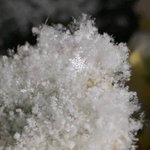
I’m a major snow nerd, so here is the break down for today in Charlotte. Mostly stellar dendrites and some graupel (little snowballs). Makes sense since it is still pretty warm, allows the dendrites to grow! #PhysicsOfSnow #Science #SnowDay
Progress update the tadpoles for my class’s research project: they are starting to get front legs! #research #ScienceTwitter #ClassroomResearch #UndergraduateResearch #tadpole #Herptology #AlmostAFrog
5
Kira McEntire retweeted
AND WE’RE BACK! The first episode of season two is now live - featuring not one, not two, but FOUR incredible guests! Thank you to Austin, Kira, Kassandra, and Mackenzie for taking the time to join us and share their experiences as ace individuals in STEM!
Kira McEntire retweeted
I will be recruiting for both PhD and postdoc positions soon! So if you are interested in thermal physiology, global change, immunology, disease ecology, and the conservation of amphibians, stay tuned!
Taking advantage of the gray tree frogs that decided to lay eggs in my student’s summer lily pad #research and setting up a new project for my #herpetology students! We will be exploring the idea that #tadpoles are more of an #omnivore than an #herbivore. #ScienceTwitter #cute
1
7
Kira McEntire retweeted
"...Variation underlies all #evolutionary processes and allows persistence and resilience in changing environments; thus, uncovering the drivers of variation is critical." (in advanced)
doi.org/10.1093/icb/icab160
by @ProfessorKira, @NoaPinter et al
part of @NSF Jumpstart/ issue 6

ALT Figure 1. Populations of the Pacific tree frog (Hyla (Pseudacris) regilla) exhibit three morphs: a brown morph, a green morph, and a color-changing morph. As the background vegetation turns from predominantly brown in winter to predominantly green in spring, the population shifts toward a greater proportion of frogs with a green color, because of the dynamic coloration of the color-changing morph (Wente and Philips 2003, 2005). Measuring color variation within each morph, or within the larger population, in different months would lead to different conclusions regarding color variation. Original illustrations and graphic design by Mitch Beito.
How cool are these “seed shrimp” we found in my student’s summer experiment about the impact of #waterlilies on water temperature. Not sure where they came from. Lots of fun small critters just appeared, even in some controls. 1/2 #scienceTwitter #Science #pondLife #research
1
2
We are not sure what these chubby pinchers are. We are thinking beetle larvae? 2/2 #help