

Dr. Hazzard: mild-mannered scientist with a comic book villain name. Quantumaniac & professor of physics.
Houston, TX
Joined March 2017
- Tweets3.4K
- Following999
- Followers2.6K
- Likes14.6K




Kaden Hazzard retweeted

Watch the #KITP Blackboard Lunch talk from the Ultracold Molecules for Fundamental Physics, Controlled Chemistry, & Quantum Information (#ultracold26) program
"Very Cold Molecules: Chemistry, Quantum Matter, and the Laws of Nature" by Kaden Hazzard (Rice) youtu.be/5CGsrZsfvO4

Kaden Hazzard retweeted

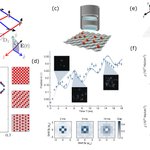
Quantum gas microscopy of three-flavor Fermi gases science.org/doi/10.1126/scie… @UVaPhysicsDept @JQInews @NIST @JILAscience – at Washington, DC

Kaden Hazzard retweeted

I've been looking forward to today!
We've long know that a key to crack the quantum many-body problem is locality, as mathematically captured by the Lieb-Robinson bound.
But Lieb-Robinson bounds always needed a lattice structure and so they remained out of reach for realistic continuum systems. This has been the major roadblock for developing a quantum information theory in continuous space.
Well, not anymore: arxiv.org/abs/2611.11655

Kaden Hazzard retweeted

Excited to see that the Aaronson-Ambainis conjecture has apparently been proved! But depressed to see the amount of completely incorrect commentary on its implications, so here's an attempt to clear things up.
Kaden Hazzard retweeted

An internal model at OpenAI has produced a claimed refutation of ETH! Russell Impagliazzo, Mohan Paturi, and I have been asked to help organize an open and independent examination of this claim. 1/4
Kaden Hazzard retweeted

10月6日にOpenAIが発表した、AIの証明による700以上の定理の一つをChatGPT Astraに一般化させました。長年論争が続いていた統計力学の基本的な問題「Z2渦解離による相転移が存在するか?」について得られた強力な結果を報告します。
7節はAIについての個人的な所感です。
hexagonmath.org/2610.00453

Kaden Hazzard retweeted

Hello, lovely people of Houston! Hope to see you all at Patterson Park on October 27th!

Kaden Hazzard retweeted

🧪⚛️ A summary of science policy/funding news, much from the last couple of weeks. Pretty intense period. nanoscale.blogspot.com/2026/…
Kaden Hazzard retweeted

Using Rydberg atom arrays, researchers show dipolar interactions bind atoms into self-bound states, enabling clean topological pumping along a synthetic lattice. Learn more: go.aps.org/4iZrtky

ALT Scientific figure shows topological pumping along a Rydberg synthetic lattice with dipolar interactions. On the left, a yellow bell-shapped object is pointed towards a purple circle representing a Rydberg atom. From the top and bottom of the atom, two flared red columns emerge. From the yellow object, red and blue half-circle rings emerge, showing microwaves emitted at the atom. A grey shaded bar shows a zoomed-in look at the atom. In it, five clear grey circles are arranged in a squished M shape with lines in between them colored alternately red and blue. The circles are labeled nS, (n+1)P, (n+1)S, (n+2)P, and (n+2)S.
Kaden Hazzard retweeted

What happens to science when AI can reason, discover, and maybe even outpace us?
We sat down with Scott Aaronson to discuss what it means to be a scientist in the age of AI.
youtu.be/Qjgc9Hs5GKs
Kaden Hazzard retweeted

Today, after 7 years in stealth, I, @emeskey and our co-founders are proud to announce @keplercompute.
The world is much better off when we give power & intelligence to the people. When everyone can become their highest selves by pairing their human creativity with the exponentially rising intelligence from our magnificent computers.
Our goal is to unlock the power of frontier intelligence for everyone by pushing memory and logic chip manufacturing to the limits of physics.
To achieve this, we will move the world from one of compute scarcity to abundance where we can make orders of magnitude more chips per dollar and can lower datacenter energies to the limits of physics. We will use physics to ensure we have enough chips and that we can power them on.
Why is compute scarce?
Today's dominant approach - shrinking transistors with EUV - has run into $20B-$40B fabs that take years to build. Sized against that risk, the industry (quite rationally!) grows capex much slower than AI demand that can grow 10x in a year.
In the current system, scarcity is built in.
A different way is possible.
We founded Kepler on the following beliefs:
1. It is possible to build leadership chips without a dependence on EUV
2. It is possible to achieve multiple orders of magnitude more intelligence per watt by evolving chips 2D Silicon to 3D Beyond silicon
3. It is possible to get much closer to the physical limits of computing than we are today while staying within mainstream digital computing
Memory is the biggest binding constraint on AI compute and so we start with a new frontier of AI memory- approaching the bandwidth per watt of SRAM, going up to 10x beyond the capacity of HBM. We use 3D and materials innovations that allow for leapfrogging leading nodes while requiring no EUV lithography and allowing us use fabs that already exist.
Our team co-led one of the industry's first 3D chip-stacking technologies, has led and scaled seven generations of DRAM and multiple logic designs into billions of chips. We built the world's first commercial physical synthesis tool and techniques at the heart of the logic design industry and solved long standing challenges in ferroelectrics, invented beyond CMOS logic devices. We would love to work with you to reinvent chip manufacturing here in America.
We have raised $468m, built our own fab and our AI memories sample this year and ramp to production next year. We are allocated for 2027 and will be scaling in America by 2028.
We are open for business, please get in touch to work together. We are also growing the group of Keplerians and would love to work with you.
Learn More @ Kepler: keplercompute.com/
Read our story in @WIRED: wired.com/story/a-new-dollar…

Kaden Hazzard retweeted

Refusing to stir milk into my tea until this whole Navier-Stokes blow up thing is fully resolved.


Kaden Hazzard retweeted

When I had chicken pox in the 80s, somebody loaned my parents a crate full of VHS tapes for me to watch while I was out of school for a week. One of the movies was DRESSED TO KILL.

Kaden Hazzard retweeted

Today QuEra is announcing results from our research preview to the Model Hardware Standard (MHS), begun with Anthropic and HHMI Janelia. An AI agent (Claude) designed, wrote, and validated a controller for a critical function inside our quantum computers: laser locking.
Kaden Hazzard retweeted

I'll say it out loud: the fact that admissions officers now have to read heaps of AI slop is karma for inventing the worst genre ever and subjecting millions of kids to having to write in it.


Kaden Hazzard retweeted

We did it! 🎉 Our new article is out in @Nature, together with the experimental group of Prof. Philipp Schindler @pschindleruibk from the University of Innsbruck.
🔬 We present a new method for studying individual molecular ions, demonstrating that the absorption of a single photon by a single polyatomic molecular ion can be detected using precise quantum techniques. Instead of observing the absorbed photon directly, we detect the extremely subtle recoil it imparts to the molecule. This tiny effect is amplified using a nonclassical motional state of two co-trapped ions—a Schrödinger cat state 🐈—and subsequently read out via an atomic ion. This is the first application of this method to detecting single-photon absorption in a molecular ion.
🤝 The experiment was designed and built by Prof. Philipp Schindler’s group in Innsbruck. On the theory side, my postdoc Dr Marcin Gronowski @Gronowski_M, with my support at the University of Warsaw @UniWarszawski, developed an accurate theoretical description of the molecular ion under study, which was essential for the analysis and interpretation of the experimental results. The method was used to investigate O–H bond-stretching vibrations in an individual CaOH⁺ ion, excited by femtosecond pulses in the mid-infrared range.
⚛️ The results represent an important step toward nondestructive measurements of complex polyatomic molecules and more advanced control of their quantum states. They open new opportunities for both precision molecular spectroscopy and the development of molecular quantum technologies.
📄 Article:
Z. Wu, T. Duka, M. Isaza-Monsalve, M. Kautzky, V. Švarc, A. Turci, R. Nardi, M. Gronowski, M. Tomza, B. J. Furey, P. Schindler, Infrared absorption spectroscopy of a single polyatomic molecular ion, Nature (2026)
nature.com/articles/s41586-0…


New research article "Infrared absorption spectroscopy of a single polyatomic molecular ion" published in @Nature!
The experiment by Prof. Philipp Schindler's group in Innsbruck, with molecular theory by Dr @Gronowski_M and Prof. @MichalTomza:
nature.com/articles/s41586-0…

Dave Chapelle knows about quantum computing?! 🤯

Dave Chappelle says no one needs to think anymore because of AI: “Thinking is for poor people”
“I was talking to a friend of mine and we were laughing about how no one really would know what to teach a kid now. What skill sets are going to matter 10 or 20 years from now as the world becomes automated”
“We decided your character is your destiny. If you’re a good person that’s all you can ask from anybody and hope for the best”
“I don’t know if anyone needs to think anymore. It’s AI, quantum computing, it seems like thinking is for poor people”
1
5
549


Kaden Hazzard retweeted

The night before OpenAI announced ten proofs for $2K, I ran an experiment 1 prompt, 14 hours, 85 subagents. Result: a 20-page "paper" resolving an open problem.
Subscription cost: €5. Grothendieck called it reaping and sowing. LLMs reap. Can they sow? tjoresearchnotes.wordpress.c…